Habanero vs Serrano Pepper: Which Pepper Should You Use?
The habanero and serrano sit at opposite ends of the everyday pepper spectrum. Habaneros clock in at 100,000-350,000 SHU with a distinctive fruity, citrusy character, while serranos deliver a clean, grassy bite in the 10,000-25,000 SHU range. Choosing between them comes down to how much heat you want and what flavor direction you're after.

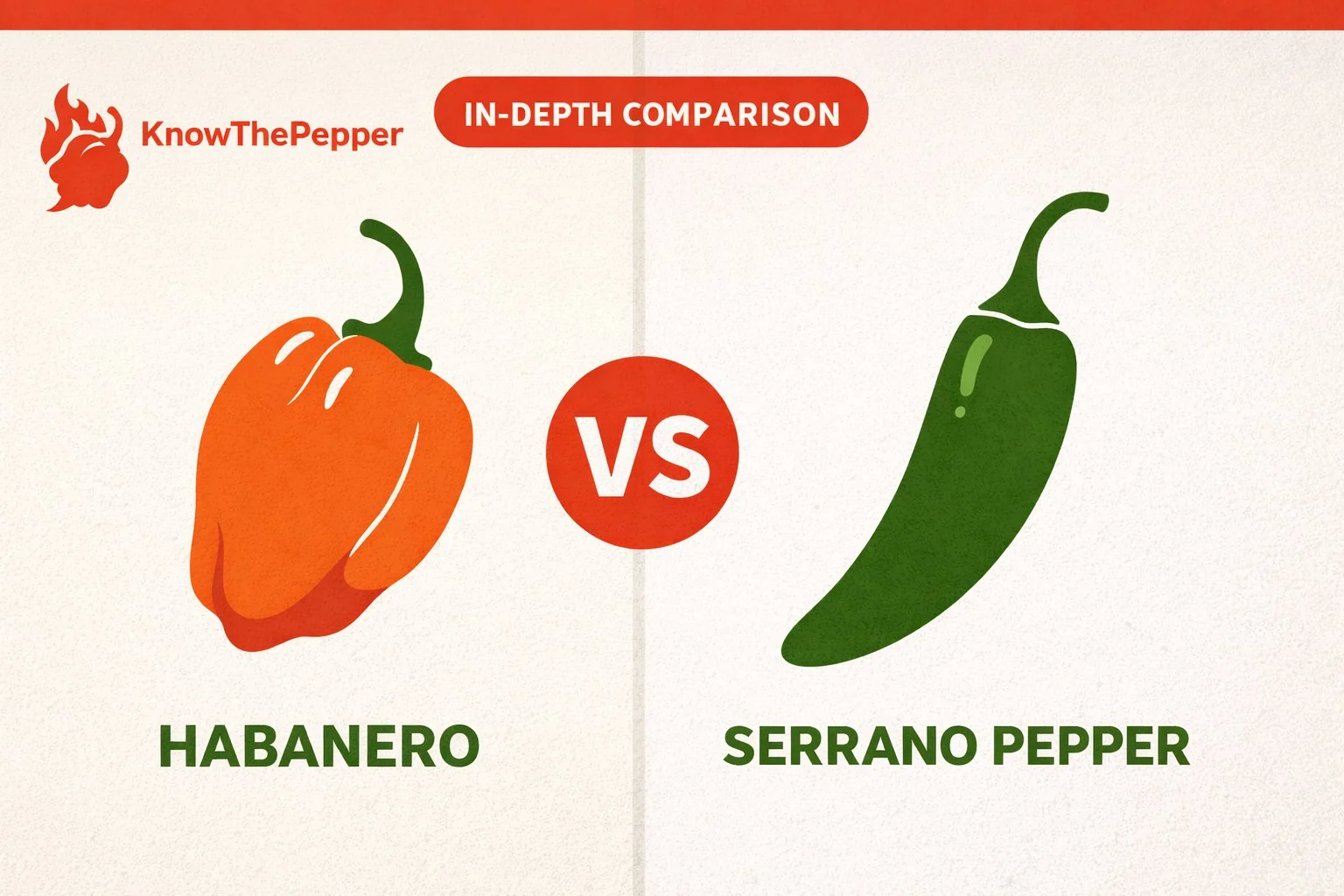
Habanero measures 100K–350K SHU while Serrano Pepper registers 10K–23K SHU — making Habanero 15× hotter. Habanero is known for its fruity and citrusy flavor (C. chinense), while Serrano Pepper offers bright and crisp notes (C. annuum).
- Heat difference: Habanero is 15× hotter
- Species: C. chinense vs C. annuum
- Best for: Habanero excels in hot sauces and extreme dishes, Serrano Pepper in fresh salsas and mild recipes
Habanero
Extra-HotSerrano Pepper
HotHabanero vs Serrano Pepper Comparison
Habanero vs Serrano Pepper Heat Levels
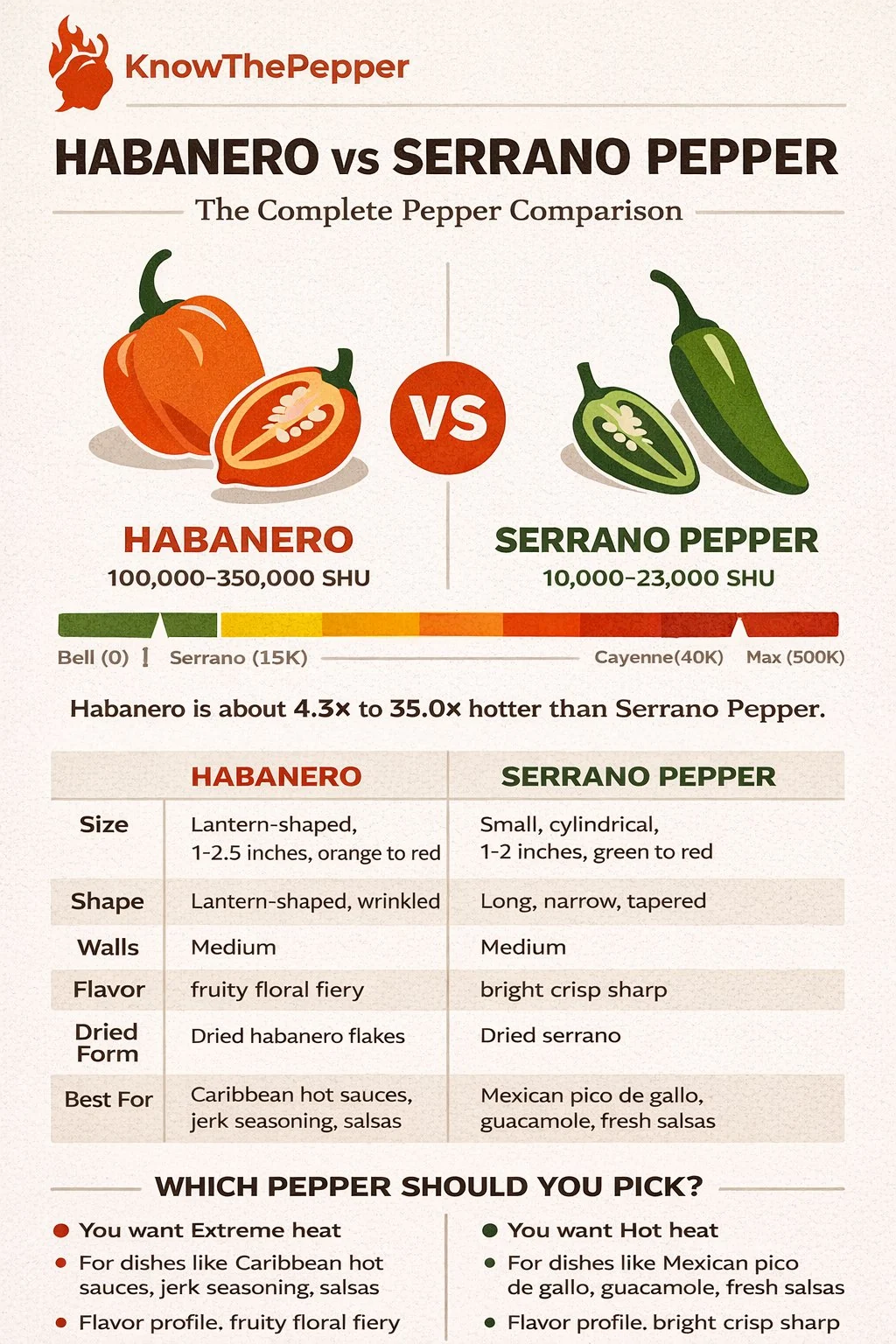
The gap between these two peppers is significant. Habaneros register 100,000-350,000 SHU, placing them firmly in the extra-hot pepper category alongside other C. chinense varieties. Serranos typically land between 10,000-25,000 SHU — hot enough to notice, but manageable for most people who cook with chiles regularly.
To put that in concrete terms: a habanero at its midpoint (~225,000 SHU) runs roughly 10-15 times hotter than a typical serrano. That's not a subtle difference — it's the kind of gap that changes how a dish functions entirely.
The burn character differs too. Habaneros carry the delayed, face-warming heat typical of C. chinense species peppers, where capsaicin binds to receptors in waves rather than all at once. Serranos hit faster and dissipate more quickly — a sharper, more direct bite that doesn't linger as long on the palate.
For context, both outpace a jalapeño (2,500-8,000 SHU), but in very different ways. A serrano is roughly 2-4x hotter than a jalapeño; a habanero can be 40-50x hotter. If you're curious about the receptor-level chemistry behind capsaicin's burn, the mechanism explains why chinense varieties feel so different from annuum peppers like serranos.
Bottom line: if serranos are already pushing your heat tolerance, habaneros will be a genuine challenge.
Flavor Profile Comparison
Few peppers balance heat and flavor as well as the habanero.
Bite into a raw serrano and the first thing you notice is the aroma — green, grassy, almost herbal, like a jalapeño that decided to be serious.
This is where the two peppers diverge just as sharply as they do on heat. Habaneros bring a fruity, citrusy flavor that's immediately recognizable — there's a brightness to them, almost tropical, that pairs naturally with mango, pineapple, and citrus-forward preparations. That flavor is part of why Caribbean and Yucatecan cooking leans so heavily on them; the heat and the taste are inseparable.
Serranos are a different story. Their flavor profile is grassy and fresh — closer to a jalapeño but with more intensity and a slightly earthier edge. They taste like a pepper, cleanly and directly, without the aromatic complexity that habaneros carry. That simplicity is actually an asset in many contexts: serranos don't compete with other ingredients the way habaneros can.
Aroma matters here too. Cut a habanero and the room fills with something floral and fruity. Cut a serrano and you get a sharp, vegetal smell — pleasant, but not perfumed. In raw applications like pico de gallo or fresh salsas, that difference shows up immediately on the palate.
Cooked, habaneros retain their fruity notes even through high heat, which is why they work so well in hot sauces and marinades where that character can shine. Serranos mellow slightly when cooked but hold their structural integrity well — they roast, char, and blister beautifully without losing their identity.
If your dish needs heat that announces itself with flavor, habanero. If you want clean pepper heat that supports rather than leads, serrano is the better call.
Culinary Uses for Habanero and Serrano Pepper
These two peppers rarely overlap in traditional applications, which tells you something about how differently they function in the kitchen.
Habaneros are the backbone of Yucatecan cuisine — salsa de habanero, cochinita pibil heat, and the fiery table sauces served alongside slow-cooked meats. Their fruity complexity makes them ideal for hot sauces, fruit-based salsas, marinades for pork and chicken, and anywhere you want heat with aromatic presence. They also work well pickled, where the brine tempers the fire while preserving that citrus-forward flavor. For a full picture of what this pepper does in the kitchen, the habanero's fruity heat profile covers its culinary range in depth.
Serranos are the workhorse of Mexican home cooking — fresh in guacamole, charred in salsa verde, sliced raw over tacos. They're also common in Thai and Vietnamese cooking as a jalapeño substitute with more heat. Their firm flesh holds up to cooking without turning mushy, and they can be used in larger quantities than habaneros without overwhelming a dish. The serrano's clean, grassy bite makes it one of the most versatile mid-heat peppers available.
Substitution: If a recipe calls for habanero and you want to use serrano, you'll need roughly 8-12 serrano peppers to approximate the heat of one habanero — and even then, the fruity flavor won't transfer. Going the other direction, use 1/4 to 1/3 of a habanero to replace a serrano, and expect the dish's flavor profile to shift noticeably.
For habanero alternatives that stay closer to the original heat and flavor, habanero swap options include scotch bonnets and fatalii peppers. If you need something in the serrano's lane, serrano substitutes like jalapeños or fresno chiles are easier to find in most grocery stores.
Both peppers work in fermented hot sauces, though habaneros dominate commercial production for good reason — their flavor survives the fermentation process intact.
Which Should You Choose?
Pick your pepper based on the job it needs to do.
Habanero is the right call when flavor is as important as heat — fruit-forward salsas, Caribbean-style marinades, hot sauces where you want complexity, not just fire. It's also the choice when you genuinely want high heat; at 100,000-350,000 SHU, it delivers intensity that serranos simply can't match. The fruity, extreme end of the Scoville scale is habanero territory.
Serrano wins when you need approachable heat with clean pepper flavor — fresh salsas, guacamole, dishes where the pepper is a supporting player. At 10,000-25,000 SHU, it's hot enough to matter without requiring heat tolerance training.
For comparisons that put habanero's heat in further context, see how habanero stacks up against cayenne's milder burn or check where it lands against Carolina Reaper's extreme capsaicin load. There's also an interesting comparison with Bulgarian carrot pepper's bright heat versus habanero's tropical punch.
If you're cooking for mixed heat tolerances, serrano. If you're cooking for pepper people, habanero.
Can You Substitute One for the Other?
Proceed with caution. Habanero is 15× hotter than Serrano Pepper.
Need a different option altogether? Search for peppers that match your target heat and flavor with precise swap ratios.
Growing Habanero vs Serrano Pepper
If you’re deciding which pepper to grow at home, consider your climate and patience level. Habanero and Serrano Pepper have different maturation times and temperature preferences. Hotter varieties generally need a longer, warmer growing season to develop their full capsaicin content. Our zone-based planting date tool can pinpoint the best sowing window for your area.
Starting habaneros from seed requires patience. Germination takes 10–21 days at soil temperatures of 80–85°F — a heat mat is not optional, it's essential.
Transplant seedlings outdoors only after nighttime temperatures stay consistently above 55°F. Habaneros are frost-intolerant and will stall in cold soil.
Full sun — at least 6–8 hours daily — is non-negotiable. In containers, use a 5-gallon minimum; habaneros develop substantial root systems.
Serranos are reliable producers that reward patient gardeners. Start seeds indoors 8–10 weeks before last frost — germination takes 10–21 days at soil temperatures around 80–85°F.
Transplant outdoors once nighttime temps stay above 55°F. Space plants 18–24 inches apart in full sun with well-draining soil amended with compost.
Days to maturity runs 70–80 days from transplant to green-ripe. Letting pods fully ripen to red adds another 2–3 weeks but intensifies both flavor and heat.
History & Origin of Habanero and Serrano Pepper
Both peppers carry centuries of culinary heritage. Habanero traces its roots to Mexico, while Serrano Pepper originates from Mexico. Understanding their backstory helps explain why each pepper developed its distinctive traits.
Buying & Storage
Whether you’re shopping for Habanero or Serrano Pepper, the same quality indicators apply. Fresh peppers should feel firm and heavy for their size, with taut, glossy skin and no soft or wet spots. Minor stem cracks known as “corking” are perfectly normal and often indicate a mature, flavorful pod.
- Firm pods with taut skin and consistent color
- Should feel heavy relative to size
- Minor stem cracks (“corking”) are normal
- Avoid anything soft, shriveled, or with dark wet spots
- Fresh: Paper bag, crisper drawer — 1–2 weeks
- Frozen: Wash, dry, freeze on sheet pan — 6+ months
- Dried: Airtight, away from light — up to 1 year
The Verdict: Habanero vs Serrano Pepper
Habanero and Serrano Pepper occupy very different positions on the heat spectrum. Habanero delivers 15× more heat with its distinctive fruity and citrusy character. Serrano Pepper, with its bright and crisp profile, excels in everyday cooking.
Frequently Asked Questions
Related Comparisons
Sources pending verification.