Ghost Pepper vs Scotch Bonnet – Heat & Flavor Compared
The ghost pepper once held the Guinness World Record for hottest pepper, clocking in at roughly 1,000,000 SHU — nearly three to ten times hotter than the Scotch Bonnet's 100,000–350,000 SHU range. Both belong to C. chinense, but they land in completely different heat brackets and serve different roles in the kitchen. If fruity Caribbean flavor is the goal, Scotch Bonnet wins; if maximum fire is the point, ghost pepper is the obvious answer.

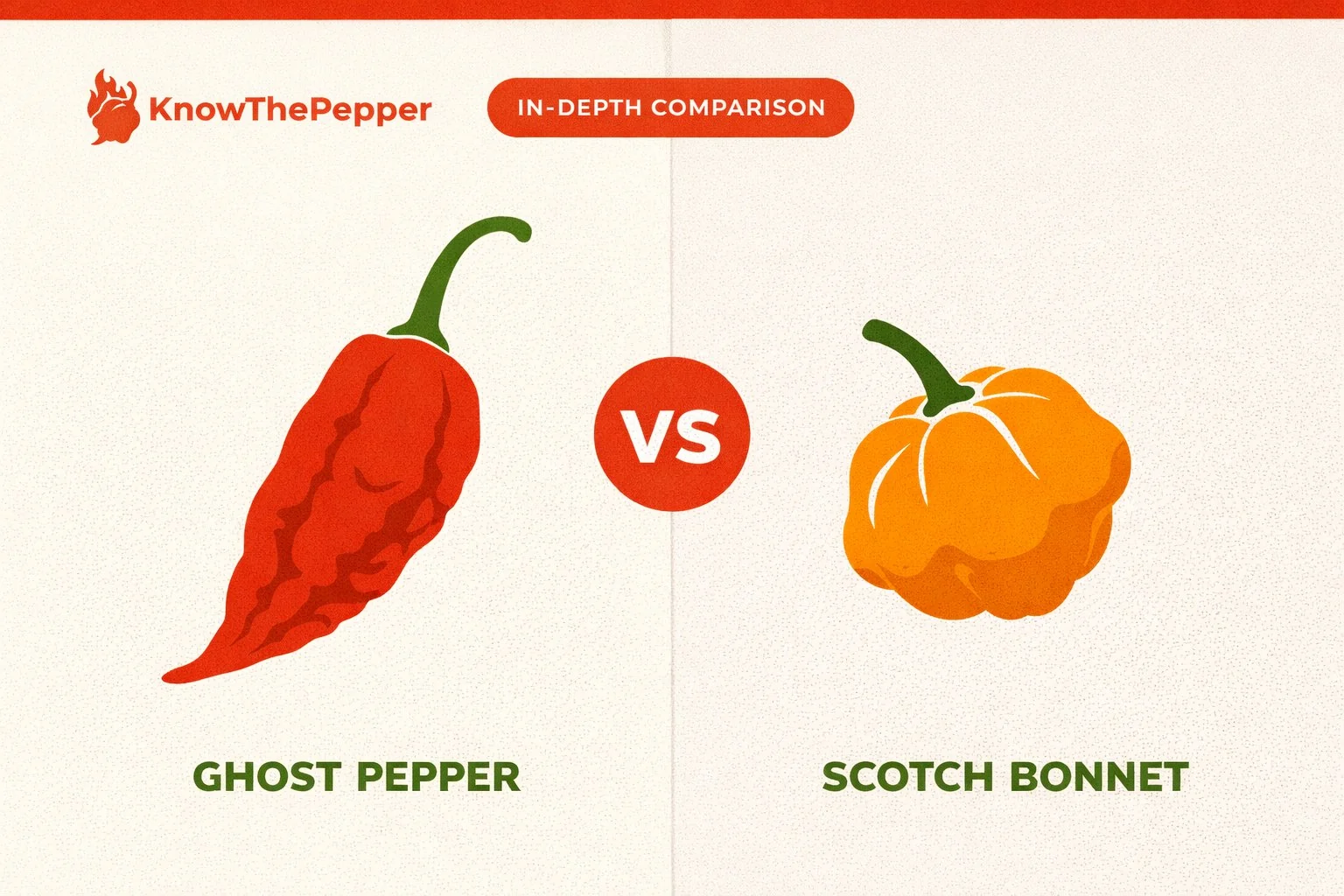
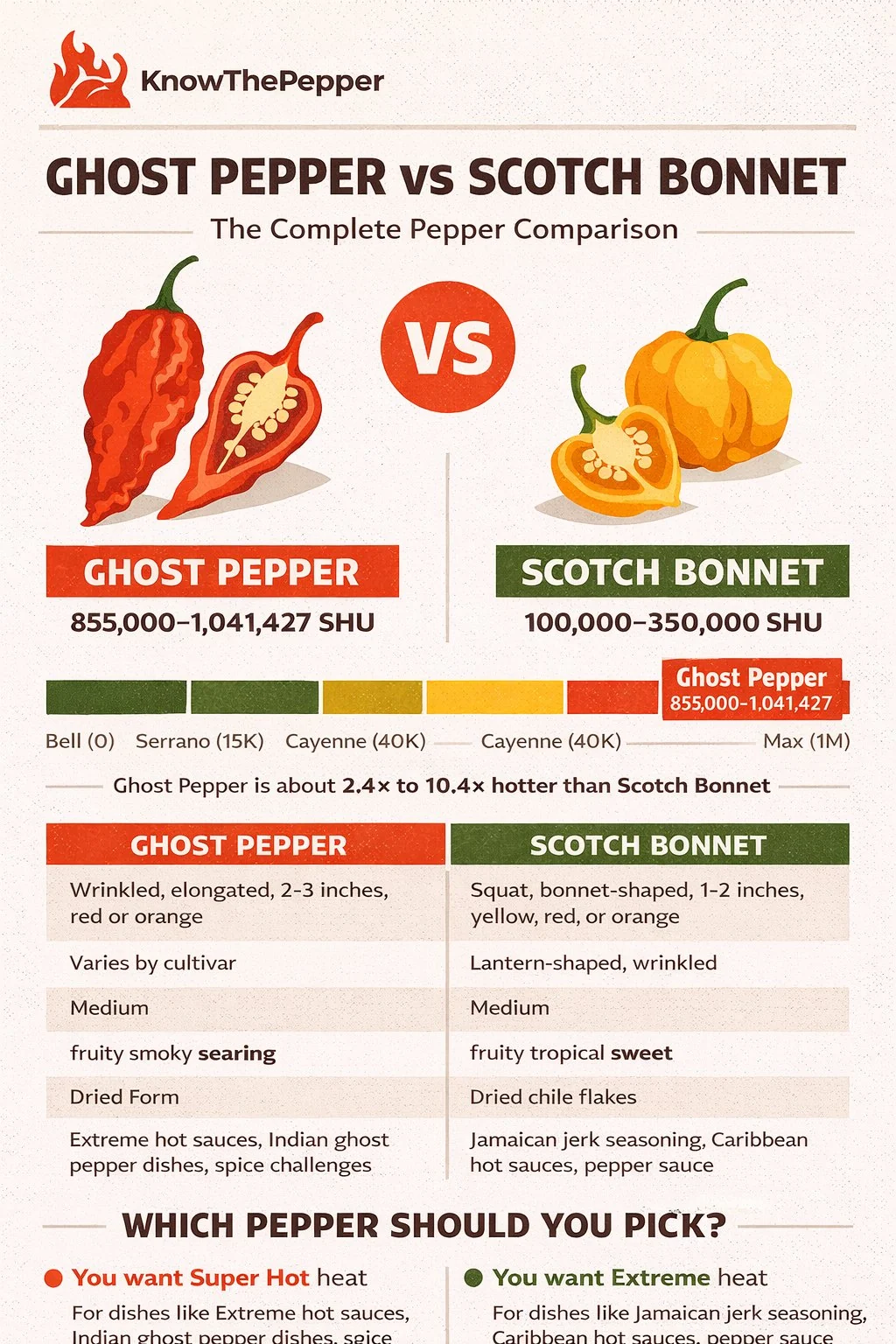
Ghost Pepper measures 855K–1M SHU while Scotch Bonnet registers 100K–350K SHU — making Ghost Pepper 3× hotter. Ghost Pepper is known for its smoky and sweet flavor (C. chinense), while Scotch Bonnet offers fruity and tropical notes (C. chinense).
- Heat difference: Ghost Pepper is 3× hotter
- Species: Both are C. chinense
- Best for: Ghost Pepper excels in hot sauces and extreme dishes, Scotch Bonnet in hot sauces and spicy dishes
Ghost Pepper
Super-HotScotch Bonnet
Extra-HotGhost Pepper vs Scotch Bonnet Comparison
Ghost Pepper vs Scotch Bonnet Heat Levels
The extra-hot heat category that defines the Scotch Bonnet already puts it well above most supermarket peppers — sitting roughly 5 to 14 times hotter than a serrano. That alone makes it a serious pepper. But the ghost pepper operates on a different level entirely.
Ghost pepper (Bhut jolokia) measures around 800,000–1,041,427 SHU, depending on growing conditions and testing method. The Scotch Bonnet caps out around 350,000 SHU on its hottest end. That means even the mildest ghost pepper reading outpaces the hottest Scotch Bonnet by more than double.
In serrano terms: a Scotch Bonnet runs approximately 5–14x hotter than a serrano (25,000 SHU baseline). A ghost pepper hits roughly 32–42x that same serrano benchmark. The gap between these two peppers is not subtle.
Both peppers deliver capsaicin through the same receptor pathway — the TRPV1 ion channel — but the ghost pepper's capsaicin load produces a slower, creeping burn that builds for several minutes after contact. Scotch Bonnet heat is more immediate, intense at the front of the mouth, and dissipates faster. Understanding the chemistry behind that slow-building burn helps explain why ghost pepper dishes catch people off guard even when they think they can handle hot food.
For reference against the full Scoville heat index, ghost pepper sits in the super-hot tier while Scotch Bonnet occupies the upper end of the hot tier — a meaningful distinction when planning recipes.
Flavor Profile Comparison
Long before it became a dare on YouTube, the ghost pepper was a staple of Naga cuisine in Assam, Nagaland, and Manipur — used in traditional pickles, meat preparations, and even as a topical remedy against arthritis.
The first time I tasted a Scotch Bonnet raw — sliced thin, no gloves, rookie mistake — the sweetness hit before anything else.
Scotch Bonnet has one of the most distinctive flavor profiles in the pepper world. The fruity Caribbean heat of this C. chinense variety delivers bright tropical notes — think mango, papaya, and a faint apple-like sweetness — layered beneath the fire. That flavor complexity is precisely why it anchors Jamaican jerk seasoning, Trinidadian pepper sauce, and countless Caribbean pepper traditions. The heat and the taste arrive together; you can't separate them.
Ghost pepper's flavor is earthier and more smoky by comparison. There's fruit there — some tasters pick up hints of dried cherry or tamarind — but it's muted, sitting behind a wall of heat that tends to dominate everything else. The aroma is pungent and slightly fermented, especially in fresh-picked pods.
For cooking purposes, this difference matters enormously. A Scotch Bonnet adds heat and a recognizable flavor contribution. Ghost pepper adds heat almost exclusively — it's the kind of ingredient you use to push a sauce into extreme territory, not to build a nuanced flavor base.
Dried ghost pepper powder intensifies the smoky, earthy character and loses even more of the fruit notes. Dried Scotch Bonnet retains its tropical brightness better, though fresh is always preferred for sauces and marinades.
If you're building a dish where the pepper's flavor should be detectable — jerk chicken, pepper shrimp, fruit-forward hot sauce — Scotch Bonnet is the tool. If the goal is pure, escalating heat with minimal flavor interference, ghost pepper does that job.
Culinary Uses for Ghost Pepper and Scotch Bonnet
Scotch Bonnet is the backbone of Caribbean cooking in a way ghost pepper never quite achieves in its native Northeast Indian cuisine. Jamaican jerk paste, Trinidadian green seasoning, Guyanese pepper sauce — all of them depend on Scotch Bonnet's specific fruity heat. The pepper is typically seeded and minced for marinades, blended whole into sauces, or dropped into stews and removed before serving (leaving heat without the full intensity).
For recipes that call for Scotch Bonnet's tropical bite, habanero is the most common substitute — the habanero-to-ghost-pepper heat gap illustrates how much distance there is between those two options. Habanero runs slightly milder than Scotch Bonnet and shares the fruity C. chinense character, making it a workable 1:1 swap in most recipes.
Ghost pepper works best in applications where it's diluted significantly: fermented hot sauces, chili oils, dry rubs where a small amount of powder is distributed across a large batch. A single fresh ghost pepper can heat a pot of chili serving 8–10 people. Treat it like a seasoning, not a vegetable.
Substitution ratios: If a recipe calls for 1 ghost pepper and you want to use Scotch Bonnet, use 3–4 Scotch Bonnets to approximate the heat — though you'll pick up considerably more fruity flavor in the process. Going the other direction, replace 4 Scotch Bonnets with 1 ghost pepper, but expect the flavor profile to shift dramatically toward earthy heat.
Ghost pepper powder has found a commercial niche in extreme snack foods, hot sauces marketed by SHU number, and spice blends. It's rarely used fresh outside of regional Indian cooking, where dishes like raja mirchi curry showcase the whole pod.
For those exploring the cultivation side of these peppers, both varieties need a long growing season — ghost pepper in particular requires 100–120 days from transplant and demands consistent heat to develop full capsaicin content.
Which Should You Choose?
These two peppers serve genuinely different purposes, and choosing between them isn't really about preference — it's about what the dish needs.
Scotch Bonnet is the better all-purpose hot pepper for Caribbean-style cooking, fruit-forward sauces, and any recipe where the pepper's flavor should be part of the dish's identity. Its 100,000–350,000 SHU range is still seriously hot, but it's manageable enough to use in meaningful quantities.
Ghost pepper is a specialist ingredient — reaching toward 1,000,000 SHU, it's for cooks who need maximum heat and are comfortable treating it like a concentrated extract rather than a culinary ingredient. The Naga Viper comparison and the Trinidad Moruga Scorpion side-by-side both show where ghost pepper sits relative to the true super-hots.
For most home cooks: Scotch Bonnet. For heat-chasing projects and extreme sauces: ghost pepper, used sparingly.
Can You Substitute One for the Other?
Proceed with caution. Ghost Pepper is 3× hotter than Scotch Bonnet.
Need a different option altogether? Search for peppers that match your target heat and flavor with precise swap ratios.
Growing Ghost Pepper vs Scotch Bonnet
If you’re deciding which pepper to grow at home, consider your climate and patience level. Ghost Pepper and Scotch Bonnet have different maturation times and temperature preferences. Hotter varieties generally need a longer, warmer growing season to develop their full capsaicin content. Our zone-based planting date tool can pinpoint the best sowing window for your area.
The hardest part of growing ghost peppers isn't germination — it's maintaining the long, hot season they need to fully ripen. In most of North America, that means starting seeds indoors 10–12 weeks before last frost and providing supplemental heat throughout the season.
Soil quality matters enormously. Ghost peppers want well-draining, slightly acidic soil (pH **6.
Fertilize with a lower-nitrogen mix once flowering begins — too much nitrogen pushes leafy growth at the expense of pods. Consistent calcium (through gypite or foliar spray) helps prevent blossom end rot, which ghost peppers are prone to during dry spells.
Scotch Bonnets need warmth from the start. Germination requires 80–85°F soil temperature; anything cooler and seeds stall for weeks.
These plants run long — expect 90–120 days from transplant to ripe fruit. They're not beginner peppers in terms of patience, but they're forgiving once established.
Soil should drain well. *C.
History & Origin of Ghost Pepper and Scotch Bonnet
Both peppers carry centuries of culinary heritage. Ghost Pepper traces its roots to India, while Scotch Bonnet originates from Caribbean. Understanding their backstory helps explain why each pepper developed its distinctive traits.
Buying & Storage
Whether you’re shopping for Ghost Pepper or Scotch Bonnet, the same quality indicators apply. Fresh peppers should feel firm and heavy for their size, with taut, glossy skin and no soft or wet spots. Minor stem cracks known as “corking” are perfectly normal and often indicate a mature, flavorful pod.
- Firm pods with taut skin and consistent color
- Should feel heavy relative to size
- Minor stem cracks (“corking”) are normal
- Avoid anything soft, shriveled, or with dark wet spots
- Fresh: Paper bag, crisper drawer — 1–2 weeks
- Frozen: Wash, dry, freeze on sheet pan — 6+ months
- Dried: Airtight, away from light — up to 1 year
The Verdict: Ghost Pepper vs Scotch Bonnet
Ghost Pepper and Scotch Bonnet occupy very different positions on the heat spectrum. Ghost Pepper delivers 3× more heat with its distinctive smoky and sweet character. Scotch Bonnet, with its fruity and tropical profile, excels in everyday cooking.
Frequently Asked Questions
Related Comparisons
Sources pending verification.