Fresno vs Red Jalapeño: Which Pepper to Use?
Fresno and red jalapeño are close enough in heat and appearance that they get swapped constantly — but they're not identical. The Fresno runs 2,500-10,000 SHU with a distinctly fruity, smoky character, while the red jalapeño tops out at 8,000 SHU with a sweeter, more straightforward fruit flavor. Knowing which to reach for depends entirely on what you're cooking.

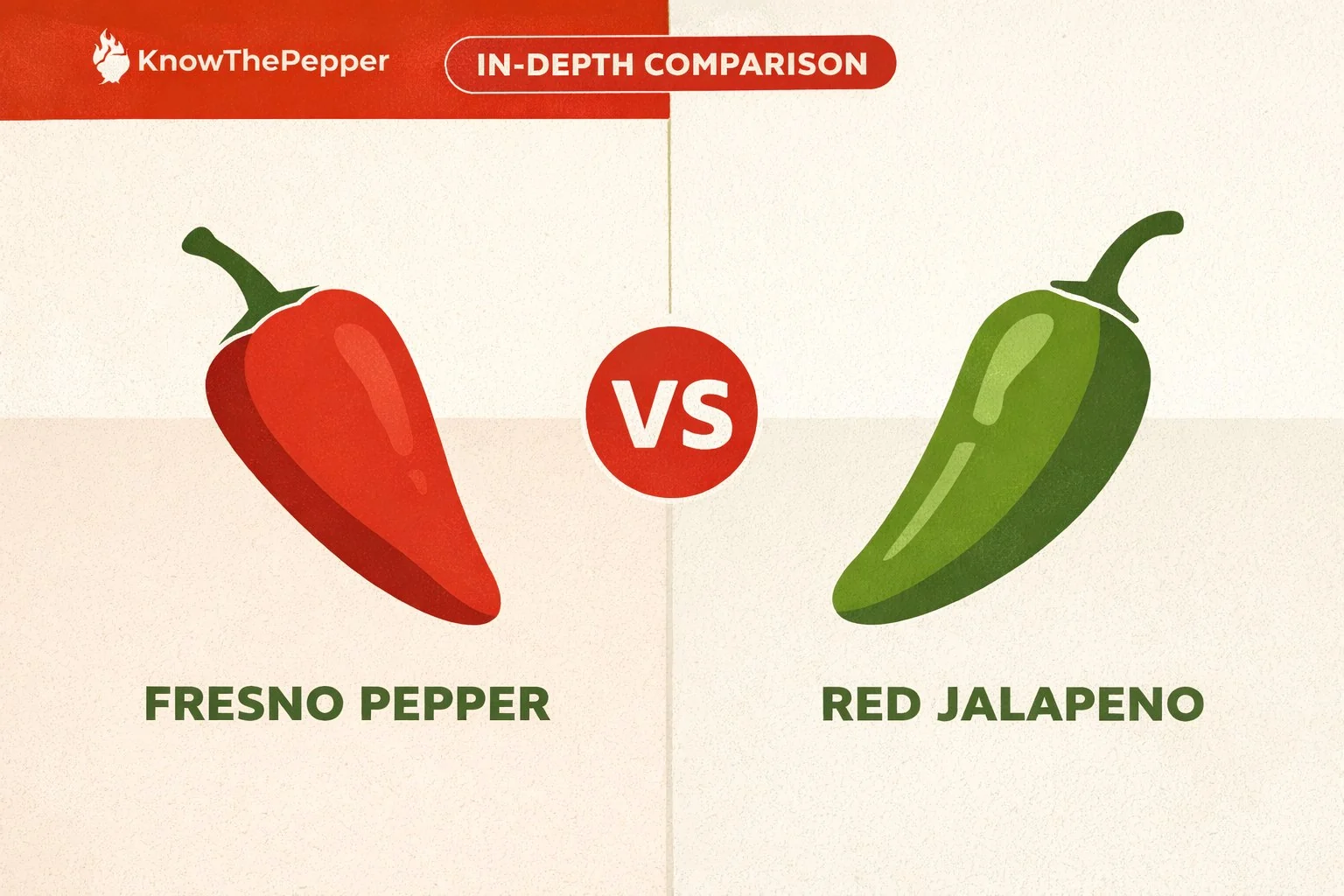
Fresno Pepper measures 3K–10K SHU while Red Jalapeño registers 3K–8K SHU — roughly equal in heat. Fresno Pepper is known for its fruity and smoky flavor (C. annuum), while Red Jalapeño offers sweet and fruity notes (C. annuum).
- Species: Both are C. annuum
- Best for: Fresno Pepper excels in everyday cooking and salsas, Red Jalapeño in fresh salsas and mild recipes
Fresno Pepper vs Red Jalapeño Comparison
Fresno Pepper vs Red Jalapeño Heat Levels
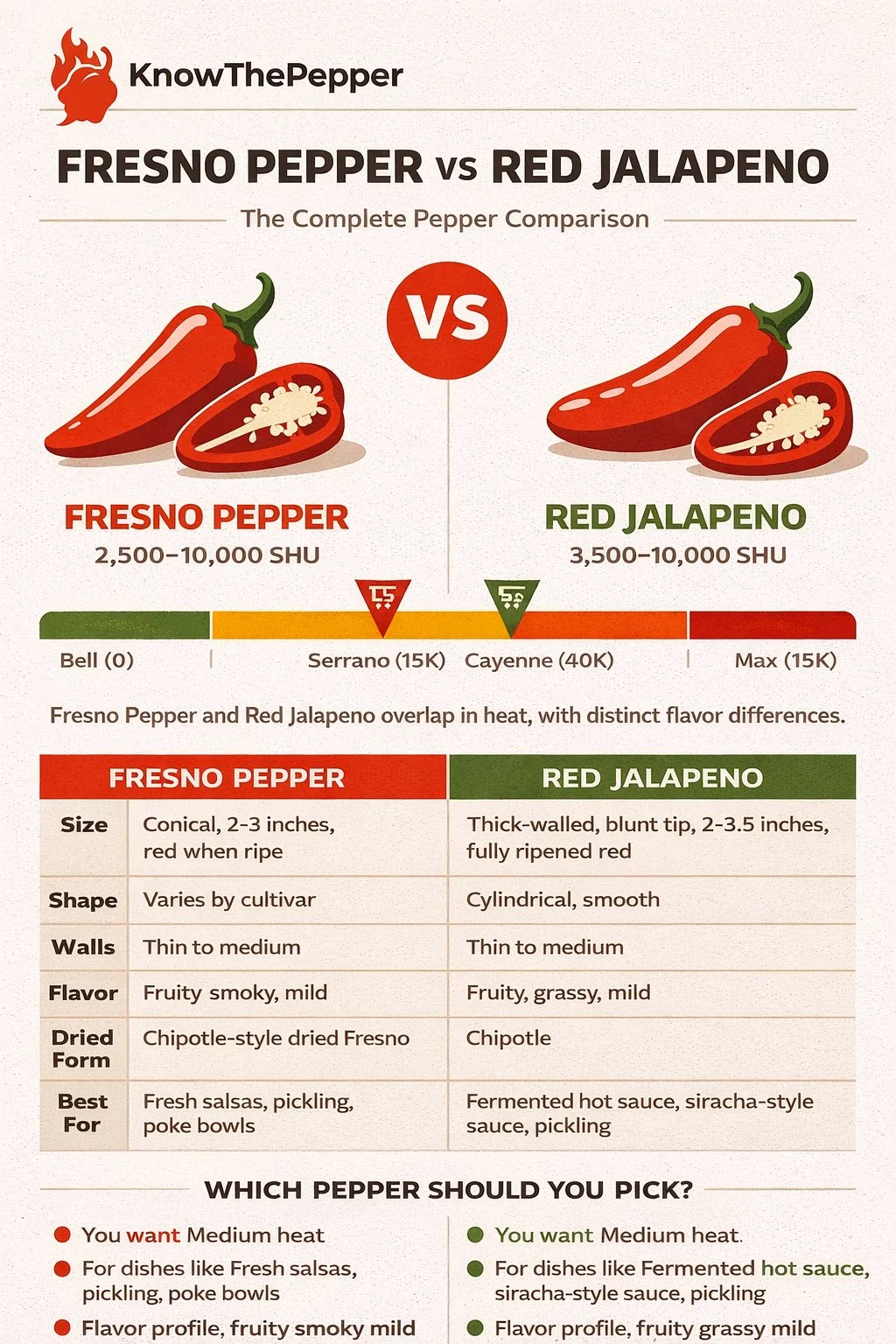
On paper, these two peppers occupy nearly the same medium heat band — both starting at 2,500 SHU and diverging only at the ceiling, where Fresno edges ahead to 10,000 SHU versus the red jalapeño's 8,000 SHU max.
For context, a dried guajillo's mild fruity warmth sits around 2,500-5,000 SHU, so both peppers at their hottest hit roughly twice the guajillo's peak. That's meaningful heat without being aggressive — you feel it, but it doesn't hijack the dish.
The practical difference is variability. Fresno peppers swing harder across their range; a single batch can contain specimens near the low end and others pushing the upper limit. Red jalapeños are generally more consistent, since they're simply green jalapeños left to fully ripen — the same genetics, just matured. That ripening process actually mellows some of the raw sharpness while boosting sugar content.
The burn character matters too. Fresno heat tends to arrive quickly and concentrate at the front of the mouth and lips. Red jalapeño heat builds slightly slower and spreads more evenly across the palate. Neither is a fire-breather by any measure — both sit comfortably in the accessible everyday heat level that works in family cooking without requiring a disclaimer. For those curious about why these differences in delivery exist, it comes down to how capsaicin interacts with pain receptors and the specific alkaloid ratios in each variety.
Flavor Profile Comparison
The Fresno pepper gets mistaken for a red jalapeño constantly — same conical shape, similar color, sold side by side at the grocery store.
Most people never think to ask what a jalapeño looks like fully ripe.
Aroma is where these peppers first announce their differences. Slice a fresh Fresno and you get a bright, almost berry-like fragrance with a faint smokiness underneath — even raw, before any heat is applied. A red jalapeño smells sweeter and grassier, with that familiar bell-pepper-adjacent scent that green jalapeños have, but warmer and more rounded after ripening.
On the palate, Fresno delivers fruit up front — think red cherry or cranberry — followed by a mild smokiness that lingers. It's not smoked, that quality is intrinsic to the flesh. This makes Fresno work exceptionally well in salsas and sauces where you want complexity without adding a chipotle or dried chile.
The red jalapeño tastes sweeter and cleaner. The extra weeks on the vine convert starches to sugars, giving it a flavor that's noticeably richer than its green counterpart but without the smoky depth of a Fresno. It's a more neutral carrier of heat — the pepper flavor supports the dish rather than competing with other ingredients.
Texturally, Fresno walls are thinner and the flesh dries faster when roasted or charred, which concentrates its fruity notes. Red jalapeño walls are thicker and juicier, holding moisture longer and producing a different mouthfeel in cooked applications. If you're making a fresh pico, the red jalapeño's juiciness is an asset. If you're charring peppers for a sauce, Fresno's thinner skin blisters faster and peels more cleanly. Both belong to C. annuum, which explains the family resemblance — but the flavor divergence is real enough to matter in the kitchen.
Culinary Uses for Fresno Pepper and Red Jalapeño
Both peppers handle raw and cooked applications, but each has a home court advantage.
Fresno peppers shine in fresh salsas, ceviche, and anywhere you want visible red color with layered flavor. Their thin walls mean they pickle beautifully — the brine penetrates quickly and the texture stays snappy even after a few days. Quick-pickled Fresnos on tacos or grain bowls are hard to beat. They also char exceptionally fast under a broiler, making them ideal for fire-roasted sauces where you want a slightly smoky base without pulling out the smoker.
For a comparison of how Fresno stacks up against its green counterpart, the Fresno's fruity depth versus green jalapeño's grassy bite is worth understanding before you substitute one for the other.
Red jalapeños work best where you want heat with a sweeter, fruitier background note. They're excellent in hot sauces — the thicker flesh produces more volume when blended and the sweetness balances vinegar-forward recipes. Stuffed preparations work well too; the thicker walls hold their shape during cooking better than Fresnos. Red jalapeño jelly is a classic application that leans into the natural sugar content.
For substitution: these peppers swap 1:1 in most recipes. If a recipe calls for Fresno and you only have red jalapeño, add a small pinch of smoked paprika to approximate the smokiness. Going the other direction — Fresno for red jalapeño — works without adjustment in most cases, though expect slightly less juice in the final dish.
Fresno also appears frequently alongside Calabrian chili's bolder Mediterranean heat, and understanding that matchup helps clarify where Fresno sits on the flavor spectrum — it's fruitier and less intensely hot than Calabrian.
Both peppers dehydrate well and can be ground into flakes or powder. Fresno powder has a distinctly richer color and smokier aroma than red jalapeño powder, making it a better finishing spice. Red jalapeño flakes are closer to a standard crushed red pepper with more sweetness.
For gardeners, both are productive plants suited to growing in containers or raised beds — a full germination guide covers both. Fresno typically matures slightly faster than red jalapeño, since red jalapeños require the extra ripening time from green.
Which Should You Choose?
If your priority is flavor complexity — smoky, fruity, visually striking red color — reach for the Fresno. It earns its place in salsas, quick pickles, and fire-roasted sauces where that extra dimension matters. The heat ceiling is slightly higher too, which helps when you want the pepper to assert itself.
If you need reliable sweetness and thicker flesh — for hot sauces, stuffed preparations, or anywhere a juicier pepper improves the result — the red jalapeño is the better call. Its familiar flavor profile is also more predictable for cooks who want heat without surprises.
For most everyday cooking, they're interchangeable with minor adjustments. Both are part of the broader American-grown pepper tradition that includes dozens of accessible varieties worth keeping in rotation. The red jalapeño has deeper roots in Mexican culinary history, while Fresno was developed in California specifically for commercial fresh-market use.
Stock both if you cook with fresh chiles regularly. If you can only choose one, the Fresno's flavor range makes it the more versatile pick.
Can You Substitute One for the Other?
Yes — direct substitution works. Fresno Pepper and Red Jalapeño are close enough in heat to swap at roughly 1:1. The main difference will be flavor. For more swap options, explore ranked alternatives with conversion ratios.
Growing Fresno Pepper vs Red Jalapeño
If you’re deciding which pepper to grow at home, consider your climate and patience level. Fresno Pepper and Red Jalapeño have different maturation times and temperature preferences. Hotter varieties generally need a longer, warmer growing season to develop their full capsaicin content. Our zone-based planting date tool can pinpoint the best sowing window for your area.
Fresnos are straightforward to grow but reward growers who manage water stress deliberately. Start seeds indoors 8–10 weeks before last frost — they germinate well at 80–85°F soil temperature and typically sprout within 10–14 days.
Transplant after all frost risk has passed, spacing plants 18 inches apart in full sun. They need at least 6–8 hours of direct light daily.
For more heat in your harvest, reduce watering by about 30% during the final 2–3 weeks of ripening. This mild drought stress increases capsaicin concentration noticeably — the same technique used commercially to push Fresnos toward the upper end of their 10,000 SHU ceiling.
Growing red jalapeños is identical to growing green ones — the difference is simply patience. Standard jalapeño plants are productive and relatively forgiving, making them a solid choice for gardeners at most experience levels.
Start seeds indoors 8–10 weeks before the last frost date. Germination is reliable at soil temperatures between 75–85°F.
For practical guidance on timing and soil prep, the jalapeño cultivation guide covers transplanting depth, spacing, and hardening off in detail.
History & Origin of Fresno Pepper and Red Jalapeño
Both peppers carry centuries of culinary heritage. Fresno Pepper traces its roots to USA, while Red Jalapeño originates from Mexico. Understanding their backstory helps explain why each pepper developed its distinctive traits.
Buying & Storage
Whether you’re shopping for Fresno Pepper or Red Jalapeño, the same quality indicators apply. Fresh peppers should feel firm and heavy for their size, with taut, glossy skin and no soft or wet spots. Minor stem cracks known as “corking” are perfectly normal and often indicate a mature, flavorful pod.
- Firm pods with taut skin and consistent color
- Should feel heavy relative to size
- Minor stem cracks (“corking”) are normal
- Avoid anything soft, shriveled, or with dark wet spots
- Fresh: Paper bag, crisper drawer — 1–2 weeks
- Frozen: Wash, dry, freeze on sheet pan — 6+ months
- Dried: Airtight, away from light — up to 1 year
The Verdict: Fresno Pepper vs Red Jalapeño
Fresno Pepper and Red Jalapeño occupy very different positions on the heat spectrum. Fresno Pepper delivers its distinctive fruity and smoky character. Red Jalapeño, with its sweet and fruity profile, excels in everyday cooking.
Frequently Asked Questions
Related Comparisons
Sources pending verification.