Fatalii vs Habanero: What's the Difference?
Fatalii and habanero are both C. chinense peppers with overlapping SHU ranges and similar fruity-citrus flavor profiles, yet they diverge meaningfully in heat ceiling, origin, and culinary personality. The fatalii comes from Central Africa and hits harder at its peak; the habanero carries centuries of Mexican tradition and broader kitchen versatility. Understanding the differences helps you pick the right pepper — or decide they're interchangeable.

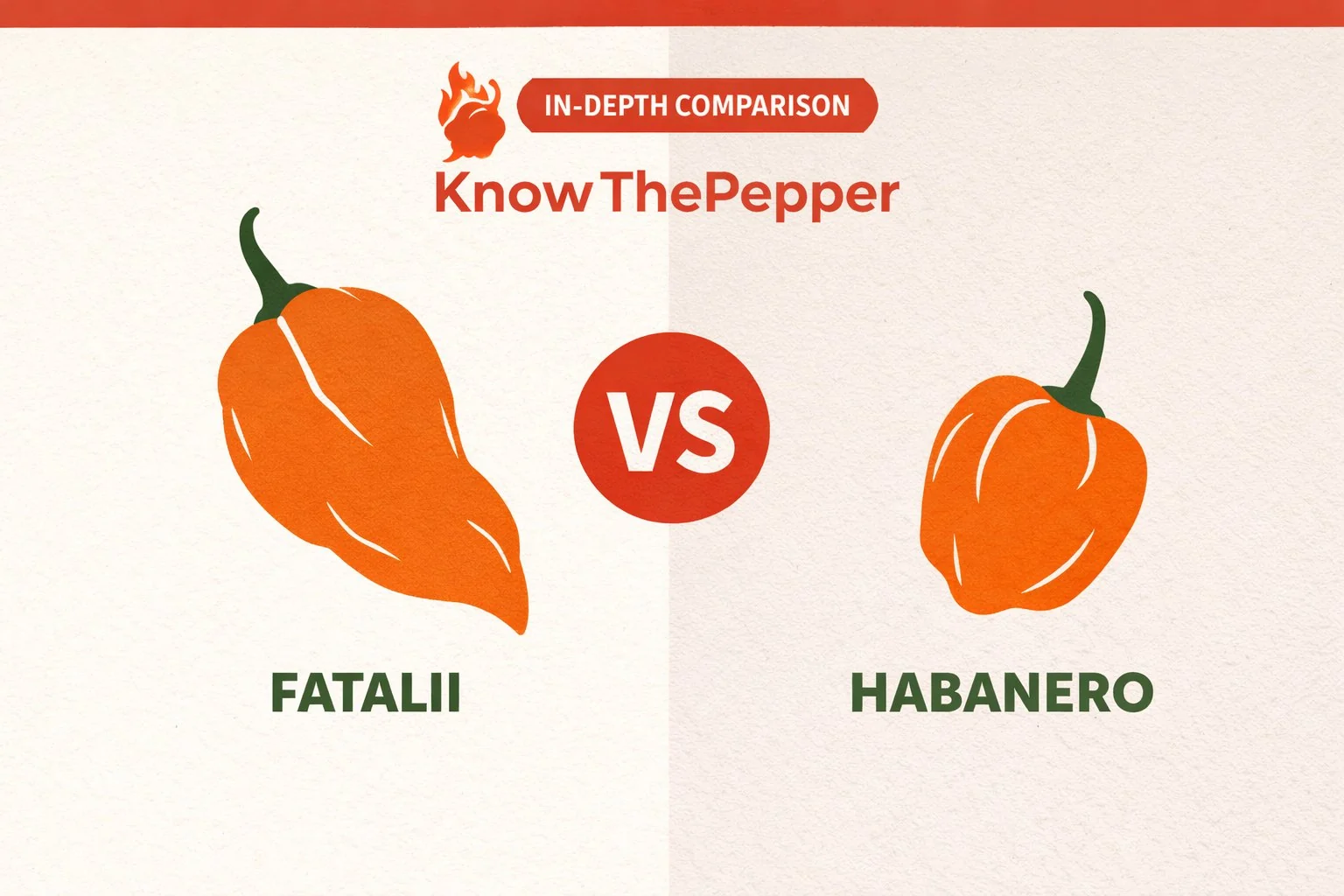
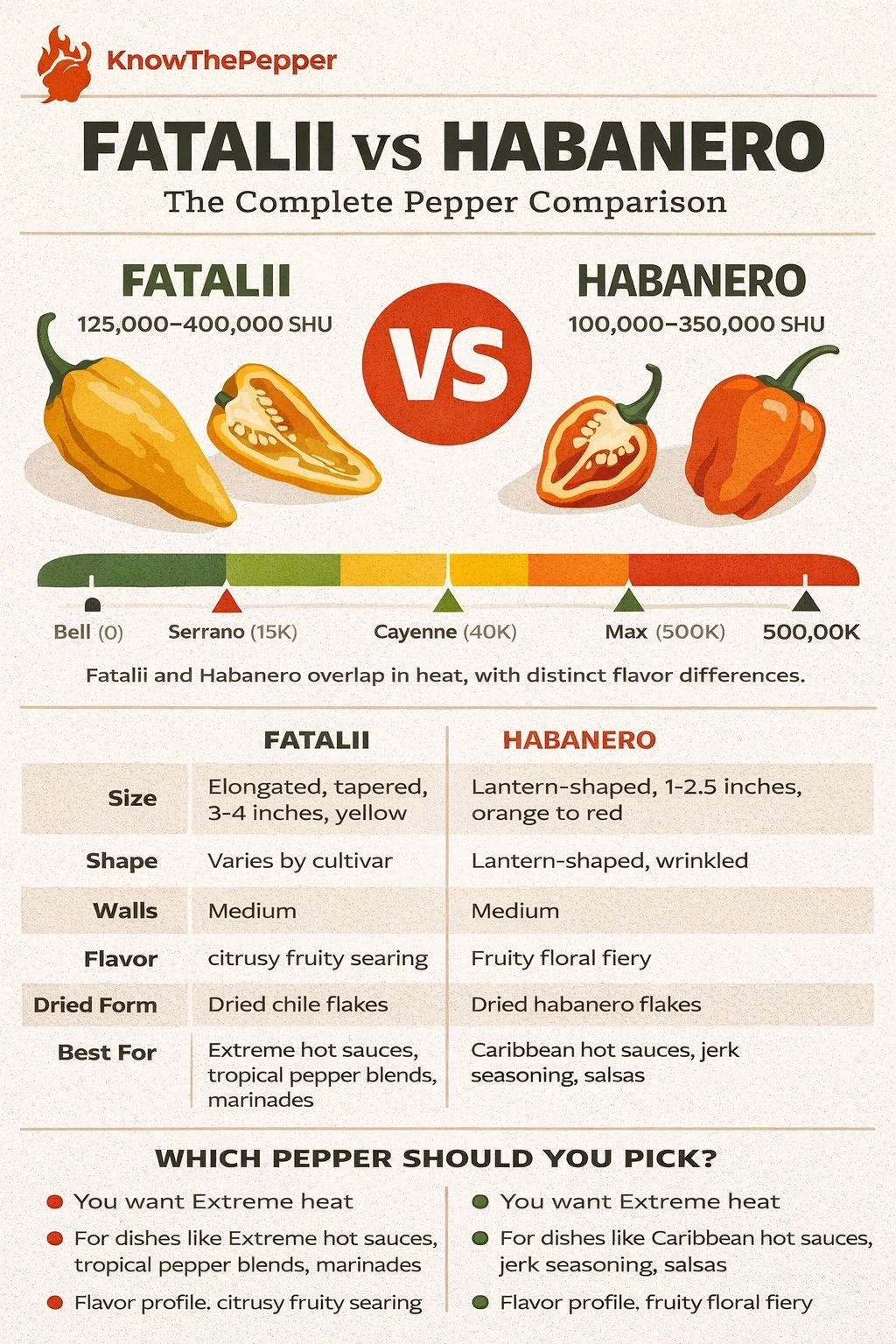
Fatalii measures 125K–400K SHU while Habanero registers 100K–350K SHU — roughly equal in heat. Fatalii is known for its citrusy and fruity flavor (C. chinense), while Habanero offers fruity and citrusy notes (C. chinense).
- Species: Both are C. chinense
- Best for: Fatalii excels in hot sauces and extreme dishes, Habanero in hot sauces and spicy dishes
Fatalii
Extra-HotHabanero
Extra-HotFatalii vs Habanero Comparison
Fatalii vs Habanero Heat Levels
Both peppers sit firmly in the extra-hot pepper bracket, but the fatalii has a higher ceiling. Fatalii ranges from 125,000 to 400,000 SHU, while habanero clocks in at 100,000 to 350,000 SHU — a meaningful gap at the top end even if their floors are close.
To put that in perspective against a more approachable reference: a typical Anaheim pepper measures around 500 to 2,500 SHU. That means a mid-range fatalii at roughly 260,000 SHU is about 100 times hotter than an Anaheim. A mid-range habanero at around 225,000 SHU is still approximately 90 times hotter than that same Anaheim. Neither pepper is forgiving.
The burn character differs despite the similar numbers. Fatalii heat tends to hit fast and concentrate at the front of the mouth and lips before spreading, with a sharp, almost electric quality. Habanero heat builds slightly more gradually and distributes across the palate and throat — not slow by any measure, but a touch more diffuse.
Both peppers get their fire from capsaicin and dihydrocapsaicin, which bind to the TRPV1 heat-response receptors in your mouth. The Scoville organoleptic method and its modern HPLC equivalent measure these compounds directly, which is why fatalii's higher capsaicin concentration produces that elevated ceiling. For heat-seekers, the fatalii edges ahead; for everyone else, the practical difference between a 300,000 SHU fatalii and a 300,000 SHU habanero is academic — both will demand respect.
Flavor Profile Comparison
Bite into a Fatalii and the first thing you notice is the aroma — a sharp, citrusy burst that smells more like a zest grater than a pepper.
Few peppers balance heat and flavor as well as the habanero.
On paper these two peppers sound nearly identical: fruity, citrusy, C. chinense aromatics. In practice, there are real distinctions worth knowing before you commit to a recipe.
Fatalii flavor leans toward sharp citrus — lemon and lime dominate, with a tropical brightness that some describe as almost floral. The fruitiness is clean and forward, not buried under sweetness. When you cut a fresh fatalii, the aroma hits immediately and carries a distinctive zesty quality that persists even through cooking.
Habanero flavor is fruitier in a rounder sense — apricot, peach, and mango notes appear alongside the citrus. The aroma is equally intense but warmer, with a slight earthiness that fatalii lacks. This is partly a function of the habanero's long cultivation history across the Mexican pepper-growing regions, where different microclimates and soil types shaped its flavor over centuries.
Cooking affects them differently. Habanero mellows into sauces and stews with a recognizable fruity backbone that anchors Caribbean and Yucatecan dishes. Fatalii's sharper citrus character can thin out under prolonged heat, making it better suited to quick-cook applications or raw preparations where that brightness stays intact.
For raw applications — fresh salsas, ceviche, sliced into dishes at the table — fatalii's lemon-forward punch is distinctive. For slow-cooked sauces where you want a fruity-hot depth, habanero's warmer profile integrates more smoothly. Neither is superior; they serve different flavor goals.
Culinary Uses for Fatalii and Habanero
Despite their similarities, these peppers have developed distinct culinary identities shaped by their origins.
Habanero is one of the most widely used superhot peppers in professional and home kitchens. It anchors classic Yucatecan salsas, Jamaican jerk seasoning, and countless commercial hot sauces. Its balanced fruity heat makes it approachable enough for dishes where you want heat present but not overwhelming everything else. Standard applications include: mango-habanero glazes for grilled proteins, habanero-lime crema, fermented hot sauces, and pepper jellies. For a closer look at how it stacks up against another popular Mexican superhot, the datil vs. habanero heat and flavor breakdown is worth reading.
Fatalii is less common in supermarkets but well-established in the artisan hot sauce world. Its citrus-dominant profile pairs exceptionally well with fish, shellfish, and chicken — anywhere you'd normally reach for lemon. Try it in a fatalii-citrus marinade, blended into a fresh mango salsa, or dehydrated and ground into a finishing powder for seafood dishes. The African pepper cultivation traditions that shaped fatalii's development also inform how it's used locally — often in simple preparations that let the raw flavor speak.
Substitution ratios: These two peppers swap 1:1 in most recipes. The fatalii's higher heat ceiling means you might reduce quantity by 10-15% when substituting it into recipes written for habanero, particularly if the recipe uses a large amount. Going the other direction — habanero in a fatalii recipe — is usually fine at equal quantities, with a slight reduction in that sharp citrus character.
For fresh salsas, either pepper works well raw. For cooked sauces, habanero is the safer choice if you want predictable results; fatalii rewards cooks who know their source peppers and can adjust on the fly. Both peppers work beautifully in fermented preparations — the fruity aromatics of C. chinense species peppers survive lacto-fermentation better than most other species.
Which Should You Choose?
If you grow your own or have access to specialty suppliers, fatalii is worth seeking out for its sharp citrus character — it does things in fresh preparations and seafood dishes that habanero simply cannot replicate. The fatalii vs. scotch bonnet comparison illustrates how dramatically citrus-forward fatalii is even relative to close C. chinense relatives.
Habanero wins on availability, versatility, and predictability. It has earned its place as the go-to superhot for a reason — the flavor is complex without being polarizing, and it integrates into an enormous range of dishes. The fresno vs. habanero contrast shows how much more heat and complexity habanero brings to the table compared to more common supermarket options.
For most cooks: habanero is the practical choice. For citrus-heat enthusiasts or anyone building a sauce around bright, acidic flavors: fatalii is worth the effort. At equal heat levels, the choice comes down entirely to flavor direction.
Can You Substitute One for the Other?
Proceed with caution. Fatalii is 1× hotter than Habanero.
Need a different option altogether? Search for peppers that match your target heat and flavor with precise swap ratios.
Growing Fatalii vs Habanero
If you’re deciding which pepper to grow at home, consider your climate and patience level. Fatalii and Habanero have different maturation times and temperature preferences. Hotter varieties generally need a longer, warmer growing season to develop their full capsaicin content. Our zone-based planting date tool can pinpoint the best sowing window for your area.
Fatalii seeds need warmth to germinate reliably — 80–85°F soil temperature is the target. Start them 10–12 weeks before last frost; this is a pepper that rewards patience during the seedling phase.
Once established, the plants grow to 2–3 feet tall with a somewhat open, branching structure. They prefer full sun and consistent moisture without waterlogging.
In containers, a 5-gallon pot works but a 7-gallon gives the root system more room and tends to produce heavier yields. The plants are somewhat sensitive to temperature swings, especially cool nights below 55°F, which can stall fruit development.
Starting habaneros from seed requires patience. Germination takes 10–21 days at soil temperatures of 80–85°F — a heat mat is not optional, it's essential.
Transplant seedlings outdoors only after nighttime temperatures stay consistently above 55°F. Habaneros are frost-intolerant and will stall in cold soil.
Full sun — at least 6–8 hours daily — is non-negotiable. In containers, use a 5-gallon minimum; habaneros develop substantial root systems.
History & Origin of Fatalii and Habanero
Both peppers carry centuries of culinary heritage. Fatalii traces its roots to Central Africa, while Habanero originates from Mexico. Understanding their backstory helps explain why each pepper developed its distinctive traits.
Buying & Storage
Whether you’re shopping for Fatalii or Habanero, the same quality indicators apply. Fresh peppers should feel firm and heavy for their size, with taut, glossy skin and no soft or wet spots. Minor stem cracks known as “corking” are perfectly normal and often indicate a mature, flavorful pod.
- Firm pods with taut skin and consistent color
- Should feel heavy relative to size
- Minor stem cracks (“corking”) are normal
- Avoid anything soft, shriveled, or with dark wet spots
- Fresh: Paper bag, crisper drawer — 1–2 weeks
- Frozen: Wash, dry, freeze on sheet pan — 6+ months
- Dried: Airtight, away from light — up to 1 year
The Verdict: Fatalii vs Habanero
Fatalii and Habanero sit in the same heat tier but serve different roles. Fatalii delivers its distinctive citrusy and fruity character. Habanero, with its fruity and citrusy profile, excels in everyday cooking.
Frequently Asked Questions
Related Comparisons
Sources pending verification.