Dundicut Pepper vs Kashmiri Chili: What's the Difference?
Dundicut and Kashmiri Chili are both South Asian staples, but they serve very different purposes in the kitchen. Kashmiri Chili sits at 1,000-2,000 SHU - a gentle warmth used primarily for its brilliant red color and mild sweetness - while Dundicut data remains less standardized in Western databases. Understanding their differences helps you pick the right pepper for color, heat, or flavor depth.

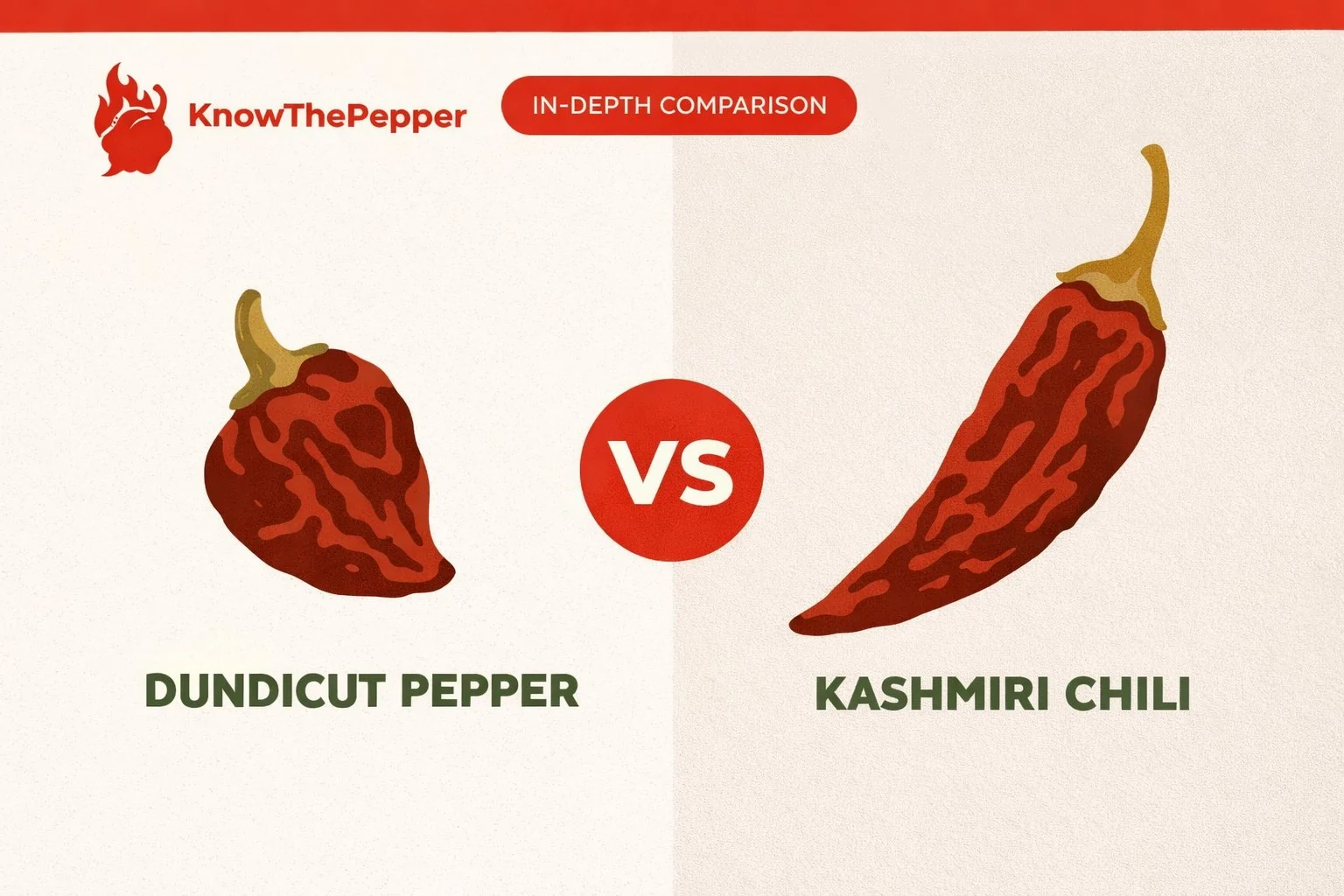
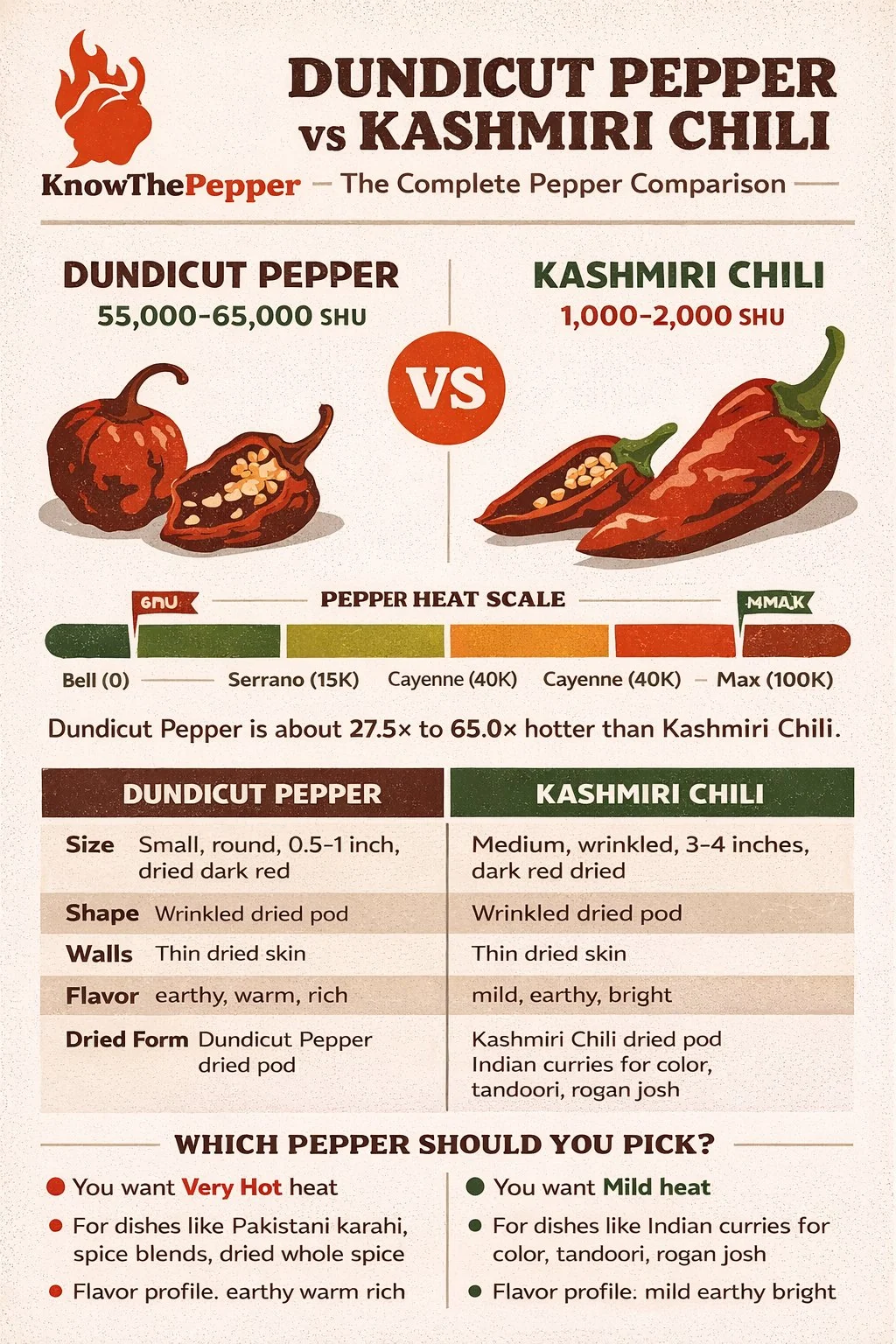
Dundicut Pepper measures 30K–65K SHU while Kashmiri Chili registers 1K–2K SHU — making Dundicut Pepper 33× hotter. Dundicut Pepper is known for its sharp and pungent flavor (C. annuum), while Kashmiri Chili offers mild and sweet notes (C. annuum).
- Heat difference: Dundicut Pepper is 33× hotter
- Species: Both are C. annuum
- Best for: Dundicut Pepper excels in hot sauces and extreme dishes, Kashmiri Chili in fresh salsas and mild recipes
Dundicut Pepper
HotKashmiri Chili
MediumDundicut Pepper vs Kashmiri Chili Comparison
Dundicut Pepper vs Kashmiri Chili Heat Levels
Kashmiri Chili registers 1,000-2,000 SHU on the Scoville rating system for measuring pepper heat, placing it firmly in the mild pepper intensity band - well below even the gentlest guajillo, which typically runs 2,500-5,000 SHU. That means a guajillo delivers roughly 1.5 to 5 times more heat than a Kashmiri Chili at comparable measurements.
The Dundicut pepper, also called the "Pakistani chili" or "lal mirch," is harder to pin down with Western SHU databases - its heat profile varies by source, but it is widely described by Pakistani cooks as noticeably hotter than Kashmiri Chili, with some sources placing it in the 25,000-65,000 SHU range. That would put Dundicut at roughly 10 to 65 times hotter than Kashmiri Chili depending on the specific batch.
The burn character differs too. Kashmiri Chili delivers a soft, almost imperceptible warmth that builds slowly and fades quickly - you barely register it as heat. Dundicut, by contrast, produces a sharper front-of-mouth bite that lingers. Neither pepper approaches the hot pepper intensity level of cayenne or bird's eye, but Dundicut is the one you'd actually feel at the dinner table. For dishes where color matters more than heat, Kashmiri wins. For dishes needing a real kick with South Asian character, Dundicut is the clear choice.
Flavor Profile Comparison
First time I cracked open a bag of dried Dundicits, the smell alone told me this wasn't a decorative chili.
Color is the whole point with Kashmiri chili.
Kashmiri Chili has a distinctive dried-earth aroma with faint sweetness - crack open a dried pod and you get something almost paprika-like, warm and slightly fruity without any aggressive spice smell. The aroma alone signals its purpose: this is a coloring and flavoring pepper, not a heat delivery system.
On the palate, Kashmiri Chili tastes mild and sweet with a subtle earthiness. Its flavor is often compared to a more complex sweet paprika - it adds depth without dominating. The mild sweet profile of Kashmiri Chili versus paprika's earthiness is a common point of confusion, and rightly so - they occupy similar culinary territory.
Dundicut has a more pungent dried-chili aroma, sharper and more resinous. The flavor is distinctly hotter with a slightly smoky, tangy edge that Kashmiri Chili lacks entirely. Pakistani cooking relies on this tang for dishes where Kashmiri would produce a flat, overly sweet result.
Both peppers contribute vivid red color to dishes - Kashmiri is famous for the brilliant scarlet it imparts to tikka masaMissing and korma without burning anyone. Dundicut contributes color too, but heat comes along for the ride. In terms of flavor differences between Kashmiri and cayenne-style peppers, the gap is enormous - Kashmiri sits closer to a sweet bell pepper in heat terms while delivering a uniquely South Asian flavor note that neither paprika nor cayenne can replicate exactly.
Culinary Uses for Dundicut Pepper and Kashmiri Chili
Kashmiri Chili is practically indispensable in Indian cooking for one specific reason: it gives dishes a restaurant-quality red color without making them painfully hot. Butter chicken, rogan josh, tandoori marinades - the characteristic orange-red color you see in these dishes typically comes from Kashmiri Chili powder, not from cayenne or generic red chili. Use 1-2 teaspoons per serving in marinades and sauces for color impact.
For substitution ratios when Kashmiri Chili is unavailable, the standard approach is a mix of sweet paprika with a small amount of cayenne - roughly 3 parts paprika to 1 part cayenne approximates both the color and the mild heat. The color and heat contrast between Kashmiri and paprika-type peppers is worth understanding before you substitute blindly.
Dundicut is the workhorse of Pakistani home cooking. Dried whole or ground, it appears in nihari, haleem, and various kebab spice blends. Because it carries real heat, you use it more sparingly - half the volume you'd use of Kashmiri Chili if you're trying to replicate a dish's heat level.
The two peppers can actually work together. Some cooks use Kashmiri Chili for color base and add Dundicut for heat calibration - this gives you control over both variables independently. For slow-cooked curries, add Kashmiri Chili early for color development and Dundicut toward the end to preserve its sharper heat character.
Dundicut works well dried and whole in tempering oil (tadka), where its heat blooms into the fat. Kashmiri Chili in the same application would give you color but almost no heat transfer. Both peppers belong to South Asian pepper traditions rooted in the subcontinent's regional cooking - understanding their distinct roles makes you a more precise cook.
Which Should You Choose?
For color without heat, Kashmiri Chili is unmatched - it's the go-to pepper for achieving that vivid red in tikka and korma dishes while keeping the dish accessible to heat-sensitive diners. Its 1,000-2,000 SHU range and mild sweetness make it essentially a flavor-and-color tool rather than a heat source.
Dundicut is the choice when you want authentic Pakistani heat character - a sharper, tangier bite that Kashmiri simply cannot provide. It works in dishes where the spice itself is part of the flavor identity, not just background warmth.
If you're cooking Indian restaurant-style dishes for a broad audience, keep Kashmiri Chili powder in your pantry as a staple. If you're cooking Pakistani home recipes or want that specific front-of-mouth heat with South Asian character, Dundicut earns its place. The peppers aren't really substitutes for each other - they solve different problems. The botanical diversity within C. annuum species explains how two peppers from the same broad family can serve such different culinary functions.
Can You Substitute One for the Other?
Proceed with caution. Dundicut Pepper is 33× hotter than Kashmiri Chili.
Need a different option altogether? Search for peppers that match your target heat and flavor with precise swap ratios.
Growing Dundicut Pepper vs Kashmiri Chili
If you’re deciding which pepper to grow at home, consider your climate and patience level. Dundicut Pepper and Kashmiri Chili have different maturation times and temperature preferences. Hotter varieties generally need a longer, warmer growing season to develop their full capsaicin content. Our zone-based planting date tool can pinpoint the best sowing window for your area.
Dundicut performs best in hot, dry climates — conditions that mirror its native Sindh region. In North American gardens, that means full sun, well-drained soil, and consistent warmth above 70°F at night before transplanting outdoors.
Start seeds indoors 10–12 weeks before last frost. Germination runs 10–21 days at soil temperatures between 80–85°F.
Drought tolerance is moderate. Consistent moisture during fruit set matters, but waterlogged roots will stunt the plant fast.
Kashmiri chili is a warm-season annual that performs best in USDA zones 9–11 outdoors, though it grows well as a container plant in cooler climates when brought inside before frost. Start seeds indoors 8–10 weeks before last frost, maintaining soil temperature around 75–85°F for germination.
The plants are relatively compact — typically 18–24 inches tall — and moderately productive. They prefer well-drained, slightly acidic soil with consistent moisture.
For those comparing cultivation approaches, the Aji Panca's similarly low-heat growing profile offers a useful parallel — both reward patience over intensity manipulation.
History & Origin of Dundicut Pepper and Kashmiri Chili
Both peppers carry centuries of culinary heritage. Dundicut Pepper traces its roots to India, while Kashmiri Chili originates from India. Understanding their backstory helps explain why each pepper developed its distinctive traits.
Buying & Storage
Whether you’re shopping for Dundicut Pepper or Kashmiri Chili, the same quality indicators apply. Fresh peppers should feel firm and heavy for their size, with taut, glossy skin and no soft or wet spots. Minor stem cracks known as “corking” are perfectly normal and often indicate a mature, flavorful pod.
- Firm pods with taut skin and consistent color
- Should feel heavy relative to size
- Minor stem cracks (“corking”) are normal
- Avoid anything soft, shriveled, or with dark wet spots
- Fresh: Paper bag, crisper drawer — 1–2 weeks
- Frozen: Wash, dry, freeze on sheet pan — 6+ months
- Dried: Airtight, away from light — up to 1 year
The Verdict: Dundicut Pepper vs Kashmiri Chili
Dundicut Pepper and Kashmiri Chili occupy very different positions on the heat spectrum. Dundicut Pepper delivers 33× more heat with its distinctive sharp and pungent character. Kashmiri Chili, with its mild and sweet profile, excels in everyday cooking.
Frequently Asked Questions
Related Comparisons
Sources pending verification.