De Arbol vs Tien Tsin: What's the Difference?
De Arbol and Tien Tsin are two dried chilies that look deceptively similar hanging in their respective markets — slender, red, and fiery — yet they come from opposite ends of the globe and behave quite differently in the pan. Both land in the high-heat range, but their flavor characters and best applications pull them in distinct culinary directions. This comparison breaks down what separates them and when to reach for each.

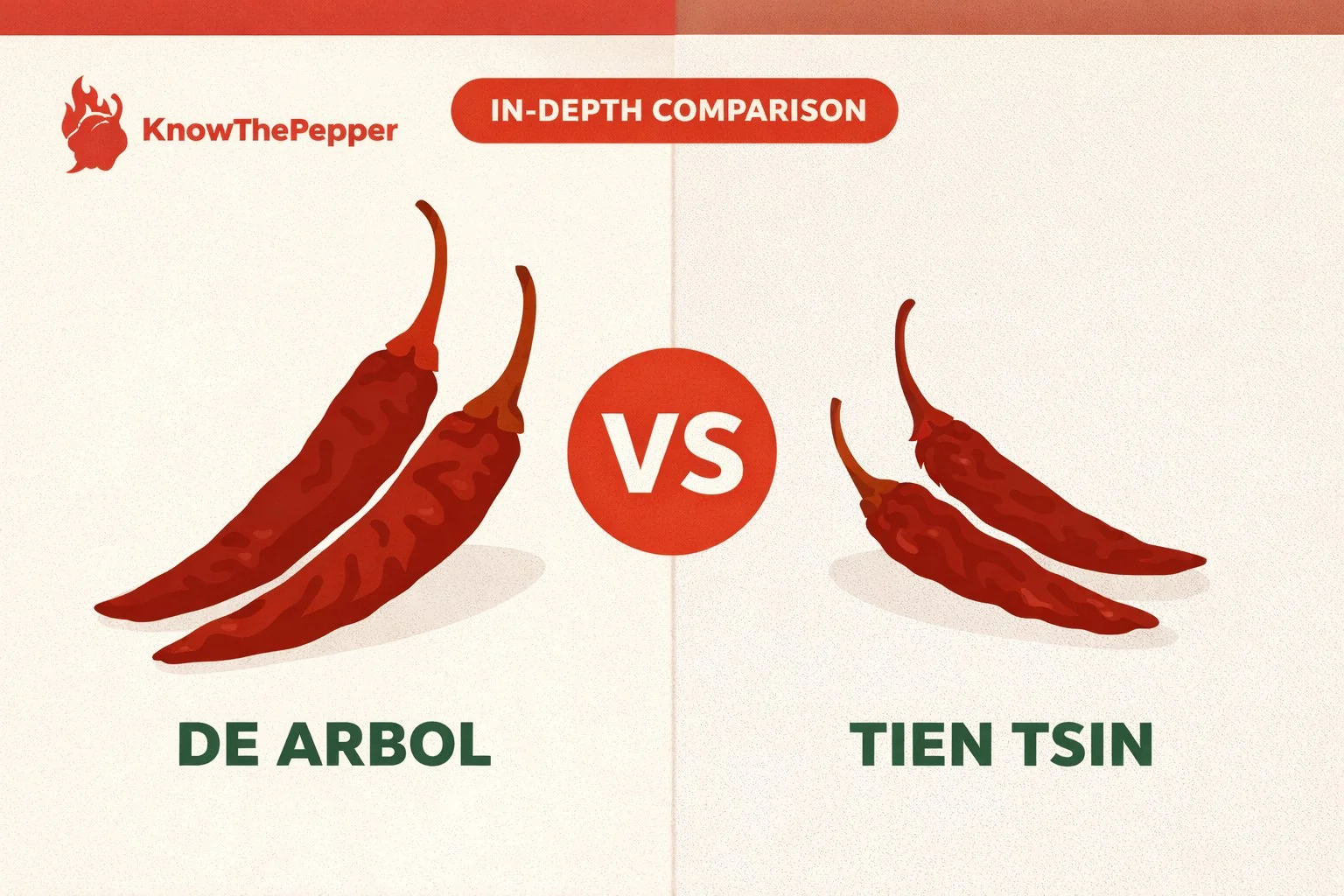
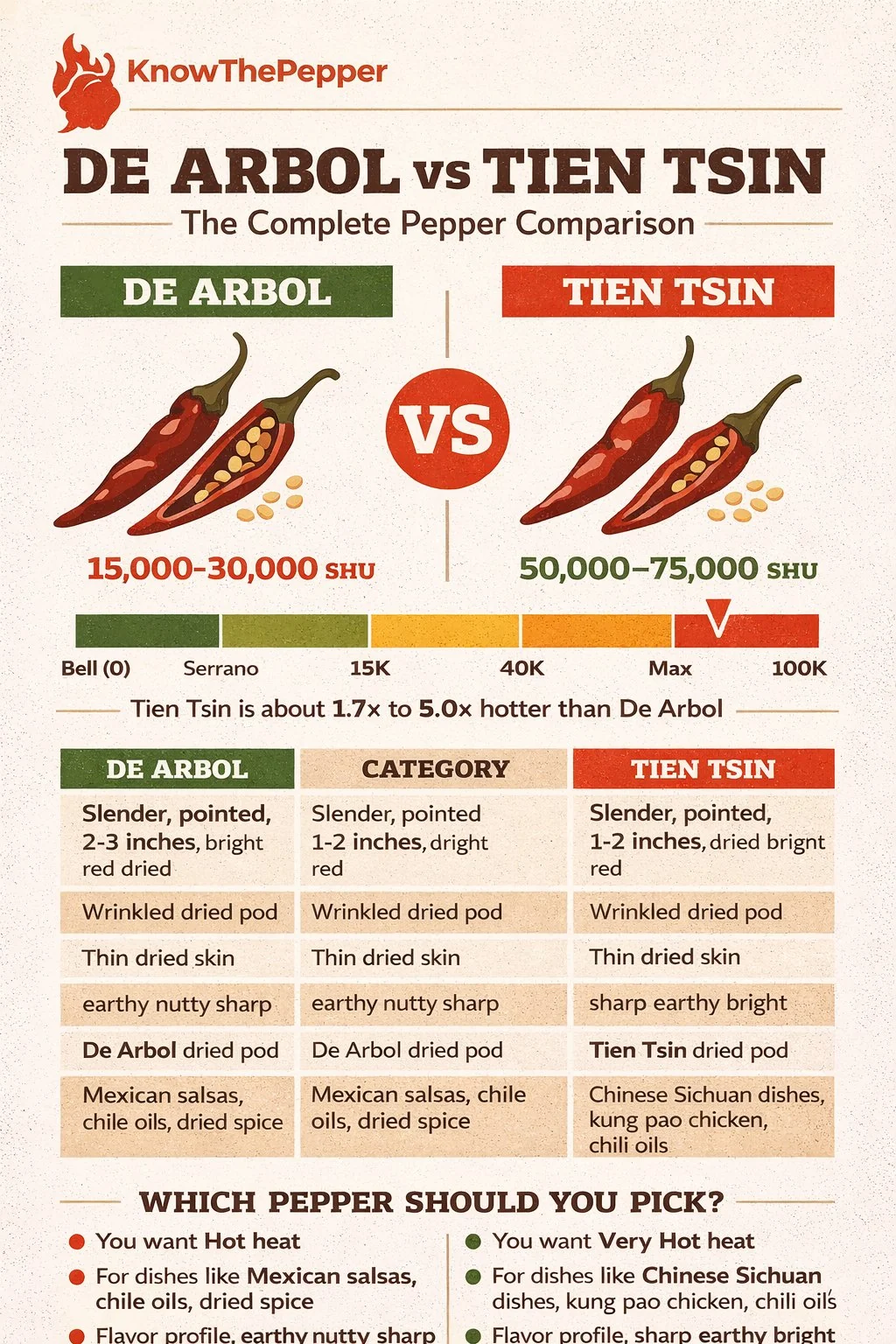
De Arbol measures 15K–30K SHU while Tien Tsin registers 50K–75K SHU — making Tien Tsin 3× hotter. De Arbol is known for its smoky and nutty flavor (C. annuum), while Tien Tsin offers sharp and smoky notes (C. annuum).
- Heat difference: Tien Tsin is 3× hotter
- Species: Both are C. annuum
- Best for: De Arbol excels in everyday cooking and salsas, Tien Tsin in hot sauces and spicy dishes
De Arbol vs Tien Tsin Comparison
De Arbol vs Tien Tsin Heat Levels
Both peppers deliver a heat that hits the back of the throat fast and lingers — the kind of dry, searing burn that makes you pause mid-bite rather than build slowly. Without confirmed SHU data on record for either variety, placing exact numbers is unreliable, but both are widely understood to sit in the 15,000-30,000 SHU range based on culinary consensus and regional classification.
To put that in perspective against a Fresno's moderate punch, which typically tops out around 10,000 SHU, both De Arbol and Tien Tsin run roughly 2-3 times hotter. That's meaningful — enough to shift a dish from pleasantly warm to genuinely spicy.
The heat character differs despite the similar intensity. De Arbol carries a clean, sharp heat with little warmup time. It fires quickly and sustains. Tien Tsin tends toward a slightly more diffuse heat — still aggressive, but with a touch more body behind it that some describe as fuller rather than purely sharp.
For anyone tracking where these fall on the Scoville testing and measurement spectrum, both occupy the upper-medium to lower-hot tier — comfortably above cayenne's typical floor and well below habanero territory. Neither is a novelty heat pepper; both are working chilies bred for everyday use in cuisines that take spice seriously.
Flavor Profile Comparison
The first time a de arbol found its way into my kitchen, I mistook it for a decorative dried chili.
Named after the northern Chinese city now spelled Tianjin, this slender **C.
Strip away the heat and these two peppers reveal genuinely different personalities. De Arbol — which translates roughly to 'tree chili' in Spanish — has a flavor profile that leans nutty and slightly smoky when dried, with a grassy brightness underneath. Toasting it in a dry pan draws out a subtle earthiness that's almost reminiscent of roasted nuts. It's a straightforward chili: hot, direct, and clean.
Tien Tsin, named for the Chinese city of Tianjin where it gained prominence, reads differently. Its dried form carries a faintly sweet, almost floral edge beneath the heat — a quality that works particularly well in oil-based preparations where that nuance can bloom. Stir-fried in a wok with aromatics, it releases something more complex than De Arbol typically offers.
Both are used primarily in their dried form, which concentrates flavor and changes how they interact with fat and liquid. De Arbol's grassiness makes it a natural fit for vinegar-based hot sauces and Mexican red salsas. Tien Tsin's subtle sweetness integrates better into soy-forward braises and Sichuan-style oil infusions.
Aroma matters here too. De Arbol has a sharper, more pungent dried chili smell. Tien Tsin smells slightly more rounded when you open the bag — less aggressive on the nose, which often signals how it will behave in a finished dish. Neither pepper dominates with fruit the way a habanero might, but Tien Tsin edges closer to it.
Culinary Uses for De Arbol and Tien Tsin
These two chilies overlap in surprising ways but diverge where it counts most — the cuisine they're built for.
De Arbol is a Mexican kitchen staple, foundational to red chili sauces, enchilada bases, and table salsas. It's almost always toasted before use — 30 seconds per side in a dry skillet until fragrant — then rehydrated in hot water or blended directly into a sauce. The key differences between De Arbol and its close relative serrano come down to fresh versus dried application; De Arbol is almost exclusively a dried-form chili. It also appears in birria, pozole rojo, and chile de arbol oil, the latter made by simmering whole dried pods in neutral oil until the heat and color transfer.
Tien Tsin belongs to Chinese cooking, particularly Sichuan and Hunan traditions. It's a primary component in kung pao chicken, mapo tofu preparations, and the aromatic base for chili oils. Like De Arbol, it performs best when briefly fried in hot oil — a technique that activates its fat-soluble capsaicinoids and releases flavor compounds that water-based methods miss. The side-by-side comparison of Tien Tsin with Facing Heaven chili shows how different regional Chinese chilies approach heat and aroma differently despite surface similarities.
Substitution works in a pinch but requires adjustment. Swap De Arbol for Tien Tsin at roughly a 1:1 ratio in oil-based preparations, but expect a slightly nuttier, less floral result. Going the other direction — Tien Tsin into a Mexican red sauce — produces something functional but with a mildly unfamiliar sweetness that purists will notice.
For the cayenne-versus-De Arbol flavor distinction, the main difference is texture and depth: cayenne is typically ground and one-dimensional; De Arbol as whole dried pods offers more complexity. Both De Arbol and Tien Tsin are better used whole or roughly crushed than ground, preserving their aromatic oils longer in storage.
Which Should You Choose?
Choosing between these two comes down to what cuisine you're cooking and what flavor register you want beneath the heat.
Reach for De Arbol when you need clean, assertive heat in Mexican or Latin American cooking — red salsas, enchilada sauce, chili oils with a nutty backbone. It's direct and reliable, with a flavor that doesn't compete with the other ingredients so much as amplify them.
Choose Tien Tsin when the dish is Chinese or Southeast Asian in spirit — stir-fries, chili oils, braises where a touch of floral sweetness behind the heat actually helps. It integrates differently in fat, releasing a slightly more complex aromatic signature.
For heat tolerance purposes, treat them as roughly equivalent — neither is going to surprise you if you're comfortable with the intensity feel of the upper-medium heat zone. Both reward toasting or frying in oil before use. Neither is a good candidate for raw applications. If your pantry has room for one dried red chili, your cuisine preference should make the call easy.
Can You Substitute One for the Other?
Yes — direct substitution works. De Arbol and Tien Tsin are close enough in heat to swap at roughly 1:1. The main difference will be flavor. For more swap options, explore ranked alternatives with conversion ratios.
Growing De Arbol vs Tien Tsin
If you’re deciding which pepper to grow at home, consider your climate and patience level. De Arbol and Tien Tsin have different maturation times and temperature preferences. Hotter varieties generally need a longer, warmer growing season to develop their full capsaicin content. Our zone-based planting date tool can pinpoint the best sowing window for your area.
De arbol is a reliable producer once established, though it demands heat to perform. Start seeds indoors 8-10 weeks before last frost — germination runs 10-14 days at soil temperatures around 80-85°F.
Transplant outdoors only after nighttime temps stay consistently above 55°F. De arbol needs full sun and well-drained soil; waterlogged roots stall growth quickly.
Pods mature from green to bright red in 80-90 days from transplant. The plants set fruit prolifically — a single established plant can carry dozens of pods simultaneously.
Tien Tsin is a rewarding garden pepper once it gets established, though germination requires patience. Start seeds indoors 8-10 weeks before last frost.
Transplant outdoors after all frost risk passes, spacing plants 18 inches apart in full sun. The plants grow to about 2-3 feet tall and tend to branch heavily, which means good airflow matters.
For a complete seed-starting germination walkthrough for hot pepper varieties, the basics apply here: consistent moisture without waterlogging, bright light from the start, and hardening off over 7-10 days before outdoor planting.
History & Origin of De Arbol and Tien Tsin
Both peppers carry centuries of culinary heritage. De Arbol traces its roots to Mexico, while Tien Tsin originates from China. Understanding their backstory helps explain why each pepper developed its distinctive traits.
Buying & Storage
Whether you’re shopping for De Arbol or Tien Tsin, the same quality indicators apply. Fresh peppers should feel firm and heavy for their size, with taut, glossy skin and no soft or wet spots. Minor stem cracks known as “corking” are perfectly normal and often indicate a mature, flavorful pod.
- Firm pods with taut skin and consistent color
- Should feel heavy relative to size
- Minor stem cracks (“corking”) are normal
- Avoid anything soft, shriveled, or with dark wet spots
- Fresh: Paper bag, crisper drawer — 1–2 weeks
- Frozen: Wash, dry, freeze on sheet pan — 6+ months
- Dried: Airtight, away from light — up to 1 year
The Verdict: De Arbol vs Tien Tsin
De Arbol and Tien Tsin sit in the same heat tier but serve different roles. Tien Tsin delivers 3× more heat with its distinctive sharp and smoky character. De Arbol, with its smoky and nutty profile, excels in everyday cooking.
Frequently Asked Questions
Related Comparisons
Sources pending verification.