Datil Pepper vs Scotch Bonnet: Key Differences Explained
The datil pepper and Scotch Bonnet share a surprising kinship - both belong to the C. chinense species and deliver fruity, tropical heat - but they diverge sharply in origin, documented heat range, and culinary tradition. The Scotch Bonnet clocks in at 100,000-350,000 SHU, making it a certified heavy hitter, while the datil's SHU data remains poorly documented despite its devoted following in St. Augustine, Florida. Understanding these differences helps you choose the right pepper for the right dish.

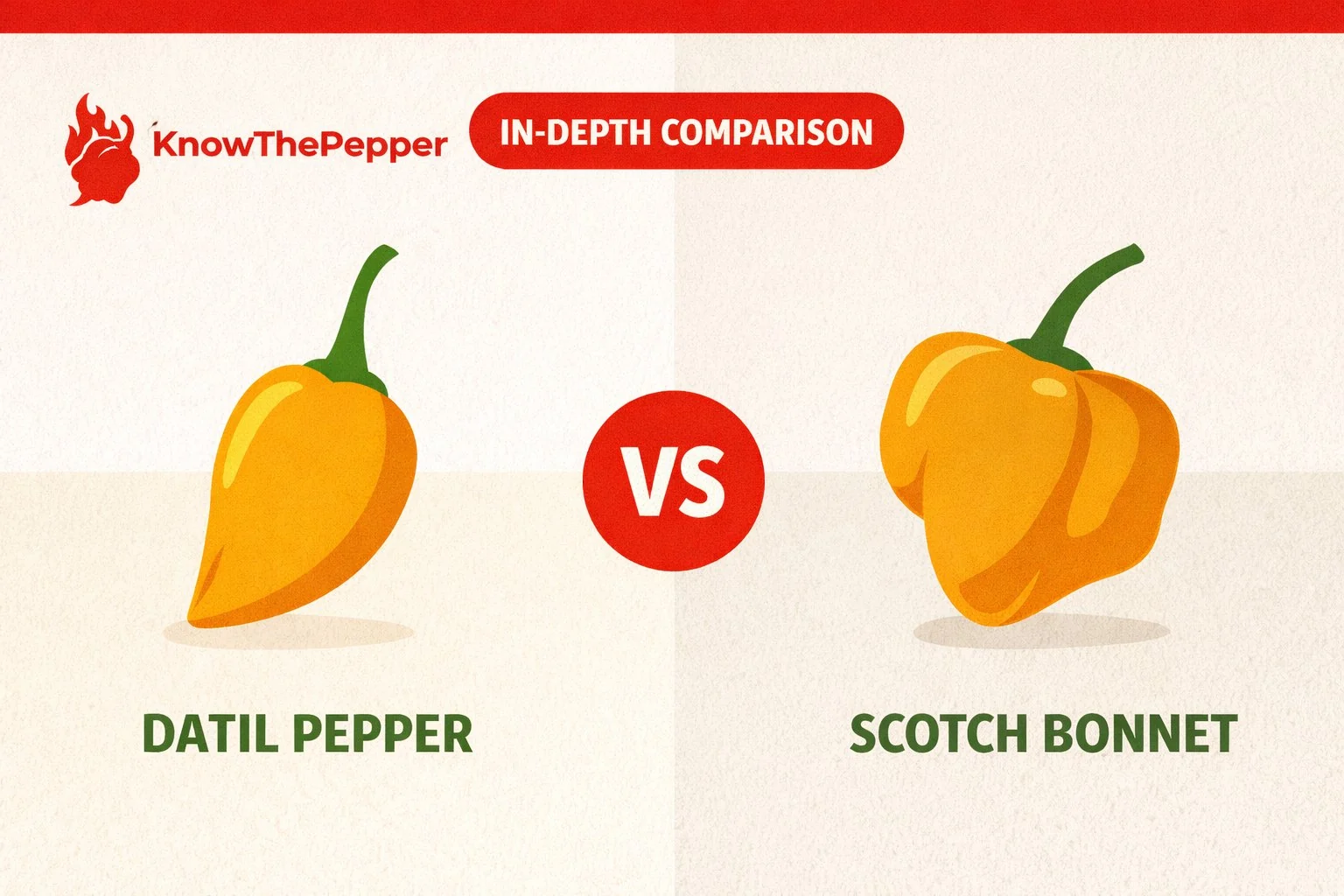
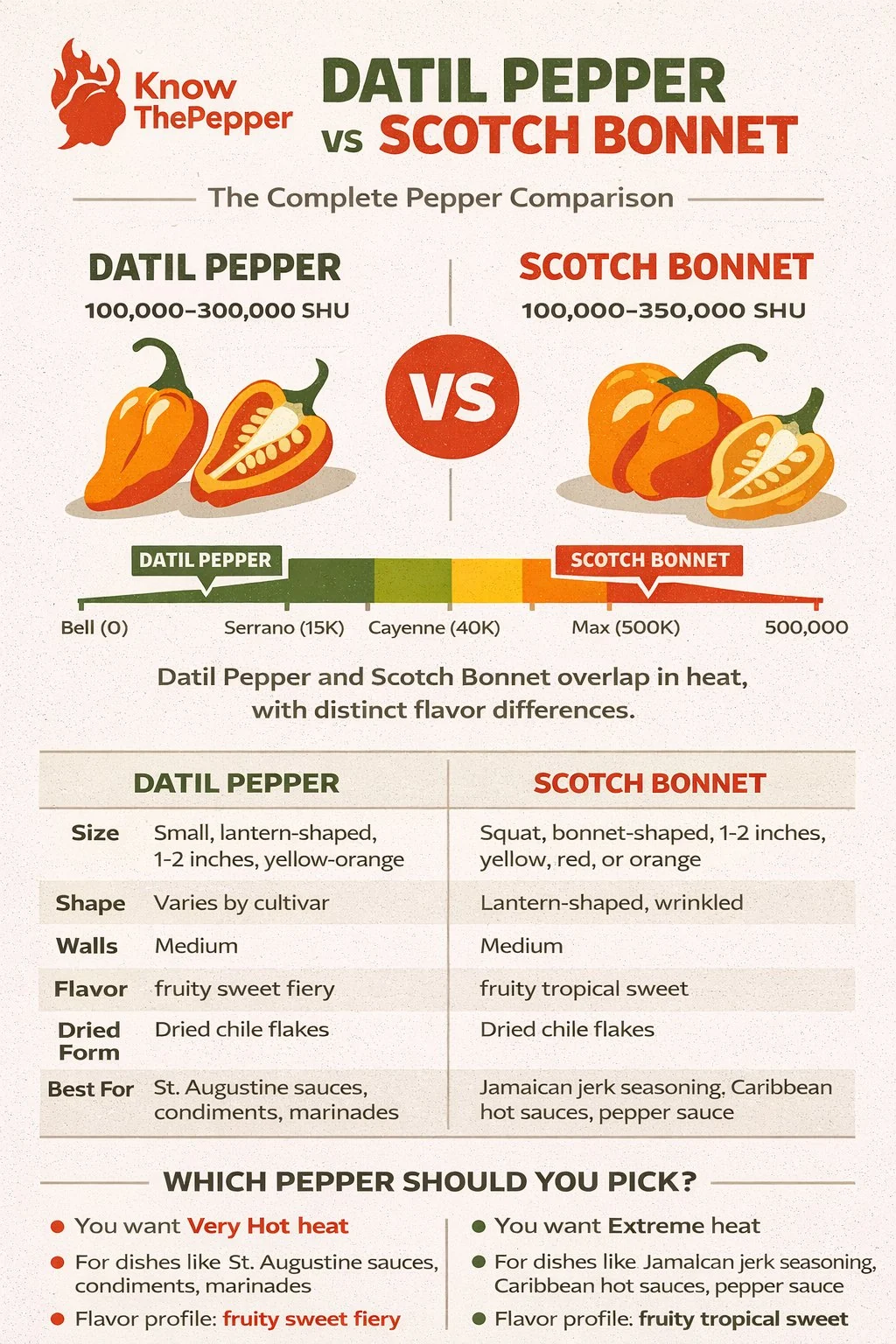
Datil Pepper measures 100K–300K SHU while Scotch Bonnet registers 100K–350K SHU — roughly equal in heat. Datil Pepper is known for its fruity and sweet flavor (C. chinense), while Scotch Bonnet offers fruity and tropical notes (C. chinense).
- Species: Both are C. chinense
- Best for: Datil Pepper excels in hot sauces and extreme dishes, Scotch Bonnet in hot sauces and spicy dishes
Datil Pepper
Extra-HotScotch Bonnet
Extra-HotDatil Pepper vs Scotch Bonnet Comparison
Datil Pepper vs Scotch Bonnet Heat Levels
Before getting into numbers, the heat character of these two peppers tells you a lot. Both hit with a fruity, almost candy-like sweetness before the burn arrives - that delayed-onset quality is a hallmark of C. chinense species chemistry, which both peppers share. The burn itself lands differently though: Scotch Bonnet tends to spread across the palate and linger, while datil devotees describe a slightly quicker, sharper spike.
On the Scoville scale, the Scotch Bonnet sits firmly in the extra-hot pepper category at 100,000-350,000 SHU. That puts it roughly 40 to 140 times hotter than a jalapeño (which averages around 2,500-8,000 SHU). At peak heat, a scorching Scotch Bonnet rivals lower-end habaneros - you can see that datil-to-habanero heat gap side-by-side for more context on where these peppers stack up.
The datil is trickier to pin down. Published SHU data is inconsistent and the pepper lacks the rigorous Scoville testing methodology that well-commercialized peppers receive. Anecdotal reports place it somewhere in the 100,000-300,000 SHU range - overlapping significantly with Scotch Bonnet territory - but treat that figure with appropriate skepticism until more systematic measurement catches up with this regional favorite.
Practically speaking, if you're cooking with either pepper, assume significant heat and taste as you go. Neither is a pepper you add by the handful.
Flavor Profile Comparison
Grown almost exclusively around St.
The first time I tasted a Scotch Bonnet raw — sliced thin, no gloves, rookie mistake — the sweetness hit before anything else.
Flavor is where these two peppers get genuinely interesting to compare. The Scotch Bonnet has one of the most distinctive flavor profiles in the pepper world - a pronounced tropical fruitiness that reads as mango, papaya, and citrus peel, with a slight floral note underneath. It's the reason Caribbean pepper cuisine built entire cooking traditions around it rather than substituting freely with other hot peppers. The flavor is irreplaceable in jerk seasoning and pepper sauces precisely because it does something no other pepper quite replicates.
The datil carries similar fruity-sweet notes - expected given the shared C. chinense genetics - but with a character that leans slightly more toward stone fruit and a tangy edge that some describe as almost apricot-like. St. Augustine, Florida's local food culture has developed a whole ecosystem of datil-based condiments that highlight this tanginess: datil pepper jellies, mustard-based sauces, and hot sauces that lean into the sweetness rather than fighting it.
Aroma-wise, both peppers are assertive. Cut a Scotch Bonnet and the smell fills the room - that tropical, slightly pungent fragrance is unmistakable. Datil shares the intensity but with slightly earthier undertones.
For cooking substitution, the flavor overlap is real enough that each can stand in for the other in many recipes, though a Scotch Bonnet brings more documented consistency in both heat and flavor. The aji dulce versus Scotch Bonnet flavor contrast is a useful reference point if you want to understand where the sweeter end of this flavor family sits.
Culinary Uses for Datil Pepper and Scotch Bonnet
Scotch Bonnet is the backbone of Caribbean cooking in a way few peppers match in their home region. Jamaican jerk marinades, Trinidadian pepper sauce, Bahamian hot sauce - the pepper shows up across island cuisines because its fruity heat integrates rather than just burns. It pairs naturally with allspice, thyme, citrus, and coconut, and it holds up to long cooking without losing its character entirely.
For Fatalii versus Scotch Bonnet comparisons in African-inspired cooking, both bring similar heat levels with fruity profiles - but Scotch Bonnet carries more culinary tradition behind it. Use it fresh in salsas, blended into sauces, or added whole to stews (remove before serving if you want flavor without full heat).
The datil pepper has a more localized culinary identity centered on northeastern Florida. St. Augustine restaurants and home cooks use it in ways that reflect the region's Minorcan heritage - datil pepper chowder, datil-spiked pilau, and a wide range of bottled hot sauces that have developed cult followings. The tangier edge of datil makes it particularly good in mustard-based and vinegar-forward preparations.
Substitution between the two works reasonably well in most applications. If a recipe calls for Scotch Bonnet and you have datil, use a 1:1 ratio and adjust based on the actual heat of your specific peppers. Going the other direction, Scotch Bonnet for datil works similarly - the flavor profile is close enough that most dishes won't suffer.
Fresh availability differs significantly. Scotch Bonnet appears in Caribbean grocery stores across North America and is increasingly stocked in mainstream supermarkets. Datil peppers outside of Florida are harder to source fresh - look for dried datil or datil-based hot sauces as the more accessible format. Both peppers also dry and powder well, concentrating heat and shifting the flavor profile toward something earthier and more intense.
Which Should You Choose?
If you're cooking Caribbean food - jerk chicken, pepper sauce, rice dishes with island flavors - Scotch Bonnet is the correct choice. Its flavor is documented, consistent, and genuinely difficult to replicate. The fruity-hot Scotch Bonnet profile evolved alongside those cuisines and it shows.
The datil pepper earns its place for anyone interested in American regional food traditions or who wants a C. chinense heat with a tangier, slightly different fruit character. It's the more obscure choice, which also makes it interesting - datil-based hot sauces make excellent gifts for pepper enthusiasts who think they've tried everything.
For pure heat reliability and global availability, Scotch Bonnet wins. For regional character and something off the beaten path, datil delivers. If you're building a pantry rather than chasing a specific recipe, a good datil hot sauce alongside whole frozen Scotch Bonnets covers most of what either pepper does well.
Can You Substitute One for the Other?
Proceed with caution. Scotch Bonnet is 1× hotter than Datil Pepper.
Need a different option altogether? Search for peppers that match your target heat and flavor with precise swap ratios.
Growing Datil Pepper vs Scotch Bonnet
If you’re deciding which pepper to grow at home, consider your climate and patience level. Datil Pepper and Scotch Bonnet have different maturation times and temperature preferences. Hotter varieties generally need a longer, warmer growing season to develop their full capsaicin content. Our zone-based planting date tool can pinpoint the best sowing window for your area.
Datils thrive in Florida's heat and humidity, but they'll produce well in any warm climate with a long growing season. Start seeds 8–10 weeks before your last frost date; germination is slow at 14–21 days, so patience matters more here than with faster-sprouting species.
Soil temperature for germination should stay between 80–85°F. Use a heat mat under your trays and don't rush transplanting — datil seedlings need to be well-established before going outdoors.
In the garden, space plants 18–24 inches apart in full sun. They prefer well-draining, slightly acidic soil (pH **6.
Scotch Bonnets need warmth from the start. Germination requires 80–85°F soil temperature; anything cooler and seeds stall for weeks.
These plants run long — expect 90–120 days from transplant to ripe fruit. They're not beginner peppers in terms of patience, but they're forgiving once established.
Soil should drain well. *C.
History & Origin of Datil Pepper and Scotch Bonnet
Both peppers carry centuries of culinary heritage. Datil Pepper traces its roots to USA, while Scotch Bonnet originates from Caribbean. Understanding their backstory helps explain why each pepper developed its distinctive traits.
Buying & Storage
Whether you’re shopping for Datil Pepper or Scotch Bonnet, the same quality indicators apply. Fresh peppers should feel firm and heavy for their size, with taut, glossy skin and no soft or wet spots. Minor stem cracks known as “corking” are perfectly normal and often indicate a mature, flavorful pod.
- Firm pods with taut skin and consistent color
- Should feel heavy relative to size
- Minor stem cracks (“corking”) are normal
- Avoid anything soft, shriveled, or with dark wet spots
- Fresh: Paper bag, crisper drawer — 1–2 weeks
- Frozen: Wash, dry, freeze on sheet pan — 6+ months
- Dried: Airtight, away from light — up to 1 year
The Verdict: Datil Pepper vs Scotch Bonnet
Datil Pepper and Scotch Bonnet sit in the same heat tier but serve different roles. Scotch Bonnet delivers its distinctive fruity and tropical character. Datil Pepper, with its fruity and sweet profile, excels in everyday cooking.
Frequently Asked Questions
Related Comparisons
Sources pending verification.