Datil Pepper vs Habanero: Side-by-Side Pepper Comparison
The datil and habanero are closely related C. chinense peppers sharing a similar heat ceiling, but the datil carries a sweeter, more complex flavor profile rooted in St. Augustine, Florida's food culture. Both land in the extra-hot range, though the habanero is better documented at 100,000-350,000 SHU. Understanding their differences helps you choose the right pepper for sauces, marinades, and hot preparations.

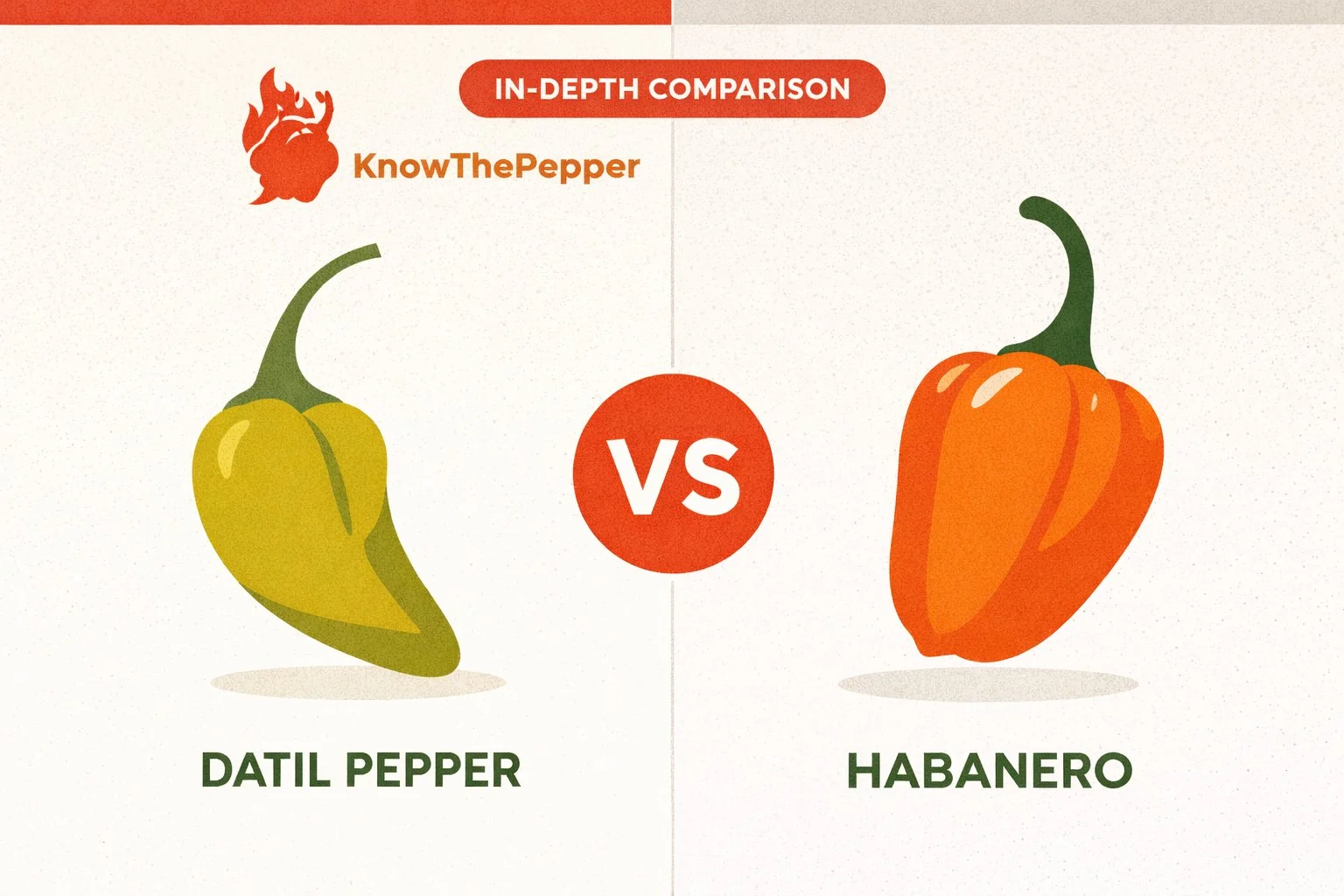
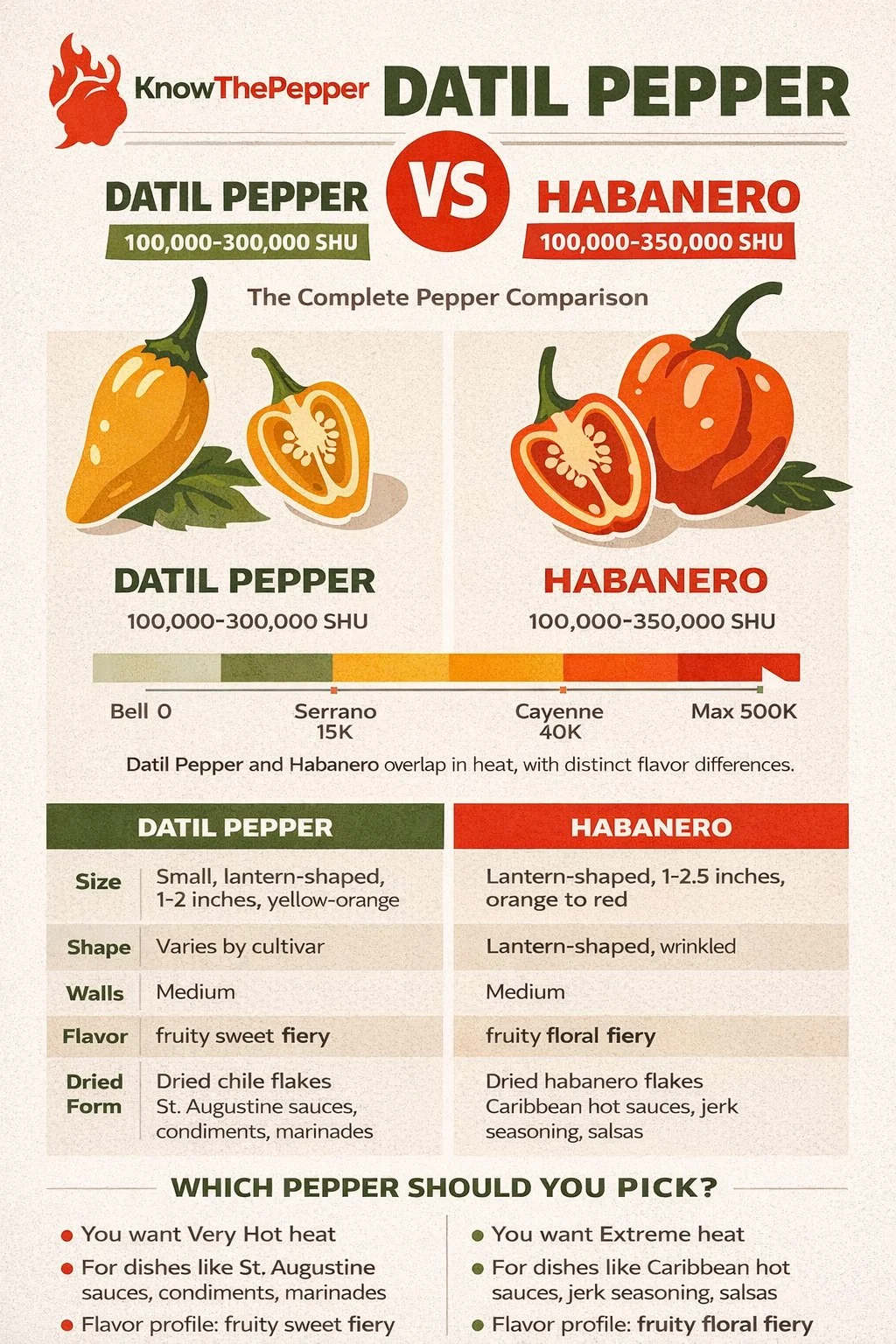
Datil Pepper measures 100K–300K SHU while Habanero registers 100K–350K SHU — roughly equal in heat. Datil Pepper is known for its fruity and sweet flavor (C. chinense), while Habanero offers fruity and citrusy notes (C. chinense).
- Species: Both are C. chinense
- Best for: Datil Pepper excels in hot sauces and extreme dishes, Habanero in hot sauces and spicy dishes
Datil Pepper
Extra-HotHabanero
Extra-HotDatil Pepper vs Habanero Comparison
Datil Pepper vs Habanero Heat Levels
The first time someone handed me a datil hot sauce at a Florida roadside stand, I assumed it was just a regional habanero knockoff. One bite changed that assumption fast.
The habanero is one of the most precisely measured peppers in the world, clocking in at 100,000-350,000 SHU - placing it firmly in the extra-hot pepper classification. To put that in context, a dried guajillo typically tops out around 5,000 SHU, meaning habaneros can hit 70 times hotter at their peak.
The datil pepper presents a more complicated picture. Reliable SHU data is harder to pin down for this regional variety, but most sources place it in a comparable range to the habanero - somewhere between 100,000 and 300,000 SHU. The C. chinense botanical species that both peppers belong to is well-known for producing this upper-tier heat, and the datil is no exception.
What separates them in practice is how that heat arrives. Habanero burn hits fast and spreads across the palate with an almost electric intensity. The datil's heat tends to build more gradually, with a slightly sweeter initial impression before the capsaicin fully registers. Neither pepper is forgiving - both demand respect in the kitchen. For a deeper look at why that burn activates so intensely, the chemistry behind C. chinense varieties is genuinely fascinating.
Flavor Profile Comparison
Grown almost exclusively around St.
Few peppers balance heat and flavor as well as the habanero.
Flavor is where these two peppers genuinely diverge, despite their shared genetics.
The habanero delivers a bold fruity and citrusy character that's become iconic in hot sauces worldwide. There's a brightness to it - almost like a tropical fruit that forgot to tone down the aggression. Mango, apricot, and citrus peel notes come through clearly, especially in fresh or lightly cooked preparations. The habanero's fruity citrus intensity becomes even more apparent when you compare it against other C. chinense varieties like the fatalii.
The datil shares that fruity foundation but adds a distinctly sweeter, almost tangy dimension that habanero lacks. Some describe it as slightly more floral. St. Augustine cooks have been working with this flavor for generations, and the local hot sauce tradition leans into that sweetness rather than fighting it.
Aroma-wise, both peppers are pungent when cut fresh - the habanero perhaps more aggressively so. The datil's scent has a subtle sweetness underneath the heat that makes it particularly well-suited to fruit-forward preparations.
In cooked applications, habanero holds its citrus character reasonably well but can turn slightly bitter if overcooked. The datil tends to mellow more gracefully with heat, which is part of why it works so well in slow-cooked Florida-style seafood dishes. For a direct look at how the datil stacks up against its closest Caribbean cousin, the datil vs. Scotch bonnet flavor matchup is worth reading.
Culinary Uses for Datil Pepper and Habanero
Both peppers excel in hot sauces, but their distinct flavor profiles push them toward different applications.
Habanero is the workhorse of commercial and home hot sauce production. Its fruity heat from Mexican pepper traditions pairs exceptionally well with mango, pineapple, and citrus-based salsas. It's the go-to for Caribbean jerk marinades, and it handles vinegar-based preservation well without losing its character. A little goes a long way - even a quarter of a fresh habanero can dominate a pot of salsa.
The datil shines in the specific culinary context it evolved within: Florida Minorcan cooking. Datil-based sauces are a staple condiment in St. Augustine, used on everything from shrimp to pilau. The sweeter profile makes it more forgiving in compound butters, cream-based sauces, and glazes where habanero's sharper citrus edge might clash.
Substitution ratios: These two are close enough that a 1:1 swap works in most recipes. If substituting datil for habanero in a recipe expecting that bright citrus punch, consider adding a small squeeze of lime juice to compensate. Going the other direction - habanero for datil - you may want to add a pinch of sugar to approximate the datil's natural sweetness.
For hot sauce making, datil peppers produce a sauce with more depth and less sharp acidity than a straight habanero sauce. Combining both peppers (roughly 60% datil, 40% habanero) creates a sauce that captures the best of both - sweetness, complexity, and that unmistakable C. chinense heat.
For the cayenne vs. habanero heat difference, habanero is dramatically hotter - keep that in mind if you're scaling recipes that call for cayenne as a base. Anyone interested in growing either variety should check out a step-by-step pepper growing walkthrough - both are manageable in containers with the right care.
Which Should You Choose?
Choose the habanero when you need a reliable, widely available pepper with a sharp fruity-citrus heat that performs consistently in commercial-style sauces, salsas, and marinades. It's easier to source, better documented, and its flavor is broadly understood across cuisines.
Choose the datil when you want that same heat ceiling paired with a sweeter, more complex flavor that suits seafood dishes, glazes, and Florida-style cooking. It's the more interesting pepper from a flavor standpoint, though harder to find outside of specialty stores or online.
For heat-sensitive cooks, neither is a beginner pepper - both sit in the upper heat classification and should be handled accordingly. Gloves when cutting, ventilation when cooking.
If you're building a hot sauce pantry, both deserve a spot. They're complementary rather than redundant - the habanero for brightness and punch, the datil for depth and sweetness. The Scoville unit position of both peppers confirms they're peers in intensity, even if their personalities differ.
Can You Substitute One for the Other?
Proceed with caution. Habanero is 1× hotter than Datil Pepper.
Need a different option altogether? Search for peppers that match your target heat and flavor with precise swap ratios.
Growing Datil Pepper vs Habanero
If you’re deciding which pepper to grow at home, consider your climate and patience level. Datil Pepper and Habanero have different maturation times and temperature preferences. Hotter varieties generally need a longer, warmer growing season to develop their full capsaicin content. Our zone-based planting date tool can pinpoint the best sowing window for your area.
Datils thrive in Florida's heat and humidity, but they'll produce well in any warm climate with a long growing season. Start seeds 8–10 weeks before your last frost date; germination is slow at 14–21 days, so patience matters more here than with faster-sprouting species.
Soil temperature for germination should stay between 80–85°F. Use a heat mat under your trays and don't rush transplanting — datil seedlings need to be well-established before going outdoors.
In the garden, space plants 18–24 inches apart in full sun. They prefer well-draining, slightly acidic soil (pH **6.
Starting habaneros from seed requires patience. Germination takes 10–21 days at soil temperatures of 80–85°F — a heat mat is not optional, it's essential.
Transplant seedlings outdoors only after nighttime temperatures stay consistently above 55°F. Habaneros are frost-intolerant and will stall in cold soil.
Full sun — at least 6–8 hours daily — is non-negotiable. In containers, use a 5-gallon minimum; habaneros develop substantial root systems.
History & Origin of Datil Pepper and Habanero
Both peppers carry centuries of culinary heritage. Datil Pepper traces its roots to USA, while Habanero originates from Mexico. Understanding their backstory helps explain why each pepper developed its distinctive traits.
Buying & Storage
Whether you’re shopping for Datil Pepper or Habanero, the same quality indicators apply. Fresh peppers should feel firm and heavy for their size, with taut, glossy skin and no soft or wet spots. Minor stem cracks known as “corking” are perfectly normal and often indicate a mature, flavorful pod.
- Firm pods with taut skin and consistent color
- Should feel heavy relative to size
- Minor stem cracks (“corking”) are normal
- Avoid anything soft, shriveled, or with dark wet spots
- Fresh: Paper bag, crisper drawer — 1–2 weeks
- Frozen: Wash, dry, freeze on sheet pan — 6+ months
- Dried: Airtight, away from light — up to 1 year
The Verdict: Datil Pepper vs Habanero
Datil Pepper and Habanero sit in the same heat tier but serve different roles. Habanero delivers its distinctive fruity and citrusy character. Datil Pepper, with its fruity and sweet profile, excels in everyday cooking.
Frequently Asked Questions
Related Comparisons
Sources pending verification.