Chipotle vs Pasilla Pepper – Heat & Flavor Compared
Chipotle and pasilla are both cornerstones of Mexican cooking, but they arrive at the table through completely different paths. Chipotle is a smoke-dried jalapeño with a bold, campfire-like heat; pasilla is a dried chilaca with earthy, raisin-forward depth and mild warmth. Choosing between them often comes down to whether you want smoke or subtlety driving the dish.

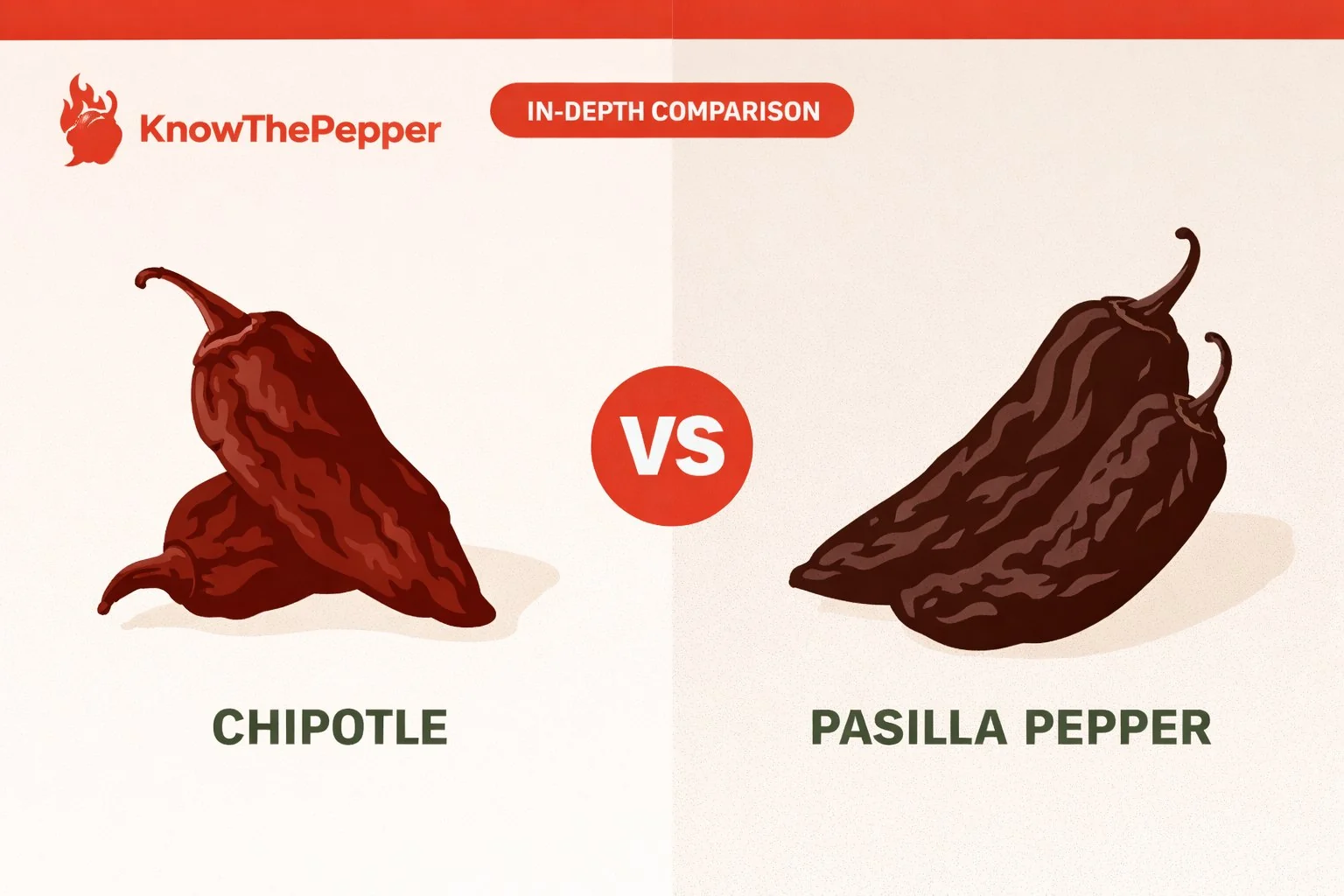
Chipotle measures 3K–8K SHU while Pasilla Pepper registers 1K–3K SHU — making Chipotle 3× hotter. Chipotle is known for its smoky and sweet flavor (C. annuum), while Pasilla Pepper offers earthy and rich notes (C. annuum).
- Heat difference: Chipotle is 3× hotter
- Species: Both are C. annuum
- Best for: Chipotle excels in everyday cooking and salsas, Pasilla Pepper in fresh salsas and mild recipes
Chipotle
MediumPasilla Pepper
MediumChipotle vs Pasilla Pepper Comparison
Chipotle vs Pasilla Pepper Heat Levels
Before the numbers, consider what each pepper actually tastes like when heat hits — because the burn character matters as much as the intensity.
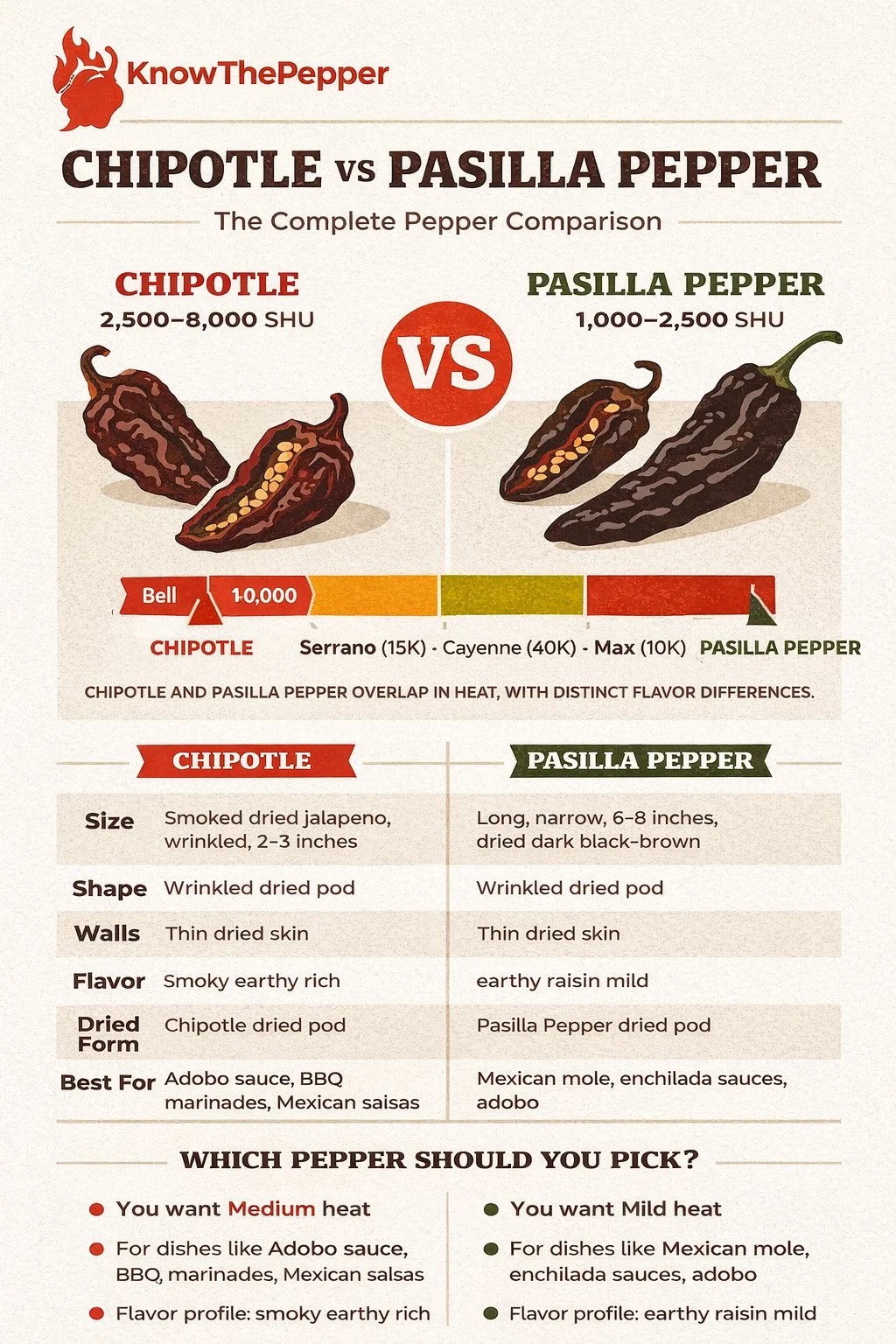
Chipotle delivers heat that arrives quickly and sits on the back of the palate. The smoke amplifies the sensation, making the burn feel more aggressive than the Scoville numbers alone would suggest. Chipotle ranges from 2,500 to 8,000 SHU, which puts it squarely in the same territory as the fresh jalapeño it comes from — roughly 0.5x to 1.5x a typical jalapeño depending on the individual pod.
Pasilla is considerably milder. Its range of 1,000 to 2,500 SHU places it at the lower end of the mild-to-medium SHU bracket, and the heat itself is gentle — a slow, diffuse warmth that builds rather than bites. Compared to jalapeño, pasilla lands at roughly 0.2x to 0.5x the heat, making it one of the more approachable dried chiles in the Mexican pantry.
The gap between them is real but not dramatic. Chipotle at its hottest is about 3x hotter than pasilla at its hottest. For most cooks, this means pasilla works in dishes where heat should stay in the background, while chipotle is the choice when you want warmth to be part of the experience. Neither pepper approaches the extra-hot pepper intensity zone — both are firmly accessible.
For a closer look at how chipotle's heat stacks up against its dried-chile relatives, the ancho vs. chipotle heat gap is worth reading.
Flavor Profile Comparison
The first time I tasted a chipotle straight from an adobo can, the smokiness hit before the heat — a slow, woody burn that felt nothing like the fresh medium-heat jalapeño it came from.
Pasilla sits in the medium heat intensity range — warm enough to notice, gentle enough to let flavor lead.
Flavor is where this comparison gets genuinely interesting — these two peppers occupy almost opposite ends of the dried-chile flavor spectrum.
Chipotle is smoke first, everything else second. The drying process — traditionally done over mesquite or pecan wood for days — transforms the fresh jalapeño's grassy, bright character into something deep and almost meaty. There's a leathery quality, a hint of chocolate, and a persistent smokiness that lingers long after the heat fades. Chipotle morita (the smaller, darker variety) skews slightly fruitier; chipotle meco runs drier and more intensely smoky.
Pasilla starts from a completely different base. The chilaca-to-pasilla transformation involves air-drying rather than smoking, which concentrates the fresh pepper's natural sugars. The result is a complex, wine-like flavor with notes of dried fruit, cocoa, and mild licorice. Some describe it as raisin-adjacent, others pick up on a faint berry quality. There's no smoke at all — just layered earthiness with a herbal undertone.
In practice, chipotle dominates whatever it's added to. Pasilla integrates — it rounds out a sauce rather than announcing itself. This makes pasilla the better choice for complex mole-style preparations where you want multiple chiles contributing different notes. Chipotle works best when smoke is a deliberate design choice, not background texture.
The ancho vs. pasilla flavor comparison is a useful reference point if you're building out a dried-chile pantry and want to understand how pasilla sits relative to its closest cousin.
Culinary Uses for Chipotle and Pasilla Pepper
These two peppers rarely compete for the same role in a recipe — their flavor profiles push them toward different applications.
Chipotle shines anywhere smoke makes sense: braised meats, barbecue sauces, bean dishes, marinades, and anything with tomato as a base. Chipotle in adobo (the canned version) is one of the most convenient pantry items in Mexican-American cooking — blend one or two chiles with the sauce and you have an instant smoky base. For dry applications, ground chipotle powder works well as a rub component for grilled chicken or pork. A single chipotle chile adds enough smoke and heat for a pot of black beans serving four.
Pasilla is a workhorse in traditional mole negro and mole rojo, where its earthy depth helps anchor the sauce without competing with the other dried chiles. It's also excellent in enchilada sauce — toast it briefly in a dry skillet, rehydrate in warm water for 20 minutes, then blend with garlic, cumin, and a splash of the soaking liquid. The result is a sauce with genuine complexity. Pasilla also pairs well with mushrooms, squash, and dark chocolate in vegetarian preparations.
Substitution guidance: If you need chipotle and don't have it, smoked paprika plus a pinch of cayenne approximates the profile — use 1 teaspoon smoked paprika per chipotle chile. For pasilla substitutions, dried ancho chile swap options are your best starting point, as ancho shares the fruity-earthy character without the smoke.
When cooking with either pepper, toasting before rehydrating is worth the extra two minutes — it wakes up the oils and sharpens the flavor considerably. Both peppers store well in an airtight container for up to a year.
Which Should You Choose?
Pick chipotle when smoke is the point. It's the right tool for marinades, braises, and any dish where you want that campfire character doing real work. The heat is approachable enough that it won't overwhelm, but the smokiness is assertive — it will always make itself known.
Pick pasilla when you want depth without dominance. Its earthy, raisin-like complexity makes it ideal for sauces that need layers rather than a single loud note. It's also the friendlier option for heat-sensitive guests — the mild warmth rarely surprises anyone.
For cooks building a dried-chile pantry from scratch, these two actually complement each other rather than duplicate. Keep both: chipotle for weeknight beans and smoky salsas, pasilla for weekend mole projects and enchilada sauce. If you can only buy one, chipotle is the more versatile pantry staple simply because of how many cuisines reach for smoky heat. But pasilla is the one that serious Mexican cooking reaches for when complexity matters more than convenience.
Can You Substitute One for the Other?
Yes — direct substitution works. Chipotle and Pasilla Pepper are close enough in heat to swap at roughly 1:1. The main difference will be flavor. For more swap options, explore ranked alternatives with conversion ratios.
Growing Chipotle vs Pasilla Pepper
If you’re deciding which pepper to grow at home, consider your climate and patience level. Chipotle and Pasilla Pepper have different maturation times and temperature preferences. Hotter varieties generally need a longer, warmer growing season to develop their full capsaicin content. Our zone-based planting date tool can pinpoint the best sowing window for your area.
Growing chipotle starts with growing jalapeños — because that is exactly what they are before smoking. The distinction is purely in post-harvest processing.
Capsicum annuum jalapeños thrive in well-drained soil with full sun and consistent moisture. Start seeds indoors 8–10 weeks before your last frost date.
For chipotles specifically, you want the peppers to ripen fully to red before harvest. Most growers pick jalapeños green, but chipotle production requires patience — leave them on the plant until they turn deep red and the skin begins to show slight wrinkling.
Pasilla plants are tall growers, often reaching 24–36 inches with good support. Start seeds indoors 8–10 weeks before last frost — the long growing season (roughly 80–85 days to maturity) means early starts matter.
Transplant after soil temperatures stabilize above 60°F. Space plants 18–24 inches apart — they branch outward as they mature, and crowding invites fungal issues on the dense foliage.
Water consistently but avoid waterlogged soil. These plants are somewhat drought-tolerant once established, but irregular watering during pod development causes blossom drop and misshapen fruit.
History & Origin of Chipotle and Pasilla Pepper
Both peppers carry centuries of culinary heritage. Chipotle traces its roots to Mexico, while Pasilla Pepper originates from Mexico. Understanding their backstory helps explain why each pepper developed its distinctive traits.
Buying & Storage
Whether you’re shopping for Chipotle or Pasilla Pepper, the same quality indicators apply. Fresh peppers should feel firm and heavy for their size, with taut, glossy skin and no soft or wet spots. Minor stem cracks known as “corking” are perfectly normal and often indicate a mature, flavorful pod.
- Firm pods with taut skin and consistent color
- Should feel heavy relative to size
- Minor stem cracks (“corking”) are normal
- Avoid anything soft, shriveled, or with dark wet spots
- Fresh: Paper bag, crisper drawer — 1–2 weeks
- Frozen: Wash, dry, freeze on sheet pan — 6+ months
- Dried: Airtight, away from light — up to 1 year
The Verdict: Chipotle vs Pasilla Pepper
Chipotle and Pasilla Pepper sit in the same heat tier but serve different roles. Chipotle delivers 3× more heat with its distinctive smoky and sweet character. Pasilla Pepper, with its earthy and rich profile, excels in everyday cooking.
Frequently Asked Questions
Related Comparisons
Sources pending verification.