Calabrian Chili vs Peperoncino: Key Differences Explained
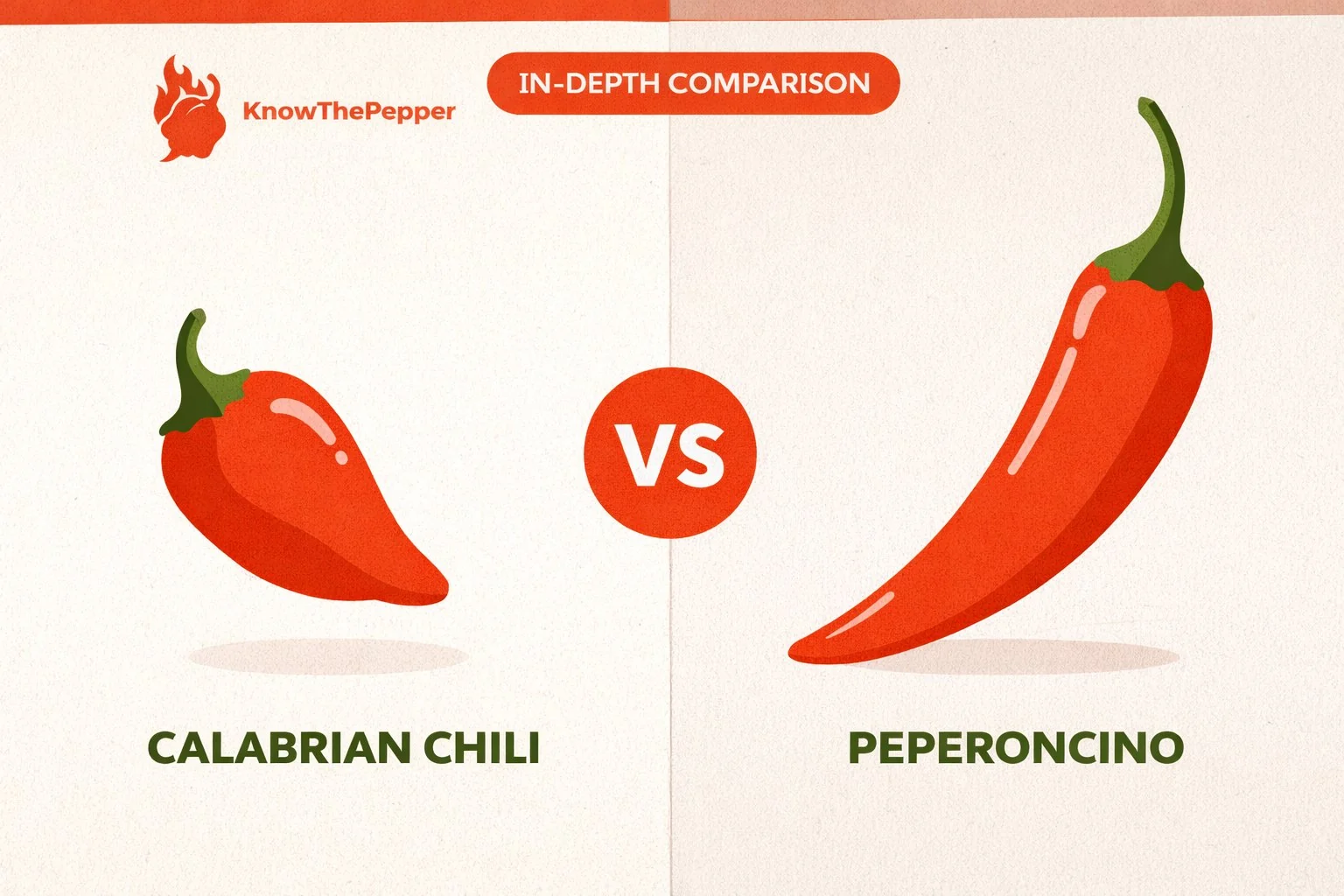
Both the Calabrian chili and peperoncino hail from Italy and belong to C. annuum, but they occupy different heat and flavor territory. Calabrian chili runs 25,000-40,000 SHU with a fruity, smoky depth, while peperoncino sits at 15,000-30,000 SHU with a brighter, sharper bite. The overlap in their ranges masks real differences in how each performs in the kitchen.

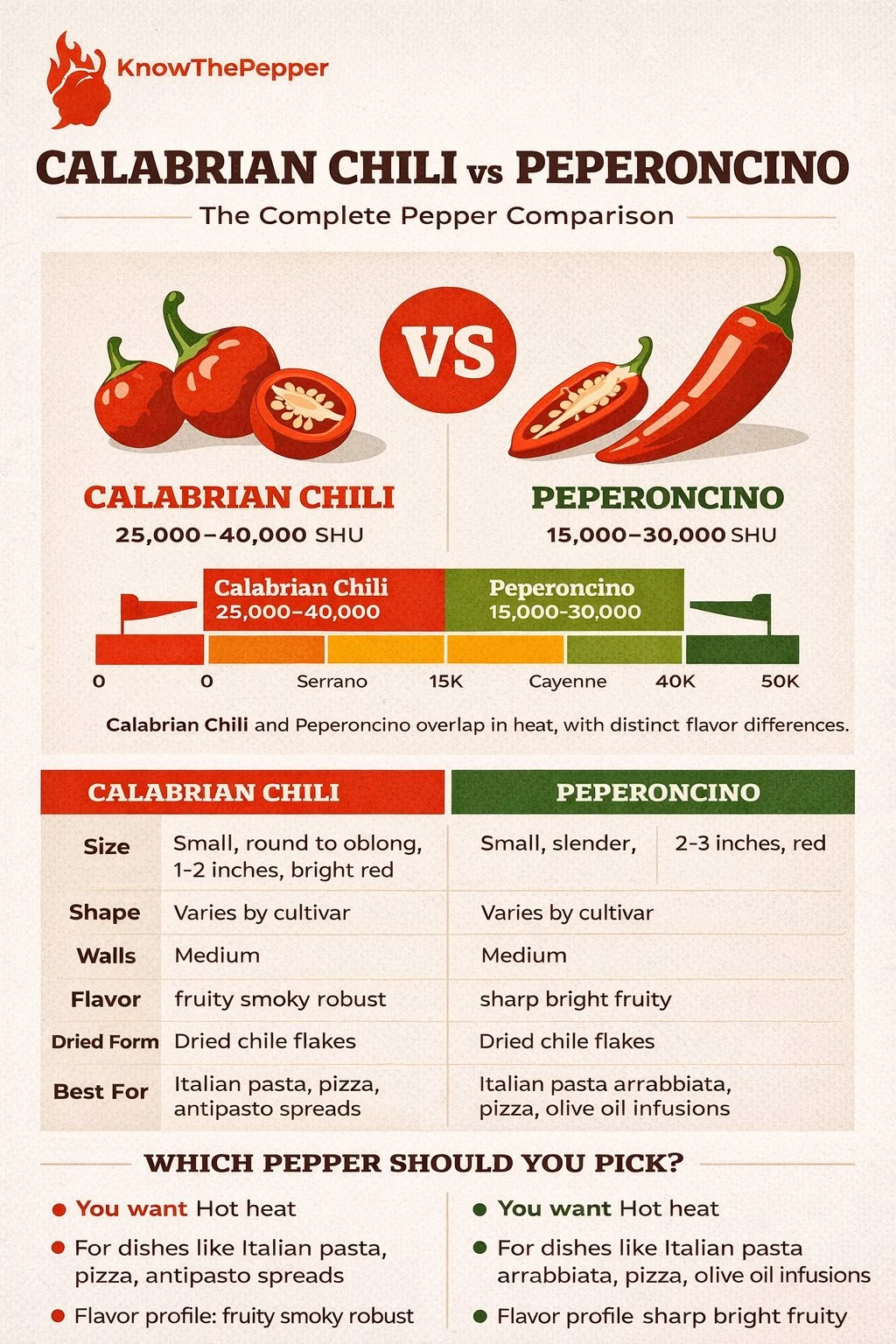
Calabrian Chili measures 25K–40K SHU while Peperoncino registers 15K–30K SHU — roughly equal in heat. Calabrian Chili is known for its fruity and smoky flavor (C. annuum), while Peperoncino offers bright and sharp notes (C. annuum).
- Species: Both are C. annuum
- Best for: Calabrian Chili excels in everyday cooking and salsas, Peperoncino in fresh salsas and mild recipes
Calabrian Chili vs Peperoncino Comparison
Calabrian Chili vs Peperoncino Heat Levels
The numbers tell part of the story. Calabrian chili registers 25,000-40,000 SHU, putting it firmly in the hot pepper intensity zone — roughly 3 to 7 times hotter than a typical serrano, which lands around 10,000-23,000 SHU. Peperoncino clocks in at 15,000-30,000 SHU, overlapping with serrano territory at the lower end but reaching comparable heat at its ceiling.
The gap between their floors matters more than the overlap at the top. At minimum heat, peperoncino delivers a noticeable but manageable warmth. Calabrian chili's floor of 25,000 SHU already surpasses many serrano samples — you feel it immediately rather than gradually.
Their burn characters differ too. Calabrian chili's heat tends to build slowly, spreading across the palate before settling into a lingering warmth. That's partly a function of how capsaicin interacts with TRPV1 receptors — a process detailed in the chemistry behind why peppers produce heat. Peperoncino hits faster and sharper, a front-of-mouth sensation that fades more quickly.
For practical purposes: if a recipe calls for peperoncino and you swap in Calabrian chili at equal amounts, expect a 30-50% heat increase depending on which end of each range you're working with. The Scoville rating system for testing pepper heat uses organoleptic testing or HPLC chromatography — and both these peppers would fall into similar testing brackets while delivering meaningfully different eating experiences.
Flavor Profile Comparison
Calabria, the sun-scorched toe of Italy's boot, produces a pepper that reflects its terroir completely — intense, complex, and a little wild.
That sharp, almost electric bite you get from a slice of spicy Italian salami?
Heat aside, the flavor gap between these two Italian peppers is arguably more important for cooking decisions.
Calabrian chili carries a pronounced fruitiness — think sun-dried tomato meets cherry pepper — layered with a smoky undertone that comes partly from traditional drying and oil-packing methods. That smokiness is not incidental; it's a defining characteristic that makes Calabrian chili paste or oil-packed whole chilis behave almost like a condiment on their own. The fruit-forward quality lingers even after the heat fades.
Peperoncino is sharper and more direct. The flavor is bright — closer to a fresh red chile than a preserved one — with a clean heat that doesn't carry the same depth or sweetness. Dried peperoncino flakes read as straightforwardly spicy rather than complex. This makes peperoncino more of a background heat element, while Calabrian chili tends to assert itself as a flavor component.
Aroma differs noticeably too. Calabrian chili in oil has a rich, almost fermented depth. Peperoncino, especially dried, smells more like standard crushed red pepper — familiar, pungent, but without the layered quality.
For dishes where the pepper needs to shine — nduja, pasta sauces, bruschetta toppings — Calabrian chili's complexity earns its place. For dishes where you want background heat without altering the flavor profile significantly, peperoncino is the cleaner choice. Both belong to the broader Italian pepper-growing tradition but represent different regional philosophies about what pepper should contribute to food.
Culinary Uses for Calabrian Chili and Peperoncino
Calabrian chili is most at home in oil-packed or paste form. Stir a spoonful into pasta aglio e olio, spread it on pizza before the sauce, or blend it into aioli — the fruity smokiness amplifies rather than just heats. Calabrian chili oil doubles as a finishing drizzle over burrata or grilled fish.
For pasta specifically, the ratio that works: 1 teaspoon of Calabrian chili paste per two servings delivers noticeable heat without overwhelming. Scale up carefully — it concentrates.
Peperoncino is the workhorse. Dried and crushed, it functions like a more complex version of standard red pepper flakes. Pasta all'arrabbiata traditionally calls for peperoncino; so does spaghetti aglio e olio in many regional versions. Whole dried peperoncino bloomed in olive oil at the start of cooking releases its heat into the fat, which then carries it through the entire dish.
Substitution guidance: Calabrian chili paste (1 tsp) ≈ peperoncino flakes (1.5-2 tsp) in heat terms, but the flavor shift is significant — expect more depth and less brightness when swapping in Calabrian. Going the other direction, use peperoncino at 1.5x the volume of Calabrian chili to approximate heat, but accept a cleaner, less smoky result.
For a side-by-side look at how Calabrian chili compares to the more familiar Fresno, the flavor contrast is starker than the heat difference suggests. Similarly, understanding where Calabrian chili and red pepper flakes actually diverge clarifies why the two aren't direct swaps despite similar SHU ranges.
Both peppers belong to C. annuum, the same botanical family as bell peppers and jalapeños — which explains why neither produces the extreme heat of habanero-family peppers despite their respectable SHU numbers. The peperone di Senise vs Calabrian chili comparison rounds out the picture of how dramatically different Italian peppers can be within the same regional tradition.
Which Should You Choose?
Calabrian chili is the right call when you want the pepper to be a flavor event — complex, smoky, fruity, and assertive. It earns its place in preserved form (paste, oil-packed) and works best in dishes where its depth can come through: pasta sauces, meat braises, pizza, charcuterie-style applications like nduja.
Peperoncino suits situations where heat is a background element rather than a feature. It integrates cleanly without redirecting a dish's flavor profile, making it better for recipes where other ingredients should lead.
If you're stocking one: Calabrian chili paste offers more versatility per jar because its flavor complexity means a small amount does significant work. If you cook Italian food regularly and want the authentic sharp heat of southern Italian pasta dishes, dried peperoncino is irreplaceable.
For those exploring swap options, the Calabrian chili substitute guide covers alternatives when neither pepper is on hand. Neither is strictly superior — they solve different problems in the kitchen.
Can You Substitute One for the Other?
Yes — direct substitution works. Calabrian Chili and Peperoncino are close enough in heat to swap at roughly 1:1. The main difference will be flavor. For more swap options, explore ranked alternatives with conversion ratios.
Growing Calabrian Chili vs Peperoncino
If you’re deciding which pepper to grow at home, consider your climate and patience level. Calabrian Chili and Peperoncino have different maturation times and temperature preferences. Hotter varieties generally need a longer, warmer growing season to develop their full capsaicin content. Our zone-based planting date tool can pinpoint the best sowing window for your area.
Growing Calabrian chilies follows the standard C. annuum playbook, but they particularly reward warm, dry conditions — which makes sense given their origin.
Transplant outdoors once nighttime temps stay above 55°F. These plants prefer full sun and well-drained soil; they'll tolerate drought better than many peppers but produce more flavorful pods with consistent moderate watering.
Pods mature in 80–90 days from transplant. Harvest when fully red for maximum fruity character.
Peperoncino is one of the more grower-friendly hot peppers — a good entry point if you're moving beyond jalapeños, and a reliable producer even in less-than-ideal conditions.
Start seeds indoors 8–10 weeks before your last frost date. Check the full guide on when to start seeds for your specific region — timing matters more than most growers expect.
Transplant after all frost risk passes. Peperoncino prefers full sun (6+ hours daily) and well-draining soil with a pH of **6.
History & Origin of Calabrian Chili and Peperoncino
Both peppers carry centuries of culinary heritage. Calabrian Chili traces its roots to Italy, while Peperoncino originates from Italy. Understanding their backstory helps explain why each pepper developed its distinctive traits.
Buying & Storage
Whether you’re shopping for Calabrian Chili or Peperoncino, the same quality indicators apply. Fresh peppers should feel firm and heavy for their size, with taut, glossy skin and no soft or wet spots. Minor stem cracks known as “corking” are perfectly normal and often indicate a mature, flavorful pod.
- Firm pods with taut skin and consistent color
- Should feel heavy relative to size
- Minor stem cracks (“corking”) are normal
- Avoid anything soft, shriveled, or with dark wet spots
- Fresh: Paper bag, crisper drawer — 1–2 weeks
- Frozen: Wash, dry, freeze on sheet pan — 6+ months
- Dried: Airtight, away from light — up to 1 year
The Verdict: Calabrian Chili vs Peperoncino
Calabrian Chili and Peperoncino sit in the same heat tier but serve different roles. Calabrian Chili delivers its distinctive fruity and smoky character. Peperoncino, with its bright and sharp profile, excels in everyday cooking.
Frequently Asked Questions
Related Comparisons
Sources pending verification.