Bird's Eye Chili vs Siling Labuyo: Key Differences Explained
Bird's Eye Chili and Siling Labuyo are two small, fiery peppers that look nearly identical but come from different species, different countries, and carry distinct flavor signatures. Bird's Eye Chili (C. annuum) originates from Thailand with 50,000-100,000 SHU, while Siling Labuyo (C. frutescens) is the Philippine native clocking 80,000-100,000 SHU. The species difference matters more than most cooks expect — it shapes everything from heat character to how each pepper behaves in a pan.

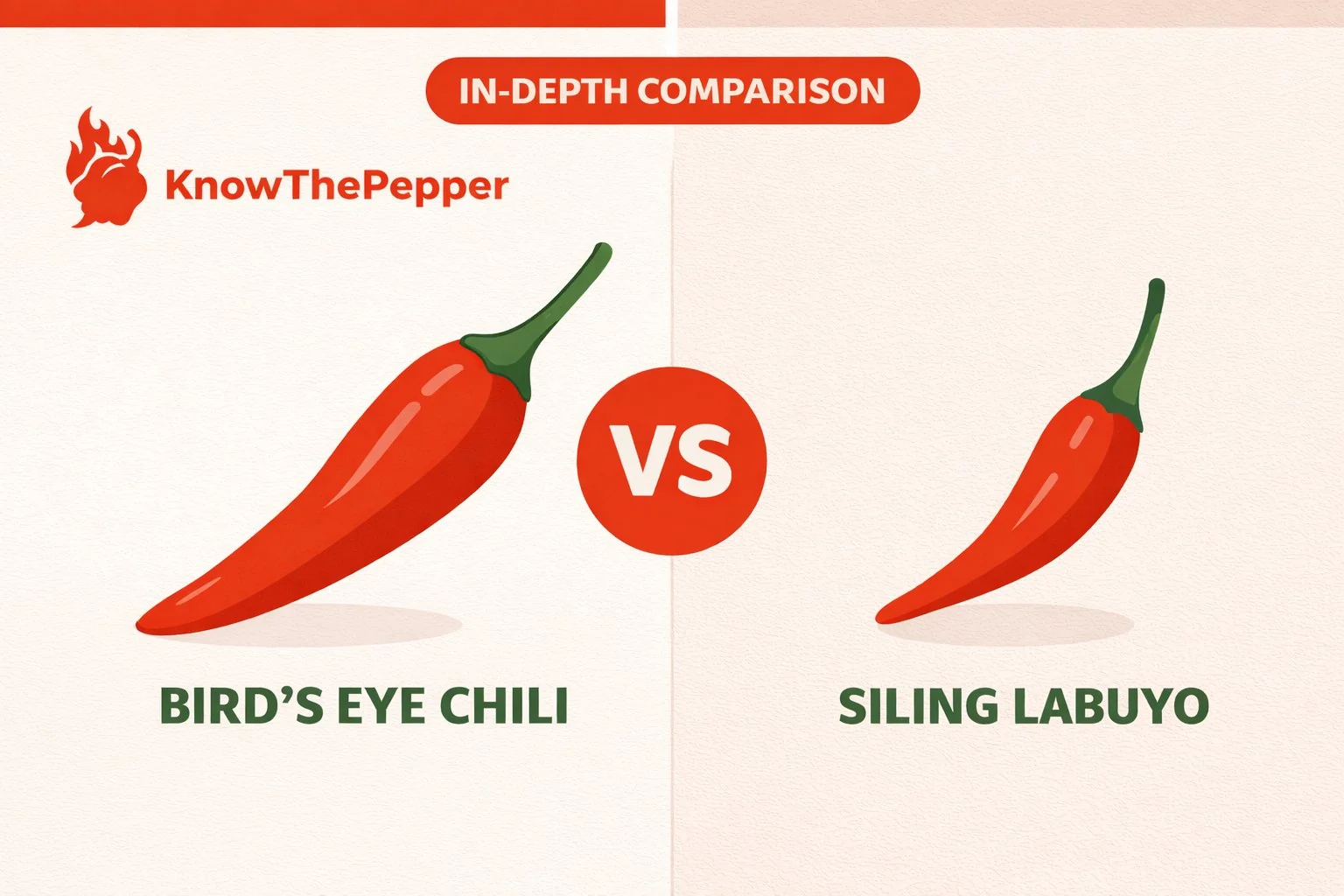
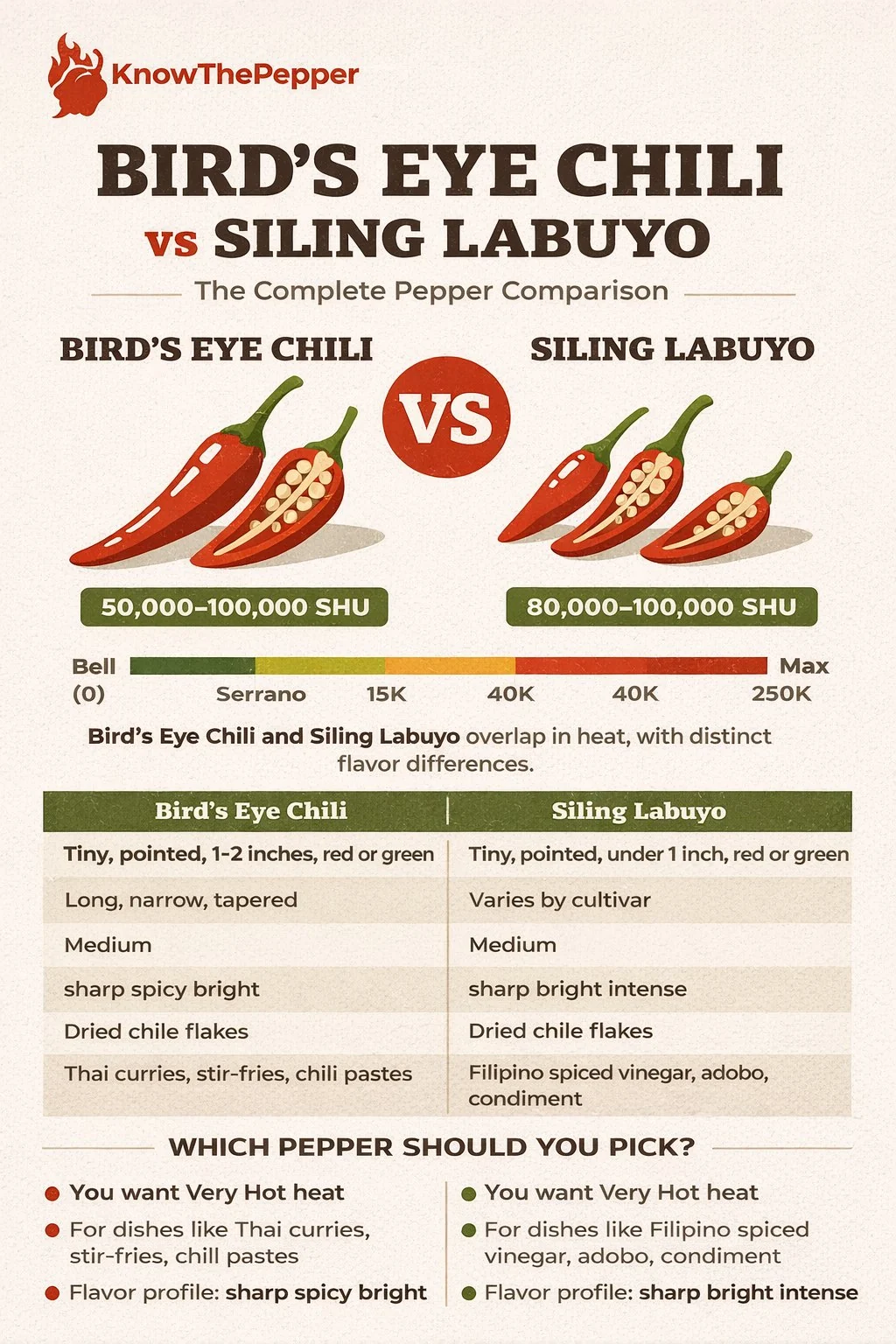
Bird's Eye Chili measures 50K–100K SHU while Siling Labuyo registers 80K–100K SHU — roughly equal in heat. Bird's Eye Chili is known for its peppery and bright flavor (C. annuum), while Siling Labuyo offers sharp and pungent notes (C. frutescens).
- Species: C. annuum vs C. frutescens
- Best for: Bird's Eye Chili excels in hot sauces and extreme dishes, Siling Labuyo in hot sauces and spicy dishes
Bird's Eye Chili
Extra-HotSiling Labuyo
Extra-HotBird's Eye Chili vs Siling Labuyo Comparison
Bird's Eye Chili vs Siling Labuyo Heat Levels
Both peppers sit firmly in the hot pepper intensity zone, but the overlap in their SHU ranges masks a real difference in how that heat lands.
Bird's Eye Chili spans 50,000-100,000 SHU. At the low end, it's roughly 6 times hotter than a serrano (which averages around 8,000-10,000 SHU); at peak, it pushes 10 times that. Siling Labuyo has a tighter range — 80,000-100,000 SHU — meaning its floor is already near the Bird's Eye ceiling. That narrower band also means less variance from pod to pod, which Filipino cooks have relied on for centuries.
The species difference explains some of the heat character distinction. Bird's Eye (C. annuum) tends to deliver a sharper, faster spike — you feel it immediately on the tip of the tongue and it peaks quickly. Siling Labuyo (C. frutescens), sharing its species with Tabasco peppers, produces heat that builds more gradually and lingers noticeably longer in the throat and chest.
For a deeper look at how capsaicin binds to pain receptors and triggers that burn, the chemistry is the same compound — it's the concentration and distribution of capsaicinoids that creates the different experiences. Siling Labuyo's more persistent burn is partly why a small amount in Filipino dishes can feel more intense than the SHU number alone suggests.
If you're calibrating heat for a recipe, treat Siling Labuyo as the consistently hotter choice. Bird's Eye can vary significantly by growing conditions and maturity.
Flavor Profile Comparison
Size is genuinely deceptive here.
The first time I encountered Siling Labuyo at a Manila street market, the vendor laughed when I bought a whole bag — then handed me a glass of water I didn't ask for.
Heat aside, these two peppers taste genuinely different — and that difference matters in the kitchen.
Bird's Eye Chili has a bright, peppery quality with a clean vegetal note underneath. There's a slight citrus-adjacent sharpness, especially in fresh pods, that makes it versatile across Southeast Asian cuisines. Thai cooking leans into that brightness — it cuts through rich coconut milk curries and fatty proteins without muddying the other flavors. The aroma is sharp but not overwhelming.
Siling Labuyo is pungent in a different register. The flavor is more aggressive upfront, with a funky, almost fermented quality that intensifies when the pepper is dried or cooked down. This isn't a flaw — it's exactly why it works so well in Filipino dishes like sinigang and kare-kare condiments, where you want the pepper's presence felt even after long simmering. The aroma when cut is noticeably more assertive than Bird's Eye.
The C. frutescens species tends to produce peppers with higher volatile compound concentrations, which contributes to that more pungent nose. Bird's Eye, as a C. annuum, behaves more like a conventional hot pepper in flavor terms — heat-forward but cleaner.
For context on how Thai-origin peppers compare in flavor across the C. annuum family, Bird's Eye sits toward the brighter, sharper end of that spectrum. Siling Labuyo's pungency is more in line with what you'd expect from the C. frutescens botanical family — closer in character to Tabasco than to a typical Thai chili.
In raw applications — fresh salsas, garnishes, nam prik — Bird's Eye's cleaner flavor usually wins. Cooked into sauces or fermented condiments, Siling Labuyo's depth is harder to replicate.
Culinary Uses for Bird's Eye Chili and Siling Labuyo
These peppers overlap in many applications but each has a home territory where it genuinely outperforms the other.
Bird's Eye Chili is the workhorse of Thai cooking — pad kra pao, tom yum, green papaya salad, and countless curry pastes all rely on its clean heat and brightness. It's also common across Vietnamese, Indonesian, and Malaysian kitchens. Fresh pods can be sliced thin and added raw to finish a dish; dried Bird's Eye holds its heat well and rehydrates cleanly. For a side-by-side look at how it compares to the milder jalapeño heat profile, the gap is significant — Bird's Eye runs 5-10x hotter depending on the specimen.
Siling Labuyo is the backbone of Philippine heat. It appears in sawsawan (dipping sauces), sinamak (spiced vinegar), and as a table condiment alongside lechon and grilled meats. Because its heat lingers, a little goes further than Bird's Eye in slow-cooked dishes. Dried and ground Siling Labuyo makes a pungent chili powder with real depth. The flavor profile rooted in Filipino pepper tradition is genuinely distinct from Thai-style heat.
Substitution: These two are the most common stand-ins for each other, but adjust quantities. If a Filipino recipe calls for Siling Labuyo and you only have Bird's Eye, use 20-30% more Bird's Eye to approximate the heat level and accept a slightly cleaner, less pungent result. Going the other direction — Siling Labuyo for Bird's Eye — use 20% less and expect more lingering heat.
For dishes where the pepper is blended or cooked into a sauce, the substitution works reasonably well. In fresh preparations where the pepper's individual flavor is prominent, the difference is more noticeable. Comparing Bird's Eye against peri-peri's African heat character shows how broadly the C. annuum species adapts across different regional cuisines.
Both peppers freeze well whole — no blanching needed — and retain heat and flavor for up to a year. For fresh availability outside Asia, Bird's Eye is considerably easier to source at Asian grocery stores in most Western cities. Siling Labuyo is often found dried or in vinegar-packed jars at Filipino specialty markets.
Which Should You Choose?
If you cook Thai food regularly, Bird's Eye Chili is the right tool — its bright, clean heat integrates naturally into the flavor profiles that Thai cuisine is built on. The C. annuum lineage gives it a familiar pepper flavor that doesn't compete with delicate aromatics like lemongrass or kaffir lime.
Siling Labuyo is the better choice when you want depth alongside heat — fermented condiments, long-simmered Filipino dishes, spiced vinegars. Its pungency and lingering burn are features, not bugs, in those contexts. The tighter SHU range also makes it more predictable if consistency matters in your cooking.
For general-purpose hot pepper use, Bird's Eye is more versatile and easier to find. But anyone cooking specifically Filipino food should seek out authentic Siling Labuyo — the flavor differences between the C. annuum and C. frutescens species are real enough that the substitution always costs you something. If the dish is the point, use the right pepper.
For a closer look at how Bird's Eye stacks up against Thai chili variants, the distinctions narrow considerably within that regional family.
Can You Substitute One for the Other?
Yes — direct substitution works. Bird's Eye Chili and Siling Labuyo are close enough in heat to swap at roughly 1:1. The main difference will be flavor. For more swap options, explore ranked alternatives with conversion ratios.
Growing Bird's Eye Chili vs Siling Labuyo
If you’re deciding which pepper to grow at home, consider your climate and patience level. Bird's Eye Chili and Siling Labuyo have different maturation times and temperature preferences. Hotter varieties generally need a longer, warmer growing season to develop their full capsaicin content. Our zone-based planting date tool can pinpoint the best sowing window for your area.
Bird's eye chili is among the more forgiving hot peppers to grow, provided you give it heat and full sun. Start seeds indoors 8-10 weeks before last frost - these need soil temperatures above 75°F to germinate reliably.
The plant stays compact, typically 18-24 inches tall, which makes it suitable for containers. A 3-gallon pot works fine for a single plant.
For pest and disease management, see the practical guidance on common pepper pests and diseases - aphids and spider mites are the main threats, particularly in dry conditions. Good airflow around plants prevents fungal issues.
Siling Labuyo behaves like the perennial it is — given warm temperatures and decent soil, it will grow into a shrubby plant 2–4 feet tall that produces prolifically for multiple seasons. In USDA zones 10–12, it overwinters without intervention.
Start seeds indoors 8–10 weeks before transplant, maintaining soil temperature around 80–85°F for germination. C.
Full sun is non-negotiable: 6–8 hours minimum. The plant tolerates drought better than waterlogging, so err toward underwatering once established.
History & Origin of Bird's Eye Chili and Siling Labuyo
Both peppers carry centuries of culinary heritage. Bird's Eye Chili traces its roots to Thailand, while Siling Labuyo originates from Philippines. Understanding their backstory helps explain why each pepper developed its distinctive traits.
Buying & Storage
Whether you’re shopping for Bird's Eye Chili or Siling Labuyo, the same quality indicators apply. Fresh peppers should feel firm and heavy for their size, with taut, glossy skin and no soft or wet spots. Minor stem cracks known as “corking” are perfectly normal and often indicate a mature, flavorful pod.
- Firm pods with taut skin and consistent color
- Should feel heavy relative to size
- Minor stem cracks (“corking”) are normal
- Avoid anything soft, shriveled, or with dark wet spots
- Fresh: Paper bag, crisper drawer — 1–2 weeks
- Frozen: Wash, dry, freeze on sheet pan — 6+ months
- Dried: Airtight, away from light — up to 1 year
The Verdict: Bird's Eye Chili vs Siling Labuyo
Bird's Eye Chili and Siling Labuyo sit in the same heat tier but serve different roles. Bird's Eye Chili delivers its distinctive peppery and bright character. Siling Labuyo, with its sharp and pungent profile, excels in everyday cooking.
Frequently Asked Questions
Related Comparisons
Sources pending verification.