Bell Pepper vs Poblano: Zero Heat vs Mild Heat
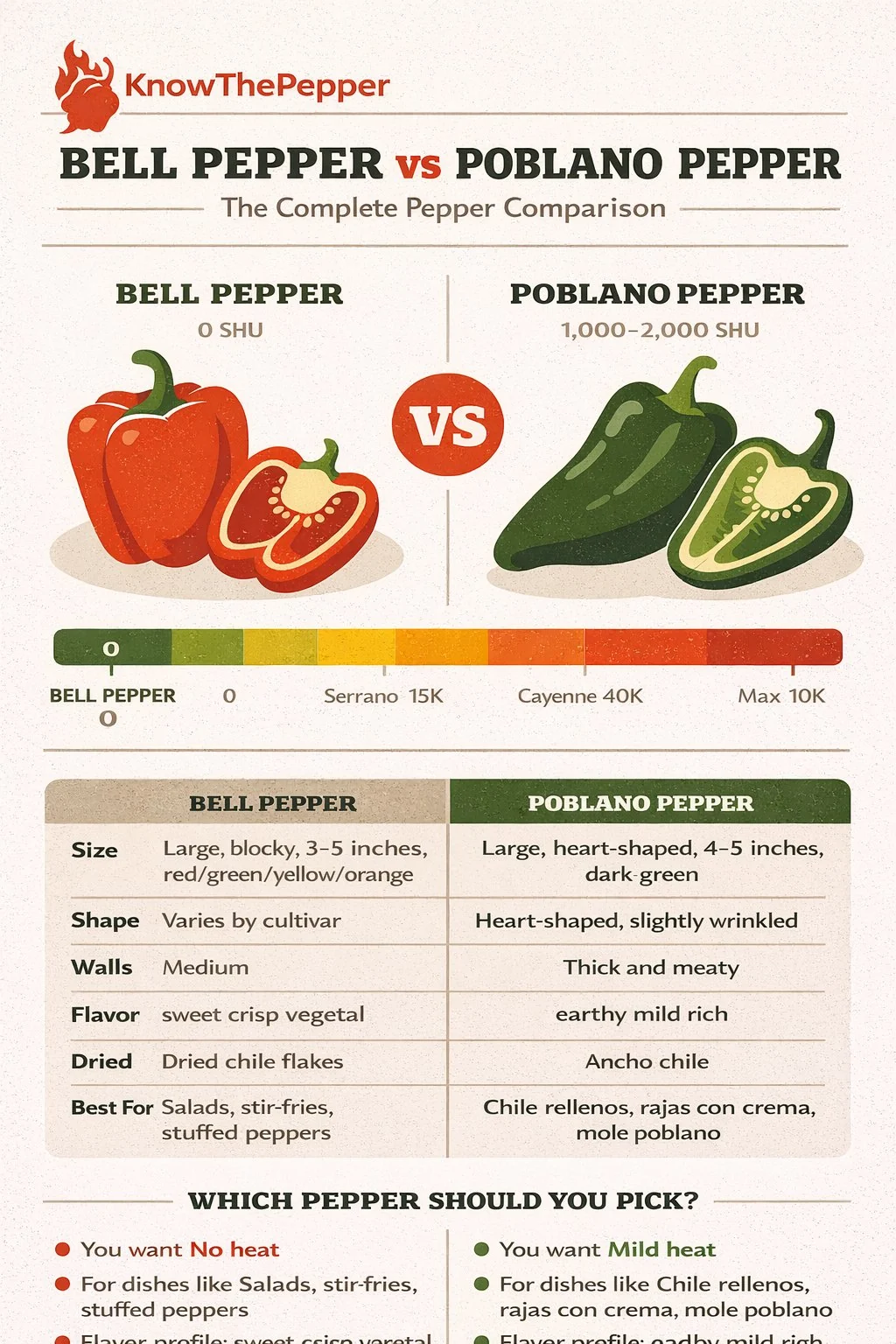
Bell peppers register 0 SHU - no heat whatsoever - while poblanos sit at 1,000-2,000 SHU, making them the mildest chile you'd actually call spicy. The gap between them is small in absolute terms but enormous in culinary character: one is a sweet, crunchy vegetable, the other an earthy, roastable chile with genuine depth. Choosing between them depends almost entirely on whether you want any heat at all.

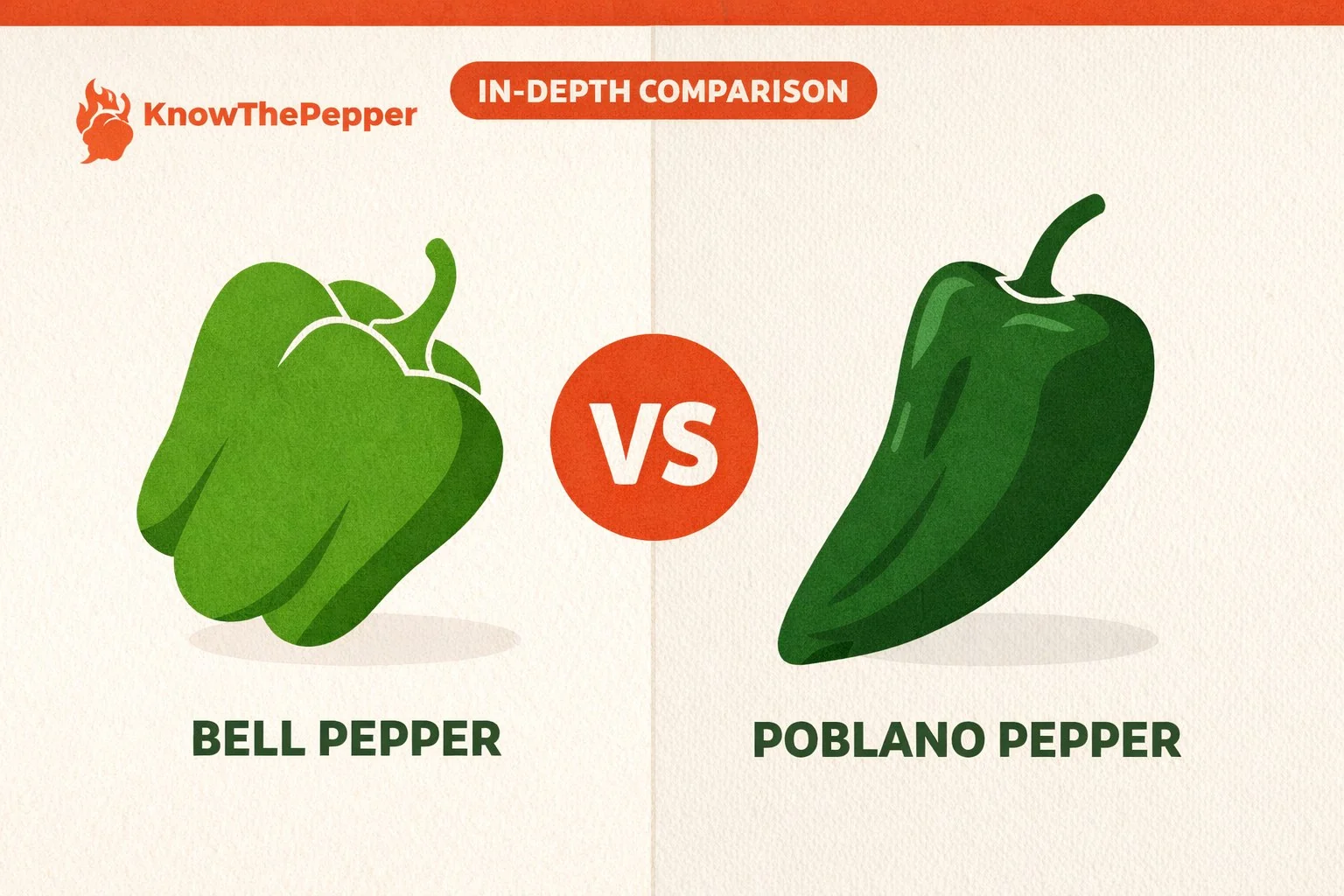
Bell Pepper measures 0–0 SHU while Poblano Pepper registers 1K–2K SHU — roughly equal in heat. Bell Pepper is known for its sweet and crisp flavor (C. annuum), while Poblano Pepper offers earthy and rich notes (C. annuum).
- Species: Both are C. annuum
- Best for: Bell Pepper excels in everyday cooking and salsas, Poblano Pepper in fresh salsas and mild recipes
Bell Pepper vs Poblano Pepper Comparison
Bell Pepper vs Poblano Pepper Heat Levels
Before getting into numbers, the flavor difference tells you something important: bell peppers taste sweet and vegetal, while poblanos carry an earthy, almost smoky richness even before any heat registers on your tongue. That baseline flavor difference matters as much as the SHU gap.
On the Scoville scale's testing methodology, bell peppers land at exactly 0 SHU - they contain no measurable capsaicin. Poblanos range from 1,000 to 2,000 SHU, placing them in the mild SHU bracket alongside peppers like banana peppers and Anaheims.
To put poblano heat in context: a typical jalapeño runs 2,500-8,000 SHU, so a poblano at its hottest reaches only about one-quarter the heat of a mild jalapeño. You're not going to feel much burn - maybe a gentle warmth at the back of the throat, nothing that requires dairy to manage.
For anyone coming from bell peppers, that first bite of poblano can still surprise. Zero to even 1,000 SHU represents an infinite multiplier on paper - technically, a poblano is infinitely hotter than a bell pepper since you're dividing by zero. In practice, it's a whisper of heat, not a shout.
The chemistry behind why capsaicin produces that warming sensation explains why even low-SHU peppers like poblanos feel different from true zero-heat bells - the TRPV1 receptors in your mouth respond to any capsaicin at all, creating that characteristic warmth even at mild levels.
Flavor Profile Comparison
Bell peppers are the only members of [C.
Pick up a fresh poblano and the first thing you notice is the weight.
This is where the comparison gets genuinely interesting, because bell peppers and poblanos occupy completely different flavor territories despite both being C. annuum relatives.
Bell peppers are sweet, crisp, and grassy. Red bells turn sugary as they ripen, green bells carry a slight bitterness, and yellows split the difference. The flavor is clean and uncomplicated - good raw, serviceable cooked, but without much depth.
Poblanos are earthy and rich, with a complexity that intensifies dramatically with heat. Raw poblano has a mild vegetal quality with hints of dried fruit and a subtle bitterness. Roast or char one and the flavor transforms: deeper, slightly smoky, almost chocolatey in the skin. It's why dried poblanos - called anchos - are a cornerstone of Mexican mole sauces.
The aroma difference is just as telling. Bell peppers smell fresh and green; poblanos have a more complex scent, especially when cut, with herbal and earthy notes that signal their chile heritage.
For raw applications like salads or crudités, bell peppers win on sweetness and crunch. For cooked applications - stuffing, roasting, sauces - poblanos offer flavor complexity that bells simply cannot match. The earthy richness of a poblano's distinctive flavor profile pairs naturally with cheese, meat, and corn in ways that bell pepper substitutions never quite replicate.
Bell peppers do have one flavor advantage: they work with almost anything without asserting themselves. Poblanos, by contrast, actively shape a dish's character - which is either exactly what you want or a complication you don't need.
Culinary Uses for Bell Pepper and Poblano Pepper
The practical kitchen differences between these two peppers are significant enough that they're rarely true substitutes for each other.
Bell peppers shine in raw preparations: sliced for dipping, diced into salads, or added to stir-fries where crunch and color matter. They're workhorses in fajitas (for volume and sweetness), pasta dishes, and anywhere you need mild vegetable bulk. Their thick walls make them ideal for stuffing too, though the flavor is neutral compared to what a chile brings.
Poblanos are built for heat. Roasting is their native state - char them over an open flame or under a broiler until blackened, steam in a bag, then peel to reveal sweet, smoky flesh underneath. This is the foundation for chiles rellenos, the classic dish of cheese-stuffed, battered, and fried poblanos. Poblanos also anchor rajas (roasted chile strips with cream and corn), chile verde, and countless Mexican pepper-based preparations where their earthy depth is non-negotiable.
For stuffed pepper recipes, the swap works structurally but not flavor-wise. Use bell peppers when you want the filling to be the star; use poblanos when you want the pepper itself to contribute.
Substitution ratios: If a recipe calls for bell pepper and you want mild heat, one poblano replaces one bell pepper by volume - but expect the dish to taste noticeably different. Going the other direction (bell for poblano), you lose all heat and most of the earthy character; consider adding a pinch of ancho chile powder to compensate.
For a look at how bell peppers compare to other mild dried-chile adjacent options, the sweet vs. smoky contrast with paprika pepper covers similar flavor territory. If you're working specifically with roasted green chiles, the heat and flavor differences between Hatch and poblano is worth understanding before you shop.
Both peppers belong to the broader C. annuum botanical family, which also includes jalapeños, serranos, and cayennes - a species with remarkable range from zero to scorching.
Which Should You Choose?
Pick bell peppers when heat is off the table entirely - cooking for kids, heat-sensitive guests, or dishes where sweet vegetal flavor and color are the goal. They're reliable, widely available, and genuinely good at what they do.
Choose poblanos when you want a pepper that actually tastes like a chile. The 1,000-2,000 SHU range is mild enough for nearly anyone, but the earthy, roastable flavor is in a different category from bells. For stuffed peppers, roasted chile applications, or any medium-heat pepper cooking that calls for real chile character, poblanos deliver something bells never can.
The honest answer: these two peppers don't compete for the same role. Bell peppers are a vegetable; poblanos are a chile. If your recipe needs one, the other is a compromise. Keep both around - bells for raw applications and volume, poblanos for anything that goes near a flame.
Can You Substitute One for the Other?
Yes — direct substitution works. Bell Pepper and Poblano Pepper are close enough in heat to swap at roughly 1:1. The main difference will be flavor. For more swap options, explore ranked alternatives with conversion ratios.
Growing Bell Pepper vs Poblano Pepper
If you’re deciding which pepper to grow at home, consider your climate and patience level. Bell Pepper and Poblano Pepper have different maturation times and temperature preferences. Hotter varieties generally need a longer, warmer growing season to develop their full capsaicin content. Our zone-based planting date tool can pinpoint the best sowing window for your area.
Bell peppers are the most rewarding slow-burn crop in a kitchen garden, but they demand patience. Start seeds indoors 8-10 weeks before your last frost date - a full step-by-step walkthrough for timing transplants correctly makes a real difference in first-year results.
Germination needs warmth: soil temperature of 80-85°F is ideal, and a heat mat is worth the investment. Seedlings emerge in 10-14 days and grow slowly at first.
In the garden, bells need full sun (6-8 hours minimum), consistent moisture, and well-draining soil amended with compost. Space plants 18-24 inches apart.
Poblanos are rewarding garden plants, but they need a long season. Start seeds indoors 10-12 weeks before your last frost date — this is one case where rushing transplant time costs you yield.
For a full breakdown of seed-starting methods and timing, the complete pepper growing guide covers everything from soil mix to hardening off. Poblanos specifically want consistent moisture — irregular watering leads to blossom end rot and cracked fruit.
Transplant into full sun once nighttime temps stay above 55°F. Space plants 18-24 inches apart; they can reach 3 feet tall with good conditions.
History & Origin of Bell Pepper and Poblano Pepper
Both peppers carry centuries of culinary heritage. Bell Pepper traces its roots to Mexico, while Poblano Pepper originates from Mexico. Understanding their backstory helps explain why each pepper developed its distinctive traits.
Buying & Storage
Whether you’re shopping for Bell Pepper or Poblano Pepper, the same quality indicators apply. Fresh peppers should feel firm and heavy for their size, with taut, glossy skin and no soft or wet spots. Minor stem cracks known as “corking” are perfectly normal and often indicate a mature, flavorful pod.
- Firm pods with taut skin and consistent color
- Should feel heavy relative to size
- Minor stem cracks (“corking”) are normal
- Avoid anything soft, shriveled, or with dark wet spots
- Fresh: Paper bag, crisper drawer — 1–2 weeks
- Frozen: Wash, dry, freeze on sheet pan — 6+ months
- Dried: Airtight, away from light — up to 1 year
The Verdict: Bell Pepper vs Poblano Pepper
Bell Pepper and Poblano Pepper occupy very different positions on the heat spectrum. Poblano Pepper delivers its distinctive earthy and rich character. Bell Pepper, with its sweet and crisp profile, excels in everyday cooking.
Frequently Asked Questions
Related Comparisons
Sources pending verification.