Ancho Pepper vs Poblano Pepper: Key Differences Explained
Ancho and poblano are technically the same pepper at different stages — poblano is the fresh green chile, ancho is its dried form. That transformation changes everything: color, texture, flavor concentration, and how each one behaves in the kitchen. Understanding the difference helps you choose the right form for the right dish.

Ancho Pepper measures 1K–2K SHU while Poblano Pepper registers 1K–2K SHU — roughly equal in heat. Ancho Pepper is known for its sweet and raisin-like flavor (C. annuum), while Poblano Pepper offers earthy and rich notes (C. annuum).
- Species: Both are C. annuum
- Best for: Ancho Pepper excels in everyday cooking and salsas, Poblano Pepper in fresh salsas and mild recipes
Ancho Pepper
MediumPoblano Pepper
MediumAncho Pepper vs Poblano Pepper Comparison
Ancho Pepper vs Poblano Pepper Heat Levels
Both the fresh poblano and its fresh-vs-dried contrast against the chilaca sit at roughly 1,000–2,000 SHU on the Scoville scale — the same pepper, same heat, just measured at different moisture levels. Compared to an Anaheim pepper (which typically runs 500–2,500 SHU), poblanos and anchos occupy nearly identical territory. Neither is going to light you up.
What shifts with drying isn't the capsaicin content so much as the perception of heat. When water evaporates during the drying process, capsaicinoids concentrate slightly, but the effect is subtle enough that most palates won't register a meaningful difference between biting into a fresh poblano and rehydrating a dried ancho. The heat sits low and even — a gentle warmth at the back of the throat rather than any sharp front-of-mouth sting.
For context on where this mild-to-medium category sits on the broader scale, anchos and poblanos land well below serranos, far below habaneros, and are closer in intensity to a banana pepper than anything approaching real fire. The TRPV1 receptor response triggered by capsaicin here is minimal — enough to notice, not enough to reach for water. If you need a more detailed breakdown of how Scoville units are actually determined, the Scoville measurement method explains the organoleptic testing and HPLC processes behind the numbers.
Flavor Profile Comparison
Long before dried chiles appeared on supermarket shelves, the ancho was already central to Mexican cuisine — a staple ground into sauces, rehydrated for stews, and layered into moles that could take days to prepare.
Pick up a fresh poblano and the first thing you notice is the weight.
This is where ancho and poblano genuinely diverge. Fresh poblanos taste grassy and mildly bitter, with a thick vegetal flesh similar to a green bell pepper but with more complexity — earthy, slightly smoky even before any cooking, with a subtle sweetness that emerges when roasted. Their aroma when cut is bright and herbaceous.
Dried anchos are a different animal entirely. The drying process — typically sun-drying until the skin turns deep reddish-brown and wrinkled — triggers Maillard reactions and concentrates natural sugars. The result is a pepper with raisin-like sweetness, mild chocolate undertones, and a rich dried-fruit depth that fresh poblanos simply don't have. Some describe ancho as having hints of coffee or dried plum. The aroma shifts from green and grassy to something closer to a mild mole paste.
This flavor transformation is why ancho is one of the foundational dried chiles in Mexican cooking while poblano dominates fresh preparations. They're not interchangeable — not because of heat, but because the flavor profiles serve completely different culinary functions. Using ancho where a recipe calls for fresh poblano introduces sweetness and depth that can overwhelm lighter dishes. Going the other direction — using fresh poblano in a mole — loses the concentrated complexity the sauce depends on.
The bell pepper vs. poblano contrast illustrates how much earthiness poblano brings even in its fresh state compared to a sweeter, blander baseline.
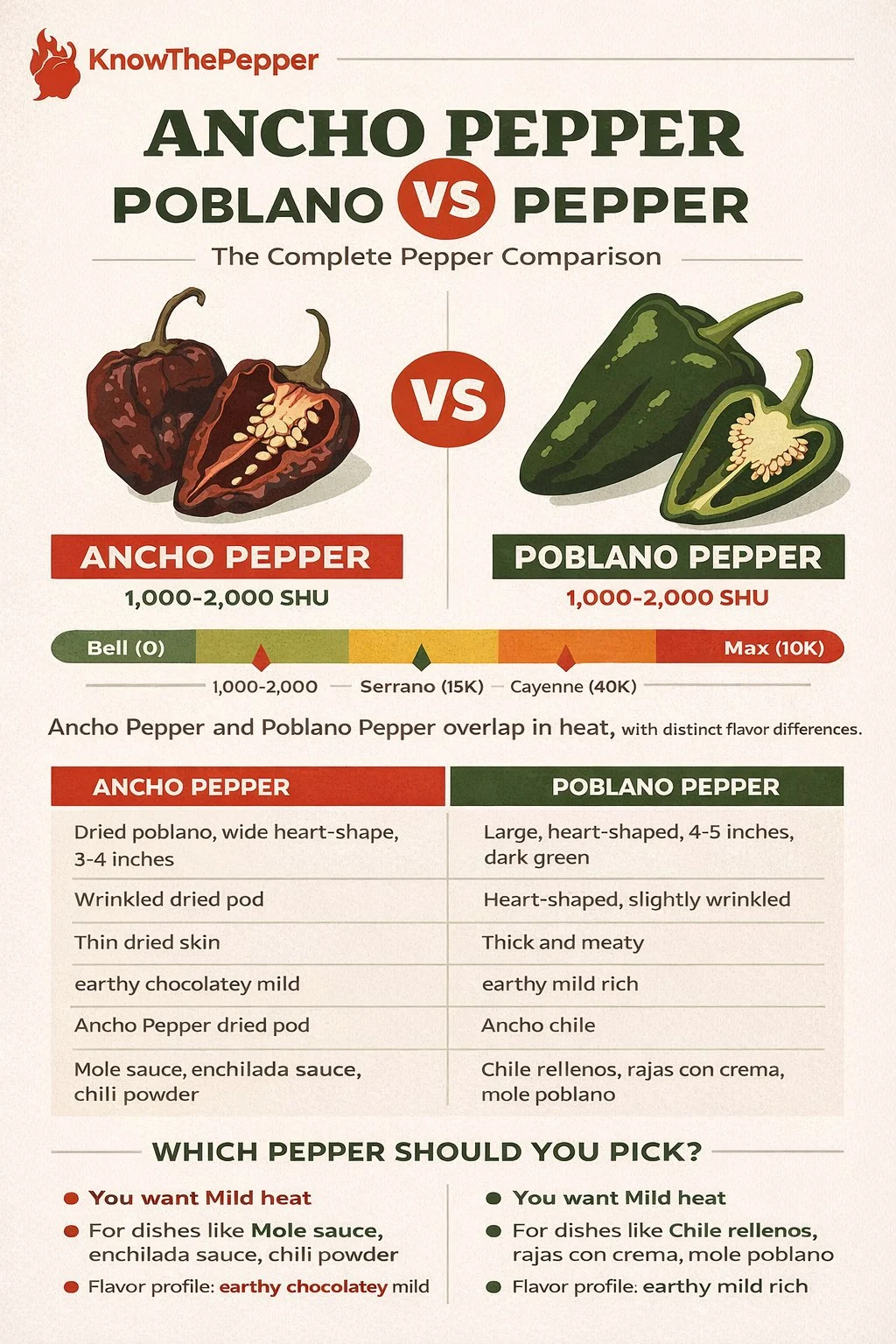
Culinary Uses for Ancho Pepper and Poblano Pepper
Fresh poblanos are built for direct-heat cooking. Roasting them over an open flame or under a broiler chars the skin, which peels away to reveal silky, smoky flesh underneath. That's the foundation of chiles rellenos — the pepper stuffed with cheese or picadillo, battered, and fried. Poblanos also work sliced into rajas (strips cooked with onion and cream), folded into quesadillas, or added to corn-based soups where their mild earthiness complements without competing.
Because of their size and thick walls, poblanos hold up to stuffing better than almost any other fresh chile. If a recipe calls for a poblano and you're substituting, a large Anaheim works reasonably well at a 1:1 ratio, though you lose some bitterness and earthiness. For the full substitute picks with ratios, the options depend heavily on whether the pepper is being stuffed, roasted, or used raw.
Anchos are a dried chile pantry staple. Rehydrate them in hot water for 20–30 minutes, then blend into sauces, mole negro, adobo marinades, or enchilada sauce. They're one of the three chiles in a classic mole poblano alongside mulato and pasilla. Ground ancho powder is also sold commercially and works as a finishing spice on grilled meats, in dry rubs, or stirred into chocolate-based sauces.
For substitution, one dried ancho equals roughly one large fresh poblano in terms of flavor contribution, but the moisture difference means you'll need to adjust liquid in the recipe. Ancho can substitute for mulato or pasilla in many mole recipes — the ancho vs. pasilla flavor breakdown covers where those differences matter most.
For anyone starting peppers indoors from transplant to grow their own poblanos for drying into anchos, timing the harvest at full red maturity gives you the best color and sweetness in the finished dried chile.
Which Should You Choose?
If a recipe says poblano, it wants the fresh pepper — thick-walled, mildly bitter, excellent for roasting and stuffing. If it says ancho, it wants the dried version — sweet, complex, essential for slow-cooked sauces and mole.
The confusion is understandable because they're biologically identical. But treating them as interchangeable is a real cooking mistake. Swapping dried ancho into a chiles rellenos recipe introduces sweetness and a jammy texture that doesn't belong. Using fresh poblano in mole loses the concentrated dried-fruit depth the sauce is built around.
For heat-seekers, neither pepper delivers. Both sit at 1,000–2,000 SHU — firmly mild, closer to the lower end of the Scoville scale than anything spicy. Choose based on the dish, not the heat. Poblano for fresh applications; ancho for dried, sauce-based, and slow-cooked recipes. When in doubt, the ancho substitute guide covers your options if you run out of either.
Can You Substitute One for the Other?
Yes — direct substitution works. Ancho Pepper and Poblano Pepper are close enough in heat to swap at roughly 1:1. The main difference will be flavor. For more swap options, explore ranked alternatives with conversion ratios.
Growing Ancho Pepper vs Poblano Pepper
If you’re deciding which pepper to grow at home, consider your climate and patience level. Ancho Pepper and Poblano Pepper have different maturation times and temperature preferences. Hotter varieties generally need a longer, warmer growing season to develop their full capsaicin content. Our zone-based planting date tool can pinpoint the best sowing window for your area.
Growing anchos means growing poblanos and drying them yourself — the transformation happens post-harvest. Plants thrive in USDA zones 9–11 as perennials and are treated as annuals elsewhere.
Transplant outdoors after all frost risk passes, spacing plants 18–24 inches apart in full sun. Poblanos are heavy feeders — a balanced fertilizer at transplant followed by a phosphorus-forward feed once flowering begins keeps production strong.
Fruits are ready to dry when they turn fully red — this is when sugar content peaks and the dried ancho will have its characteristic sweetness. Hang or dehydrate at 125–135°F until completely leathery with no soft spots.
Poblanos are rewarding garden plants, but they need a long season. Start seeds indoors 10-12 weeks before your last frost date — this is one case where rushing transplant time costs you yield.
For a full breakdown of seed-starting methods and timing, the complete pepper growing guide covers everything from soil mix to hardening off. Poblanos specifically want consistent moisture — irregular watering leads to blossom end rot and cracked fruit.
Transplant into full sun once nighttime temps stay above 55°F. Space plants 18-24 inches apart; they can reach 3 feet tall with good conditions.
History & Origin of Ancho Pepper and Poblano Pepper
Both peppers carry centuries of culinary heritage. Ancho Pepper traces its roots to Mexico, while Poblano Pepper originates from Mexico. Understanding their backstory helps explain why each pepper developed its distinctive traits.
Buying & Storage
Whether you’re shopping for Ancho Pepper or Poblano Pepper, the same quality indicators apply. Fresh peppers should feel firm and heavy for their size, with taut, glossy skin and no soft or wet spots. Minor stem cracks known as “corking” are perfectly normal and often indicate a mature, flavorful pod.
- Firm pods with taut skin and consistent color
- Should feel heavy relative to size
- Minor stem cracks (“corking”) are normal
- Avoid anything soft, shriveled, or with dark wet spots
- Fresh: Paper bag, crisper drawer — 1–2 weeks
- Frozen: Wash, dry, freeze on sheet pan — 6+ months
- Dried: Airtight, away from light — up to 1 year
The Verdict: Ancho Pepper vs Poblano Pepper
Ancho Pepper and Poblano Pepper sit in the same heat tier but serve different roles. Ancho Pepper delivers its distinctive sweet and raisin-like character. Poblano Pepper, with its earthy and rich profile, excels in everyday cooking.
Frequently Asked Questions
Related Comparisons
Sources pending verification.