
Anaheim Pepper vs Poblano Pepper: Key Differences Explained
Anaheim and poblano peppers are two of the most popular mild chiles in American kitchens, but they differ in heat character, flavor depth, and best culinary applications. Both sit at the mild end of the Scoville scale, yet they behave quite differently once you start cooking with them. Understanding those differences helps you pick the right pepper for the right dish every time.

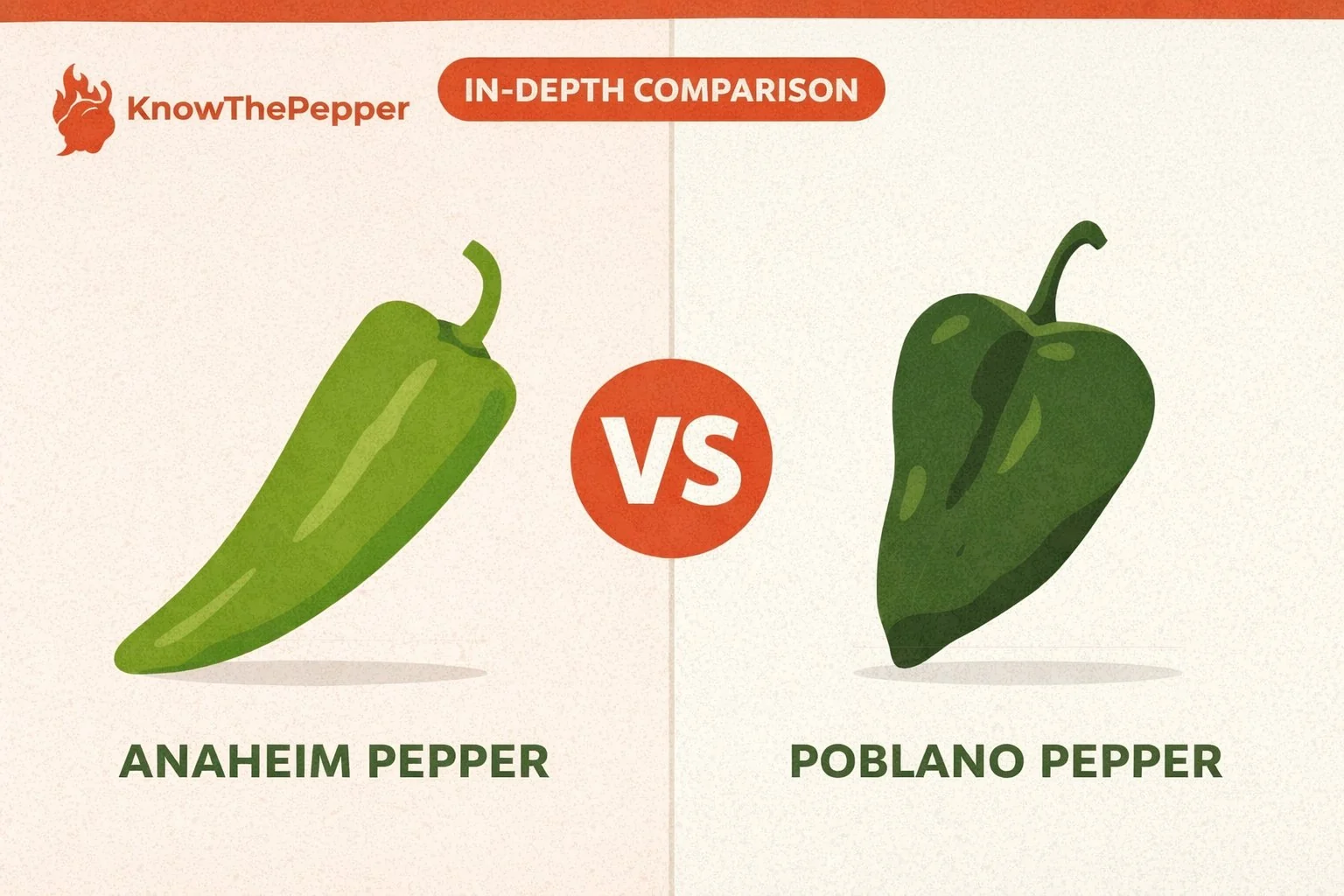
Anaheim Pepper measures 500–3K SHU while Poblano Pepper registers 1K–2K SHU — roughly equal in heat. Anaheim Pepper is known for its mild and sweet flavor (C. annuum), while Poblano Pepper offers earthy and rich notes (C. annuum).
- Species: Both are C. annuum
- Best for: Anaheim Pepper excels in everyday cooking and salsas, Poblano Pepper in fresh salsas and mild recipes
Anaheim Pepper
MediumPoblano Pepper
MediumAnaheim Pepper vs Poblano Pepper Comparison
Anaheim Pepper vs Poblano Pepper Heat Levels
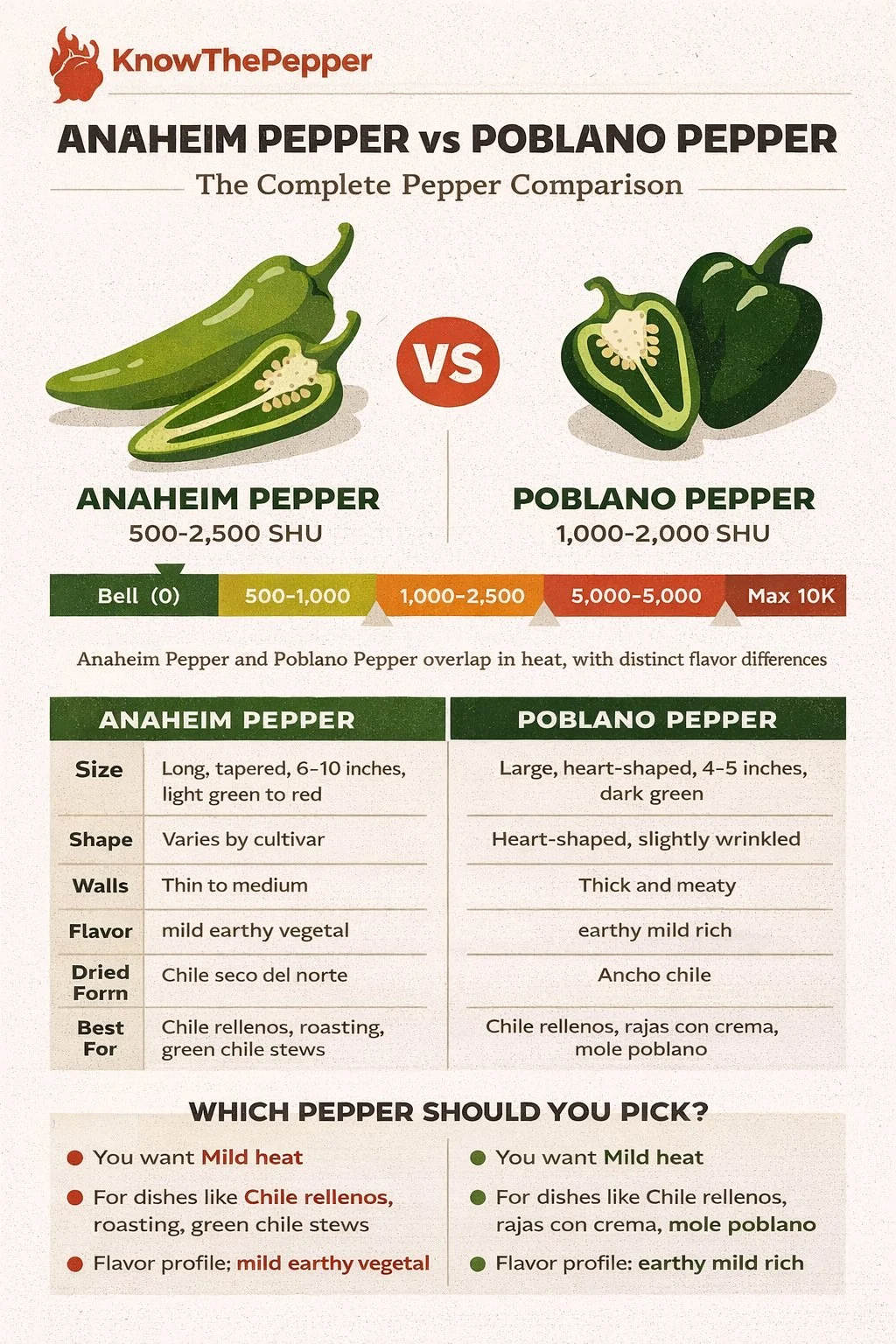
Both peppers clock in at the mild end of the spectrum, but there is meaningful variation between them. Anaheim peppers typically range from 500 to 2,500 SHU, while poblanos run 1,000 to 2,000 SHU - so the ranges overlap considerably, though Anaheims can occasionally spike hotter depending on growing conditions and the specific cultivar.
Compared to a Fresno chile (which averages around 6,000 SHU), both peppers are dramatically milder - a Fresno can be roughly 3 to 12 times hotter than an Anaheim and 3 to 6 times hotter than a poblano at their respective midpoints. Neither pepper will challenge heat-seekers, but that mildness is exactly the point: these are mild-tier workhorse peppers built for flavor rather than fire.
The heat character also differs in quality. Poblano heat tends to concentrate near the seed membrane and delivers a slow, earthy warmth that builds gradually. Anaheim heat is more front-loaded and dissipates quickly, which makes it easier to eat raw or lightly cooked without any lingering discomfort. For cooks who want pepper flavor without committing to real burn, both are excellent choices - though the poblano's occasional hotter specimens can catch you off guard in a way the Anaheim rarely does.
For the receptor science behind why even mild peppers register as heat, the capsaicin concentration in both is low enough that most people experience it as pleasant warmth rather than pain.
Flavor Profile Comparison
At 500–2,500 SHU, the Anaheim sits at the gentler end of the medium heat peppers category — closer to a bell pepper in burn than anything that'll make you reach for milk.
Pick up a fresh poblano and the first thing you notice is the weight.
Flavor is where these two peppers genuinely diverge. Anaheim peppers have a clean, grassy sweetness with a slightly tangy finish - think green bell pepper with more complexity and a faint herbal note. They are bright and fresh-tasting, which makes them exceptional raw or minimally cooked. The skin is thin enough that you get the full flavor impact without much textural interference.
The poblano is a fundamentally different flavor experience. Earthy, rich, and faintly smoky even before any cooking, poblanos carry a depth that Anaheims simply do not. That complexity comes partly from the thicker flesh and darker pigmentation, which concentrate flavor compounds differently. Roasting a poblano transforms it dramatically - the char brings out chocolate and dried fruit undertones that pair remarkably well with cheese, cream, and red meat.
Aroma also separates them. Raw Anaheims smell grassy and vegetal. Raw poblanos have a more mineral, almost soil-like quality that becomes intensely savory when heat is applied. This is why the ancho-versus-poblano matchup matters to cooks - a dried poblano (ancho) is essentially a flavor-concentrated version of what you are already tasting fresh.
For cooking applications that depend on background flavor rather than heat, the poblano wins on complexity. For dishes where you want clean pepper flavor without muddiness - think salsas, fresh salads, or light egg dishes - the Anaheim's brightness is an asset, not a compromise.
Culinary Uses for Anaheim Pepper and Poblano Pepper
Chile Rellenos is the dish that best illustrates the poblano's structural advantage. Its wide shoulders, thick walls, and relatively large cavity make it the ideal stuffing pepper - it holds cheese, picadillo, or grain fillings without collapsing during frying or baking. The Anaheim can be stuffed, but its narrower profile and thinner flesh make it less forgiving in the oven.
Anaheims shine in green chile sauces, enchilada bases, and any application where you want to build volume. New Mexico-style green chile - the kind ladled over breakfast burritos and smothered fries - is almost always made with Anaheim-type chiles or their close relatives. For a deeper look at how Anaheims compare to their New Mexico cousins, the roasted flavor difference between Anaheim and New Mexico chile is worth understanding before you buy.
Roasting is essential for both peppers but achieves different results. Roasted Anaheims peel easily and blend into smooth sauces seamlessly. Roasted poblanos develop that characteristic smokiness and are better used in strips (rajas), creamy sauces like rajas con crema, or as the base for mole negro.
Substitution ratios: if a recipe calls for 2 poblanos, you can substitute 3 to 4 Anaheims to approximate the same volume, though you will lose some flavor depth. Going the other direction - replacing Anaheims with poblanos - use a 1:1 ratio but expect a richer, earthier result.
For cooks interested in size comparisons and yield differences between Anaheim and NuMex Big Jim, that matchup clarifies how much the cultivar matters when you are buying Anaheim-type peppers at a farmers market versus a grocery store. Sizes vary significantly.
Both peppers freeze well after roasting and peeling, making them practical for batch cooking.
Which Should You Choose?
Choose the poblano when flavor depth matters most - stuffed preparations, mole bases, creamy sauces, and any dish where the pepper is the star rather than a supporting ingredient. Its earthy complexity rewards slow cooking and high heat in ways the Anaheim cannot match.
Reach for the Anaheim when you need volume, clean flavor, or a pepper that plays well with other ingredients without dominating them. Green chile sauces, enchilada fillings, and fresh salsas are natural fits. The Anaheim is also more widely available fresh year-round in most American supermarkets, which is a practical advantage.
Heat tolerance is not really a deciding factor here - both are mild enough for nearly any audience. The real question is whether you want brightness or depth. For weeknight cooking where simplicity matters, the Anaheim delivers. For weekend projects where you want something with genuine character, the poblano earns its place on the cutting board.
Can You Substitute One for the Other?
Yes — direct substitution works. Anaheim Pepper and Poblano Pepper are close enough in heat to swap at roughly 1:1. The main difference will be flavor. For more swap options, explore ranked alternatives with conversion ratios.
Growing Anaheim Pepper vs Poblano Pepper
If you’re deciding which pepper to grow at home, consider your climate and patience level. Anaheim Pepper and Poblano Pepper have different maturation times and temperature preferences. Hotter varieties generally need a longer, warmer growing season to develop their full capsaicin content. Our zone-based planting date tool can pinpoint the best sowing window for your area.
Anaheims are among the more forgiving chiles to grow, though they still need warm conditions to produce well. Start seeds indoors 8–10 weeks before last frost.
Transplant outdoors after all frost risk has passed, spacing plants 18–24 inches apart. They prefer full sun and well-drained soil with consistent moisture.
Plants reach 24–36 inches tall and begin producing pods around 75–80 days after transplant. Green pods are ready to harvest when they reach full size; leave them longer for red-ripe fruit.
Poblanos are rewarding garden plants, but they need a long season. Start seeds indoors 10-12 weeks before your last frost date — this is one case where rushing transplant time costs you yield.
For a full breakdown of seed-starting methods and timing, the complete pepper growing guide covers everything from soil mix to hardening off. Poblanos specifically want consistent moisture — irregular watering leads to blossom end rot and cracked fruit.
Transplant into full sun once nighttime temps stay above 55°F. Space plants 18-24 inches apart; they can reach 3 feet tall with good conditions.
History & Origin of Anaheim Pepper and Poblano Pepper
Both peppers carry centuries of culinary heritage. Anaheim Pepper traces its roots to USA, while Poblano Pepper originates from Mexico. Understanding their backstory helps explain why each pepper developed its distinctive traits.
Buying & Storage
Whether you’re shopping for Anaheim Pepper or Poblano Pepper, the same quality indicators apply. Fresh peppers should feel firm and heavy for their size, with taut, glossy skin and no soft or wet spots. Minor stem cracks known as “corking” are perfectly normal and often indicate a mature, flavorful pod.
- Firm pods with taut skin and consistent color
- Should feel heavy relative to size
- Minor stem cracks (“corking”) are normal
- Avoid anything soft, shriveled, or with dark wet spots
- Fresh: Paper bag, crisper drawer — 1–2 weeks
- Frozen: Wash, dry, freeze on sheet pan — 6+ months
- Dried: Airtight, away from light — up to 1 year
The Verdict: Anaheim Pepper vs Poblano Pepper
Anaheim Pepper and Poblano Pepper sit in the same heat tier but serve different roles. Anaheim Pepper delivers its distinctive mild and sweet character. Poblano Pepper, with its earthy and rich profile, excels in everyday cooking.
Frequently Asked Questions
Related Comparisons
Sources pending verification.
