
Anaheim Pepper vs New Mexico Chile: What's the Difference?
The Anaheim and New Mexico Chile share a tangled history and nearly identical appearance, but they diverge sharply in heat and intensity. Anaheims sit at the mild end of the spectrum, while New Mexico Chiles can deliver a genuine kick reaching 8,000 SHU. Understanding which to reach for depends entirely on what you want from your dish.

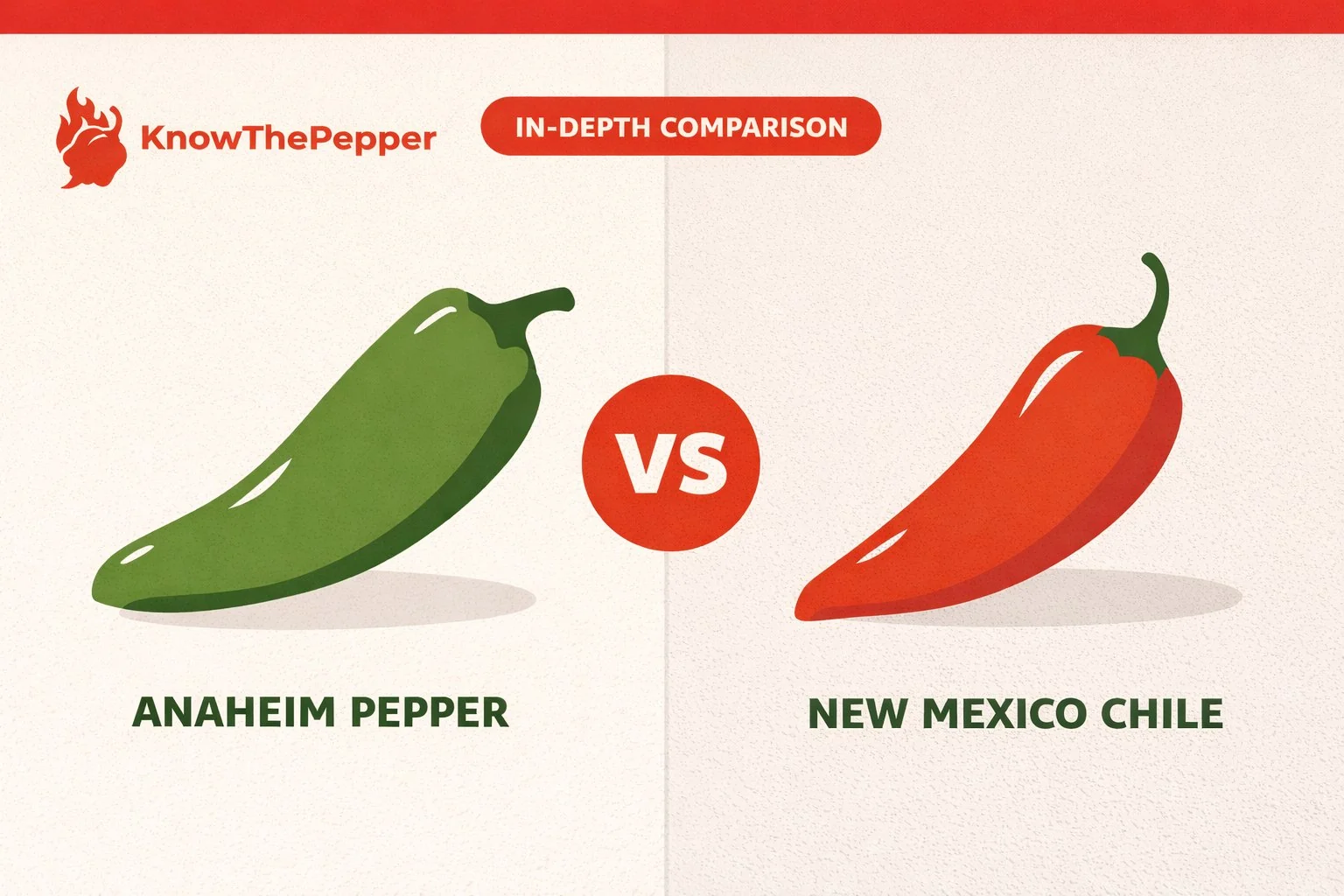
Anaheim Pepper measures 500–3K SHU while New Mexico Chile registers 1K–8K SHU — making New Mexico Chile 3× hotter. Anaheim Pepper is known for its mild and sweet flavor (C. annuum), while New Mexico Chile offers earthy and sweet notes (C. annuum).
- Heat difference: New Mexico Chile is 3× hotter
- Species: Both are C. annuum
- Best for: Anaheim Pepper excels in everyday cooking and salsas, New Mexico Chile in fresh salsas and mild recipes
Anaheim Pepper
MediumNew Mexico Chile
MediumAnaheim Pepper vs New Mexico Chile Comparison
Anaheim Pepper vs New Mexico Chile Heat Levels
Bite into a raw Anaheim and you get a mild, almost sweet warmth — nothing that lingers, nothing that builds. That gentleness reflects its position at the very bottom of the heat scale, with most sources placing it between 500 and 2,500 SHU, though some specimens register near zero.
The New Mexico Chile is a different proposition. Its range spans 1,000 to 8,000 SHU, which puts the hotter end of the spectrum squarely in the medium-heat SHU bracket — comparable to a moderately hot banana pepper or a mild serrano. At its peak, a hot New Mexico Chile is roughly 2-3 times hotter than a Fresno pepper, which typically tops out around 2,500-10,000 SHU but averages closer to 3,000-5,000 in most commercial settings.
The heat character differs too. Anaheim's warmth, when present, sits at the front of the mouth and fades quickly. New Mexico Chile's capsaicin tends to build gradually, spreading across the palate and settling into a slow, dry heat that's characteristic of many C. annuum dried-chile varieties. It's not aggressive, but it's persistent.
For reference against the Scoville scale's testing methodology, a jalapeño averages 5,000 SHU — meaning a mild New Mexico Chile is roughly half that heat, while a hot specimen matches it almost exactly. The Anaheim rarely approaches jalapeño territory at all.
This heat gap matters more than the numbers suggest. In a finished dish, the difference between zero heat and 8,000 SHU is the difference between a pepper that adds body and one that adds fire.
Flavor Profile Comparison
At 500–2,500 SHU, the Anaheim sits at the gentler end of the medium heat peppers category — closer to a bell pepper in burn than anything that'll make you reach for milk.
Here's something that trips up even experienced cooks: the New Mexico chile and the Anaheim pepper share common ancestry, but they've diverged significantly through decades of selective breeding.
Anaheims are workhorses of mild pepper flavor — grassy, slightly sweet, with a thin vegetal note that plays well with other ingredients without dominating. Fresh, they taste similar to a green bell pepper with more character. Roasted, the skin blisters easily and the flesh turns silky, developing a subtle sweetness that makes them ideal for stuffing.
New Mexico Chiles carry a more complex flavor signature. Fresh pods have that same green, grassy quality, but the earthy depth becomes more pronounced as they ripen to red. Dried red New Mexico Chiles — the form most commonly used in Southwestern cooking — develop a rich, slightly chocolatey earthiness with dried fruit undertones. That flavor is the backbone of authentic red chile sauce across New Mexico and southern Colorado.
The aroma difference is equally telling. Fresh Anaheims smell clean and green. Dried New Mexico Chiles, especially the red Hatch variety, have a complex, almost smoky fragrance even without any actual smoking — it's an intrinsic quality of the dried flesh.
For a side-by-side look at how Anaheim compares to another mild green chile, the poblano comparison is instructive — Anaheims are thinner-walled and milder than poblanos, while New Mexico Chiles occupy their own distinct flavor lane.
In terms of culinary identity, Anaheims skew toward fresh applications — salads, quick sautés, light salsas. New Mexico Chiles are built for long cooking: sauces, stews, enchilada bases, and the slow simmer of a proper posole. Both belong to the broader American pepper tradition rooted in Southwestern agriculture, but they've evolved toward very different kitchens.
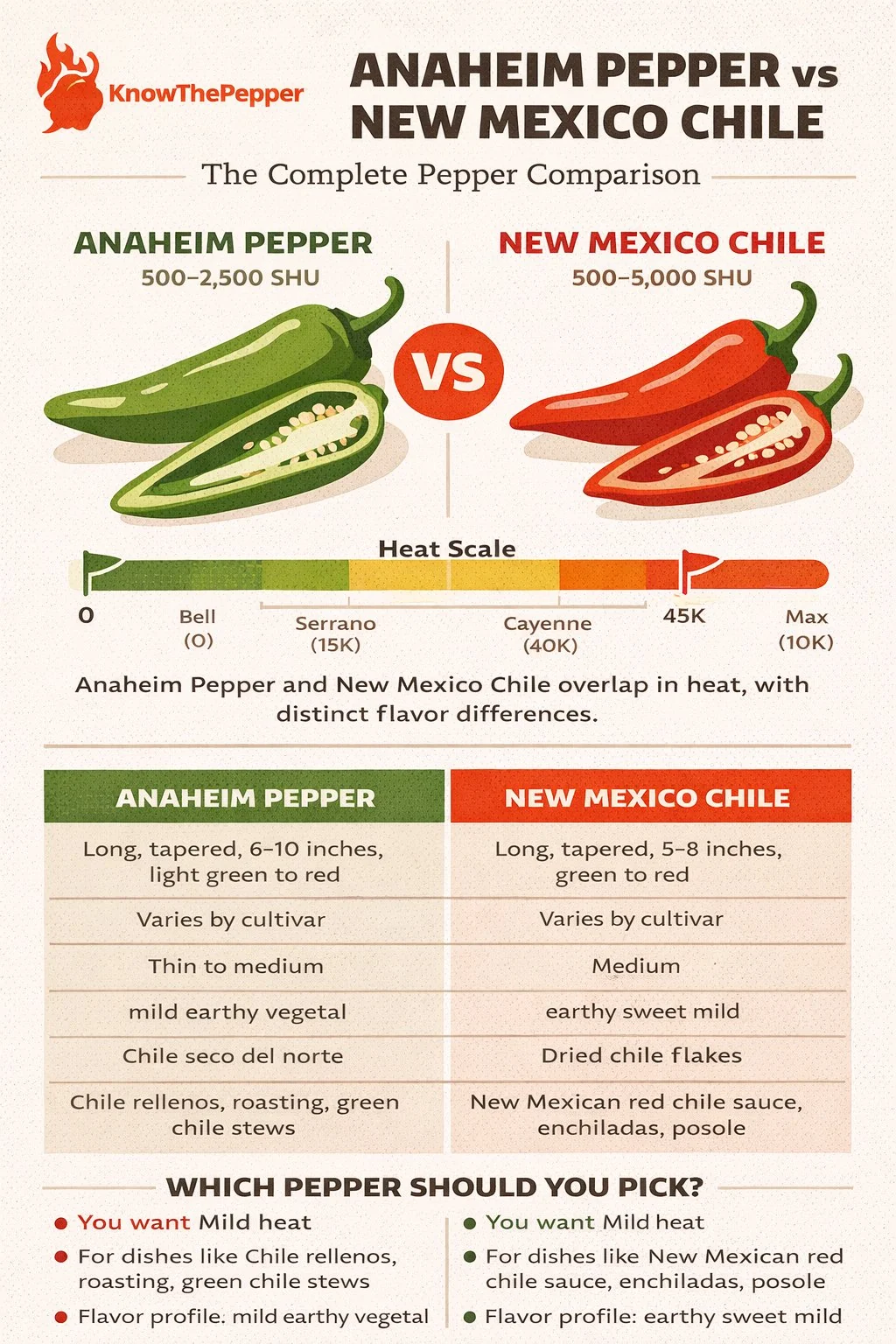
Culinary Uses for Anaheim Pepper and New Mexico Chile
Anaheim peppers shine in fresh preparations. Their mild heat and thin walls make them excellent for roasting and peeling — a 10-minute char under a broiler transforms them into something far more interesting than their raw form suggests. Classic uses include chile rellenos (though poblanos are more traditional), green chile omelets, and layered into enchiladas where you want pepper presence without heat.
For stuffing, Anaheims are particularly practical. Their elongated shape and firm walls hold fillings well, and the mild flavor doesn't compete with cheese, meat, or grain-based stuffings. If a recipe calls for Anaheim and you're short, a fresh poblano's richer, earthier flavor profile works as a direct swap at a 1:1 ratio, though expect slightly more heat and depth.
New Mexico Chiles are the foundation of Southwestern red chile sauce — the kind that goes on Christmas-style plates in Albuquerque, ladled over both red and green. Dried red New Mexico Chiles are rehydrated in hot water for 20-30 minutes, then blended with garlic, cumin, and broth into a sauce with real complexity. For this application, there's no clean substitute — the guajillo pepper's flavor differences versus New Mexico Chile are significant enough that swapping them changes the dish meaningfully.
Fresh green New Mexico Chiles — particularly the famous Hatch variety harvested in late summer — are roasted by the bushel and frozen for year-round use. A standard home batch involves blistering them directly over a gas flame or on a grill, steaming in a covered bowl for 10 minutes, then peeling. Freeze in 1-cup portions for green chile stew, breakfast burritos, and burger toppings.
For heat substitution: if a recipe calls for New Mexico Chile and you only have Anaheim, add a pinch of cayenne per chile to approximate the heat difference. Going the other direction — swapping New Mexico for Anaheim — simply omit any added heat and expect a milder result.
The NuMex Big Jim comparison is worth reading if you're navigating the broader New Mexico Chile family, since Big Jim is a specific cultivar with its own heat and size characteristics.
Which Should You Choose?
Reach for Anaheim peppers when mild flavor and low heat are the point — fresh salsas, stuffed pepper dishes, or anywhere you want pepper character without any burn. They're forgiving, widely available, and perform reliably across a range of cooking methods.
Choose New Mexico Chiles when depth and heat both matter. The dried red form is irreplaceable for authentic Southwestern red sauce. Fresh green Hatch chiles, roasted and frozen, are a pantry staple with no real equal for green chile stew or breakfast burritos.
The two peppers share enough DNA and appearance that they're often confused in grocery stores — and sometimes mislabeled. As a practical rule: if it's sold fresh and labeled 'Anaheim' outside the Southwest, it's probably mild. If it's from New Mexico or labeled 'Hatch,' expect real heat and more complex flavor. Both are worthwhile peppers; they just answer different questions in the kitchen.
Can You Substitute One for the Other?
Yes — direct substitution works. Anaheim Pepper and New Mexico Chile are close enough in heat to swap at roughly 1:1. The main difference will be flavor. For more swap options, explore ranked alternatives with conversion ratios.
Growing Anaheim Pepper vs New Mexico Chile
If you’re deciding which pepper to grow at home, consider your climate and patience level. Anaheim Pepper and New Mexico Chile have different maturation times and temperature preferences. Hotter varieties generally need a longer, warmer growing season to develop their full capsaicin content. Our zone-based planting date tool can pinpoint the best sowing window for your area.
Anaheims are among the more forgiving chiles to grow, though they still need warm conditions to produce well. Start seeds indoors 8–10 weeks before last frost.
Transplant outdoors after all frost risk has passed, spacing plants 18–24 inches apart. They prefer full sun and well-drained soil with consistent moisture.
Plants reach 24–36 inches tall and begin producing pods around 75–80 days after transplant. Green pods are ready to harvest when they reach full size; leave them longer for red-ripe fruit.
New Mexico chile thrives in hot, dry conditions — it was bred for the Southwest's climate. That said, it performs well across [*C.
Start seeds indoors 8–10 weeks before last frost. Germination is reliable at 80–85°F soil temperature.
Spacing matters: 18–24 inches between plants. These grow 2–3 feet tall with decent lateral spread, and heavy pod sets benefit from cage support.
History & Origin of Anaheim Pepper and New Mexico Chile
Both peppers carry centuries of culinary heritage. Anaheim Pepper traces its roots to USA, while New Mexico Chile originates from USA. Understanding their backstory helps explain why each pepper developed its distinctive traits.
Buying & Storage
Whether you’re shopping for Anaheim Pepper or New Mexico Chile, the same quality indicators apply. Fresh peppers should feel firm and heavy for their size, with taut, glossy skin and no soft or wet spots. Minor stem cracks known as “corking” are perfectly normal and often indicate a mature, flavorful pod.
- Firm pods with taut skin and consistent color
- Should feel heavy relative to size
- Minor stem cracks (“corking”) are normal
- Avoid anything soft, shriveled, or with dark wet spots
- Fresh: Paper bag, crisper drawer — 1–2 weeks
- Frozen: Wash, dry, freeze on sheet pan — 6+ months
- Dried: Airtight, away from light — up to 1 year
The Verdict: Anaheim Pepper vs New Mexico Chile
Anaheim Pepper and New Mexico Chile sit in the same heat tier but serve different roles. New Mexico Chile delivers 3× more heat with its distinctive earthy and sweet character. Anaheim Pepper, with its mild and sweet profile, excels in everyday cooking.
Frequently Asked Questions
Related Comparisons
Sources pending verification.
