Aji Dulce vs Trinidad Perfume – Heat & Flavor Compared
Aji Dulce and Trinidad Perfume are two of the most fascinating zero-heat peppers in the C. chinense family — visually similar to their scorching habanero cousins, but bred for fragrance and sweetness instead of fire. Both sit at the gentlest end of the no-burn mild pepper range, making them ideal for cooks who want habanero-style aroma without the capsaicin consequences.

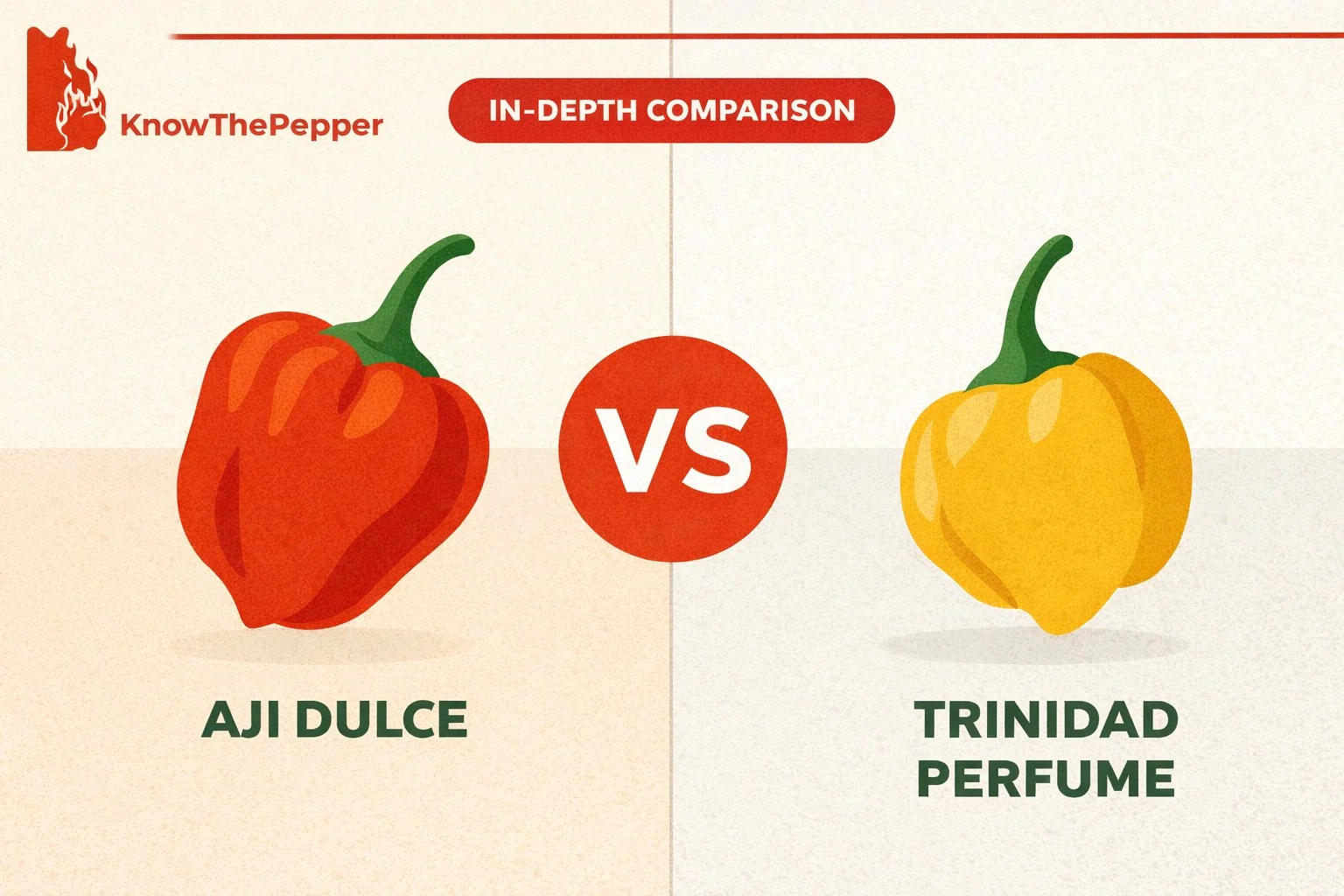
Aji Dulce measures 0–500 SHU while Trinidad Perfume registers 0–500 SHU — roughly equal in heat. Aji Dulce is known for its sweet and aromatic flavor (C. chinense), while Trinidad Perfume offers fruity and floral notes (C. chinense).
- Species: Both are C. chinense
- Best for: Aji Dulce excels in everyday cooking and salsas, Trinidad Perfume in fresh salsas and mild recipes
Aji Dulce
MildTrinidad Perfume
MildAji Dulce vs Trinidad Perfume Comparison
Aji Dulce vs Trinidad Perfume Heat Levels
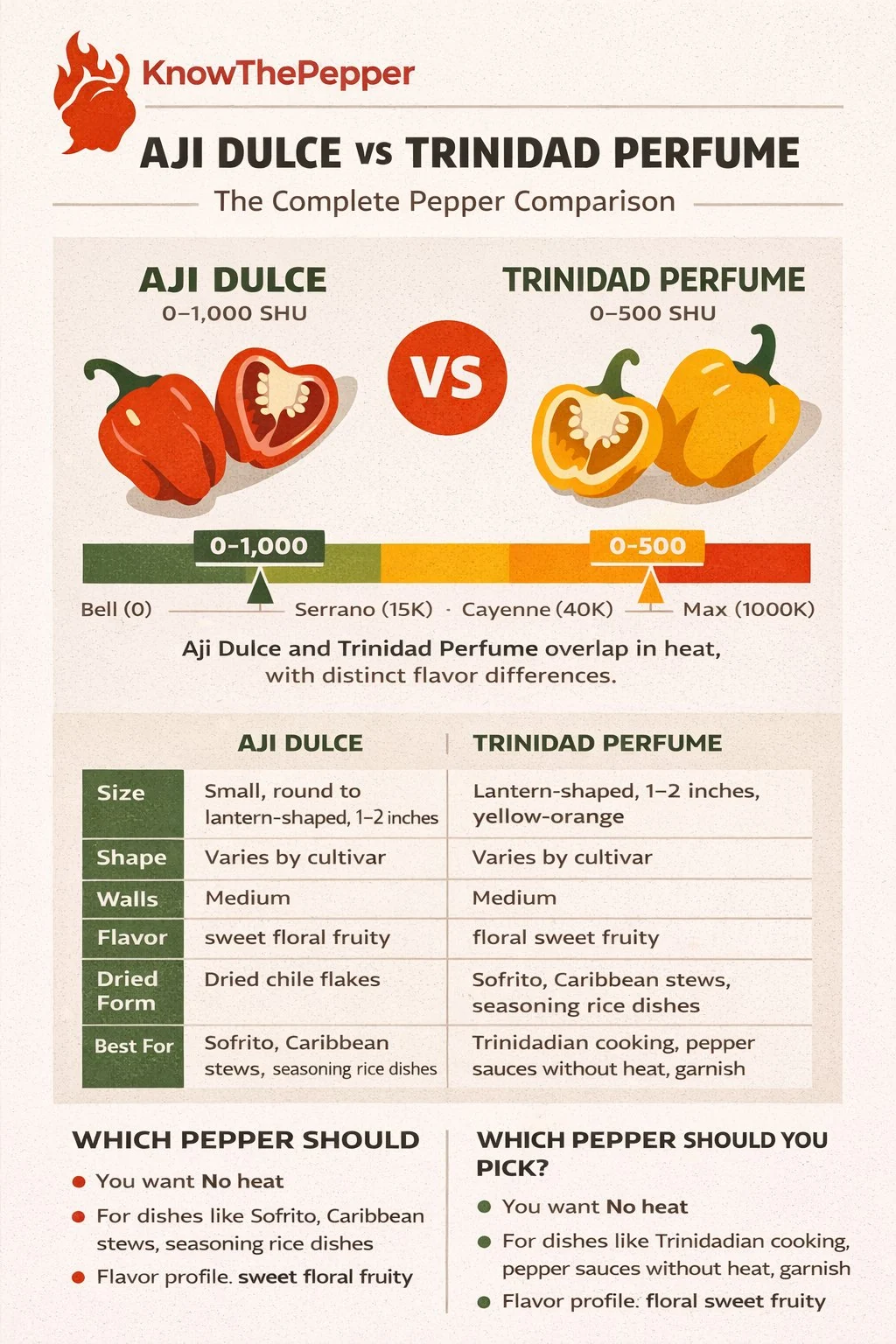
On the Scoville heat index, Aji Dulce registers between 0 and 500 SHU — effectively zero heat for most palates, with occasional plants producing the faintest background warmth. Trinidad Perfume measures a flat 0 SHU, a consistent result that holds across nearly every specimen grown.
For context, a typical serrano lands around 10,000-23,000 SHU. That means even the hottest Aji Dulce is roughly 20 to 46 times milder than a serrano — and Trinidad Perfume doesn't even register on the same scale. Both peppers belong to the no-heat end of the mild pepper spectrum, but Trinidad Perfume is the more reliable zero-heat option of the two.
The variation in Aji Dulce is worth noting. Because the pepper shares genetics with C. chinense relatives that do produce capsaicin, cross-pollination in home gardens can occasionally push individual fruits slightly above baseline. Trinidad Perfume, by contrast, was specifically selected for consistent non-pungency, so growers and chefs can count on it delivering zero burn every time.
Neither pepper activates the TRPV1 pain receptors responsible for the chemistry of capsaicin's heat response — there simply isn't enough capsaicinoid content to trigger that pathway. The result is a pepper that delivers the full sensory experience of a habanero — shape, color, aroma — without any of the physiological heat response.
Flavor Profile Comparison
The flavor hits you before the heat does — because there is no heat.
Crack open a Trinidad Perfume and the first thing that hits you is the smell — a heady, tropical fragrance that would be right at home on a habanero.
This is where the two peppers genuinely diverge, and where the comparison gets interesting.
Aji Dulce carries a sweet, fruity depth with a distinctly floral backbone. Grown across Venezuela and the wider Caribbean, it's the foundational ingredient in sofrito — and that role tells you everything about its flavor profile. It contributes body, sweetness, and a slow-building aromatic complexity that no bell pepper or banana pepper can replicate. The fragrance is reminiscent of a ripe habanero without the threat: stone fruit, citrus peel, and something almost herbal underneath.
Trinidad Perfume leans even harder into the aromatic direction, as the name suggests. The flavor is lighter and more delicate than Aji Dulce — less fruity sweetness, more pure floral perfume. Some growers describe it as smelling nearly identical to a Scotch Bonnet fresh off the plant, which makes sense given the shared C. chinense lineage. Compare that to the sweet fruity warmth in the Aji Dulce vs Scotch Bonnet heat gap and you can see how closely these peppers sit to their hotter relatives in aroma alone.
In raw preparations, Trinidad Perfume's gentler sweetness makes it slightly more versatile as a garnish or fresh addition. Aji Dulce holds up better to heat — its sugars caramelize nicely and its complexity deepens when cooked down into sauces or stews. Both lack the grassy bitterness of bell peppers, which is part of what makes them so appealing to cooks working with Caribbean or South American flavor profiles.
Culinary Uses for Aji Dulce and Trinidad Perfume
Aji Dulce is the backbone of traditional Caribbean sofrito, the aromatic base used in Puerto Rican, Dominican, and Venezuelan cooking. A standard sofrito ratio calls for roughly 6-8 Aji Dulce peppers per batch alongside onion, garlic, cilantro, and culantro. The pepper's sweetness and floral depth do the heavy lifting — substituting bell peppers produces a noticeably flatter result.
For dishes where you want the visual and aromatic character of South American peppers without heat, Aji Dulce is hard to beat. It works beautifully in rice dishes, bean stews, braised meats, and any preparation where low-and-slow cooking concentrates its sugars. Roasting intensifies the fruitiness considerably.
For a deeper look at swap options when Aji Dulce isn't available, the Aji Dulce alternatives guide covers the closest substitutes by use case.
Trinidad Perfume shines brightest in raw applications — fresh salsas, ceviche, and dishes where you want that unmistakable C. chinense fragrance without any heat risk. Its consistent zero-SHU rating makes it the safer choice when cooking for heat-sensitive guests. Stuff them whole like mini sweet peppers, slice thin over fish tacos, or blend into a fragrant hot sauce base where the aroma carries the dish.
Substitution between the two is straightforward: use a 1:1 ratio in most applications. The flavor difference is subtle enough that most diners won't notice the swap in cooked dishes. In raw preparations, expect Trinidad Perfume to read slightly lighter and more floral, while Aji Dulce brings more fruity sweetness.
Both peppers work well pickled — their thin walls absorb brine quickly and the floral notes survive the acidity surprisingly well. For a flavor contrast comparison that shows how these mild aromatics stack up, the sweet vs mild heat gap between Biquinho and Aji Dulce is a useful reference point.
Dried Aji Dulce loses some of its fresh fragrance but develops a concentrated sweetness useful in spice blends. Trinidad Perfume doesn't dry as well — the aroma that defines it fades significantly.
Which Should You Choose?
If you're cooking Caribbean food authentically — sofrito, sancocho, pernil — Aji Dulce is the correct choice. Its flavor is more complex, its sweetness more pronounced, and it's the pepper those recipes were built around. The slight SHU variability is a non-issue in practice.
Trinidad Perfume wins on consistency and aroma intensity. For anyone who wants guaranteed zero heat — cooking for children, heat-sensitive guests, or situations where a single hot pepper would ruin a dish — Trinidad Perfume's flat 0 SHU is a genuine advantage. Its fragrance is arguably more dramatic than Aji Dulce's, making it the better choice for raw preparations where that habanero-adjacent perfume is the whole point.
Both belong to the broader C. chinense botanical family — which explains why they smell like habaneros while delivering none of the heat. For most home cooks, Aji Dulce is the more versatile everyday pepper. Trinidad Perfume is the specialist tool: reach for it when aroma and zero heat are the only things that matter.
Can You Substitute One for the Other?
Yes — direct substitution works. Aji Dulce and Trinidad Perfume are close enough in heat to swap at roughly 1:1. The main difference will be flavor. For more swap options, explore ranked alternatives with conversion ratios.
Growing Aji Dulce vs Trinidad Perfume
If you’re deciding which pepper to grow at home, consider your climate and patience level. Aji Dulce and Trinidad Perfume have different maturation times and temperature preferences. Hotter varieties generally need a longer, warmer growing season to develop their full capsaicin content. Our zone-based planting date tool can pinpoint the best sowing window for your area.
Start seeds indoors 8–10 weeks before last frost. Germination is reliable at soil temperatures above 80°F, so bottom heat helps considerably.
Plant spacing of 18–24 inches gives the bushy plants room to branch. They're productive in containers too — a five-gallon pot works well on a patio or balcony.
For anyone starting from seed for the first time, the practical guide to growing from seed covers the fundamentals that apply directly here. If you're growing multiple varieties close together, knowing how to hand-pollinate for variety isolation keeps strains true — important if you're saving seeds.
Growing Trinidad Perfume follows the same rhythm as other C. chinense varieties, which means patience is required.
For anyone new to the species, the germination and full growing walkthrough covers the fundamentals well. Trinidad Perfume is considered approachable for the species — it is more forgiving of temperature swings than many of its hotter chinense relatives.
Transplant after all frost risk has passed into full sun with well-draining soil. Spacing matters more than many growers expect; the practical guidance on pepper plant spacing explains why crowding reduces airflow and invites disease.
History & Origin of Aji Dulce and Trinidad Perfume
Both peppers carry centuries of culinary heritage. Aji Dulce traces its roots to Venezuela, while Trinidad Perfume originates from Trinidad. Understanding their backstory helps explain why each pepper developed its distinctive traits.
Buying & Storage
Whether you’re shopping for Aji Dulce or Trinidad Perfume, the same quality indicators apply. Fresh peppers should feel firm and heavy for their size, with taut, glossy skin and no soft or wet spots. Minor stem cracks known as “corking” are perfectly normal and often indicate a mature, flavorful pod.
- Firm pods with taut skin and consistent color
- Should feel heavy relative to size
- Minor stem cracks (“corking”) are normal
- Avoid anything soft, shriveled, or with dark wet spots
- Fresh: Paper bag, crisper drawer — 1–2 weeks
- Frozen: Wash, dry, freeze on sheet pan — 6+ months
- Dried: Airtight, away from light — up to 1 year
The Verdict: Aji Dulce vs Trinidad Perfume
Aji Dulce and Trinidad Perfume sit in the same heat tier but serve different roles. Aji Dulce delivers its distinctive sweet and aromatic character. Trinidad Perfume, with its fruity and floral profile, excels in everyday cooking.
Frequently Asked Questions
Related Comparisons
Sources pending verification.