Aji Amarillo vs Aji Cristal Showdown: Heat, Flavor & Uses
Aji Amarillo and Aji Cristal are two C. baccatum peppers from South America that share an identical heat range of 30,000-50,000 SHU — yet they taste surprisingly different in the kitchen. The Amarillo leans toward deep, raisin-like fruit, while the Cristal delivers a brighter, tangier bite. Choosing between them comes down to flavor direction, not heat tolerance.

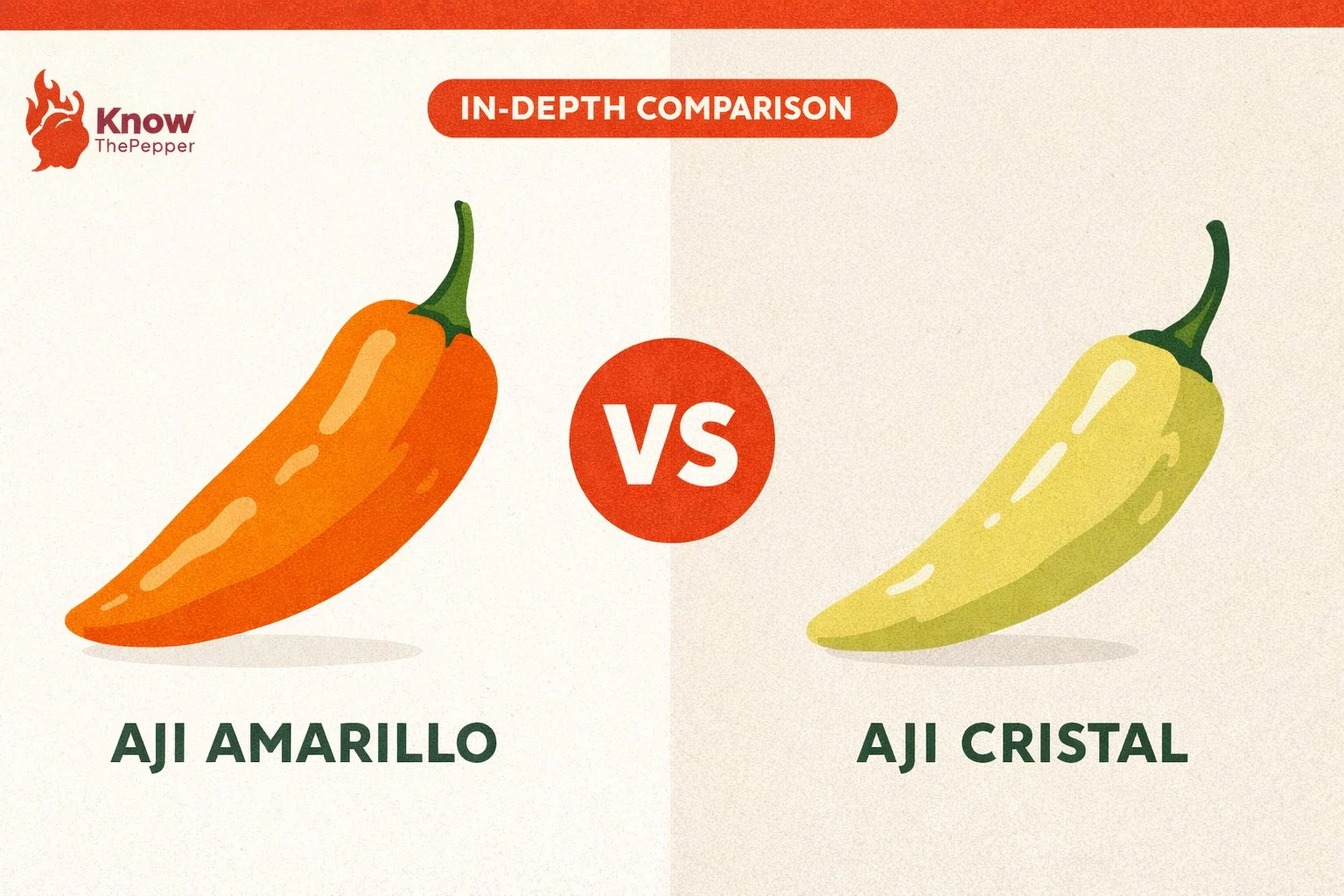
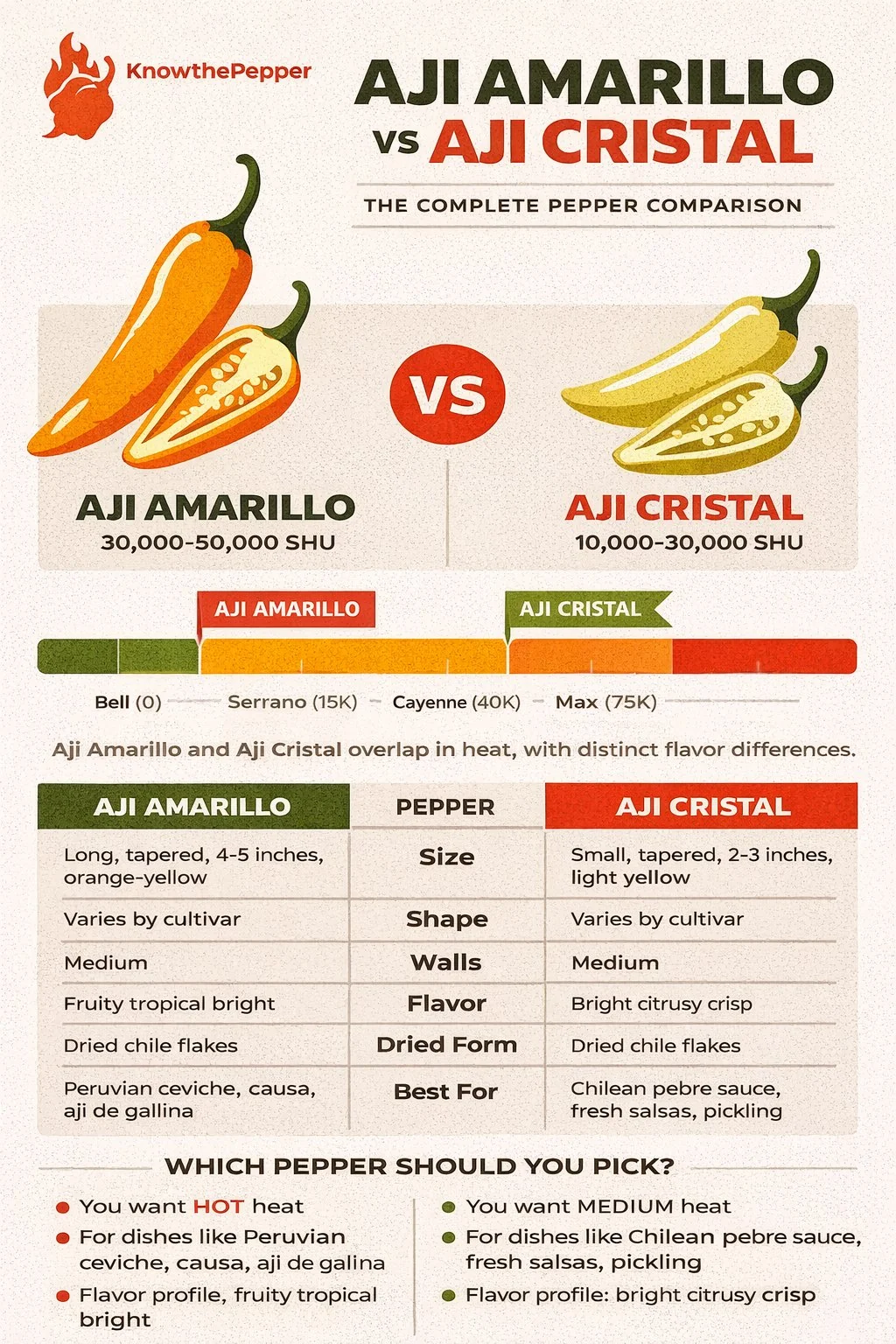
Aji Amarillo measures 30K–50K SHU while Aji Cristal registers 30K–50K SHU — roughly equal in heat. Aji Amarillo is known for its fruity and raisin-like flavor (C. baccatum), while Aji Cristal offers fruity and tangy notes (C. baccatum).
- Species: Both are C. baccatum
- Best for: Aji Amarillo excels in everyday cooking and salsas, Aji Cristal in fresh salsas and mild recipes
Aji Amarillo vs Aji Cristal Comparison
Aji Amarillo vs Aji Cristal Heat Levels
Both peppers land squarely in the hot pepper classification band at 30,000-50,000 SHU, which puts them roughly 6-10 times hotter than an Anaheim pepper (typically 500-2,500 SHU). That gap is significant — an Anaheim barely registers for most people, while these two aji varieties produce a sustained, full-mouth burn that demands attention.
The Scoville scale, which you can explore through the Scoville unit measurement method, places both peppers in the same bracket as cayenne at its lower end and approaching the base of habanero territory at the top. Neither pepper is a one-trick heat bomb — the burn builds gradually rather than hitting instantly, a trait common across the C. baccatum botanical family.
What separates them heat-wise is texture of delivery, not intensity. Aji Amarillo tends to concentrate heat at the back of the palate and throat, giving a lingering warmth. Aji Cristal often registers more upfront, with a sharper initial spike that fades faster. Both clock the same SHU numbers, but the subjective experience differs enough that cooks notice. The capsaicin binding process — specifically the TRPV1 heat-trigger response — is identical in both, but the pepper's sugar and acid content shapes how quickly that signal arrives.
For context, this heat level sits comfortably above serrano territory but well below habanero. Anyone comfortable with cayenne-spiced food will handle either pepper without trouble.
Flavor Profile Comparison
Long before Spanish conquistadors arrived in South America, the aji amarillo was already woven into the fabric of Andean civilization.
The first time I bit into an aji cristal, I expected heat and got a conversation.
This is where the two peppers genuinely diverge. Aji Amarillo, the backbone of Peruvian pepper-based cooking traditions, carries a distinctive raisin-like depth — dried fruit sweetness layered beneath the heat, with subtle floral notes and a richness that holds up through long cooking. It's why Peruvian cooks have used it in stews and sauces for centuries; the flavor deepens rather than disappears when simmered.
Aji Cristal, a variety rooted in South American pepper-growing regions, goes a different direction entirely. The flavor profile is tangy and bright — closer to citrus peel than dried fruit, with a clean acidity that cuts through fat. Fresh Aji Cristal has an almost effervescent quality, which is why it works particularly well in ceviches, fresh salsas, and vinegar-based preparations where that acidity is an asset rather than a distraction.
Aroma differences are equally noticeable. Aji Amarillo smells tropical and slightly musky when sliced; Aji Cristal has a sharper, more herbaceous scent. In blind tastings, people often guess them as unrelated peppers despite the identical heat numbers.
Both share the fruity backbone typical of C. baccatum varieties — a characteristic that separates this species from the earthier C. annuum or the intensely floral C. chinense. But within that shared framework, Amarillo reads as warm and complex while Cristal reads as cool and electric. Neither is a substitute for the other when flavor is the priority.
Culinary Uses for Aji Amarillo and Aji Cristal
Aji Amarillo has one of the most defined culinary identities of any South American pepper. It's the foundation of aji de gallina (Peruvian creamed chicken), causa (layered potato dish), and countless Nikkei-Peruvian fusion preparations. Paste form — made by roasting, peeling, and blending — is the standard delivery method. A tablespoon of aji amarillo paste carries the flavor of roughly 2-3 fresh peppers and is the format most commonly found outside Peru.
For substitution, the aji amarillo substitute ratio guide covers the full range of options, but Aji Cristal is actually one of the closer swaps when you need the same heat level with a slightly different flavor direction. Use a 1:1 ratio by volume when substituting fresh, though expect a tangier, less sweet result.
For a side-by-side heat and flavor breakdown with Aji Limo — another bright, citrusy baccatum — the flavor gap between Amarillo and Cristal becomes even clearer by comparison.
Aji Cristal shines in applications where acidity matters. Fresh salsas, escabeche, and citrus-marinated fish dishes benefit from its tangy punch. It's also excellent pickled — the natural acidity of the pepper amplifies the brine rather than fighting it. Roasting softens the tang considerably and brings out a sweeter side, making it more Amarillo-adjacent when cooked.
Both peppers dry well, though Amarillo loses less of its character in the drying process. Dried Cristal becomes more raisin-like itself, ironically converging toward Amarillo's profile. Fresh applications are where the difference matters most.
For a deeper contrast between Amarillo's fruity heat and Aji Panca's smoky depth, the flavor difference within the baccatum family becomes even more apparent — Cristal sits between those two poles, brighter than Panca but less sweet than Amarillo.
Which Should You Choose?
If you're cooking traditional Peruvian dishes — aji de gallina, causa, lomo saltado — Aji Amarillo is non-negotiable. Its raisin-fruit depth is baked into those recipes at a foundational level, and no substitution fully replicates it. The comparison of Amarillo's fruity profile against habanero's floral intensity shows just how specific that flavor identity is.
Aji Cristal earns its place in the kitchen when brightness is the goal. Ceviches, fresh salsas, pickled preparations, and vinegar-forward sauces are where it outperforms Amarillo. The tangy acidity does work that Amarillo's sweetness cannot.
For heat alone, there's no difference — both sit at 30,000-50,000 SHU, both qualify as peppers in the hot intensity classification, and both require the same handling precautions. The decision is purely about flavor direction: deep and sweet versus bright and tangy.
Grow both if you can. They're close enough in heat that you can use either in a pinch, but different enough in flavor that having both opens up more cooking options than either alone.
Can You Substitute One for the Other?
Yes — direct substitution works. Aji Amarillo and Aji Cristal are close enough in heat to swap at roughly 1:1. The main difference will be flavor. For more swap options, explore ranked alternatives with conversion ratios.
Growing Aji Amarillo vs Aji Cristal
If you’re deciding which pepper to grow at home, consider your climate and patience level. Aji Amarillo and Aji Cristal have different maturation times and temperature preferences. Hotter varieties generally need a longer, warmer growing season to develop their full capsaicin content. Our zone-based planting date tool can pinpoint the best sowing window for your area.
Aji amarillo is a warm-season perennial grown as an annual in most climates. Seeds need 80–90 days from transplant to first harvest, so starting indoors 10–12 weeks before last frost is standard practice.
The plants grow tall, often reaching 3–4 feet, and benefit from staking once pods set. They prefer well-draining soil with a pH between 6.
For cultivation characteristics, compare this to peppers grown in upward-facing clusters — aji amarillo pods hang downward, which helps with water drainage off the fruit. Pods start green and ripen through yellow to orange; the sweetest flavor develops at full orange ripeness.
C. baccatum varieties like aji cristal are vigorous growers once established, but they need time — expect 90–100 days from transplant to ripe fruit.
These plants get tall. Aji cristal can reach 3–4 feet in a good season and benefits from staking once it starts setting fruit.
For growers familiar with cayenne's straightforward cultivation traits, aji cristal requires a bit more patience but isn't dramatically harder. The main challenge is the long season; in short-summer climates, starting seeds early and using row cover to extend the season makes the difference.
History & Origin of Aji Amarillo and Aji Cristal
Both peppers carry centuries of culinary heritage. Aji Amarillo traces its roots to Peru, while Aji Cristal originates from Peru. Understanding their backstory helps explain why each pepper developed its distinctive traits.
Buying & Storage
Whether you’re shopping for Aji Amarillo or Aji Cristal, the same quality indicators apply. Fresh peppers should feel firm and heavy for their size, with taut, glossy skin and no soft or wet spots. Minor stem cracks known as “corking” are perfectly normal and often indicate a mature, flavorful pod.
- Firm pods with taut skin and consistent color
- Should feel heavy relative to size
- Minor stem cracks (“corking”) are normal
- Avoid anything soft, shriveled, or with dark wet spots
- Fresh: Paper bag, crisper drawer — 1–2 weeks
- Frozen: Wash, dry, freeze on sheet pan — 6+ months
- Dried: Airtight, away from light — up to 1 year
The Verdict: Aji Amarillo vs Aji Cristal
Aji Amarillo and Aji Cristal sit in the same heat tier but serve different roles. Aji Amarillo delivers its distinctive fruity and raisin-like character. Aji Cristal, with its fruity and tangy profile, excels in everyday cooking.
Frequently Asked Questions
Related Comparisons
Sources pending verification.