

Malagueta Pepper Substitute by Form, Starting With Bird's Eye Chile
Bird's eye chile is the most practical fresh Malagueta substitute when a recipe needs a small, thin-walled pod with concentrated heat.
Fresh Tabasco or clearly labeled piri-piri can be closer physical matches when they are available.
First identify whether the missing ingredient is fresh, preserved, bottled, or dried. Those forms contribute different amounts of pepper solids, liquid, acid, and salt, and published heat ranges are too inconsistent to support a universal pod ratio.
Fresh pod, preserve, sauce, or dried heat?
The recipe usually reveals the required form through its unit and timing. A count of whole peppers points to pods, a drained spoonful points to a preserve, teaspoons added at the table suggest sauce, and a pinch bloomed in cooking liquid behaves like dried chile.
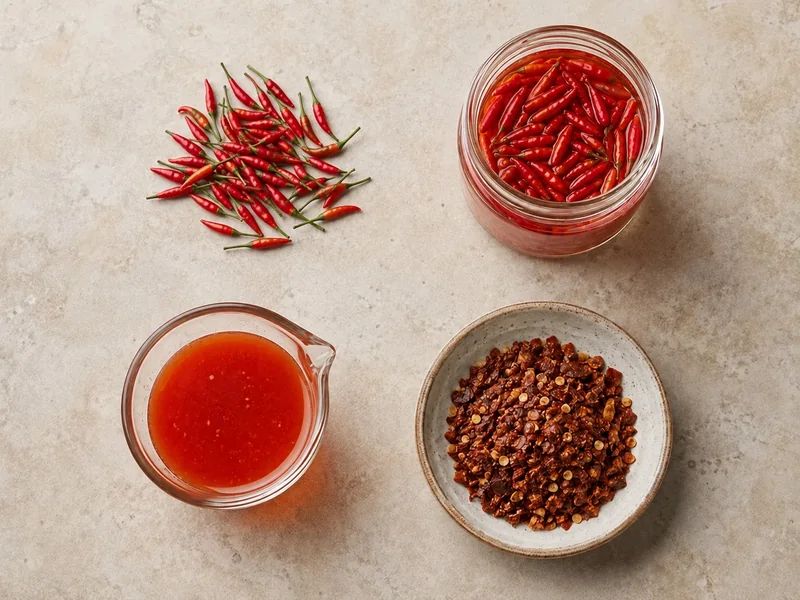
Embrapa records Malagueta sold fresh and processed into liquid sauces, preserves, jellies, and pastes.
The same pepper name can therefore describe ingredients that behave very differently in a pan.
For a fresh pod, preserve small pieces and clean heat. For a whole preserve, keep the fruit and its liquid separate in your calculation, while a prepared sauce requires you to account for seasoning already inside the bottle.
Dried chile belongs in the last branch because it supplies concentrated heat with almost no fresh moisture. A form mismatch usually changes the dish more than a modest difference on the Scoville scale.
Which Malagueta substitutes work best?
Choose the candidate that preserves the missing ingredient's job. The first three options supply actual pepper flesh, while the remaining choices solve narrower sauce or background-heat problems.
Bird's Eye Chile
Closest MatchBird's eye chile is the most practical fresh replacement. Iowa State places bird's eye and Malagueta in the same 50,000 to 100,000 SHU band, and both are small enough to mince into relishes, bean dishes, and seafood stews without adding much vegetable bulk.
The flavor is not identical, and supermarket packages may use “bird's eye” for more than one small hot chile. Compare an equal prepared volume in a spoonful of the food, then increase only after the heat has dispersed.
Fresh Tabasco Pepper
Runner-UpFresh Tabasco is the strongest same-species choice. Embrapa identifies Malagueta and Tabasco as Capsicum frutescens peppers, while Iowa State places Tabasco lower at 25,000 to 50,000 SHU.
Its small upright fruit and thin walls make it useful for chopped condiments, beans, and whole-pepper vinegar. Availability is the main drawback, and its lower published band means the first sample may need another measured addition.
Piri-Piri or African Bird Chile
Also GreatPiri-piri works when the package contains small hot pods rather than a seasoned sauce. Oregon State lists piri and African bird's-eye types within Capsicum frutescens, which gives them a useful botanical and physical connection to Malagueta.
Market names are inconsistent. Check whether the package holds fresh fruit, dried pods, powder, or sauce before measuring, because only the fresh or rehydrated pod supplies visible pepper pieces.
Plain Red Pepper Sauce
A thin red pepper sauce fits a liquid-condiment job. It can season a finished stew or replace heat at the table, but it also brings its own vinegar and salt.
Choose a bottle without smoke, strong sweetness, or a long list of aromatics when the original condiment is bright and direct. Mix it into a sample of the food before changing the salt or acid in the full batch.
Habanero
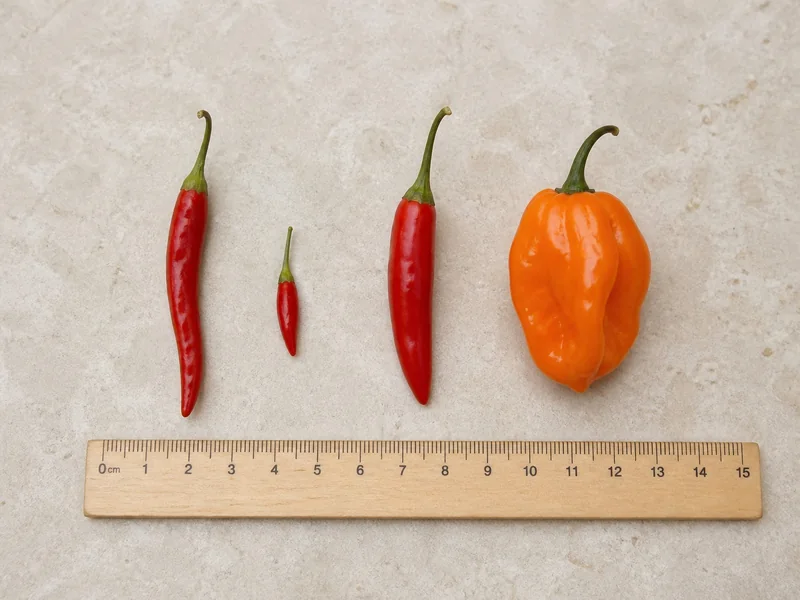
Habanero suits blended preparations that can absorb its fruitier aroma. Embrapa describes the larger Capsicum chinense fruit as strongly aromatic and reports a higher 250,000 to 700,000 SHU range.
Use a small weighed or finely minced piece, not one whole pod in place of one Malagueta. A simple vinegar condiment exposes the floral difference, while a blended sauce with onion, tomato, or fruit can integrate it more easily.
Cayenne or Red Pepper Flakes
Cayenne and red pepper flakes solve background heat, not fresh-pepper texture. Ground cayenne disperses evenly in soup, beans, and braises, while flakes leave visible particles and release heat more slowly.
Bloom a small pinch in the hot liquid and wait before judging it. Neither choice belongs in a recipe that needs whole preserved peppers, crisp fresh pieces, or the aroma of newly cut chile.
Why does a fixed pod ratio fail?
Published figures do not support a universal one-pod-for-one-pod rule. Embrapa reports 150,000 to 165,000 SHU for Malagueta, while Iowa State places it at 50,000 to 100,000 SHU.
The logarithmic chart keeps the wide ranges readable, but it also exposes uncertainty.
Cultivar, ripeness, growing conditions, sample selection, and source method can move a pod away from the number printed in a guide.
- Prepare the candidate in the recipe's form. Mince a fresh pepper, dilute sauce into liquid, or bloom dried chile in the hot base.
- Move one spoonful aside and use it as a sample of broth, beans, sauce, or relish rather than gambling on the full batch.
- Wait for the heat to spread because fresh and dried chile can taste stronger after extraction and mixing.
- Scale from the prepared amount, then hold back a little for the final correction.
Pod count is especially weak when one option is a larger habanero or a smaller bird's eye chile. Prepared volume or weight gives a more useful starting comparison, but tasting remains the final control.
Can a bottled pepper sauce replace Malagueta?
Start with the ingredient list, then tip the bottle. A thin vinegar sauce behaves differently from whole peppers in liquid, while a thick sauce may contain sugar, garlic, fruit, starch, or smoke that the original dish never asked for.
TABASCO lists distilled vinegar, red pepper, and salt in its Original Red Sauce. Embrapa describes Malagueta preserves made with vinegar, oil, or cachaça as well as mixed pepper sauces, so the words “pepper sauce” alone do not establish equivalence.
Dose the chile component into a small sample before changing anything else.
Reduce other vinegar or citrus only after the replacement tastes bright enough.
Season the full dish last because bottled sauce may already carry substantial salt.
Treat sweetness, smoke, garlic, and thickness as screening questions rather than later corrections.
If any one of them dominates the label or the aroma, choose a plainer sauce or build heat from a fresh chile and adjust vinegar separately.
For one spoonful of Malagueta preserve, drain and measure the pepper solids apart from the liquid. Replace the solids with minced bird's eye or fresh Tabasco, then add only enough plain vinegar to restore the original looseness.
A fresh pepper can season a wet dish without adding bottled sauce, but it cannot recreate an acidic table condiment by itself.
In that case, make the heat correct first and add acid and salt in separate, small steps.

Which substitute fits the dish?
Embrapa names Malagueta in moqueca, feijoada, acarajé, seafood, beans, meat dishes, soups, and table preserves.
Those uses expose different weaknesses, so one candidate should not win every row.
| Dish or use | Property to preserve | Best starting choice | Adjustment |
|---|---|---|---|
| Moqueca or seafood stew | Clean heat without smoke | Bird's eye chile | Mince finely and test in the broth |
| Feijoada, beans, or braise | Heat spread through a large pot | Bird's eye, cayenne, or flakes | Test in a ladleful before scaling |
| Table pepper sauce | Heat balanced with acid and salt | Plain thin red pepper sauce | Correct vinegar and salt afterward |
| Whole-pepper vinegar | Intact small fruit in liquid | Fresh Tabasco or piri-piri | Follow a tested preservation formula |
| Raw relish | Fresh aroma and small pieces | Bird's eye or fresh Tabasco | Rest the relish before final tasting |
Moqueca exposes smoke and heavy fruitiness quickly. Bird's eye is the safer fresh starting point, while a very small amount of habanero makes more sense in a blended sauce whose other ingredients can absorb its aroma.
Beans and braises disperse heat through a larger mass and tolerate cayenne or flakes more easily. Add dried chile early enough to bloom, but keep a fresh or bottled table condiment separate when diners want different heat levels.
Whole-pepper vinegar is less forgiving because pod size, skin, liquid, acid, and salt remain visible in the result.
A similar fresh pod solves the physical part, while a tested recipe must still govern preservation.

When leaving Malagueta out works
Omission works when Malagueta supplies optional heat and the base dish is already balanced.
It works especially well when a separate pepper sauce can be offered at the table for diners who want it.
- Skip it when the recipe adds chile only to taste and no pepper solids need to remain visible.
- Replace the solids when chopped or whole pepper contributes texture to a relish or preserve.
- Replace the liquid seasoning when the missing spoonful also contributes vinegar and salt.
- Keep heat separate when children or heat-sensitive diners share the same pot.
Do not compensate by pouring extra vinegar directly into the full dish.
Taste the base first, then correct acid and salt only if the omitted condiment had been part of the recipe rather than an optional garnish.
For moqueca or beans, a mild base plus a bright table sauce can be a cleaner solution than a poor in-pot substitute. For a pepper relish or whole preserve, leaving the ingredient out removes structure as well as heat, so omission is no longer equivalent.
What should you not use as a direct substitute?
Grains of paradise is a naming trap. Kew classifies it as Aframomum melegueta in the ginger family, so it contributes warm, peppery seeds instead of chile heat and red pepper flesh.
The spelling similarity explains the confusion but does not make the ingredients interchangeable.
- Bell pepper or Habanada alone adds flesh without meaningful heat. Either can be one part of a two-ingredient solution when a separate chile supplies the burn.
- Jalapeño or a thick New Mexico chile adds far more vegetable mass for the same prepared amount.
- Chipotle introduces smoke that can redirect seafood, beans, and a bright vinegar condiment.
- Dry powder cannot replace visible fresh pieces or whole preserved fruit.
A tested shelf-stable formula must govern the jar. The National Center for Home Food Preservation specifies 5 percent vinegar, water, salt, headspace, and processing time for its pickled-hot-pepper recipe.
A cooking substitution does not authorize changing those controls. Wear gloves while handling hot peppers and follow the tested process for the jar size and elevation.
- Embrapa Hortaliças, Pimentas do gênero Capsicum no Brasil
- Embrapa, Pimenta Malagueta consumer guide
- Iowa State University Extension, Growing Peppers in the Home Garden
- Oregon State University Extension, Grow Your Own Peppers
- North Carolina State Extension, Capsicum frutescens
- Kew Plants of the World Online, Aframomum melegueta
- National Center for Home Food Preservation, Pickled Hot Peppers
- USDA GRIN, Capsicum frutescens taxonomy
- TABASCO Brand, Original Red Sauce