

Out of Gochugaru Flakes? Swaps for Their Smoky-Sweet Heat and Red Color
Gochugaru flakes are the backbone of kimchi, tteokbokki, and Korean BBQ marinades, their smoky-sweet character and brick-red color are notably hard to replicate. When you're mid-recipe and the bag is empty, you need a substitute that matches both the heat and the flavor profile, not just one or the other. The options below are ranked by how closely they mirror what gochugaru actually does in a dish.
Heat at a glance
What Can You Use Instead of Gochugaru Flakes?
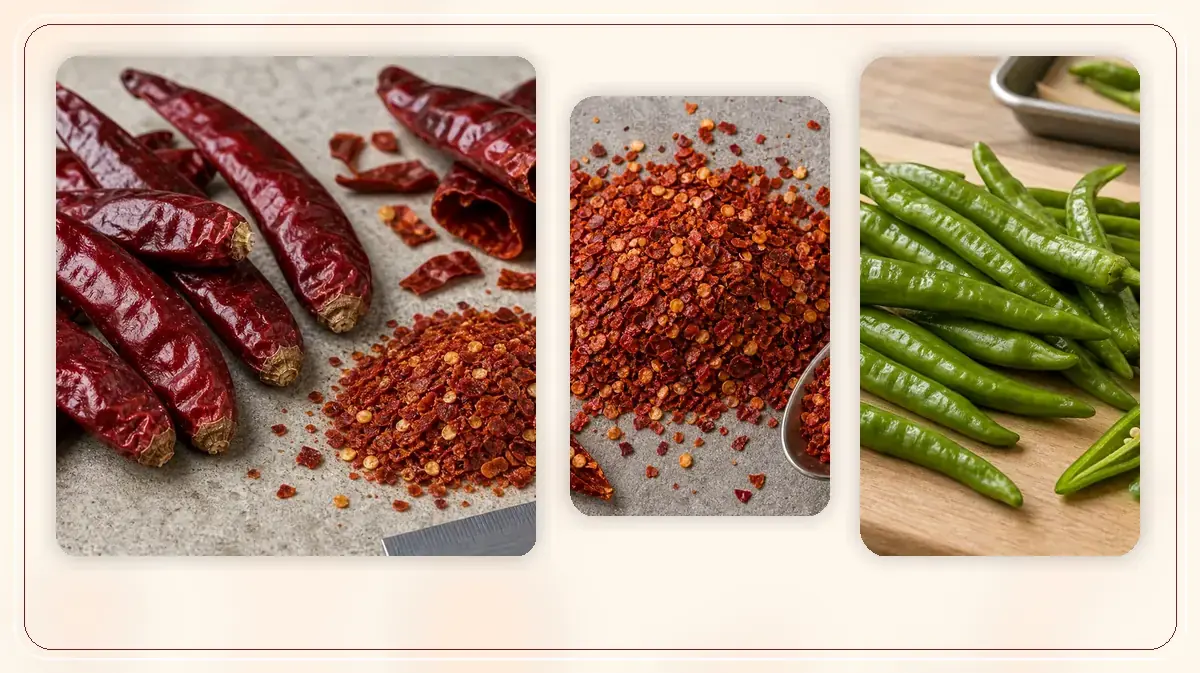
Gochugaru (Whole Flakes vs. Powder Form)
Closest MatchIf your recipe calls for gochugaru flakes specifically, the same chile in powder form is your closest swap. Both land in the 1,500-10,000 SHU range and share identical flavor DNA, that signature smoky sweetness that makes Korean cooking so distinctive.
The Gochugaru stays intact.
You just lose some texture. Use ¾ teaspoon powder for every 1 teaspoon flakes since ground spice packs more surface area per volume.
Color contribution remains the same vivid red.
Texture matters in kimchi and cucumber salad. Powder disperses faster and can make brine look cloudy, while flakes cling to cabbage leaves and give the familiar red speckled look.
If powder is the only form available, mix it with a little brine first and add it in stages.
That prevents dry clumps and lets you stop before the color becomes muddy.
Chipotle
Runner-UpChipotle is the dark horse here.
Before thinking about numbers, consider the flavor: smoke-forward with a dried fruit sweetness that echoes gochugaru more closely than most Western chiles. At 2,500-8,000 SHU, the chipotle's smoky dried-chile depth sits comfortably within gochugaru's heat window.
Use a 1:1 ratio for flakes, but taste first, chipotle carries more earthiness and less of that clean sweetness.
Works best in braises, stews, and marinades where the smoke can bloom.
Fresno Pepper (Dried and Crushed)
Also GreatFresh Fresnos won't do the job, but dried and crushed Fresnos get surprisingly close.
Their 2,500-10,000 SHU range overlaps almost perfectly, and the Fresno's fruity-smoky dried character mimics gochugaru's brightness better than most Latin American chiles. Start with a 1:1 substitution and adjust up slightly if your Fresnos are on the milder end.
The red color contribution is solid.
Best for kimchi-style applications where the fruity note matters.
Dried Fresno works when you need a North American pantry workaround with moderate heat and a clean red chile flavor. It is fruitier and less smoky than classic gochugaru, so it fits stir-fry sauce, fried rice, eggs, and quick marinades better than long-fermented kimchi.
Use 3/4 teaspoon crushed dried Fresno per 1 teaspoon gochugaru flakes, then add a pinch of sweet paprika if color looks weak.
Puya Pepper
Puya is underrated in this context. Sitting at 5,000-8,000 SHU, it's a touch hotter than mid-range gochugaru, but the Puya's fruity heat with smoky undertones makes it a natural fit for Korean-adjacent dishes.
Use ¾ teaspoon crushed Puya for every 1 teaspoon gochugaru flakes to keep heat in check.
The color is slightly darker and the flavor leans more toward dried cherry than the clean sweetness of Korean chile, works well in soups and stews, less ideal for fresh kimchi.
Morita Pepper
Morita is essentially a smoke-dried jalapeño, which puts its Morita Pepper in interesting territory as a gochugaru stand-in.
At 5,000-10,000 SHU, it runs hotter than mild gochugaru batches, so dial back to ½ teaspoon crushed Morita per teaspoon of flakes. The smoke is more aggressive than gochugaru's subtle dried-fruit smokiness, so this substitute works better in bold dishes, think braised meats, spicy tofu stews, rather than anything where gochugaru's delicacy is the point.
Pasilla de Oaxaca
This one requires some hunting, but the payoff is real. The Pasilla de Oaxaca's rich, smoky depth at 4,000-10,000 SHU makes it one of the more complex substitutes on this list.
It's a smoked chile (like chipotle) but with a richer, almost chocolatey undertone that pairs well with fermented flavors in kimchi or doenjang-based dishes.
Use a 1:1 ratio for crushed flakes. Color will be darker, more brown-red than the vivid brick of gochugaru, which matters if presentation is a priority.
7.
Korean Green Pepper (Dried)
This is the lowest-heat option at 1,500-10,000 SHU, and in dried, crushed form the Korean green pepper's mild grassy flavor shares the same C. annuum genetics as gochugaru. The flavor profile skews grassy and mild rather than smoky-sweet, so it's best used when heat level match matters more than flavor match.
Swap 1:1 and add a small pinch of smoked paprika to approximate the smokiness gochugaru brings.
Useful for dishes where you want Korean chile character without adding heat.
For a broader look at where these peppers fall on the medium SHU bracket, that hub covers the full range of chiles operating in this zone. If you're comparing gochugaru flakes directly against chipotle for a specific recipe, the gochugaru vs. chipotle heat gap and flavor differences break it down side by side.
Best Pick by Application
For kimchi, gochugaru powder is the closest substitute for flakes because the chile, color, and sweetness stay the same. Use 3/4 teaspoon powder for 1 teaspoon flakes, then adjust texture with a little less rice paste or brine.
For tteokbokki and stews, chipotle is too smoky for a perfect match, but it works when the dish can handle deeper flavor. Use 1:1, then reduce any extra smoke or toasted spice.
For dry seasoning blends, crushed Fresno or mild red pepper flakes are safer than cayenne. They keep the heat closer to Korean chile without overwhelming the blend.
Which Peppers Make Poor Gochugaru Flakes Substitutes?
Cayenne seems like an obvious swap given its red color and powdered form, but it runs 30,000-50,000 SHU - three to five times hotter than most gochugaru, and completely lacks the smoky-sweet character that defines the Korean chile. Drop it into kimchi at a 1:1 ratio and you'll blow out the dish.
Ancho chile is mild enough at 1,000-2,000 SHU and has some dried-fruit sweetness, but the flavor skews toward raisin and chocolate rather than the clean, bright smokiness of gochugaru. It also contributes a muddy brown color instead of the vivid red that matters for dishes like kimchi or tteokbokki.
Paprika (standard sweet) gets recommended often as a gochugaru substitute, but regular paprika has almost no heat and a flat, one-dimensional flavor. Even smoked paprika lacks the chile's natural sweetness and brightness.
It can work as a color fix in a pinch, but as a flavor substitute it falls short of what any of the seven ranked options above can deliver.
Straight cayenne is too hot for kimchi at the same volume. Use it only as a tiny heat booster.
Sweet paprika alone fixes color but not heat. Blend it with a small amount of mild chile flakes if color is the main concern.
Avoid hot red pepper flakes as a straight kimchi swap. They are usually sharper, seedier, and hotter than Korean flakes, and they lack the soft sweetness that balances garlic, ginger, and fish sauce.
If you must use them, combine a small pinch with paprika or dried Fresno rather than replacing the full amount.
Substitution tip: When substituting Gochugaru Flakes, start with less of a hotter substitute and add more to taste. For milder substitutes, increase the quantity.
Our swap ratio calculator gives precise conversion amounts, and the heat unit converter translates between Scoville and other scales.
Gochugaru Flakes Substitute FAQ
- Heat - Chile Pepper Institute, NMSU
- Korean Fermented Foods and Spice Use - Journal of Ethnic Foods