Sandia Pepper

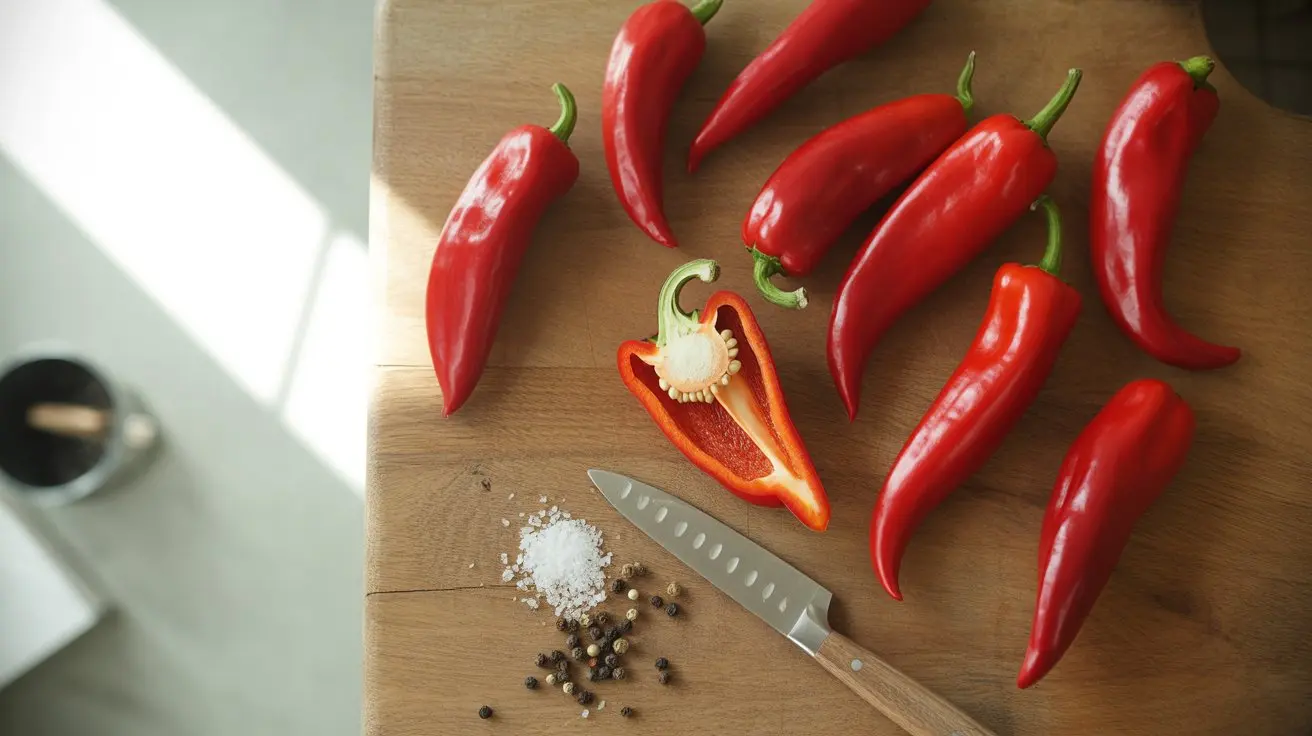
The Sandia pepper is a New Mexico-bred C. annuum variety developed at NMSU in the 1950s, registering 5,000–7,000 SHU. Elongated and bright red at maturity, it delivers a clean, sweet heat that made it a staple of New Mexican cuisine. Roughly comparable to a mid-range serrano's sharp bite, it bridges everyday cooking and regional chile tradition.
- Species: C. annuum
- Heat tier: Medium (1K–10K SHU)
What is Sandia Pepper?
Bred at New Mexico State University in 1956 by Dr. Roy Harper, the Sandia was engineered to give New Mexican farmers a higher-yielding, hotter alternative to the milder Anaheim types dominating the market. The name references the Sandia Mountains east of Albuquerque — fitting for a pepper that became synonymous with the state's agricultural identity.
At 5,000–7,000 SHU, the Sandia sits in the medium heat intensity range — enough warmth to register clearly on the palate without overwhelming a dish. The heat is clean and forward, building steadily rather than sneaking up on you, with a bright, sweet undertone that persists through cooking.
The pods grow 6–8 inches long, tapering to a point with smooth, glossy skin. They start green and ripen through a deep red, with both stages offering distinct culinary value. Green Sandia reads more grassy and sharp; red Sandia turns sweeter and more complex.
Within the broader American pepper tradition, the Sandia occupies a specific cultural niche — it's the workhorse of traditional New Mexican red and green chile sauces. Restaurants across the Rio Grande corridor have relied on it for decades, and it remains one of the most planted varieties in the Hatch Valley. Its place in the C. annuum botanical family means it shares genetics with everything from bell peppers to cayennes, but the Sandia's flavor profile stands apart.
History & Origin of Sandia Pepper
The Sandia pepper's origin is unusually well-documented for a regional variety. Dr. Roy Harper at New Mexico State University developed it through selective breeding, releasing it commercially around 1956. The goal was practical: New Mexico's chile industry needed a variety that could handle the state's arid conditions, produce high yields, and deliver more heat than the older Anaheim strains.
It quickly became a commercial staple, planted widely across the Hatch Valley and the broader Rio Grande agricultural corridor. For several decades it was among the most common red chiles processed into dried powder and canned green chile throughout the Southwest.
The Sandia's story connects directly to New Mexico's deep-rooted chile culture — a tradition stretching back centuries to indigenous cultivation. While newer NMSU varieties like NuMex Big Jim eventually surpassed it in commercial planting, the Sandia retained loyal followings among traditional growers and home gardeners who prize its balanced heat and reliable flavor.
How Hot is Sandia Pepper? Heat Level & Flavor
The Sandia Pepper delivers 5K–7K Scoville Heat Units, placing it in the Medium tier (1K–10K SHU).
Flavor notes: bright and sweet.
Sandia Pepper Nutrition Facts & Health Benefits
A 100g serving of fresh Sandia pepper provides roughly 40 calories, with most of that from carbohydrates. Red-ripe pods contain significantly more vitamin C than green — up to 150mg per 100g in mature red specimens, exceeding many citrus fruits by weight. Vitamin A content also increases substantially as pods ripen, driven by accumulating carotenoids.
Capsaicin, the compound responsible for the 5,000–7,000 SHU rating, has been studied for anti-inflammatory and metabolic effects — the biochemistry of how capsaicin interacts with pain receptors explains why moderate heat like Sandia's can feel simultaneously warm and pleasant. Fiber content runs about 1.5g per 100g.
Best Ways to Cook with Sandia Peppers
Sandia peppers work across an unusually wide range of preparations, which explains why they've stayed relevant in New Mexican kitchens for nearly 70 years.
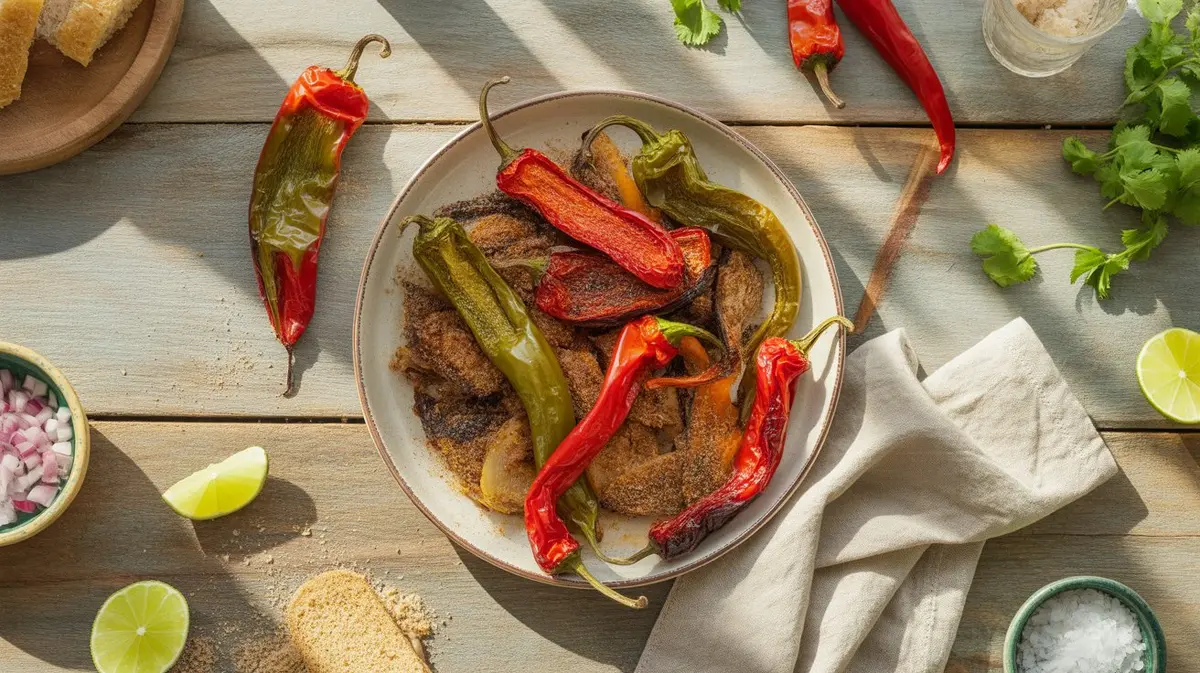
Roasted whole over an open flame or under a broiler, the skin blisters cleanly and the flesh softens into something rich and slightly smoky. This is the foundation of traditional New Mexican green chile sauce — peel the roasted pods, chop them roughly, and simmer with garlic, onion, and pork or chicken stock. The Sandia's sweetness keeps the sauce from turning harsh even when you use a lot of it.
Dried and ground, red Sandia becomes a pure red chile powder with real depth. It's not the same as generic supermarket chili powder — no cumin, no garlic, just concentrated pepper flavor with medium heat. Use it in enchilada sauce, pozole, or rubbed onto meat before grilling.
For fresh applications, the Sandia substitutes well anywhere you'd use something like the smoky depth of a dried chipotle's warmth but want a cleaner, less smoky profile. It also makes a solid swap for the bright, waxy bite of Hungarian wax peppers in pickled preparations.
Seed removal matters here — learning how to deseed peppers properly before roasting prevents bitterness from the seed mass. If the heat runs hotter than expected, reducing spice in a finished dish is easier with dairy-based sauces alongside.
Where to Buy Sandia Pepper & How to Store
Fresh Sandia peppers appear at New Mexico farmers markets and specialty grocers from late summer through early fall. Outside the Southwest, dried whole pods or ground powder are more accessible — look for labeled New Mexico red chile powder from reputable producers, as generic blends often substitute cheaper varieties.
Fresh pods keep 1–2 weeks refrigerated in a paper bag or loosely wrapped. For longer storage, roast and freeze: peel roasted pods, pack flat in freezer bags, and they'll hold for 6–8 months without significant flavor loss. Dried whole pods stored in a cool, dark pantry stay potent for up to a year. Ground powder degrades faster — use within 6 months for best flavor.
Best Sandia Pepper Substitutes & Alternatives
Whether you ran out of sandia pepper or just want to try something different, these peppers make solid stand-ins. We picked them based on heat range, flavor overlap, and how well they actually work in the same dishes.
Our top pick: Puya Pepper (5K–8K SHU). Same species (C. annuum) and nearly the same heat, so it swaps in at a 1:1 ratio without changing the character of the dish. The flavor leans fruity and smoky, which is close enough that most people won’t notice the difference in a cooked recipe.
How to Grow Sandia Peppers
The trickiest part of growing Sandia isn't getting seeds to sprout — it's managing the transition from transplant to outdoor conditions. These plants are sensitive to temperature swings in their first few weeks in the ground. A late cold snap after planting can stall growth for weeks, so wait until nighttime temps stay consistently above 55°F before moving them outside.
Sandia thrives in USDA zones 7–10, matching the high desert conditions of its New Mexico homeland. Full sun is non-negotiable — at least 8 hours daily. The plants reach 24–36 inches tall and benefit from light staking once pods start forming, since the elongated fruits add real weight to branches.
Soil should drain well but retain some moisture. Sandy loam amended with compost mirrors the Rio Grande Valley conditions where this variety developed. Water deeply but infrequently; Sandia is drought-tolerant once established, and overwatering encourages root rot more than most annuums.
Days to maturity run 75–80 days from transplant to green stage, with full red ripeness adding another 2–3 weeks. Pick green for fresh cooking or let pods hang until deep red for drying. Compared to the similarly-sized fruity heat of Guajillo, Sandia tends to set fruit more reliably in dry heat conditions.
Aphids are the main pest pressure. A strong water spray or neem oil application handles most infestations before they establish. Avoid planting in the same bed where tomatoes or other solanums grew the previous season.
Frequently Asked Questions
-
The Sandia registers 5,000–7,000 SHU, which puts it roughly in the same range as a mid-level serrano (typically 10,000–23,000 SHU) — meaning serranos run noticeably hotter. Sandia's heat is real but approachable, making it easier to use in larger quantities without overwhelming a dish.
-
Yes — Sandia and the distinctive flavor profile of Hatch-grown chiles overlap significantly, and the swap works well in most sauces and roasted preparations. The main difference is that Hatch is a regional designation rather than a single variety, so heat levels vary more widely across Hatch chiles than with Sandia.
-
Green Sandia is sharper and more vegetal, with the heat hitting quickly on the front of the palate. Red-ripe pods develop a sweeter, more complex flavor with a slightly smoky undertone that makes them better suited for dried powder and slow-cooked red sauces.
-
NMSU's Chile Pepper Institute sells authentic Sandia seeds directly, which is the most reliable source for true-to-type genetics. Several reputable seed companies including Baker Creek and Seed Savers Exchange also carry it, though availability varies by season.
-
No — they are distinct NMSU-bred varieties from different breeding programs, though both belong to the C. annuum species group and share New Mexican heritage. New Mexico No. 9 is milder (typically 1,000–5,000 SHU), while Sandia runs hotter and has a more pronounced sweetness at maturity.
- New Mexico State University Chile Pepper Institute - Variety History
- USDA GRIN - Capsicum annuum accession data
- New Mexico Department of Agriculture - Chile Production Statistics
- Journal of the American Society for Horticultural Science - NM Chile Breeding Programs
Species classification: C. annuum — based on published botanical taxonomy.