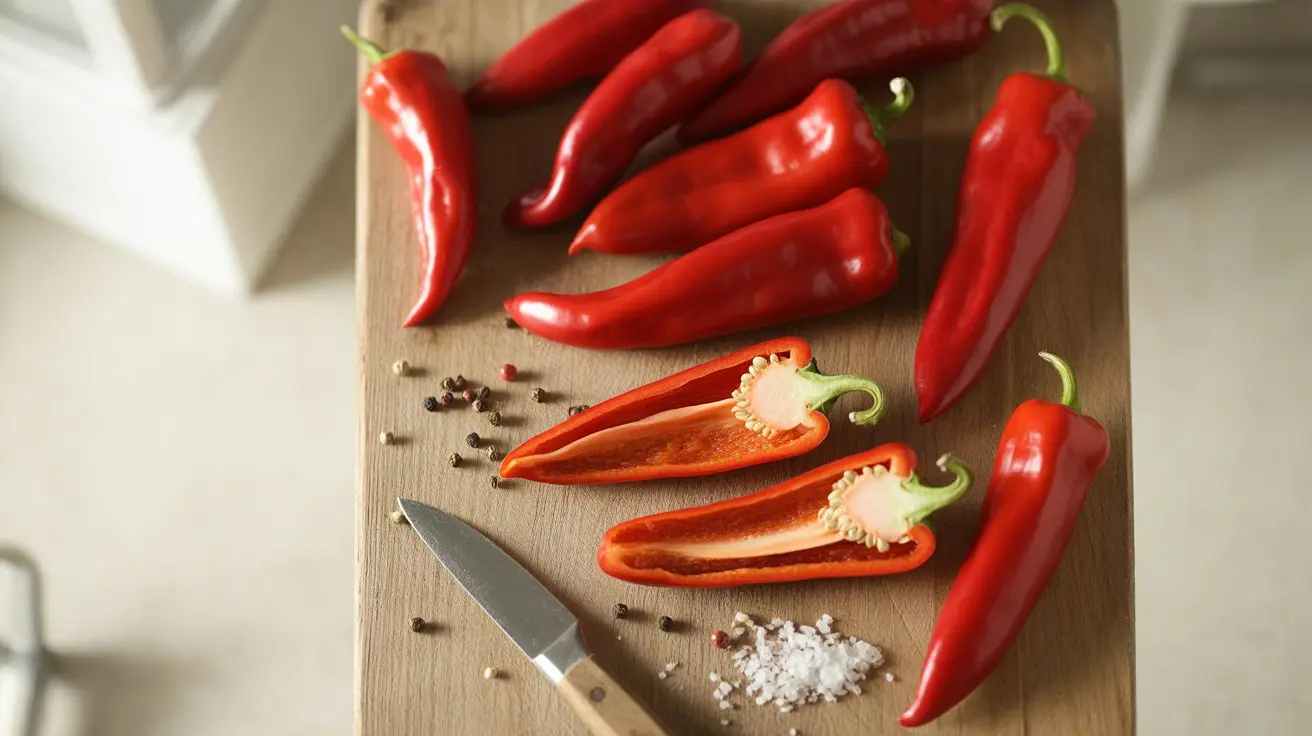
Espelette Pepper

The Espelette pepper carries a French AOC designation — the only pepper in France to earn protected origin status. At 1,500–4,000 SHU, it sits firmly in the medium heat zone with a sweet, smoky flavor that makes it a kitchen staple far beyond the Basque region where it originated.
- Species: C. annuum
- Heat tier: Medium (1K–10K SHU)
What is Espelette Pepper?
Few peppers have a legal identity quite like the Espelette. Grown exclusively in ten communes of the French Basque Country, this elongated C. annuum variety earned its Appellation d'Origine Contrôlée in 2000 — meaning authentic Espelette can only come from a specific patch of southwestern France, much like Champagne or Roquefort.
The flavor is where it earns its reputation. Sweet upfront, with a gentle smokiness that deepens when dried, and a clean warmth that finishes without lingering punishment. At 1,500–4,000 SHU, it's roughly comparable to a mild jalapeño — accessible enough for everyday cooking but with far more character than black pepper, which it famously replaces on Basque tables.
Fresh pods are bright red and elongated, typically 10–15 cm long. Most Espelette reaches kitchens as a dried powder — the vivid red piment d'Espelette powder sold in ceramic jars that have become a culinary souvenir from the region. The drying and grinding process concentrates that smoky sweetness while keeping the heat gentle.
For cooks who want complexity without fire, Espelette occupies a rare position: it behaves like a spice rather than a heat source. Sprinkled over eggs, stirred into butter, or dusted on fish, it adds dimension that neither black pepper nor paprika can replicate. Understanding how capsaicin chemistry works helps explain why Espelette's heat feels so clean compared to sharper chilies at the same SHU.
History & Origin of Espelette Pepper
The Espelette pepper's story begins in the 16th century, when Spanish explorers returned from the Americas with C. annuum seeds. The Basque region — straddling the French-Spanish border — adopted the pepper quickly, and the town of Espelette became its center of cultivation.
For centuries, farmers hung drying pepper strings called cordes from the red-shuttered facades of Basque homes, a tradition that continues today and defines the town's visual identity. The pepper displaced black pepper as the primary seasoning in Basque cuisine, appearing in dishes like axoa (veal stew) and piperade.
In 2000, Espelette received AOC status, and in 2002 it gained EU Protected Designation of Origin (PDO) status. This legally restricts production to ten Basque communes and mandates specific drying and processing standards. The annual Espelette Pepper Festival in late October draws visitors from across Europe to celebrate the harvest — a tradition rooted in the French pepper-growing heritage of the region.
How Hot is Espelette Pepper? Heat Level & Flavor
The Espelette Pepper delivers 2K–4K Scoville Heat Units, placing it in the Medium tier (1K–10K SHU).
Flavor notes: sweet and smoky.
Espelette Pepper Nutrition Facts & Health Benefits
Like most C. annuum peppers, Espelette delivers meaningful nutrition alongside its flavor. A tablespoon of dried piment d'Espelette powder provides roughly 20 calories, with significant concentrations of vitamin C, vitamin A (as beta-carotene), and vitamin E.
Capsaicin at Espelette's modest 1,500–4,000 SHU level still contributes antioxidant activity. Research published in peer-reviewed journals has linked regular capsaicin consumption to anti-inflammatory effects, though the amounts in typical culinary use are small. The Scoville scale's practical guide to measuring heat provides context for how these compounds are quantified. Iron and potassium are also present in dried form at useful concentrations.
Best Ways to Cook with Espelette Peppers
Espelette's greatest strength in the kitchen is restraint. Unlike the sharp bite of bird's eye chili, Espelette adds warmth without demanding center stage. That quality makes it genuinely flexible across protein, egg, and vegetable applications.
In Basque cooking, it's non-negotiable in piperade (the tomato-pepper sauce), ttoro (fish stew), and as a finishing spice on Bayonne ham. Beyond traditional applications, chefs across France use it wherever black pepper might otherwise go — on oysters, scrambled eggs, foie gras, and roasted vegetables.
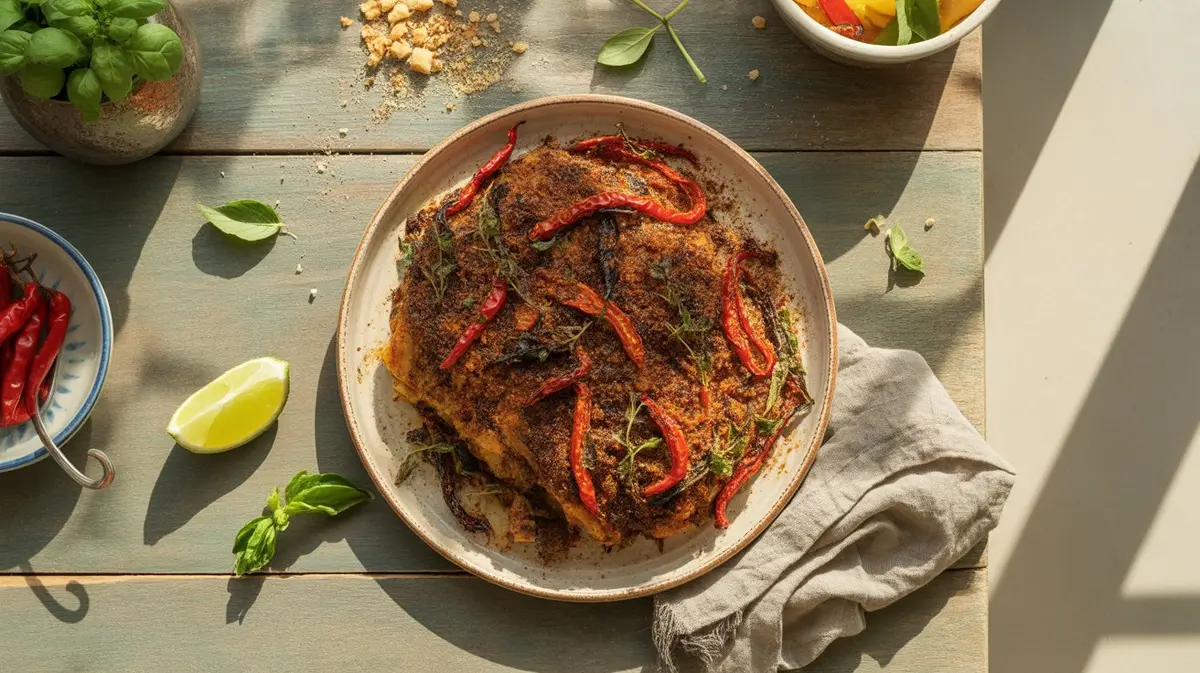
The powder form is most practical. A light dusting over butter-basted fish or into vinaigrettes introduces smokiness without overwhelming delicate flavors. Mixed into softened butter with sea salt, it makes a finishing compound that works on everything from steak to corn.
For heat comparison: serrano's brighter, grassier burn sits at 10,000–23,000 SHU — meaningfully hotter than Espelette's ceiling of 4,000. That gap matters in recipe development. Espelette can be used generously; serrano demands precision.
Substitution works in both directions: smoked paprika plus a pinch of cayenne approximates the flavor profile reasonably well, though the specific Basque terroir character is difficult to replicate. For those curious about culinary applications of similarly-ranged dried chilies, the comparison is instructive.
Where to Buy Espelette Pepper & How to Store
Authentic piment d'Espelette comes in distinctive ceramic jars or sealed pouches, often labeled with the PDO certification mark. Expect to pay a premium — roughly $15–25 for a small jar — compared to generic smoked paprika. That cost reflects the protected origin and traditional processing.
Look for a vivid brick-red color and a noticeable sweet-smoky aroma when you open the container. Dull color or flat smell indicates age.
Store powder in an airtight container away from heat and light. Properly stored, it holds flavor for 12–18 months, though intensity fades gradually. Whole dried pods, if you can find them, last longer and can be ground fresh as needed.
Best Espelette Pepper Substitutes & Alternatives
Whether you ran out of espelette pepper or just want to try something different, these peppers make solid stand-ins. We picked them based on heat range, flavor overlap, and how well they actually work in the same dishes.
Our top pick: Cascabel Pepper (1K–3K SHU). Same species (C. annuum) and nearly the same heat, so it swaps in at a 1:1 ratio without changing the character of the dish. The flavor leans nutty and smoky, which is close enough that most people won’t notice the difference in a cooked recipe.
How to Grow Espelette Peppers
Outside the Basque AOC zone, Espelette grows well in any warm temperate climate — USDA zones 7–11 are comfortable. The plants prefer full sun, well-drained soil with moderate fertility, and consistent moisture without waterlogging.
Start seeds indoors 8–10 weeks before last frost. Germination happens at soil temperatures of 75–85°F; a heat mat accelerates the process noticeably. Transplant after all frost risk passes, spacing plants 45–60 cm apart.
Mature plants reach 60–90 cm tall. Pods develop green and ripen to deep red over the season — full color typically arrives 80–90 days after transplant. For authentic Espelette use, wait for full red before harvesting.
Drying is essential to develop the characteristic smoky depth. Traditional Basque method: string whole pods and hang in a warm, ventilated space for 4–6 weeks. A dehydrator at 135°F speeds this to a few days. Once dry, grind to powder and store in an airtight container away from light.
Peppers with similar cultivation characteristics and growing requirements can serve as useful benchmarks for spacing and care. Espelette is not particularly disease-resistant, so crop rotation and good airflow matter — especially in humid climates where anthracnose can be a problem.
Frequently Asked Questions
-
Espelette is sweeter and more complex than standard paprika, with a clean warmth that paprika largely lacks. Smoked paprika comes closest in flavor profile, but Espelette adds a brighter, fresher quality that's distinctly its own.
-
A blend of smoked paprika (3 parts) and cayenne (1 part) approximates the heat and smokiness reasonably well. The flavor won't be identical, but it works in most recipes that call for Espelette as a finishing spice.
-
At 1,500–4,000 SHU, most people will feel a gentle warmth rather than real heat. It's milder than a typical jalapeño and far below cayenne's sharper heat range, making it suitable for heat-sensitive diners.
-
The AOC/PDO designation restricts production to ten Basque communes in France, with strict processing requirements. Limited geographic production combined with hand-harvesting and traditional drying methods drives the price well above commodity chili powders.
-
Espelette sits at the lower end of the medium tier — the guajillo's deep cultural roots in Mexican cuisine come with a similar SHU range of 2,500–5,000, though guajillo has a darker, earthier flavor profile. Both are mild enough for generous use, but Espelette's Basque terroir gives it a distinctly sweeter, cleaner finish.
- Piment d'Espelette AOC/PDO Designation — INAO France
- Capsicum annuum Species Overview — Chile Pepper Institute, NMSU
- Capsaicin: Chemistry and Health Effects — USDA Agricultural Research Service
Species classification: C. annuum — based on published botanical taxonomy.