Pickled Sugar Rush Peppers Without Hiding the Fruit
Pickled Sugar Rush peppers need ripe pods, short heat exposure, and a light brine. The goal is not a sweet pickle, it is a tangy jar that keeps the peachy, tropical flavor clear.
Pickled Sugar Rush peppers work best when the pods are fully ripe and the brine stays light. A heavy garlic or spice jar can bury the peachy fruit that makes Sugar Rush Peach worth saving.
The best answer is a refrigerator pickle with 5 percent vinegar, modest sugar, and short heat exposure. You get tang, heat, and fruit in the same bite without turning a rare harvest into a generic hot pickle.
Which Sugar Rush pods should you pickle?
Lead. Pick only fully colored Sugar Rush pods for pickling.
Green or half-ripe pods taste thinner, and vinegar makes that underripe edge more obvious.
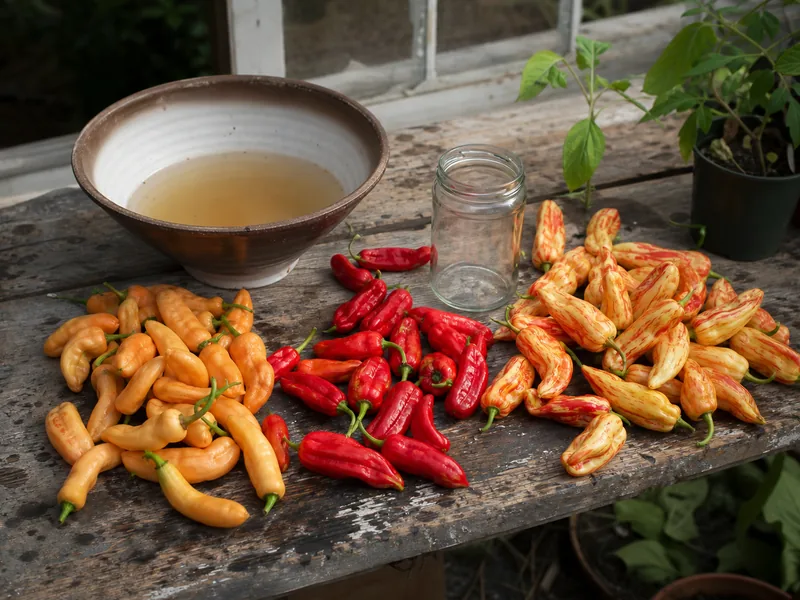
Ripe Sugar Rush peppers have thin walls, many seeds, and a long shape that curls in the jar. Slice them into wide coins or long strips so they stay visible and do not mat together.
We save the straightest pods for fresh tasting and pickle the curved ones. That habit makes packing easier, and the jar still shows the pepper color that drew us to the plant in the first place.
- Choose ripe peach, red, or striped pods.
- Skip soft tips and wrinkled shoulders.
- Rinse, dry, and cut just before packing.
- Keep seeds if you want more heat in the brine.
If the pod smells grassy rather than fruity, leave it out of the jar. Vinegar sharpens that green edge and makes the whole batch taste younger than it is.
What brine ratio suits Sugar Rush peppers?
Sugar Rush peppers need enough sugar to round vinegar, not enough to taste like candy. Start with 1 cup white vinegar, 1 cup water, 1 tablespoon kosher salt, and 1 tablespoon sugar.
Honey can work, but use a small amount because it can cover the fruit. A strip of lemon peel, a few coriander seeds, or one thin ginger coin fits better than heavy garlic.
| Brine choice | Effect | Use when |
|---|---|---|
| White vinegar | Clean tang | You want bright fruit |
| Rice vinegar | Softer acid | You want a snack jar |
| Apple cider vinegar | Rounder flavor | You do not mind darker brine |
Compared with pickled habaneros, this jar is less about managing fire and more about not covering fruit. Compared with pickled shishitos, it can carry more sugar because the pepper itself has more aroma.
Color sorting
Sort the harvest by color before you cut. Peach pods, red pods, and striped pods can all taste good, but mixed ripeness makes one jar hard to judge.
A mostly peach jar tastes brighter and lighter. A redder jar tastes fuller and hotter, with less of the fresh tropical note that people expect from Sugar Rush Peach.
Striped pods can be the prettiest in the jar, but the stripes fade once vinegar works on the skin. Use them when you care about flavor first and the first-day photo second.
If you have only a handful of fully ripe pods, pickle a tiny jar instead of stretching with underripe peppers. A small good jar beats a full jar that tastes green.
How should you slice and seed Sugar Rush peppers?
Wide coins make the prettiest jar and spread heat quickly. Long strips are better for sandwiches, tacos, and cheese boards because they lay flat and are easier to portion.
Removing seeds gives a cleaner bite, but it also removes some of the lively burn. For a balanced jar, remove half the seed mass from each pod and leave the rest attached to the ribs.
The thin walls soften faster than banana pepper pickles. Do not simmer the slices in the brine, and do not pack them so tightly that the hot liquid cannot move.
If your harvest includes Sugar Rush Stripey, pickle it in a separate jar the first time. The striped pods can taste tangier, and separate jars tell you which plant gives the better pickle.
What spices work with pickled Sugar Rush peppers?
The biggest mistake is treating Sugar Rush like a generic hot pepper. Too much garlic, dried oregano, or smoke makes the jar taste busy before the fruit can speak.
Choose one accent and keep it small. Lemon peel sharpens the fruit, ginger adds warmth, and coriander seed gives a soft citrus note without taking over.
We skip onion in the first jar because onion sweetness can make the pepper taste flatter. It works later if you already know the brine is too sharp for your taste.
For a fruitier comparison, taste a fresh slice beside one pickled slice on day three. If the pickled slice tastes only sour and hot, the brine or spice load covered the pepper.
Cold pack workflow
Clean jars and cold peppers give the best texture. Heat the brine only until the salt and sugar dissolve, then pour it over packed raw slices.
- Slice ripe pods into coins or long strips.
- Pack the jar with lemon peel or ginger if using.
- Heat vinegar, water, salt, and sugar.
- Pour hot brine over the peppers.
- Press gently so trapped air rises.
- Cool, cap, and refrigerate for 24 hours.
The first taste is sharp. Day three is usually better because the vinegar settles and the pepper fruit moves into the brine.
This workflow follows the refrigerator role from our home pepper pickling guide. It is not a pantry canning shortcut.
Thin wall timing
Sugar Rush walls are thinner than many stuffing peppers, so time matters. The jar peaks earlier than a thick-walled pickle and loses texture faster after the first month.
Wide coins show their color, but they soften sooner. Long strips hold a little better because each piece has more skin attached and fewer tiny cut edges.
If you plan to chop the peppers into relish, texture matters less. In that case, remove more seeds, pickle the strips, and mince them only when serving.
For a longer harvest plan, split fresh pods between pickles, sauce, and drying. For pods you want to keep through winter without vinegar, dried pepper storage is the better plan.
Batch splitting
Split a mixed harvest into small jars by ripeness, not by plant only. One jar can hold the softest ripe pods for quick eating, while firmer pods can sit longer without losing shape.
A second jar can test sweetness. Keep one jar at 1 tablespoon sugar and another at 2 tablespoons sugar, then taste both on day three with the same food.
This matters because Sugar Rush fruit reads differently after acid hits it. A jar that tastes perfect from a spoon can feel too sweet with fish, while a sharper jar may fit tacos better.
We usually keep the prettier coins for the table jar and the ragged ends for dressing. The ends carry the same flavor, and they are easier to mince into vinaigrette.
A third jar can hold seed-heavy pieces for heat lovers. Mark it clearly, because the seed-heavy brine can taste much hotter than the cleaner table jar after a week.
If the harvest is tiny, freeze a few ripe pods for sauce and pickle only what you can eat within a month. Small rare peppers are too valuable to force into one preservation method.
That split also protects seed stock. Save the cleanest ripe pod for seed if the plant is open-pollinated, then pickle the pods with scars or curves.
Do not mix saved-seed pods with table pickles after cutting. The seed work needs dry, clean handling, while pickle prep is wet, salty, and built around fast use.
How long do pickled Sugar Rush peppers last?
Keep the jar refrigerated and use it within 4 to 6 weeks for best color and texture. The pods can fade a little, especially if you use apple cider vinegar or a warm fridge door.
Discard the jar if mold appears, the brine smells rotten, or the slices turn slimy. A few floating seeds, light clouding from ginger, or faded peach color is normal.
If you need a shelf-stable jar, use an extension-tested pickled pepper process. Flexible fridge brines are good for flavor tests, while pantry jars need verified acid, jar size, and processing time.
For storing extra fresh pods before pickling day, use the same cold and dry thinking from our jalapeno storage guide. Moist pods soften faster in the crisper and give a weaker pickle later.
Open the jar only when you need it. Repeated warm counter time fades the color faster and weakens the crisp edge after each serving at home.
Store the jar near the back of the refrigerator, not in the door. A steady cold spot protects the color better than a shelf that warms every time the door opens.
If color matters for a board or gift, serve from a small dish and return the main jar quickly. The bright striped look is part of this pepper's value.
If the brine turns orange after a few days, that is usually pepper pigment moving into the liquid. Smell and texture matter more than color alone.
What do you serve pickled Sugar Rush peppers with?
Use pickled Sugar Rush peppers where sweet heat belongs. They work with grilled chicken, fish tacos, sharp cheddar, rice bowls, egg salad, and roasted squash.
The brine is excellent in a quick dressing. Whisk 1 tablespoon brine with olive oil and a little mustard, then add minced pepper pieces only after tasting the heat.
For related fruit heat, compare Aji Amarillo, Lemon Drop, and the broader Capsicum baccatum group. For sauce direction instead of pickles, our Aji Charapita hot sauce recipe shows how tiny fruity pods behave with acid.
If you run short on Sugar Rush pods, do not replace them blindly with a superhot. Read the Aji Amarillo and Lemon Drop comparison or the Aji Amarillo substitute guide to keep the fruit profile rather than only matching heat.