How to Make Pickled Habaneros That Stay Bright and Crisp
Pickled habaneros stay intensely hot in a bright refrigerator brine. Use equal parts 5% vinegar and water, wear gloves, wait 1 to 2 days, keep the jar cold, and finish it within 2 weeks.
Pickled habaneros work best as a refrigerator pickle made with vinegar labeled 5% acidity, clean containers, and prompt refrigeration. NC State Extension uses an equal-parts vinegar and water brine for quick refrigerator pickles and says to use them within two weeks.
Pickling spreads habanero heat through the peppers and liquid, but it does not turn the pods mild. Penn State Extension places habaneros around 100,000 to 350,000 SHU, so safe handling and small serving portions remain important after the vinegar goes in.
How Do You Handle Habaneros Safely?
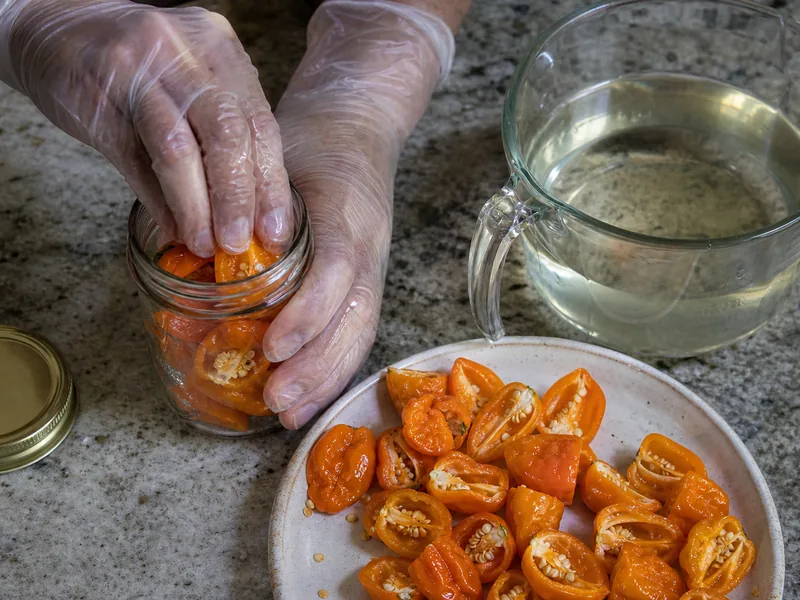
Wear rubber or plastic gloves before cutting habaneros and keep your hands away from your face. Both the National Center for Home Food Preservation and Penn State Extension make that precaution explicit for hot-pepper preparation.
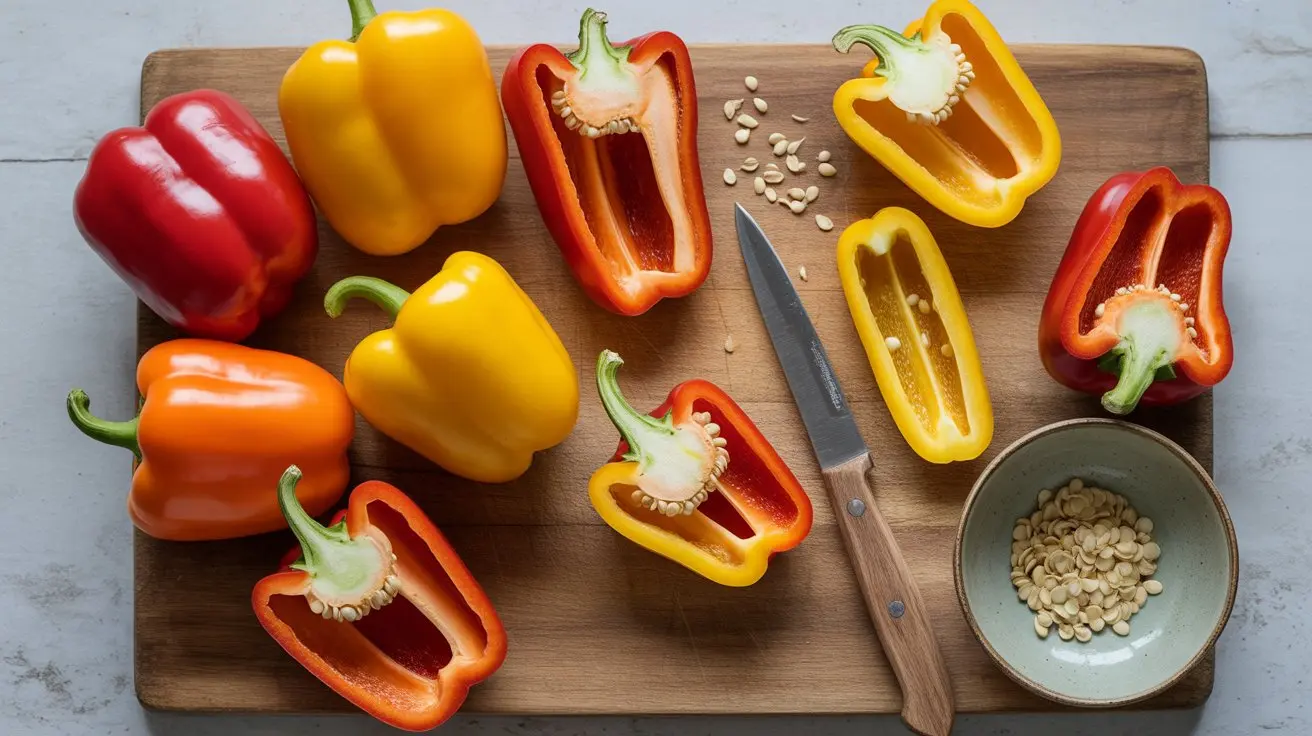
Iowa State University Extension explains that capsaicinoids are produced in glands on the pepper's placenta, the pale tissue that holds the seeds. Removing that tissue can reduce the amount entering the jar, while the seeds themselves are not the original source of the heat.
For flavor planning, we treat orange habaneros as the brighter, fruitier choice and chocolate habaneros as the darker, earthier choice. That is editorial pairing guidance, so pod variety and ripeness still matter more than color alone.
- Put on gloves before stemming, slicing, or removing the placenta.
- Use a nonporous cutting board that can be washed immediately.
- Wash the knife, board, sink, and jar rim after packing.
- Use clean tongs or a clean spoon when serving from the jar.
The brine can carry capsaicin from every cut surface. Treat contact with the liquid as carefully as contact with a fresh pod.
Should You Slice or Halve Habaneros for Pickling?
Choose the cut by how you plan to serve the peppers. Thin rings season food quickly, halves make individual portions easier to retrieve, and whole pods need slits so brine can reach the interior.
NCHFP directs cooks to cut two to four slits in small whole peppers in its tested hot-pepper method. Its jalapeno-ring formula uses 1/4-inch slices, which is a practical reference when evenly sized rings matter.
| Cut | Best use | Heat movement |
|---|---|---|
| 1/4-inch rings | Tacos, eggs, and beans | More cut surface exposes the brine quickly |
| Halves | Sauces and chopped garnish | Placenta is easier to remove before packing |
| Whole pods with slits | Portioned garnish | Less cut surface slows brine exchange |
Small pods often hold together better as halves than as many narrow rings. Keep the pieces similar in size within one jar so their texture changes at roughly the same pace.
What Brine Ratio Works for Refrigerator Pickled Habaneros?
Use 1 cup 5% vinegar to 1 cup water for this refrigerator method. Scaling the NC State Extension sour-brine formula to that amount gives 1 tablespoon canning or pickling salt and 2 teaspoons sugar.
Distilled white vinegar gives a clean, sharp result, while apple cider vinegar adds a rounder flavor and may darken orange pods. NC State permits either vinegar in its quick-pickle formula as long as the product is labeled 5% acidity.
Whole mustard seed, coriander seed, peppercorns, or allspice can add aroma without clouding the main habanero character. NC State allows up to 2 tablespoons of fresh and dry flavorings per pint container in its refrigerator-pickle method.
Refrigerator brine is not a canning formula. NCHFP says not to alter vinegar, food, or water proportions in a tested shelf-stable recipe.
How Do You Make Refrigerator Pickled Habaneros?
Pack washed, evenly cut habaneros into clean pint jars or similar heatproof containers. Keep enough room for the hot brine to cover every piece without forcing the peppers tightly against the lid.
NC State Extension brings its quick-pickle brine to a boil for 2 minutes. Pour the hot brine over the peppers to within about 1/2 inch of the rim, close the container, and refrigerate it promptly.
- Wash the jars, lids, peppers, work surface, and utensils.
- Put on gloves, then stem and cut the habaneros.
- Pack the peppers and measured flavorings into the containers.
- Boil the vinegar, water, salt, and sugar for 2 minutes.
- Cover the peppers with hot brine, leaving about 1/2 inch at the top.
- Close the containers and move them to the refrigerator promptly.
Keep the peppers below the liquid so exposed edges do not dry out. A clean utensil protects the remaining batch whenever you remove a portion.
How Long Until Pickled Habaneros Are Ready?
Wait 1 to 2 days before serving the first portion. That is the flavor-development window in the NC State Extension quick refrigerator pickle method.
Rings expose more surface area than halves or slit whole pods, so they usually take on vinegar flavor sooner. This is a texture and portioning distinction, not permission to shorten the refrigeration requirement.
For a first batch, we recommend a half-pint or pint container rather than a large jar. A smaller batch lets you learn how cut size and pod count affect the serving heat without committing the whole harvest.
Label the jar with the date, cut, vinegar type, and number of pods. Compare one portion after 24 hours with another after 48 hours, then use those notes to adjust the next batch.
How Long Do Pickled Habaneros Last?
Keep quick pickled habaneros refrigerated and use them within 2 weeks. NC State Extension applies that limit to its equal-parts vinegar and water refrigerator pickle formula.
Discard the batch if mold appears or the peppers become slippery with other signs of spoilage. NCHFP specifically warns against eating soft or slippery pickles when spoilage is evident.
Cloudiness alone needs context because salt additives and ground spices can also make brine hazy. NCHFP lists both as possible causes, so judge a changed jar by the full set of signs and discard it when spoilage is suspected.
The two-week clock starts when the brine is poured, not when the jar is first opened. Dating the lid makes that limit visible every time the refrigerator opens.
Can You Fix Pickled Habaneros That Are Too Hot or Sharp?
Do not pour water into the stored jar to reduce heat. That changes the measured vinegar-to-water ratio that defines this refrigerator method.
Reduce heat at serving time instead. Start with one minced ring in sour cream, yogurt, mayonnaise, honey, or a pot of beans, then add more only after the portion is mixed.
Vinegar and sugar change how the burn is perceived, but they do not remove the capsaicinoids. Iowa State's pepper anatomy guidance explains why removing more placental tissue before packing is the better next-batch adjustment.
If a portion tastes too sharp, pair it with eggs, avocado, pork, grilled chicken, or another rich food. If the batch tastes flat, check that the vinegar was labeled 5% acidity and use firmer, fresher pods next time.
Change one variable in the next jar, such as cut size, pod count, vinegar type, or sugar. That preserves a clear comparison without turning the current stored brine into an unmeasured mixture.
Can You Can Pickled Habaneros for Pantry Storage?
Do not can this refrigerator formula or assume that extra boiling time makes it shelf-stable. NCHFP's tested Pickled Hot Peppers recipe names Hungarian, banana, chile, and jalapeno peppers, but it does not specifically name habanero.
The NCHFP formula uses 4 pounds of hot long peppers, 3 pounds of sweet peppers, 5 cups of 5% vinegar, 1 cup water, 4 teaspoons canning salt, and 2 tablespoons sugar. Those quantities, pepper forms, jar sizes, headspace, and processing times work as one tested system.
| Elevation | NCHFP process time | Allowed jar size |
|---|---|---|
| 0 to 1,000 feet | 10 minutes | Half-pints or pints |
| 1,001 to 6,000 feet | 15 minutes | Half-pints or pints |
| Above 6,000 feet | 20 minutes | Half-pints or pints |
If pantry storage is the goal, use a current tested recipe that explicitly covers the chosen pepper or ask a local extension food-preservation specialist about an allowed substitution. Keep this habanero quick-pickle batch cold instead of improvising across recipe types.
Refrigerated gifts should be handed over cold with a clear keep-refrigerated label and the preparation date. A decorative lid does not change the storage requirement.
How Should You Use Pickled Habaneros and Their Brine?
Treat pickled habaneros as a measured garnish rather than a side dish. Our editorial starting point is one ring or a small spoonful of minced pepper for tacos, rice, eggs, fried fish, beans, or mayonnaise.
The brine carries both acid and capsaicin. Add it by the teaspoon to hot sauce, bean dishes, slaw, or a marinade, then taste the finished portion before adding more.
For a milder plate, serve pickled banana peppers beside the habanero jar instead of mixing every pepper into one container. Separate jars let diners control heat without changing either brine.
Scotch bonnet offers a related fruity aroma but has its own shape and regional uses. Compare the two peppers before replacing one with the other in a batch.
Wash skin promptly with soap and water after accidental brine contact, following the hot-pepper handling advice from Penn State and NCHFP. Avoid touching eyes or other sensitive areas until hands and utensils are clean.
How to Make Pickled Habaneros That Stay Bright and Crisp FAQ
- NC State Extension, How to Make Quick Refrigerator Pickles
- National Center for Home Food Preservation, Pickled Hot Peppers
- National Center for Home Food Preservation, Pickled Jalapeno Rings
- National Center for Home Food Preservation, Problems with Pickled Foods
- Iowa State University Extension, Growing Peppers in the Home Garden
- Penn State Extension, Hot Peppers: Preserving the Heat