Which Peppers Grow Upwards, and Why Do Their Pods Point Up?
Upward-pointing pods are a normal inherited trait in Tabasco, Santaka, Facing Heaven, Medusa, NuMex Twilight, Mirasol, and several Thai or bird-type chiles. Fruit direction helps narrow an identity, but it cannot prove heat, flavor, health, or edibility by itself.
Peppers that grow upwards include Tabasco, Santaka, Facing Heaven, Medusa, NuMex Twilight, NuMex Mirasol, and several Thai or bird-type chiles. These cultivars begin with erect flowers or fruit stems that hold small pods above the leaves.
The angle is normal for the variety and can change as a pod gains weight. Curled leaves, weak stems, yellowing, or wilt are separate evidence and should be diagnosed on their own.
Use direction to narrow an identity, then confirm pod shape, cluster pattern, color sequence, and the cultivar label before deciding how to eat or save it.
Which pepper varieties naturally hold fruit upright?
Small-fruited chiles are the most common upward growers. Their pods stay light enough that the fruit stem can hold them above the canopy, especially before the pods fully color.
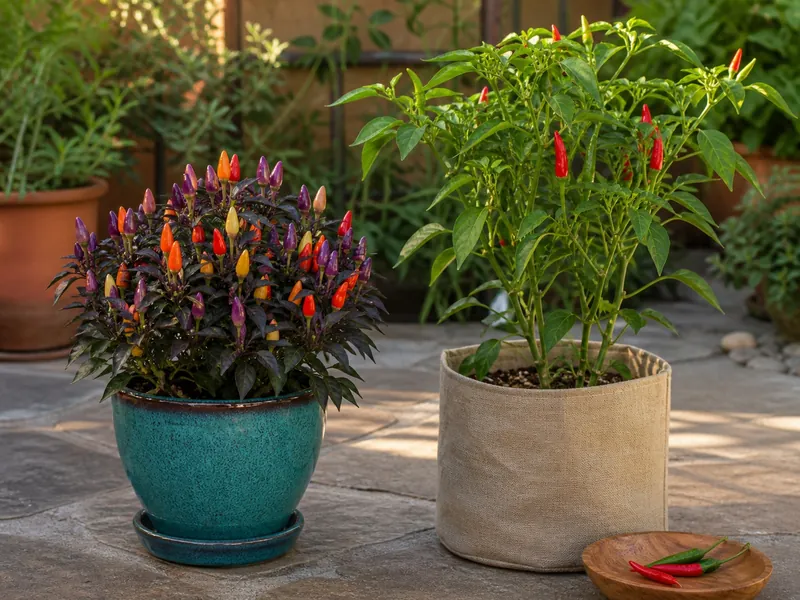
Ornamental peppers show this trait the most because breeders often select them for display. A plant with red, purple, orange, or cream pods held above the leaves looks brighter in a patio pot than a plant with hidden hanging fruit.
New Mexico State University describes NuMex Twilight with erect flower pedicels and smooth upright fruit. Its pods progress from purple through yellow and orange to red, which explains why the fruit remains visible above a compact potted canopy.
Food peppers can do it too. Facing Heaven peppers are named for their upward habit, and Santaka peppers often carry slim pods that point up or out.
NMSU also named NuMex Mirasol from the Spanish phrase for looking at the sun and selected it for upright fruit. Tabasco and many small Thai-type chiles carry kitchen pods upright without being ornamental cultivars.
| Variety or type | Pod direction | Why it grows that way |
|---|---|---|
| Medusa | Mostly upright | Small ornamental pods stay light |
| NuMex Twilight | Upright clusters | Compact display habit and many color stages |
| Tabasco | Often upright | Small thin pods and strong fruit stems |
| Facing Heaven | Upward or angled up | Variety trait named for pod direction |
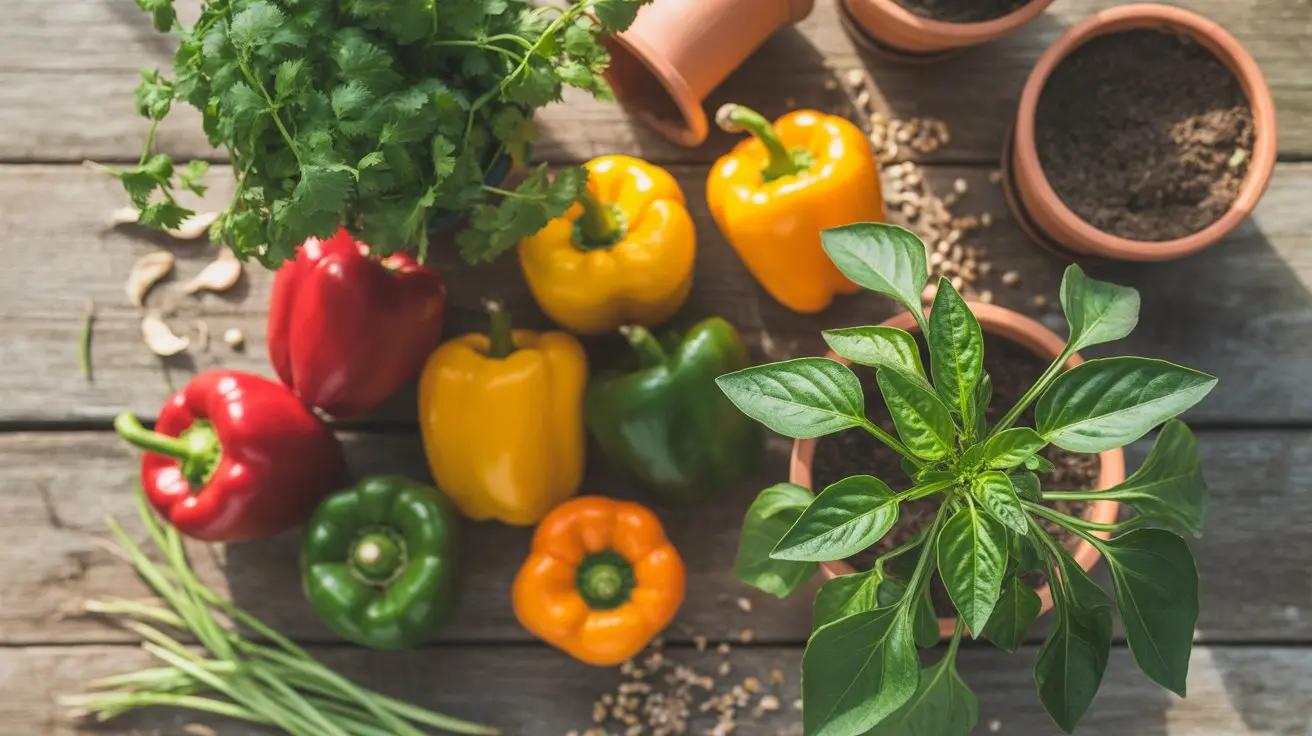
| Bell and poblano | Usually hanging | Large pods pull stems downward |
Why do some pepper pods point upward?
Pod direction is a trait, not a diagnosis. Fruit orientation reflects the cultivar's flower position, the pedicel or fruit-stem angle, stem strength, and the weight gained as a pod expands.
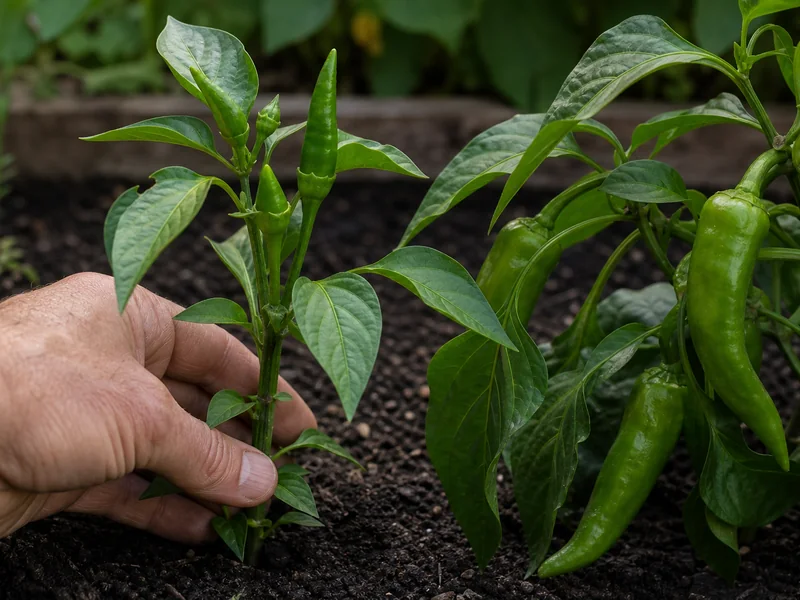
A light narrow pod can stay erect through ripening, while a thick-walled bell or poblano usually pulls its fruit stem downward. Some fruit also begins angled upward and settles toward horizontal or hanging as mass increases.
Use leaves and stems for health diagnosis. Flat growing leaves and firm branches support a normal cultivar trait, while curl, yellowing, wilt, sticky residue, or distorted tips need their own evidence.
This matters because small upward chiles can look strange beside a jalapeño or poblano pepper. Those bigger pods often hang because gravity wins as the wall thickens.
- Normal sign: upright pods with firm stems and new leaf growth.
- Check further: upward pods plus curled new leaves or sticky residue.
- Not a pod issue: yellow lower leaves, wet soil, or drooping stems.
- Likely variety trait: many pods point up in the same direction from early fruit set.
Should you choose upright peppers for display or cooking?
Choose the plant by its intended job because an upright fruit habit says nothing about flavor quality or treatment history. Compact canopies keep the pods visible in containers, but display value and kitchen value can diverge.
Cooking first
Choose Tabasco, Santaka, Facing Heaven, or a named Thai food cultivar for sauce, drying, or stir-fry.
Display first
Choose Medusa or NuMex Twilight when compact habit and visible color stages matter most.
Both jobs
Use a correctly identified food cultivar that also carries bright fruit above the leaves, then harvest by its flavor goal.
Edible-use boundary
NMSU says ornamental peppers are bred for appearance rather than flavor, and its NuMex Twilight release did not evaluate heat or flavor. Keep a nursery ornamental out of food unless the cultivar is identified and the grower confirms every treatment allowed edible use.
If you want a cooking pepper, pick Tabasco, Thai-type chiles, Santaka, or Facing Heaven before a purely ornamental plant. If you want a pot that looks full, ornamental types win.
How do you space upward-fruiting peppers?
Plant upright peppers the same way you plant other small chiles. Use warm soil, full sun, and enough spacing that the pods stay dry after rain.
Most compact types can sit closer than large bells, but do not crowd them until leaves overlap into one wet canopy. Airflow matters because upright clusters concentrate flowers, fruit stems, and tender tips in a small zone.
Use the same transplant rules as other peppers. Harden plants gradually, then keep the small root ball evenly moist during its first week outside.
| Plant type | Good spacing | Support need |
|---|---|---|
| Compact ornamental | 12-18 inches | Usually none in a pot |
| Tabasco or Thai type | 18-24 inches | Small stake in windy sites |
| Facing Heaven or Santaka | 18 inches | Stake if branches lean late |
| Mixed bed with larger peppers | Keep small chiles on the south edge | Prevent shade from tall plants |
Can pod direction identify a pepper?
Pod direction can help catch a label mistake. If a seed packet promised bell peppers and the plant grows many narrow upright pods, you probably do not have a bell pepper.
That happens most often with mixed seed trays, saved seed, or nursery tags that moved. Wait until the first pods size up before deciding.
Early pod angle plus leaf size gives a better clue than seedling leaves alone.
Use pod shape, flower habit, leaf size, cluster pattern, and color progression together. No single clue is enough when plants are young.
- Check the plant tag and seed packet first.
- Compare pod size, not only pod direction.
- Look at whether pods grow in clusters or single fruit.
- Match the heat level after harvest before saving seed.
Where should you inspect crowded upright clusters?
Do not overfeed compact upward peppers just to push more pods. Too much nitrogen can make the plant leafy and hide the display you wanted.
Water at the base and avoid wetting clusters late in the day. Small individual pods expose less surface than bells, but a dense cluster can still hold moisture around fruit stems and leaves.
Cluster inspection zone
If aphids gather on new tips, treat the insects rather than the pod direction. UC IPM notes that aphids often cluster on tender growth and leaf undersides, so inspect the fruit stems, top shoots, and leaves immediately below each upright cluster.
For a mixed edible bed, keep upright chiles near other small hot peppers like bird's eye chili or Thai chili. That makes harvest easier because the small hot pods stay in one zone.
Which upright pepper fits your goal?
The best upward pepper depends on whether you want food, display, or both. A bright patio plant and a cooking chile can look similar in a photo, but they do not serve the same job.
For sauce and vinegar, Tabasco is the most familiar upward grower. The pods are small, hot, and easy to harvest by the handful once they color.
For a decorative pot, Medusa and NuMex Twilight make more sense. They hold many small pods above compact leaves, so the plant looks full even before you pick anything.
For stir-fries, drying, or chile oil, Santaka, Facing Heaven, and Thai-type chiles give you a better kitchen payoff. They stay small enough to dry well, but they are not just patio color.
| Reader goal | Better choice | Skip if |
|---|---|---|
| Patio color | Medusa or NuMex Twilight | You need a mild cooking pepper |
| Vinegar sauce | Tabasco | You want thick slices for pickling |
| Drying whole pods | Santaka or Thai-type chiles | You dislike sharp heat |
| Sichuan-style cooking | Facing Heaven | You need a sweet pepper |
How should you harvest pods that point upward?
Upright pods are easy to see, but pulling in their pointing direction can split a compact fork. Minnesota Extension recommends clipping most pepper stems with sharp shears.
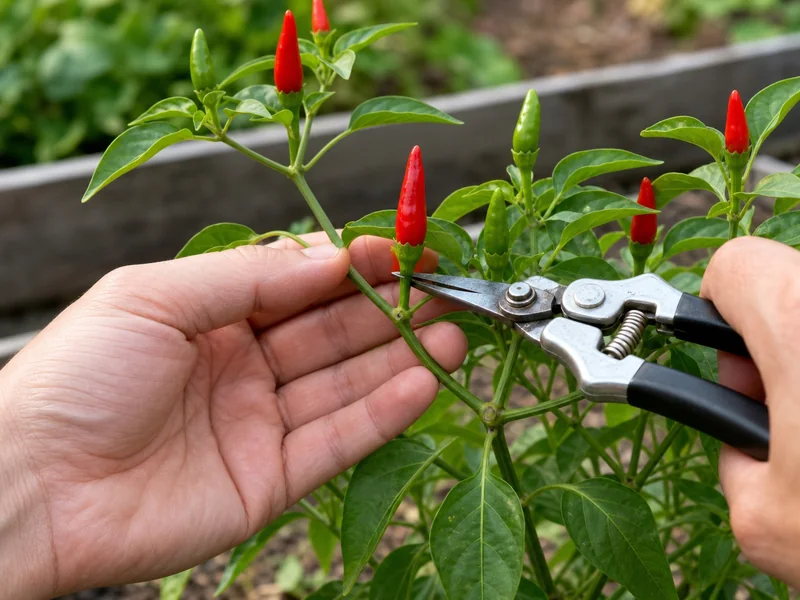
Support the branch with one hand and cut the fruit stem with the other. Harvest when foliage is dry, especially where several upright pods crowd one tip.
Do not pull upward just because the fruit points upward. That can peel the branch or snap a tender side shoot, especially on compact ornamental plants with many pods packed close together.
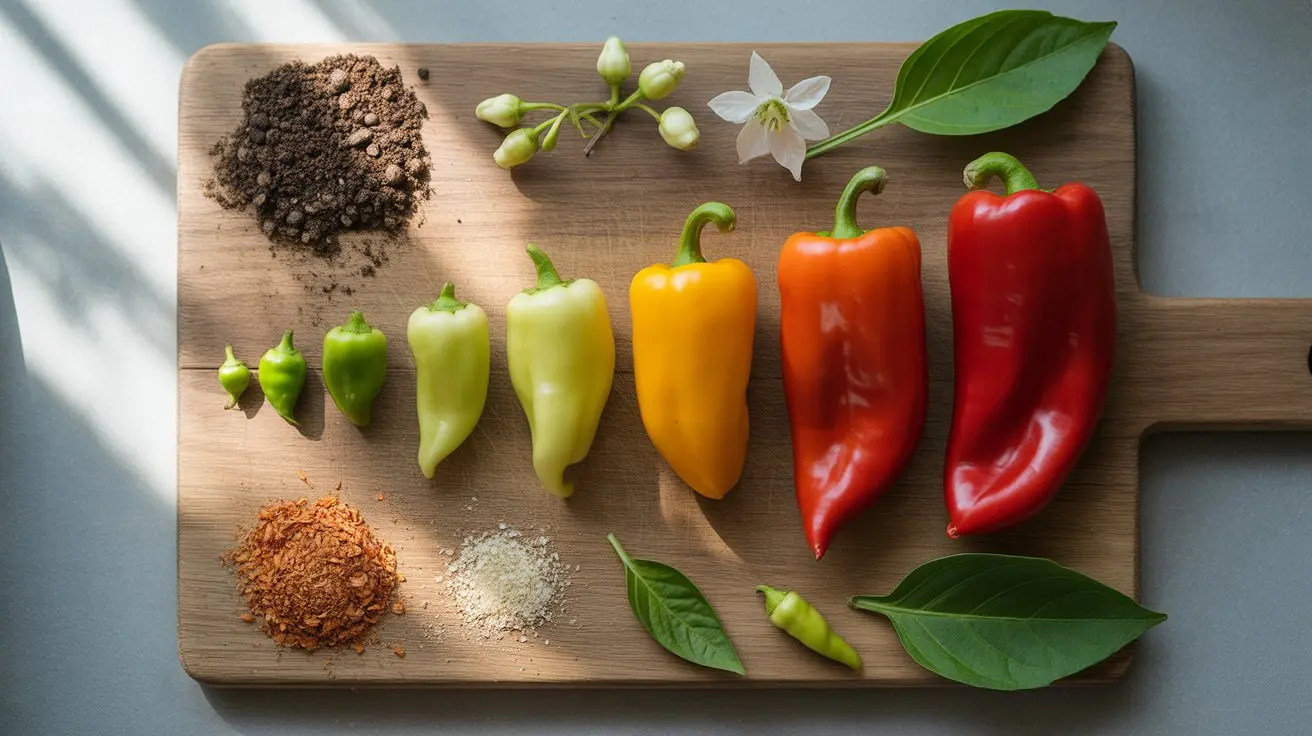
Color timing depends on the variety. Some upward peppers pass through cream, yellow, orange, purple, and red stages.
Others move from green to red with less show.
If the plant is a known food cultivar, assess one ripe pod before harvesting the whole plant. Wear gloves for a hot cultivar and keep any ornamental with unknown treatment history out of the kitchen.
- Cut pods instead of pulling clusters.
- Harvest dry plants so fruit stores better.
- Keep ornamental and cooking peppers in separate bowls.
- Save seed only after you confirm the variety and heat.
Does upward direction predict heat or flavor?
Upward direction does not predict heat, flavor, sweetness, bitterness, or wall thickness because those traits belong to the cultivar.
Heat boundary
Many upward peppers are small, pointed, and bright, but size and direction are not a Scoville test. Use a named cultivar record, then assess one pod cautiously before mixing it into a dish.
Heat depends on the cultivar. Tabasco and Thai-type peppers can be sharp.
Some ornamental peppers are hot but thin and bitter. Other display peppers are grown more for color than balanced flavor.
Use published cultivar data when identity is known. For an edible plant without reliable heat data, handle the first ripe pod cautiously and keep it separate from mild ingredients until its heat is established.
For cooking, compare upward chiles with known hot peppers in your garden. If a pod tastes closer to cayenne, dry it or use it in sauce.
If it tastes flat or bitter, keep it as a patio plant and grow a kitchen pepper beside it next season.
Should you save seed from an upright-fruiting pepper?
Save seed only from plants you can identify with confidence. Ornamental peppers, Thai-type chiles, and small hot peppers can cross if bees move pollen between nearby flowers.
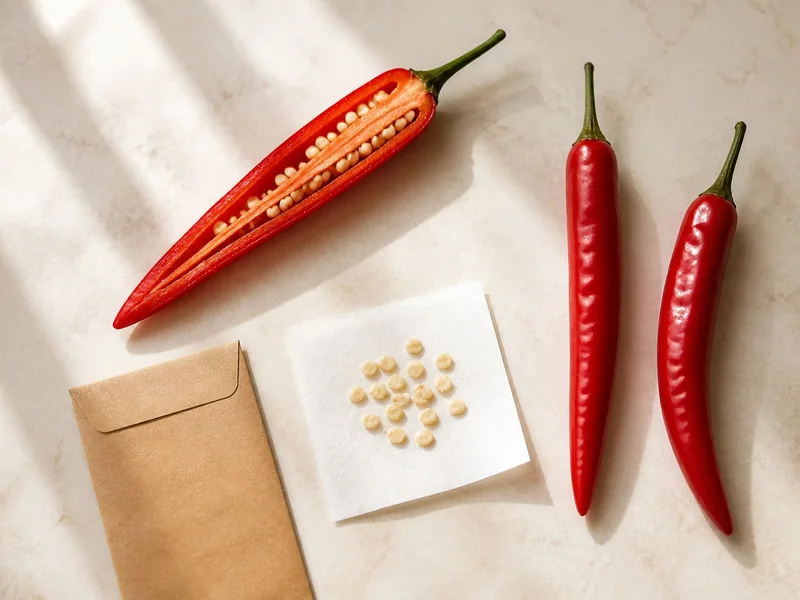
Maryland Extension notes that peppers are largely self-fertile but recommends insect screening or about 500 feet of separation when predictable saved seed matters. Without isolation, an upright parent can produce descendants with different direction, color, shape, or heat.
Pick a fully ripe pod from a healthy plant. If the parent grew beside other peppers without isolation, expect the next generation to vary.
- Confirm the parent from its tag, mature pods, and known heat before choosing fruit.
- Open one fully ripe pod and remove clean, well-filled seed.
- Dry seed in a labeled single layer away from direct sun.
- Record the cultivar, year, isolation method, and any nearby flowering peppers.
That surprise can be fun for a patio pot, but it is risky if you need a reliable sauce pepper. Buy fresh seed when pod direction, color, and heat must match the variety.
One last check helps at seed-buying time. If the catalog photo shows pods standing above the leaves, expect a compact plant that wants frequent picking and visible fruit.
If the photo shows long heavy pods hanging low, plan for more branch support and wider paths.
Which Peppers Grow Upwards, and Why Do Their Pods Point Up? FAQ
- New Mexico State University - Ornamental Chile Pepper Breeding Program
- New Mexico State University - NuMex Mirasol Chile Pepper
- University of Minnesota Extension - Growing peppers in home gardens
- University of Maryland Extension - Growing peppers in a home garden
- University of California IPM - Aphids