Best Peppers for Pizza
Top peppers for pizza include Calabrian chili, banana pepper, and cherry pepper. 10 options ranked by heat and style. Find your perfect heat level.

Why Pepper Choice Changes Everything on Pizza
The first time I put Calabrian chili oil on a plain margherita, I understood why Italian pizzerias keep it on every table. That low, slow burn underneath bright tomato and mozzarella was a revelation — not heat for its own sake, but heat as a flavor layer.
Choosing the right pepper for pizza is less about tolerance and more about what role you want the pepper to play: background warmth, sharp bite, sweet counterpoint, or full-on fire.
The Italian Foundation: Calabrian Chili
If there is one pepper that belongs on pizza by birthright, it is the Calabrian chili from southern Italy. Ranging between 25,000 and 40,000 SHU, it sits in the hot pepper intensity bracket without crossing into punishing territory.
The flavor is fruity, slightly smoky, and deeply savory — it amplifies tomato sauce rather than competing with it. You'll find it packed in oil, as a paste, or dried, and all three forms work on pizza.
For a traditional pairing, scatter torn Calabrian chilies over a Neapolitan-style pie before the final two minutes of baking. The heat blooms in the oven without burning off.
Italy's pepper heritage runs deep — the Italian pepper tradition encompasses dozens of regional varieties bred specifically for cooking, and Calabrian is the crown jewel for pizza.
Peperone di Senise: The Sweet Southern Option
Not every pizza needs heat. Peperone di Senise is a mildly sweet, PDO-protected pepper from Basilicata that brings intense sweetness and a paprika-like depth when dried and crumbled.
Fresh, it roasts beautifully — thin skin, almost no moisture, concentrated sugar. On a white pizza with ricotta and caramelized onion, it is exceptional.
Dried and fried in olive oil, it crumbles into a topping that resembles a sweeter, more complex version of chili flakes — all flavor, essentially zero heat. Falls cleanly in the mild end of the pepper spectrum.
Banana Pepper and Cherry Pepper: The Deli Classics
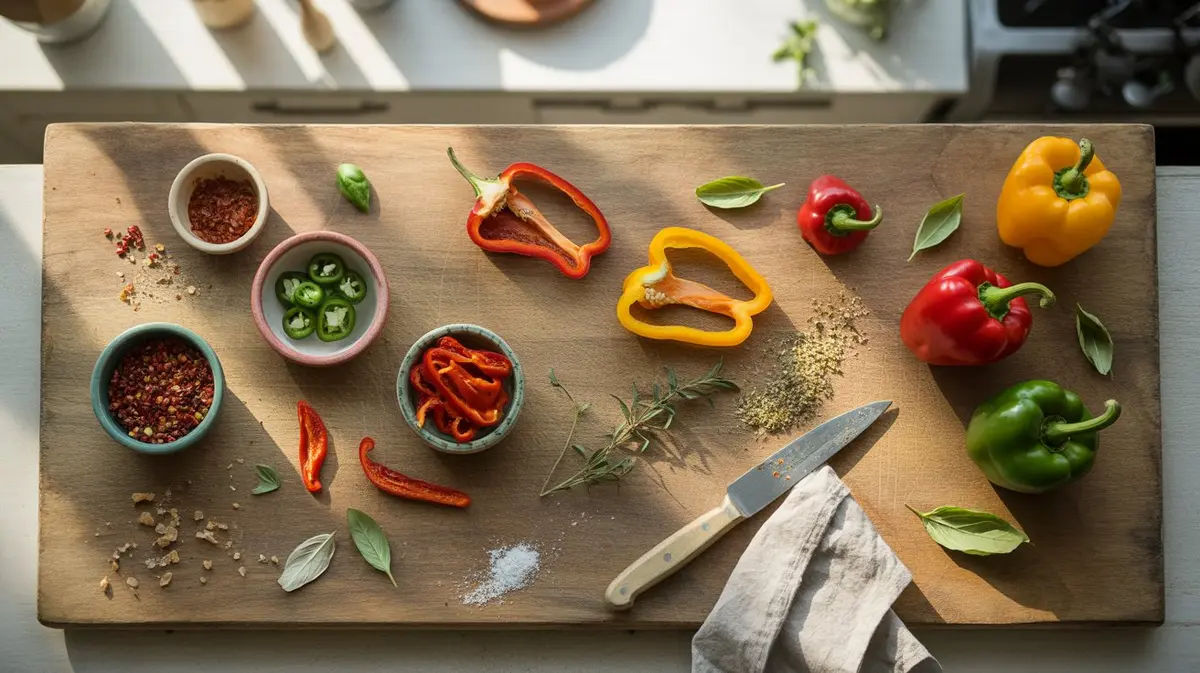
Banana peppers (around 0 to 500 SHU) are a fixture on American-style pizza for good reason. Their mild tang from pickling cuts through fatty cheese and rich sausage, providing acid contrast without heat.
Fresh banana peppers roasted directly on the pie add a sweet, slightly grassy note. Pickled rings add brightness. Both work — the choice depends on whether you want sweetness or acidity leading.
Cayenne: The Flake Standard
Almost every pizzeria in the world keeps dried red chili flakes on the table. Most of those flakes are cayenne, or cayenne-adjacent blends landing around 30,000 to 50,000 SHU.
The sharp, linear heat of dried cayenne disperses evenly across a slice, which is exactly what you want from a table condiment. It doesn't add much flavor — it adds heat, cleanly and predictably.
As a fresh topping, thinly sliced cayenne rings baked into the cheese layer deliver more flavor than the dried form: grassy, slightly tannic, with a clean finish. Worth trying on a simple cheese or marinara pie.
Cayenne sits roughly 4 to 5 times hotter than a guajillo, which gives you a useful frame of reference if you're calibrating topping amounts for guests with different tolerances.
Serrano: Fresh Heat With Flavor
When you want fresh pepper heat that actually tastes like something beyond just capsaicin, the serrano's grassy, bright bite is hard to beat. At 10,000 to 23,000 SHU, it's hotter than a jalapeño but more manageable than cayenne.
Thin slices placed directly on pizza before baking soften into the cheese and lose some bite, leaving a green, slightly citrusy heat. Raw rings added post-bake keep more punch and crunch.
Serrano works especially well on white pies — garlic, olive oil, mozzarella — where its vegetal sharpness fills the flavor gap that tomato sauce usually occupies. It's also excellent paired with chorizo or 'nduja.
Tabasco Pepper: Sauce or Topping?
Most people know Tabasco as a sauce, but the pepper itself — Capsicum frutescens, around 30,000 to 50,000 SHU — is worth knowing on its own terms. The intensely thin-walled, vinegary Tabasco pepper belongs to a species with a distinctly different burn profile than most pizza-friendly chilies.
Using Tabasco sauce as a post-bake drizzle is the practical move for most home cooks. A few dashes over a slice adds acidic heat that integrates with melted cheese in a way that dried flakes don't replicate.
The pepper itself, fresh or pickled, is harder to source but worth seeking for homemade hot oil infusions. A Tabasco-infused olive oil drizzled at the table is a step up from standard chili oil.
Bird's Eye Chili: Southeast Asian Heat on Pizza
This is where things get unconventional — and interesting. The bird's eye chili's piercing, clean-burning heat (around 50,000 to 100,000 SHU) is a fixture in Thai and Vietnamese cooking, not traditionally Italian-American pizza.
But it works. Thin slices on a Thai-inspired pizza — chicken, peanut sauce, scallions — make obvious sense. Less obvious: a few rings on a classic pepperoni pie add a brightness that complements the paprika in the meat.
The heat here is roughly 8 to 15 times hotter than a guajillo, so portion carefully. Half a bird's eye chili across a whole pie is usually enough for most people's threshold.
Bird's eye belongs to the broader Thai pepper tradition, which has produced some of the most heat-efficient small chilies in the world — a lot of SHU in very little volume.
Thai Chili: When You Want Southeast Asian Influence
Closely related to bird's eye but with some distinct regional variations, the Thai chili's floral, sharp heat is a natural fit for fusion-style pies. It runs 50,000 to 100,000 SHU, placing it firmly in the extra-hot range.
Where bird's eye tends toward a clean, almost neutral burn, Thai chili varieties can carry a slightly fruity or floral quality that adds more to a dish than pure heat alone.
For pizza, use sparingly as a fresh topping or incorporate into a chili oil applied before baking. The floral notes survive the oven better than the raw heat does, which actually makes this a more nuanced topping than its SHU suggests.
Habanero and Scotch Bonnet: For Heat Seekers
At 100,000 to 350,000 SHU, habanero and Scotch bonnet are not everyday pizza toppings — but used with restraint, they're transformative. The fruity, tropical quality of both peppers pairs surprisingly well with pineapple or mango-based pizza concepts.
A habanero-infused honey drizzled post-bake is the most accessible entry point. It delivers the fruit-forward flavor with modulated heat, and the sweetness of honey balances the burn effectively.
Raw slices on pizza are a commitment. Even a quarter of a habanero distributed across a whole pie will dominate. These peppers belong in sauces and infusions for pizza applications, not as standalone toppings.
How to Match Pepper to Pizza Style
The pepper-to-pizza pairing logic follows a few reliable patterns once you see them.
- Neapolitan / margherita: Calabrian chili oil, fresh serrano slices, or peperone di senise — anything that complements tomato without overwhelming fresh mozzarella
- New York-style / pepperoni: Pickled cherry peppers, banana pepper rings, cayenne flakes at the table — classic deli flavor combinations
- White pizza (bianca): Serrano, peperone di senise, or roasted banana pepper — no tomato competition, so sweeter or more vegetal peppers shine
- Sausage / meat-heavy pies: Calabrian chili, cayenne, or pickled pepperoncini — acid and heat cut through fat
- Fusion / Thai-inspired: Bird's eye chili, Thai chili, or habanero honey — match the pepper's origin to the flavor profile of the pie
Fresh vs. Pickled vs. Dried: Application Matters
The same pepper behaves completely differently depending on preparation. Fresh peppers added pre-bake soften and lose some heat but gain sweetness. Added post-bake, they stay sharp and crunchy.
Pickled peppers bring acid alongside heat — that brine is a flavor component, not just a preservation method. Don't rinse them before using; you'll lose half the point.
Dried and crushed peppers concentrate heat and lose volatile aromatics. This is why dried cayenne flakes taste different from fresh cayenne — you're getting a different chemical profile, not just a more intense version of the same thing. Understanding why peppers burn and how heat develops helps explain why the same pepper in different forms can taste so distinct.
Chili oil occupies its own category: the fat carries fat-soluble capsaicin and flavor compounds evenly across the surface of a pizza in a way that solid toppings don't. For controlled, even heat distribution, infused oil is the most reliable method.
Building a Pizza Pepper Pantry
If you cook pizza regularly, having a few key items on hand covers most situations without requiring specialty sourcing every time.
- Calabrian chili paste or oil — the most versatile single item; works pre-bake and as a condiment
- Good dried chili flakes — cayenne-based or a Calabrian blend, for the table
- Pickled banana peppers or pepperoncini — acid and mild heat, ready to go from a jar
- Fresh serranos — for when you want fresh green heat; easy to find, consistent quality
- Dried peperone di senise or quality sweet paprika — for white pies and sweet pepper flavor without heat
These five cover the full range from zero-heat sweet to serious hot, and they all work in multiple ways. That's the foundation. Everything else — bird's eye, habanero honey, Tabasco oil — is an expansion from there.
If you want to go deeper on sourcing fresh chilies year-round, a solid step-by-step guide to growing your own peppers will get you from seed to harvest regardless of what your local market carries. Growing your own also means access to varieties that never appear in stores — including several that are genuinely exceptional on pizza.
Frequently Asked Questions
-
Banana peppers or pickled pepperoncini are the safest choices — both stay well under 5,000 SHU and add bright acidity alongside minimal heat. Peperone di Senise is another excellent option if you want sweet pepper flavor with essentially no burn.
-
Adding fresh peppers before baking softens them and mellows their heat while bringing out natural sweetness. Post-bake application keeps them crisp and preserves sharp, raw heat — choose based on whether you want integrated warmth or a punchy fresh bite.
-
Calabrian chili has a fruity, smoky complexity that standard cayenne flakes lack. It also comes in oil-packed form, which distributes heat and flavor more evenly across the pizza surface than dry flakes that can clump or burn.
-
Yes, but use it in an infused oil or habanero honey rather than as raw slices. This delivers the fruity, tropical flavor while moderating the heat — even a quarter of a fresh habanero can dominate an entire pie if used directly.
-
Serrano is the strongest choice — its grassy, citrusy sharpness fills the flavor role that tomato sauce usually plays on a white pie. Roasted banana pepper or crumbled peperone di senise also work well without competing with the olive oil and cheese base.