Pepper Plant Leaves Falling Off: Match the Drop Pattern to the Cause
Pepper plant leaves falling off usually comes from transplant shock, wet roots, drought and heat, leaf spots, or sap-feeding pests, so match the drop pattern before you act. Check soil moisture first, inspect leaf undersides, remove only damaged leaves, and wait on fertilizer until the plant shows new growth.
Pepper plant leaves falling off usually means the plant is shedding stress, not dying overnight. Read the drop pattern first: new transplant shock, wet roots, heat and drought, spotted disease leaves, or sap-feeding pests each drop leaves in a different order.
The fastest fix is to stop guessing. Check soil moisture, recent weather, the age of the fallen leaves, and the underside of the leaves still on the plant before you water, feed, or spray.
Why are pepper plant leaves falling off?
Leaf drop tells a cleaner story when you separate where the leaves fell from what the whole plant looks like. A pepper that loses two old lower leaves after transplanting is not the same problem as a plant dropping spotted leaves during humid weather.
Use this table before making a fix. It keeps you from watering a wet plant, fertilizing a stressed transplant, or spraying for pests when the real issue is heat.
| Drop pattern | Most likely cause | First check |
|---|---|---|
| Lower leaves yellow, then fall | Wet soil, root stress, or normal old-leaf shed | Push a finger 2 inches into the soil and check pot weight |
| Leaves fall within a week of planting out | Transplant shock, wind, sun, or cold nights | Review hardening-off, night lows, and planting day weather |
| Crisp edges and dry soil | Drought, hot wind, or a container drying too fast | Water deeply once, then watch the plant by evening |
| Spots appear before leaves drop | Bacterial leaf spot or another leaf disease | Look for small water-soaked or tan spots and wet-weather spread |
| Sticky leaves, webbing, or distorted tips | Aphids, mites, thrips, or whiteflies | Inspect leaf undersides with a hand lens |
A few lower leaves can fall as a pepper ages, especially under a heavy fruit load. Normal shed stays low on the plant and does not keep marching upward every day.
Fast upward loss is different. That pattern means the plant is still under stress, so the next job is to find the driver before the canopy gets too thin to shade fruit.
Why do pepper leaves drop after transplanting?
Transplant shock is the first suspect when leaves drop within 3 to 10 days of moving a pepper outdoors. The plant lost its indoor shelter, then met brighter sun, wind, cooler nights, and a larger soil volume at the same time.
University of Maryland Extension recommends gradual hardening-off for indoor or greenhouse transplants over 5 to 14 days. Their transplant guidance also says warm-season crops such as peppers should come back indoors when nights drop below 50-F, and peppers establish best after soil is above 60-F.
If the plant is still upright and the newest growth looks firm, treat the shed as recovery work. Keep the soil evenly moist, shield the plant from hard afternoon sun for a few days, and avoid feeding heavily until new leaves start moving.
Look at the root ball if the transplant came from a tight cell pack or nursery pot. Circling roots, a dry peat rim above the soil, or a root ball planted into cold wet ground can keep the plant stalled long after the leaves drop.
If every leaf droops, the stem darkens, or the plant never perks up at night, switch from shock to root-zone diagnosis. Our hardening off pepper plants and transplant pepper seedlings guides cover that setup in more detail, but the short version is simple: protect roots first, then ask for growth.
Can wet soil make pepper leaves yellow and fall off?
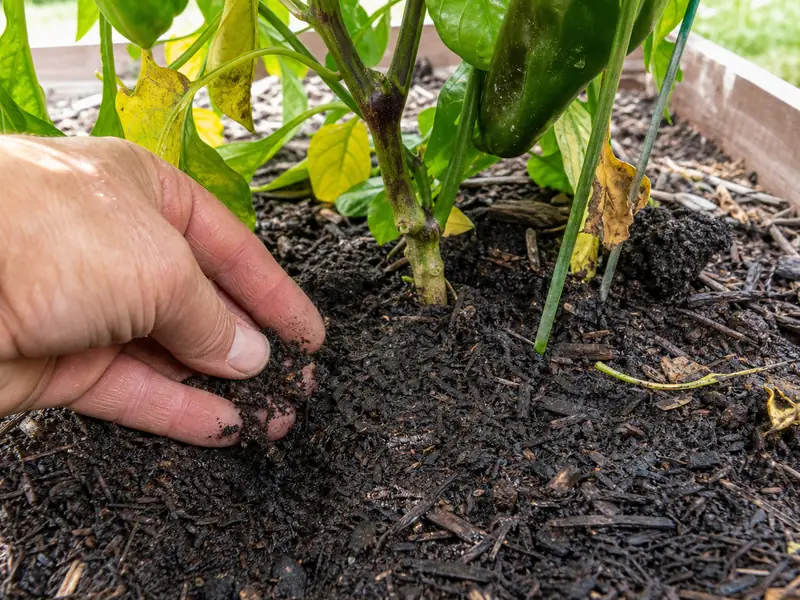
Wet soil changes the whole diagnosis. A pepper plant can look thirsty while the roots are sitting in water because stressed roots cannot move water well.
Pull back mulch and check the soil before adding more water. If the top 2 inches are wet, the pot feels heavy, or the bed smells sour, pause watering and improve airflow around the base.
Wet roots need oxygen before fertilizer. A nitrogen feed may green up a hungry plant, but it will not fix saturated soil or a container with poor drainage.
Mild cases recover after the root zone dries to evenly moist. Severe cases keep dropping leaves, stall new growth, and may show brown or mushy roots if you slide the plant from a container.
Containers add one more check. A saucer full of water, a blocked drain hole, or a pot sitting flat on plastic can keep the bottom roots wet even when the top inch looks safe.
Use the overwatering pepper plants guide when the soil stays wet for days. Use watering pepper plants when the plant is otherwise healthy and you need a rhythm for beds, containers, heat, or fruit load.
Why do leaves turn crisp and drop in hot weather?
Crisp brown edges, a light pot, and leaves that fall after a hot afternoon usually point away from disease. The plant ran short on usable water faster than the roots could replace it.
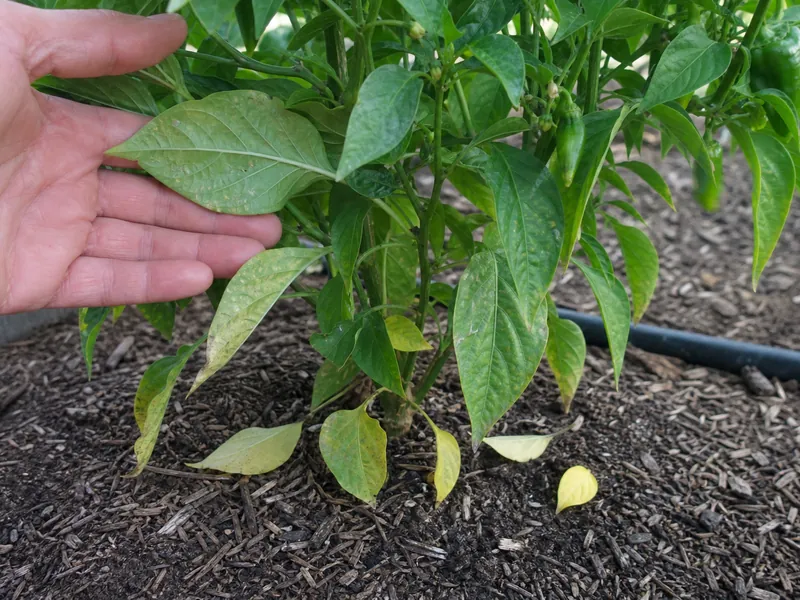
Containers fail fastest here. A dark 5-gallon pot can dry hard on the outside edge while the center still feels damp, so check the whole root ball instead of one surface spot.
In garden beds, hot wind can make leaf drop look sudden. Water deeply at soil level, then check the plant again near sunset.
A drought-stressed plant often looks better after the heat breaks.
Midday appearance can lie during a heat wave. A plant that droops at 3 p.m.
but stands up by evening is managing heat. A plant that stays limp after sunset needs a root or water check.
Do not prune hard during this stage. Leaves are the plant's shade and food factory, and removing too many can expose developing peppers to sunscald.
If the plant wilts even when soil moisture is right, compare the symptoms against pepper plant wilting. Wilting without dry soil can mean root damage, heat load, or vascular disease rather than simple thirst.
Can leaf spot disease make pepper leaves fall off?
Leaf spots that show up before the leaf falls move the diagnosis into disease territory. On peppers, bacterial leaf spot often starts as small water-soaked or pimple-like marks that turn tan or gray with darker borders.
University of Maryland Extension notes that severe bacterial leaf spot can make pepper leaves drop and expose fruit to sunscald. The same source ties spread to splashing rain and working with wet infected plants, which is why overhead watering can make a small problem larger.
Remove badly spotted leaves only when the plant can spare them. A strong plant can lose a few diseased lower leaves, but stripping a weak plant bare creates a new sunscald problem.
After removing leaves, wash hands or tools before moving to the next plant. Avoid working the patch while leaves are wet, and keep mulch under plants so rain does not splash soil back onto the canopy.
Do not leave badly infected debris under the plant at season end. Bacterial spot can arrive on seed or transplants and survive in residue, so cleanup and rotation matter more than a late rescue spray.
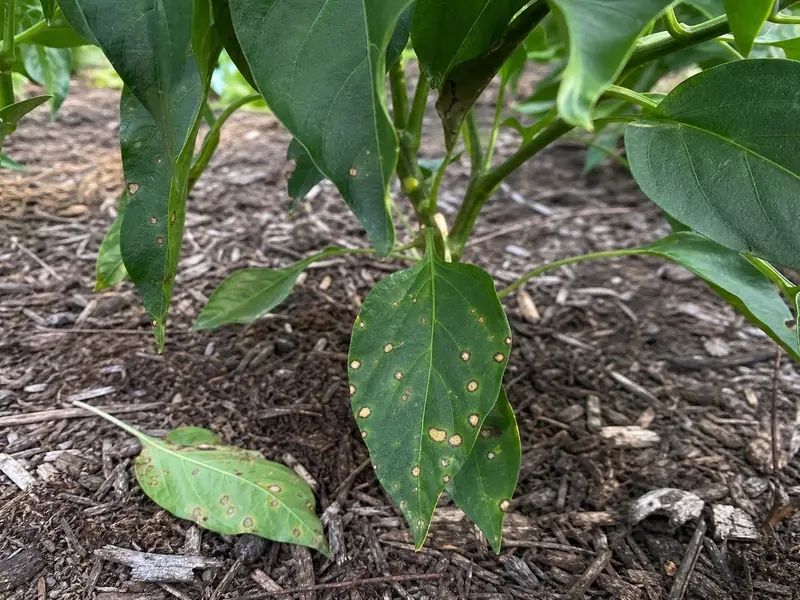
When spots, pest damage, and weather stress overlap, the broader pepper pests and diseases guide helps sort the visible marks. This guide stays focused on leaves that detach, not every pepper disease.
Which pests make pepper leaves fall off?
Sap-feeding pests do not always make leaves fall first. They often curl new growth, leave sticky residue, stipple the leaf surface, or bronze the foliage before the plant sheds the weakest leaves.
Start with the underside of the leaves that are still attached. Aphids cluster on tender growth, thrips hide in folds and flowers, and mites leave pale stippling or fine webbing when populations climb.
Use water before pesticide when colonies are light. A firm spray knocks many aphids off the plant, and it protects lady beetles, lacewings, and other helpful insects better than a broad spray.
UC IPM notes that spider mite damage is usually worse in hot, dusty conditions and on water-stressed plants. That detail matters because mite control often starts with plant care, dust reduction, and preserving predators, not reaching for the strongest spray.
Match the pest to the symptom before treating. Aphids on pepper plants usually means sticky leaves and curling tips, thrips on pepper plants often means silvery scarring, and spider mites on pepper plants fit hot, dry, stippled leaves.
If leaves curl but stay attached, the better starting point may be pepper plant leaves curling. Leaf curl and leaf drop overlap, but they are not the same path.
What should you do first when leaves start dropping?
Start with the safest action, not the most dramatic one. Most leaf-drop cases get worse when the grower stacks water, fertilizer, pruning, and spray in the same afternoon.
- Check soil first: water only if the root zone is dry enough to need it.
- Inspect the newest growth: firm new leaves mean the plant is still recovering.
- Look under leaves: pests usually hide before they become obvious from above.
- Remove only bad leaves: take off spotted, dead, or pest-covered leaves, not a third of the plant for no reason.
- Wait before feeding: fertilize only after soil moisture and root stress are under control.
If the plant is in a pot, lift it before and after watering. That weight check teaches you more than a calendar, especially when a plant drops leaves during hot weather.
For in-ground plants, dig a small side hole 4 to 6 inches from the stem and look at moisture below the surface. Dry mulch can hide wet soil, and wet mulch can hide a dry root zone.
Take one photo of the whole plant and one close-up of the underside of a problem leaf. A two-photo record makes it easier to see whether tomorrow's damage is new or just the same old leaves finally falling.
How do you prevent pepper leaf drop?
The best leaf-drop prevention is boring in a good way: warm planting weather, gradual sun exposure, steady water, enough root space, and a canopy that dries after rain.
Give peppers room for airflow instead of packing them until leaves overlap all day. The pepper plant spacing guide is useful here because tight spacing holds humidity, slows drying, and makes pest checks harder.
Feed modestly once the plant is growing, then adjust by leaf color and fruit load. Too little nitrogen can yellow old leaves, but too much soft growth invites pests and delays fruiting, so our fertilize pepper plants schedule is a better reference than a rescue dose.
Scout twice a week during hot, dry weather and after long wet stretches. Those are the two windows when mites, water stress, and leaf-spot diseases tend to turn small symptoms into leaf loss.
| Prevention target | Good working range | Why it matters |
|---|---|---|
| Hardening-off | 5 to 14 days | Reduces sun, wind, and temperature shock |
| Night temperature | Keep peppers protected below 50-F | Cold stress slows warm-season transplants |
| Planting soil | Above 60-F | Warm roots recover and grow faster |
| Soil moisture | Evenly moist, not saturated | Roots need both water and oxygen |
| Leaf wetness | Dry foliage before night when possible | Wet leaves favor bacterial and fungal spread |
One or two fallen lower leaves can be normal on a maturing pepper. The warning sign is a pattern that keeps moving upward, pairs with spots or pests, or comes with stalled new growth.
Pepper Plant Leaves Falling Off: Match the Drop Pattern to the Cause FAQ
- Planting Vegetable Transplants - University of Maryland Extension
- Growing Peppers - University of Minnesota Extension
- Bacterial Leaf Spot on Peppers - University of Maryland Extension
- Growing Peppers in a Home Garden - University of Maryland Extension
- Spider Mites - UC IPM