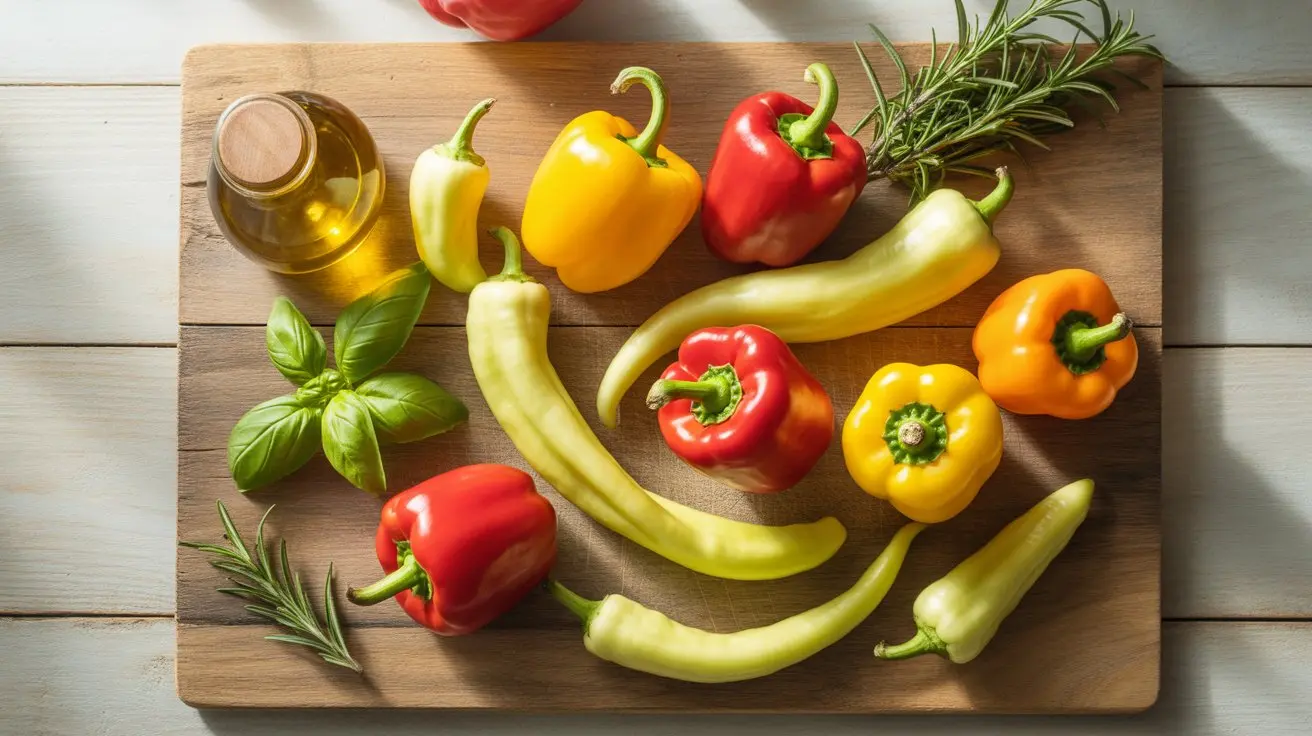
Mild Peppers for Cooking
Want pepper flavor without the burn? These 15 mild peppers add color and taste with minimal heat—perfect for families and spi. Find your perfect heat level.

What Makes a Pepper "Mild"?
Heat in peppers is measured in Scoville Heat Units — a standardized unit definition developed by Wilbur Scoville in 1912 and now refined through high-performance liquid chromatography. Mild peppers generally fall below 5,000 SHU, though the practical boundary depends on context.
For reference, an Anaheim pepper sits around 500–2,500 SHU — and most of the peppers on this list land at or below that level. A few push slightly higher but deliver their heat so gently that most palates register flavor before warmth.
The mild heat classification on the Scoville scale captures a broad spectrum: from sweet bells at zero to modestly warm varieties that still qualify as family-friendly. Understanding where a pepper sits within that range helps you cook with more confidence.
Bell Peppers: The Zero-Heat Foundation
Bell peppers (Capsicum annuum) register at 0 SHU — no capsaicin at all, thanks to a recessive gene that blocks its production. Red, orange, and yellow bells are simply riper versions of the green; sugar content rises and bitterness fades as the fruit matures.
They're the workhorse of mild cooking. Roast them until the skin blisters and the flesh turns jammy, or slice them raw for crunch in salads and stir-fries. Their thick walls hold up beautifully when stuffed and baked.
The Capsicum annuum species covers an enormous range of peppers — from zero-heat bells to moderately warm varieties — making it the most culinarily versatile species in the genus.
Pimiento and Cherry Peppers
Cherry peppers span a wider range — sweet varieties stay under 500 SHU while hot cherry types can reach 3,500 SHU. When buying jarred cherry peppers, check the label: "sweet" means negligible heat, "hot" means noticeably more kick.
Both types are thick-walled and hold their shape when pickled, which makes them popular in antipasto spreads and deli sandwiches across Italian pepper traditions.
Anaheim and Hatch Peppers
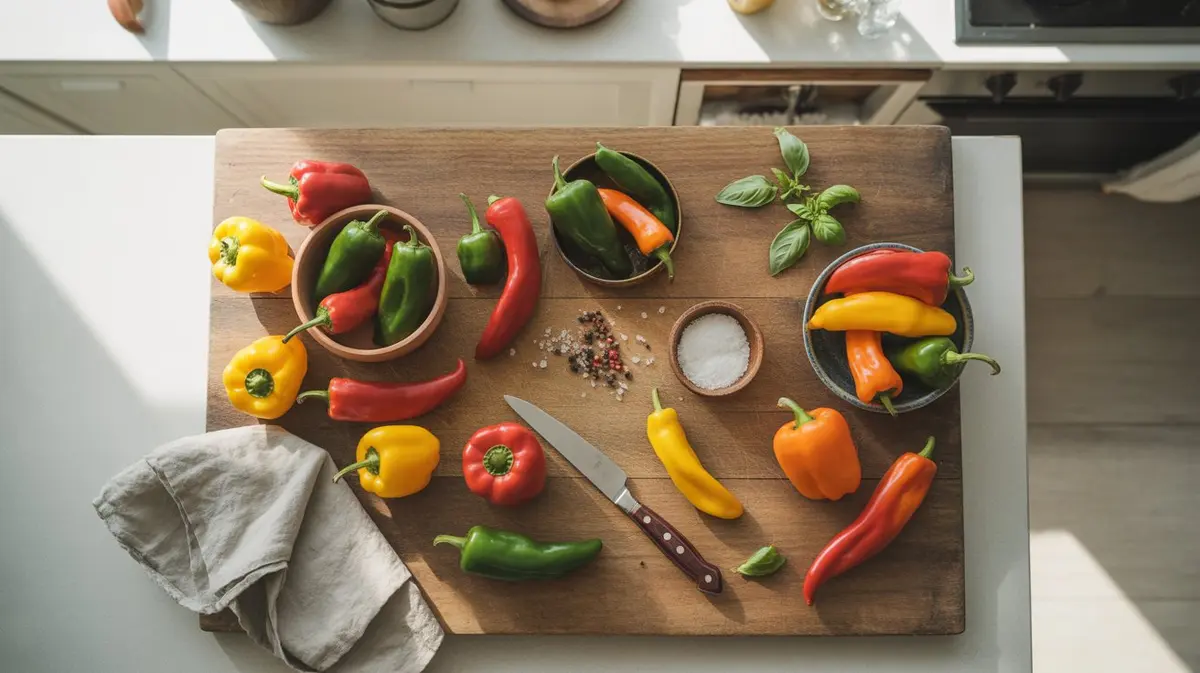
The Anaheim is arguably the defining mild cooking pepper in American kitchens — 500–2,500 SHU, long and tapered, with a grassy sweetness that deepens when roasted. It's the pepper most commonly sold as "green chile" in grocery stores outside the Southwest.
Hatch chiles are Anaheim-type peppers grown in New Mexico's Hatch Valley, where the high-altitude desert climate concentrates flavor in ways that generic Anaheims don't quite match. Heat varies by variety — mild Hatch selections stay under 1,000 SHU, while hot selections can approach 8,000 SHU — so always ask which type you're buying.
Both are excellent for chile verde, green chile stew, and stuffed preparations like chile rellenos. Charring the skin under a broiler or over a gas flame loosens it for peeling and transforms the flavor from raw-vegetal to something smoky and complex.
Poblano Peppers
At 1,000–2,000 SHU — comparable to the lower end of an Anaheim but with a distinctly earthier, darker flavor — the poblano is the mild pepper most cooks reach for when they want substance. Its thick flesh and large cavity make it ideal for stuffing.
Dried poblanos become ancho chiles, one of the foundational ingredients in mole negro and countless other Mexican chile-based sauces. Fresh and dried, these are genuinely different flavor experiences from the same fruit.
Compared to an Anaheim, a poblano delivers more vegetal depth and a slight bitterness that balances rich fillings — cheese, beans, seasoned meat — without the pepper's heat competing for attention.
Banana Peppers and Pepperoncini
Banana peppers range from 0–500 SHU in their sweet form, with a mild tang that makes them the default topping on Italian subs and Greek salads. Their thin walls pickle quickly, and the brine they develop over time is worth saving for salad dressings.
Pepperoncini (also called Tuscan peppers) sit at 100–500 SHU — nearly identical heat to banana peppers, though slightly more bitter and less sweet. The two are often confused at the deli counter; pepperoncini have a more wrinkled skin and a brighter, more acidic bite when pickled.
Both belong to the Capsicum annuum species and thrive in similar growing conditions, making them easy to grow together in a home garden.
Cubanelle Peppers
The cubanelle — also called Italian frying pepper — tops out around 1,000 SHU and is prized more for its thin walls and quick cooking than for any particular heat. Sauté one in olive oil for three minutes and it collapses into a silky, sweet-savory strip that's at home on sausage sandwiches, pizza, or eggs.
Its thin skin means you don't need to peel it after cooking, which saves time compared to poblanos or Anaheims. That convenience, combined with a flavor that's genuinely sweet without being cloying, has made it a staple in both Italian and Spanish pepper cooking traditions.
Shishito and Padrón Peppers
Shishito peppers average 50–200 SHU — roughly one-tenth the heat of an Anaheim — with a thin skin that blisters in seconds in a dry cast-iron pan. The famous catch is that roughly one in ten shishitos carries a surprise spike of heat, though "spike" is relative: even the hot ones rarely exceed 1,000 SHU.
Padrón peppers from Galicia in northwestern Spain follow a similar pattern. Harvested small in summer, most are mild; left to mature into fall, the proportion of hot fruits increases. Both varieties are best blistered whole, finished with flaky sea salt, and eaten as a snack or appetizer.
The appeal is partly the roulette element — but mostly the grassy, slightly smoky flavor that develops from high-heat dry cooking. No oil needed if your pan is hot enough.
Ramiro and Sweet Point Peppers
The elongated, candy-sweet Ramiro pepper — sometimes labeled "sweet pointed pepper" in European markets — contains virtually no capsaicin, sitting at or near 0 SHU. What it lacks in heat it makes up for in concentrated sugar content, particularly when roasted.
Ramiros are thinner-walled than bells but sturdier than shishitos, which makes them versatile: roast them whole, slice them into strips for a mezze platter, or halve and stuff them with soft cheese for a quick appetizer. Their deep red color when ripe adds visual impact to any dish.
Decorative Mild Peppers Worth Eating
Not every ornamental pepper is purely decorative — some are genuinely mild and worth cooking with. The Medusa pepper's slender, colorful fruits are edible and quite mild, making them as useful for garnishing as for cooking. Plants grow compact enough for a windowsill or patio container.
The Sangria pepper's deep burgundy coloring makes it one of the more visually striking options in this category — and its heat stays low enough that the fruits can be used fresh in salads or pickled whole. It's a good example of a pepper that earns its place both in the garden and on the plate.
The NuMex Twilight's multicolored fruit display transitions from purple through yellow to red as peppers ripen, creating a striking plant. Developed at New Mexico State University, it carries mild heat — typically under 2,000 SHU — and works well in salsas where color variety matters.
The Aurora pepper's compact, colorful fruits ripen through similar color stages and stay mild enough for everyday cooking. Its small size makes it well-suited for pickling whole or using as a garnish that actually tastes good.
The Chinese 5 Color pepper's vibrant multi-stage fruits are another ornamental-edible crossover, displaying up to five colors simultaneously on a single plant. Heat is variable but generally mild to moderate — taste before cooking with quantity.
Cooking Techniques That Work Best with Mild Peppers
Mild peppers respond well to high heat because their natural sugars caramelize rather than just softening. Dry blistering — cast iron, no oil — is the fastest way to develop smoky depth in thin-skinned varieties like shishitos and padróns.
For thicker-walled peppers (poblanos, Anaheims, bells), char-roasting under a broiler or directly over a gas flame creates the steam needed to loosen the skin. Place roasted peppers in a covered bowl for 10 minutes; the skin slips off easily.
Raw applications work best with sweeter varieties — bells, banana peppers, cubanelles — where the crisp texture and fresh flavor are assets rather than limitations. Thin-sliced raw poblano can add mild bitterness to grain bowls and grain salads, though most cooks prefer it cooked.
If you want to understand how capsaicin's TRPV1 receptor response explains why even mild peppers can feel warm to sensitive palates, that biochemistry is worth knowing before cooking for guests with low heat tolerance.
Growing Mild Peppers at Home
Most mild varieties are Capsicum annuum, which means they share similar growing requirements: full sun, well-drained soil, consistent moisture, and warm soil temperatures above 60°F before transplanting outdoors.
Starting seeds indoors 8–10 weeks before last frost gives mild varieties enough lead time to produce well within a single season. A step-by-step indoor starting guide covers everything from germination temperature (ideally 80–85°F) to hardening off before transplant.
Ornamental-edible types like NuMex Twilight and Medusa are particularly forgiving in containers — they stay compact, produce prolifically, and tolerate the slightly drier conditions that container growing creates. For anyone new to growing peppers, mild ornamental varieties offer a low-stakes starting point.
Pairing Mild Peppers with Other Ingredients
Mild peppers amplify rather than dominate, which means they pair cleanly with ingredients that would be overwhelmed by heat. Soft cheeses — ricotta, burrata, fresh goat cheese — absorb the sweetness of roasted bells or Ramiros without the dairy fat muting a spice note that isn't there anyway.
Acidic ingredients (vinegar, citrus, tomato) sharpen mild pepper flavor rather than cooling it. A quick pickle of banana pepper rings in white wine vinegar with garlic and herbs takes about 20 minutes and produces something genuinely better than store-bought within 24 hours.
For cooks who want to step up from mild without committing to serious heat, the medium heat range on the Scoville scale — roughly 2,500–30,000 SHU — includes poblanos at their hotter end, Anaheim hybrids, and New Mexican varieties that bridge the gap between mild cooking peppers and genuinely hot ones.
Buying and Storing Mild Peppers
Fresh mild peppers should feel firm and heavy for their size, with tight, glossy skin and no soft spots. Wrinkled skin indicates age and moisture loss — the pepper is still edible but past its peak texture for raw applications.
Store unwashed in the crisper drawer at 45–50°F. Most mild varieties keep for one to two weeks under these conditions. Bell peppers and thick-walled types last longer than thin-skinned shishitos or padróns, which are best used within three to four days of purchase.
Roasted and peeled mild peppers freeze well in zip-lock bags with air pressed out. No blanching required. Frozen roasted peppers are ready to drop directly into soups, sauces, and stews from frozen — one of the more underrated pantry shortcuts in mild-pepper cooking.
Frequently Asked Questions
-
Bell peppers register at 0 SHU — they contain no capsaicin at all. Pimientos and sweet cherry peppers come close, typically staying under 500 SHU, making them nearly indistinguishable from bells in terms of heat.
-
Poblanos range from 1,000–2,000 SHU, which puts them at the upper edge of the mild category. Most people with average heat tolerance find them very manageable, though sensitive palates may notice a gentle warmth.
-
Capsaicin distribution within a shishito plant is uneven due to environmental stress during development — drought, heat fluctuations, or soil conditions can trigger higher production in individual fruits. Even hot shishitos rarely exceed 1,000 SHU.
-
Yes, with adjustments. Poblanos substitute well for moderately hot peppers in stuffed preparations and sauces. For dishes relying on heat for balance — like spicy stews — add a small amount of cayenne or chili powder alongside the mild pepper.
-
Char the pepper directly over a flame or under a broiler until the skin is blackened in patches, then transfer to a covered bowl for 10 minutes.