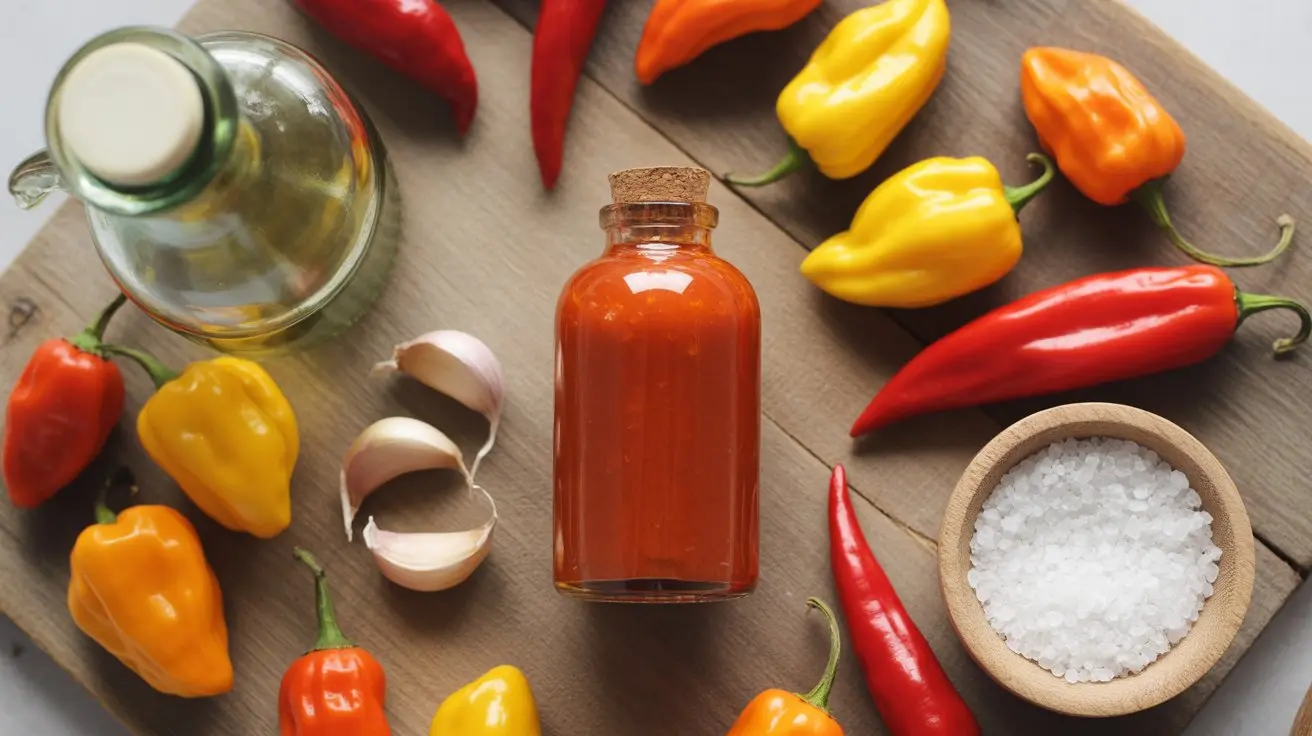
How to Make Hot Sauce
Make hot sauce from scratch. Fermented, vinegar-based, and Caribbean styles with pepper picks. Find your perfect heat level.

Why Homemade Hot Sauce Beats Anything in a Bottle
Store-bought hot sauce is almost always built around one thing: shelf stability. That means high vinegar ratios, preservatives, and heat levels calibrated to offend nobody. Making your own changes the entire equation — you control the pepper, the acid, the salt, and the fire.
Whether you want something bright and tangy for tacos or something that makes people stop mid-sentence, the process is more forgiving than most people expect. Three methods cover nearly every style: vinegar-based, lacto-fermented, and blended Caribbean-style. Start with one, understand why it works, and the others follow naturally.
Choosing Your Peppers — The Most Important Decision
Every great hot sauce starts with a clear answer to one question: what heat level are you actually aiming for?
For mild heat classification, Anaheim, poblano, and Fresno peppers give you body and color without significant burn. Move into medium heat tier territory with jalapeños and serranos — both take well to fermentation and produce balanced sauces that most people can eat freely.
The hot heat classification is where things get interesting. Cayenne and Thai-style peppers like the bright-red, intensely sharp Tien Tsin belong here — the Tien Tsin hits 50,000-75,000 SHU and produces a clean, piercing heat that doesn't muddy a sauce's flavor.
If you want serious firepower, extra-hot peppers like habanero and the fruity, scorching Red Savina habanero (around 350,000-577,000 SHU) deliver tropical fruit notes alongside genuine intensity. The small but ferociously hot Wiri Wiri from Guyana — a Capsicum chinense variety — punches at 100,000-350,000 SHU and adds a berry-like sweetness that's unusual for its heat level.
For those building a sauce around extreme heat, the super-hot tier includes peppers like the wrinkled, brutally hot Naga Morich from Bangladesh and northeast India, which registers over 1,000,000 SHU. Use sparingly — a single pepper can heat an entire batch.
Method 1 — Classic Vinegar-Based Hot Sauce
This is the fastest route to a finished sauce and the closest to what you find in commercial bottles, but with far more character when you make it right.
Basic ratio: 1 pound fresh peppers, 1 cup white vinegar (5% acidity), 4 garlic cloves, 1 teaspoon salt. Scale from there.
- Stem your peppers. Leave seeds in for more heat, remove them for a milder result.
- Combine peppers, garlic, vinegar, and salt in a saucepan. Bring to a boil, reduce heat, simmer 10-15 minutes until peppers soften.
- Cool slightly, then blend until completely smooth. A high-speed blender gives a silkier texture than an immersion blender.
- Strain through a fine-mesh sieve if you want a pourable hot sauce. Skip straining for a thicker result.
- Bottle in sterilized glass. Refrigerated, it keeps 3-6 months.
Apple cider vinegar adds a slightly fruity undertone that works well with habanero-based sauces. White wine vinegar keeps things cleaner and brighter, ideal when you want the pepper's natural flavor to dominate.
The tiny, fiery Siling Labuyo — a Capsicum frutescens variety from the Philippines — makes an exceptional vinegar sauce. Its heat is immediate and clean, landing around 80,000-100,000 SHU, and the small size means you can use whole peppers without much prep.
Method 2 — Lacto-Fermented Hot Sauce
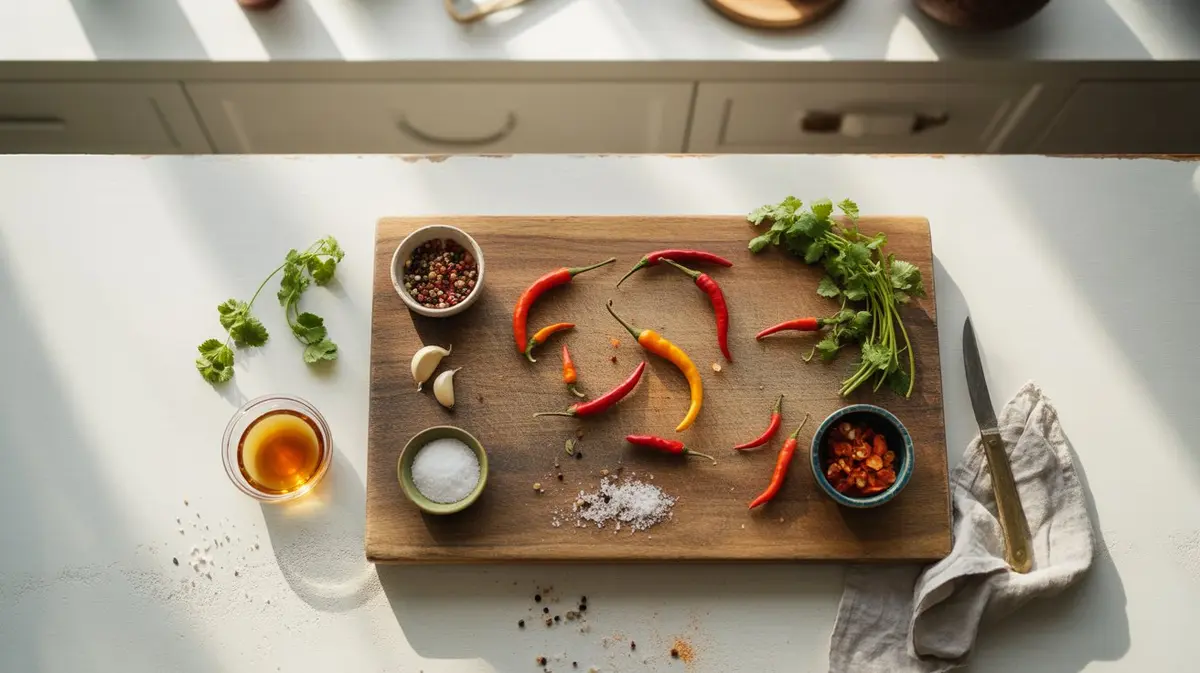
Fermentation is the technique that separates serious hot sauce makers from everyone else. The process sounds technical but requires almost no equipment — just peppers, salt, water, and time.
Lacto-fermentation uses naturally occurring Lactobacillus bacteria on the pepper's skin to convert sugars into lactic acid. The result is a sauce with a complex, tangy depth that vinegar-based versions simply cannot replicate.
- Wash and roughly chop your peppers. Pack them into a clean glass jar — a wide-mouth mason jar works perfectly.
- Dissolve salt in water and pour over peppers until fully submerged. Use a small zip-lock bag filled with brine to weigh peppers down if needed.
- Cover with a cloth or loose lid to allow gas to escape. Keep at 65-75°F (18-24°C).
- Ferment for 5-7 days. You'll see bubbling within 48 hours — that's the fermentation working. Taste daily after day 3.
- When the flavor reaches the tanginess you want, strain and blend peppers with some of the brine. Adjust consistency with more brine or a splash of vinegar.
- Bottle and refrigerate. Fermented sauces keep 6+ months cold.
The peach-hued, extreme-heat Jay's Peach Ghost Scorpion ferments beautifully — its fruity character deepens noticeably after a week in brine, and the resulting sauce has a complexity that straight blending can't produce. Handle with gloves; this pepper exceeds 900,000 SHU.
Method 3 — Caribbean-Style Blended Sauce
Caribbean hot sauce is its own category — thicker, often mustard-based or mango-forward, and built around Capsicum chinense peppers that bring fruity heat rather than pure fire. Think less Tabasco, more Matouk's.
The Caribbean pepper tradition leans heavily on Scotch bonnets and habaneros, often combined with tropical fruit, onion, and allspice.
Basic Caribbean sauce:
- Blend 6-8 habaneros or Scotch bonnets with 1 mango (peeled, diced), 1 small onion, 3 garlic cloves, juice of 2 limes, 1 tablespoon yellow mustard, 1 teaspoon turmeric, salt to taste.
- Process until smooth. If the texture is too thick, add water or lime juice tablespoon by tablespoon.
- Taste and adjust — more mustard for sharpness, more mango for sweetness, more pepper for heat.
- No cooking required. Refrigerate immediately and use within 2-3 weeks, or cook briefly and bottle for longer storage.
Wiri Wiri peppers from Guyana work exceptionally well in this style — their berry-like sweetness pairs naturally with tropical fruit without the grassy note some habaneros carry. For context on the heat gap between these varieties, the head-to-head heat comparison between habaneros and Scotch bonnets shows how similar they are in SHU but different in flavor character.
Balancing Heat, Acid, and Salt
Most failed homemade hot sauces fail for one of three reasons: too much vinegar (sharp, one-dimensional), not enough salt (flat, lifeless), or heat that overwhelms everything else.
Salt isn't just seasoning — it's a flavor amplifier. A sauce that tastes flat often needs salt before it needs anything else. Start with 1 teaspoon per pound of peppers and adjust from there.
Acid (vinegar or citrus) balances heat and extends shelf life, but it's easy to overdo. If your sauce tastes like vinegar with a pepper aftertaste, pull back. A ratio of 1 part acid to 2-3 parts pepper mash by volume is a reliable starting point.
Sweetness counteracts heat without eliminating it. Honey, mango, pineapple, or roasted garlic all work. The burn mechanism at the molecular level involves capsaicin binding to TRPV1 receptors — dairy fat and sugar don't neutralize this, but they do alter how your palate perceives it, which matters when you're calibrating a sauce for guests.
Texture and Consistency
Texture is a choice, not an accident. The same ingredients can produce a pourable hot sauce, a thick paste, or something in between — depending on how you handle them.
For a thin, pourable sauce: blend fully, then strain through a fine-mesh sieve or cheesecloth. Press the solids firmly to extract maximum liquid.
For a medium-bodied sauce: blend fully, don't strain. Let it settle and bottle as-is.
For a thick paste or mash: use less liquid during blending, or reduce the blended sauce in a saucepan over low heat until it reaches the consistency you want.
Xanthan gum (a pinch, blended in) stabilizes emulsified sauces and prevents separation in the bottle — useful if you're adding oil or fruit to the mix. Most simple pepper-vinegar sauces don't need it.
Pepper Sourcing and Preparation
Fresh peppers give the brightest flavor. Dried peppers — rehydrated in hot water for 20-30 minutes — give deeper, smokier character. Roasting peppers (directly over flame or under a broiler until charred) adds another dimension entirely.
For growing your own supply, understanding proper transplanting and cultivation techniques makes the difference between a handful of peppers and enough to fill multiple batches. Most hot sauce peppers thrive in full sun with consistent watering and benefit from being started indoors 8-10 weeks before the last frost.
The Indian pepper growing tradition produced varieties like the Naga Morich specifically for sauce and paste applications — these peppers were bred for flavor complexity alongside heat, not just raw Scoville numbers. Understanding that context helps when you're selecting peppers for a specific flavor goal.
When handling any pepper above 100,000 SHU, wear nitrile gloves. Capsaicin transfers to skin easily and lingers — touching your face after handling ghost peppers or scorpion peppers without gloves is genuinely unpleasant.
Sterilization, Bottling, and Shelf Life
A hot sauce that spoils is a waste of good peppers. Proper sterilization is simple and non-negotiable.
Wash glass bottles in hot soapy water, then sterilize by submerging in boiling water for 10 minutes, or run through a dishwasher on the hottest cycle. Fill while both the sauce and bottles are hot.
Vinegar-based sauces with a pH below 4.0 are shelf-stable at room temperature if properly sealed — a pH meter costs around $15-20 and removes the guesswork. Fermented sauces should be refrigerated unless you're doing full pressure-canning.
Label every bottle with the pepper variety and date. Flavor evolves over weeks — many sauces peak at 4-6 weeks after bottling as the flavors meld. Vinegar-based sauces can last up to a year refrigerated; fermented sauces often improve over the same period.
For reference on where specific peppers land on the pepper heat ranking index, the Scoville scale remains the standard measure — though lab-measured HPLC values are more precise than the original organoleptic method.
Scaling Up and Troubleshooting
Doubling a recipe is straightforward. Scaling to 5+ pounds of peppers introduces a few practical considerations: blender capacity, fermentation vessel size, and bottling time all become real constraints.
Common problems and fixes:
- Sauce too thin: Reduce in a saucepan over low heat, stirring frequently, until it reaches the right consistency.
- Sauce too thick: Add brine, water, or vinegar and re-blend.
- Too hot to eat: Blend in roasted red bell pepper, mango, or carrot to dilute heat without losing volume.
- Ferment smells off (not just sour): Look for pink or black mold. White kahm yeast on the surface is harmless — skim it off. Anything else, discard and start over.
- Sauce separated in bottle: Shake before use, or add a small amount of xanthan gum during blending next time.
The Thai pepper tradition — which includes varieties like Tien Tsin and related cultivars — relies on small-batch sauce making where adjustments happen by taste, not by recipe. That instinct-driven approach is worth adopting regardless of what style you're making.
Frequently Asked Questions
-
Not always. Vinegar-based sauces typically benefit from a short simmer to soften peppers and mellow raw garlic. Fermented sauces and fresh Caribbean-style blends are often made raw, which preserves brighter, sharper flavor.
-
Blend in roasted red bell pepper, carrot, or mango to dilute the heat without discarding your batch. Dairy fat also coats the palate and reduces perceived burn, though it shortens shelf life significantly.
-
White distilled vinegar (5% acidity) gives the cleanest flavor and longest shelf life. Apple cider vinegar adds