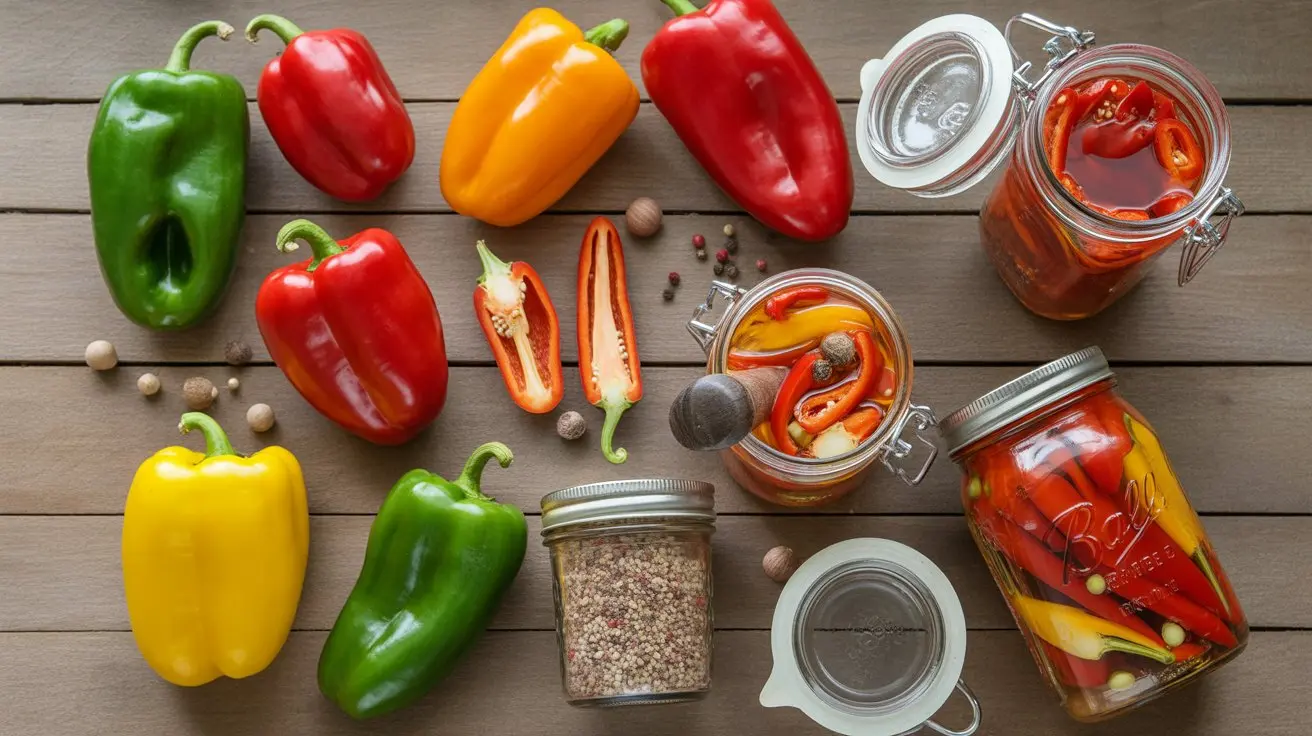
How to Pickle Peppers at Home
Step-by-step guide to pickling any pepper at home. Choose your brine, adjust heat, and preserve peppers for months.

Why Pickling Peppers at Home Is Worth the Effort
Store-bought pickled peppers are fine, but they're rarely great. The brine is usually too sharp, the peppers too soft, and the heat profile flattened by pasteurization. Making your own changes all of that.
Home pickling gives you complete control — over the pepper variety, the acidity level, the aromatics, and how long the jar sits before you crack it open. Once you understand the basic ratio, you can pickle almost anything.
Choosing the Right Peppers
Not every pepper takes to pickling equally well. The best candidates have firm flesh, enough structure to hold up in brine, and a flavor profile worth preserving.
Thick-walled peppers like Anaheim's mild, sweet flesh and the rich, earthy depth of poblanos pickle beautifully — their walls stay firm for weeks and absorb brine without going mushy. These are excellent entry-level choices if you're new to the process.
For more heat, Fresno chiles are a go-to: bright, fruity, and firm enough to slice into rings that hold their shape after a week in the jar. They land in the medium SHU range — enough warmth to notice, not enough to overwhelm.
If you want something with genuine fire, malagueta's sharp, peppery bite is a traditional South American pickling pepper that works in both vinegar-forward and oil-based preparations. Whole or halved, they're excellent in small-batch jars.
For the heat-seekers who want to push into the upper SHU brackets, varieties like the slow-building fruity fire of Komodo Dragon or the punishing intensity of Naga Viper can be pickled — but use them sparingly, as condiment additions rather than the main event. Even the scorching tropical heat of Trinidad Scorpion Butch T responds well to brine, which tempers the raw edge while keeping serious heat intact.
Thin-walled peppers like cayenne and bird's eye varieties work, but they tend to soften faster and need to be used within 2-3 weeks for best texture.
Understanding the Brine Ratio
Every pickled pepper starts with the same fundamental equation: acid + salt + water. The ratio you choose determines whether the result is sharp and snappy or mellow and complex.
The standard starting point for a refrigerator pickle is equal parts vinegar and water — a 1:1 ratio. This produces a balanced brine that's acidic enough to preserve but not so aggressive it strips the pepper's flavor.
For a sharper, more deli-style pickle, shift to a 2:1 vinegar-to-water ratio. This is common for Hungarian-style pickled peppers and anything you want to last longer at room temperature (though proper canning technique is still required for shelf stability).
Salt is non-negotiable. Use 1 teaspoon of kosher salt per cup of liquid as a baseline. Canning salt or pickling salt both work — avoid iodized table salt, which can discolor the brine and make it cloudy.
Sugar is optional but useful. A teaspoon per cup softens the acidity and complements sweeter peppers like Anaheims or banana peppers. Skip it entirely for a cleaner, more acidic result.
Vinegar Selection: It Matters More Than You Think
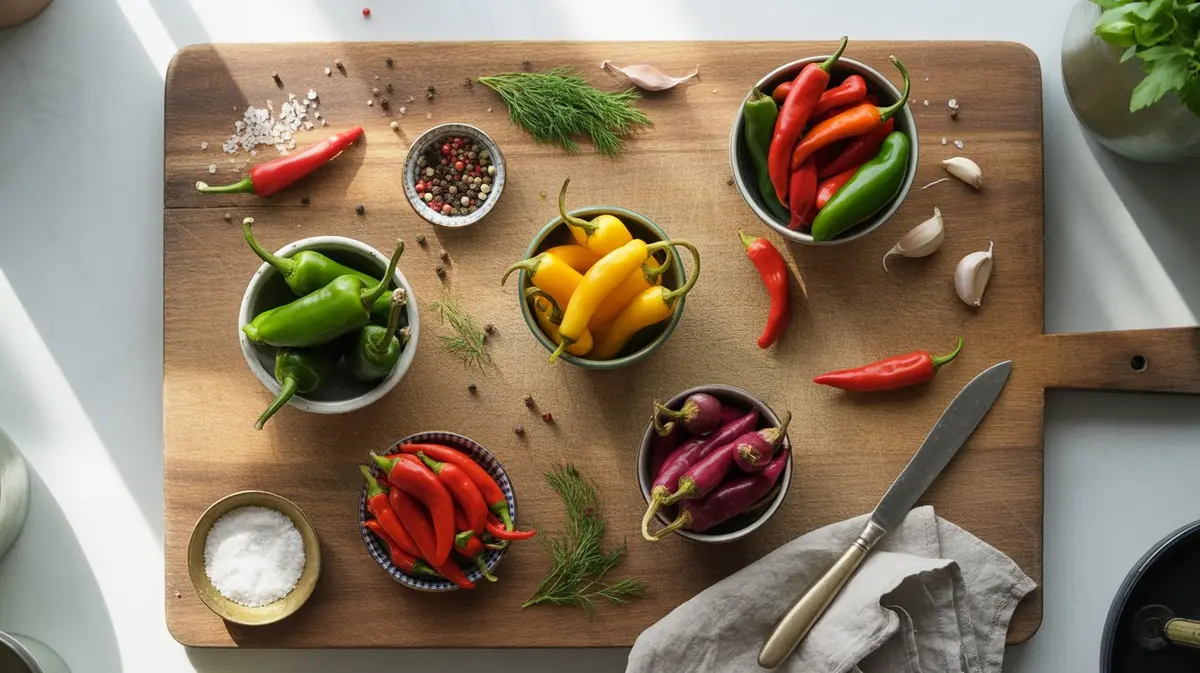
Apple cider vinegar adds a subtle fruity complexity that works particularly well with mild peppers. It can cloud the brine slightly and may darken light-colored peppers — neither is a safety concern, just aesthetic.
Rice vinegar is lower in acidity (typically 4-4.5%), which makes it unsuitable for shelf-stable canning but fine for refrigerator pickles. It produces a noticeably softer, more delicate result.
Red wine vinegar and sherry vinegar are excellent for flavor but expensive for large batches. Reserve them for specialty jars where the vinegar's character is part of the point.
Step-by-Step: Basic Refrigerator Pickled Peppers
This method requires no special equipment and produces peppers ready in 24-48 hours. They'll keep in the refrigerator for up to 2 months.
- Prepare your peppers. Wash thoroughly. Slice into rings, halves, or leave whole depending on size. Remove seeds for milder heat; leave them in for more fire.
- Sterilize your jars. Run glass jars and lids through the dishwasher on hot, or submerge in boiling water for 10 minutes. This isn't optional — it prevents spoilage.
- Make the brine. Combine 1 cup white vinegar, 1 cup water, 1 teaspoon kosher salt, and 1 teaspoon sugar (optional) in a small saucepan. Bring to a boil, stirring until salt dissolves. Remove from heat.
- Pack the jars. Fill sterilized jars with peppers, pressing down gently. Add aromatics here: garlic cloves, black peppercorns, fresh dill, bay leaves, or coriander seeds all work well.
- Pour the brine. Ladle hot brine over peppers, leaving 1/2 inch headspace at the top. Tap the jar gently to release air bubbles.
- Seal and cool. Wipe the rim clean, apply the lid, and let cool to room temperature before refrigerating.
- Wait. Minimum 24 hours before tasting. 48-72 hours gives noticeably better flavor penetration.
Water Bath Canning for Shelf-Stable Jars
Refrigerator pickles are convenient, but if you're working with a large harvest, proper canning extends shelf life to 12-18 months at room temperature.
The key difference is the heat-processing step. After filling jars with hot brine, you process them in a boiling water bath to create a vacuum seal and eliminate spoilage organisms.
Use only tested recipes from the USDA or National Center for Home Food Preservation for water bath canning. The acidity ratio is critical for safety — low-acid foods processed incorrectly can harbor botulism. Pickled peppers, with their vinegar brine, fall into the high-acid category and are generally safe for water bath canning when proper technique is followed.
Processing time for pint jars of pickled peppers is typically 10 minutes at a full rolling boil (adjust for altitude: add 5 minutes above 6,000 feet). After processing, remove jars and let cool undisturbed for 12-24 hours. You'll hear the satisfying pop of lids sealing as they cool.
Check seals before storing: the lid center should be concave and firm, not flexible. Any jar that didn't seal should go straight into the refrigerator and be used within a month.
Aromatics and Flavor Builders
The brine is the foundation, but aromatics are where you make the recipe your own. These additions go directly into the jar before the brine is poured.
- Garlic: 2-3 smashed cloves per pint jar. Non-negotiable for most savory applications.
- Black peppercorns: 1/2 teaspoon adds background complexity without heat.
- Coriander seeds: Particularly good with fruity, bright peppers. 1/4 teaspoon per jar.
- Bay leaves: One per jar. Subtle but adds a herbal depth that's hard to identify and easy to miss when absent.
- Fresh dill: A sprig or two works well with mild peppers in a more Eastern European style.
- Mustard seeds: Add a slight tang and a pleasant texture contrast. 1/4 teaspoon per jar.
- Dried oregano: A pinch pairs well with Italian-style preparations, especially with banana peppers or mild Anaheims.
Avoid fresh herbs other than dill for long-term storage — they can harbor bacteria and may discolor in the brine over time.
Adjusting Heat Level in the Jar
The heat of your pickled peppers is determined by three factors: the pepper variety, seed retention, and what you add to the jar.
Keeping seeds in during pickling increases heat noticeably. For thin-skinned peppers like Fresnos, the difference between seeded and unseeded rings is significant — closer to the sensation of eating one ring versus three.
Adding a single dried cayenne or a small piece of dried ghost pepper to a jar of mild peppers infuses heat into the brine itself, which then permeates the other peppers. This technique lets you dial in a specific heat level without committing to a hotter variety for the whole batch.
The mild end of the heat spectrum — banana peppers, Anaheims, pimientos — produces jars that almost anyone can enjoy. Moving up toward the hot pepper intensity zone with Fresnos, serranos, or jalapeños gives a more assertive result. The capsaicin compounds that create that heat are partially fat-soluble, which is why adding a small amount of olive oil to a finished jar can mellow the burn slightly while adding richness.
Fermented vs. Vinegar-Brined: The Key Difference
Vinegar pickling and lacto-fermentation are both preservation methods, but they work differently and produce very different results.
Vinegar pickling uses acetic acid (from vinegar) to lower pH and prevent spoilage. It's faster, more predictable, and shelf-stable with proper canning. The flavor is sharp and consistent.
Lacto-fermentation relies on naturally occurring lactobacillus bacteria to produce lactic acid over several days or weeks. No vinegar required — just salt and time. The result is more complex, slightly funky, and probiotic-rich. Fermented peppers also develop a different texture: softer, with a more integrated heat.
For fermentation, use a 2-3% salt brine by weight (roughly 1 tablespoon of non-iodized salt per 2 cups of water). Pack peppers into a jar, submerge under brine, cover loosely to allow gas to escape, and leave at room temperature for 3-7 days. Taste daily after day 3.
The flavor chemistry behind fermentation connects to the same capsaicin receptor science that makes fresh peppers burn — but fermentation changes how those compounds are delivered, often softening the initial impact while extending the finish.
Troubleshooting Common Problems
Mushy peppers: Usually caused by over-processing or using peppers that were already past their prime. Blanching thin-walled peppers before pickling accelerates softening — skip the blanch step. Adding a grape leaf or oak leaf to the jar introduces tannins that help peppers stay crisp.
Cloudy brine: Normal with apple cider vinegar or fermented peppers. In vinegar-brined peppers, cloudiness can also indicate starch from the pepper or residue from iodized salt. Use pickling salt and the brine will stay clear.
Weak flavor after a week: The brine-to-pepper ratio matters. If jars are too tightly packed, brine can't penetrate fully. Slicing peppers into rings rather than leaving whole dramatically speeds up flavor absorption.
Lids that didn't seal: Refrigerate immediately and use within 4 weeks. Never force a lid down or assume a partial seal is adequate for shelf storage.
Serving, Pairing, and Using Your Pickled Peppers
Pickled peppers are more versatile than they get credit for. Beyond topping sandwiches and pizzas, they work as a condiment alongside grilled meats, stirred into grain salads, blended into vinaigrettes, or layered into tacos.
The brine itself is useful. Pickle brine makes an excellent addition to Bloody Marys, a quick marinade base for chicken, or a finishing splash over roasted vegetables. Don't pour it down the drain.
Mild pickled peppers from the Italian pepper tradition — peperoncini, giardiniera-style preparations — pair naturally with charcuterie and cheese boards. Hotter pickled peppers work better as a condiment than a side, where their acidity and heat cut through rich or fatty dishes.
Pickled hot peppers from South American pepper traditions often appear alongside rice and bean dishes, where the sharp acidity provides contrast to starchy, neutral bases. The same principle applies at home: pair heat and acid with something that needs brightness.
Frequently Asked Questions
-
Refrigerator pickles stay good for up to 2 months when kept cold and sealed. Properly water-bath canned pickled peppers are shelf-stable for 12-18 months; once opened, refrigerate and use within 4 weeks.
-
Yes — even for refrigerator pickles, sterilizing jars reduces spoilage risk significantly. Run them through a hot dishwasher cycle or boil in water for 10 minutes before filling.
-
You can add fresh peppers to leftover commercial brine for a quick refrigerator pickle, but don't use it for canning. The acidity level may have diluted and can't be guaranteed safe for heat-processed preservation.
-
Soft