80 to 90°F
germination media until seedlings emerge


Make a healthy pepper plant progress faster by correcting the current stage's limiting condition. Warm germination media, strong overhead light, settled transplant weather, adequate root room, steady moisture, and conditional feeding each have a different job.
You can make a healthy pepper plant grow faster by correcting the condition that limits its current stage. Warm germination media, strong seedling light, settled transplant weather, enough root room, and a balanced water and feeding cycle each matter at a different time.
Useful speed means new roots, short sturdy nodes, expanding leaves, and a plant strong enough to hold flowers.
Extra height, very dark foliage, or one sudden flush after heavy feeding does not prove that harvest is arriving sooner.
Yes, but the plant must still be capable of active growth. A pepper that is making small leaves or short side shoots can usually respond to better conditions, while a plant that has stopped producing every new node needs a stall diagnosis before any attempt to accelerate it.
The fastest correction is the one that removes the present limit. More fertilizer cannot compensate for cold roots, and a larger pot cannot compensate for weak light.
Change one major input, then watch the same growing tips for seven to fourteen days. Stacking heat, fertilizer, repotting, pruning, and extra water at once hides which change helped and can create a second problem.
Do not compare every pepper with a tomato or with a different cultivar.
University of Illinois Extension notes that peppers need higher temperatures, grow more slowly, and remain smaller than many tomato plants.
Start by naming the stage in front of you.
Each stage has a different first lever, so a tip that helps a seed may slow a fruiting plant.
Stabilize warm media first. Water and fertilizer cannot rescue a cold seed that has not begun active germination.
Move the priority to bright overhead light after emergence. Stocky new leaves matter more than rapid stem extension.
Hold moisture, wind exposure, and night protection steady while roots connect with the surrounding soil.
Balance root space, water, and nutrition so the canopy can support flowers without producing soft foliage alone.
A stage map also prevents contradictory care. High media heat helps seeds germinate, but keeping emerged seedlings hot under weak light can produce thin stems that later take longer to harden.
Likewise, pinching a flower can help a six-leaf transplant establish, yet stripping buds from a vigorous established plant only pushes the harvest farther away.
Choose one stage-specific correction before moving to the next section.
Temperature targets change as the plant develops.
University of Minnesota Extension keeps pepper media at 80 to 90°F until emergence, while Penn State Extension places active pepper growth near 70 to 75°F.
These figures describe three different decisions, not one universal temperature band. A heat mat belongs under germinating cells, while an established outdoor plant needs a suitable day and night cycle rather than constant bottom heat.
Cold roots take up water and nutrients slowly, so feeding harder during a cool spell adds salts without removing the real limit. Wait for settled warmth or protect the planting temporarily, then judge the new leaves rather than the old chilled foliage.
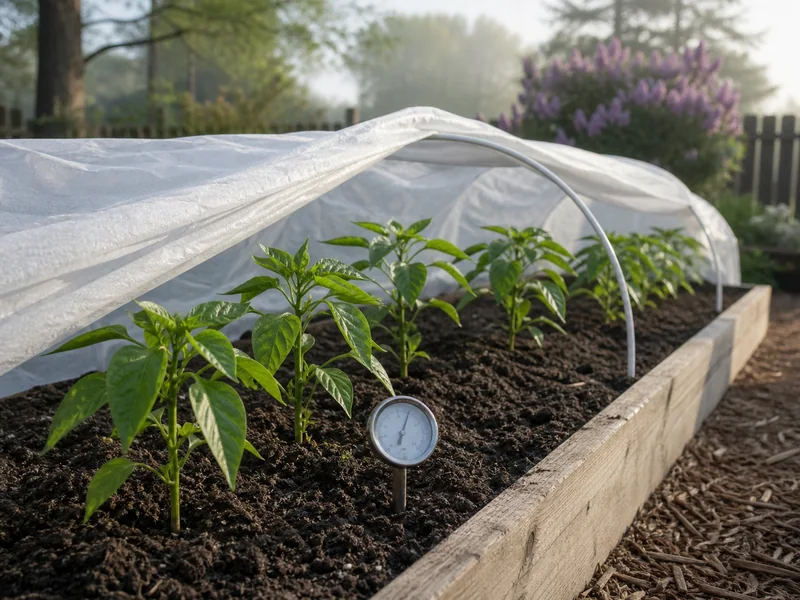
Open or remove row cover before warm daytime air accumulates around the canopy.
The goal is to soften a cold-night setback, not to seal the plants inside a hot tunnel.
After emergence, bright overhead light helps a pepper build broad leaves and short internodes. A seedling that gains height by leaning toward a window is stretching, which creates a longer stem without the leaf area or strength needed for faster establishment.
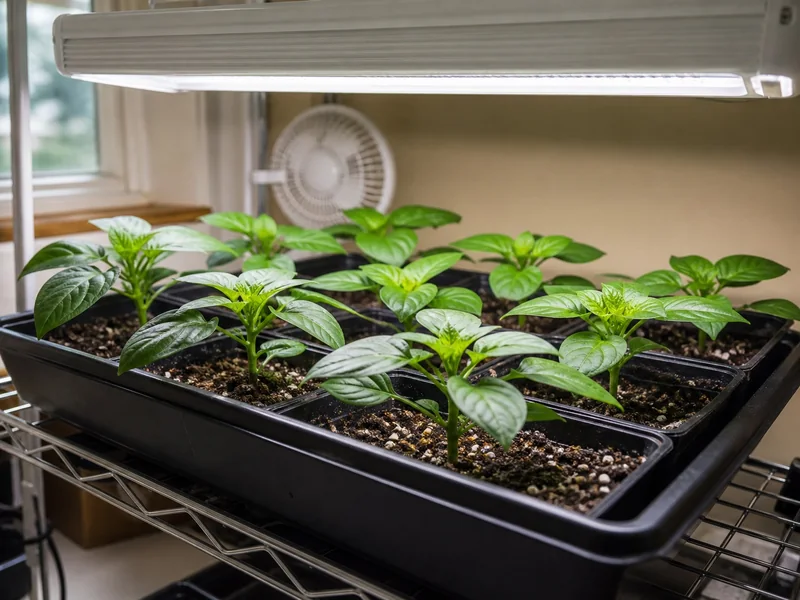
Move the lamp close enough for even, stocky growth, but follow the fixture maker's heat and distance limits. One fixed distance cannot suit every LED panel, fluorescent tube, window, and plant stage.
Outdoor sun is a second transition. A soft indoor leaf can burn during an abrupt full-day move, and the damaged canopy then has less working surface for new growth.
A normal dark period remains part of plant growth.
Extending weak light through the whole night is less useful than improving daytime intensity and keeping a stable schedule.
Repot when roots and dry-down show that the current container has become the limit. White roots circling the outside of the root ball, water running straight through, or a pot that repeatedly dries by midday are stronger signals than the seedling's age.
Move up one practical size so fresh mix surrounds the active roots but can still dry predictably. A tiny root ball placed directly into a huge cold volume may sit wet for days, which replaces a root-space problem with low root oxygen.
Roots form a tight outer web, the plant wilts between reasonable waterings, or the root ball lifts out as one hard plug.
The mix still dries evenly, roots only reach the pot edge, and new leaves continue expanding without daily wilt.
University of Maryland Extension lists at least a five-gallon container for one mature pepper plant.
Loosen only the tight outer roots when an older transplant is badly tangled. Pulling the whole root mass apart creates extra damage at the moment the plant needs fast contact with fresh mix.
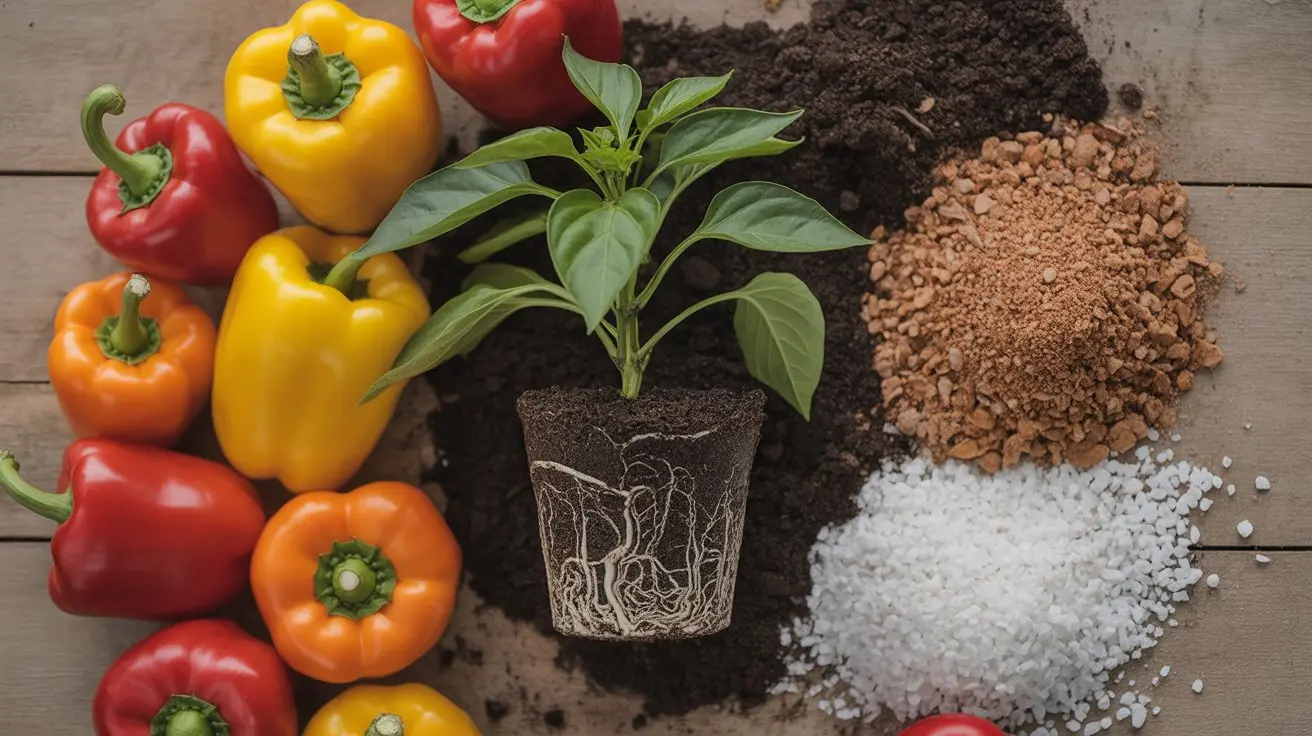
The existing root-ball image at the top of this page shows the useful distinction.
More root room helps when the old pot is full, but pot size does not replace drainage, warmth, or light.
Fast roots need moisture and air in the same pore space at different points in the cycle. Saturated mix excludes oxygen, while repeated wilt interrupts leaf expansion and can reduce yield and fruit quality.
Check below the dry-looking surface before watering. University of Maryland Extension advises testing the top few inches in a five-gallon container because the surface can look dry while the lower root zone remains wet.
A fixed daily schedule ignores canopy size, container volume, wind, soil texture, and weather.
The repeatable target is a complete watering followed by enough dry-down to restore root-zone air before the plant reaches a hard wilt.
Mulch can reduce surface evaporation after outdoor soil has warmed. Applied over cold saturated ground, it may preserve the condition that is already slowing the roots.
Fertilizer can help after roots are warm, supplied with oxygen, and extending into the soil.
It cannot make an inactive root system use nutrients on command.
Use the potting mix charge, a soil test, the plant stage, and the product label to decide whether feeding is due. Penn State Extension places productive pepper soil around pH 5.8 to 6.6, so repeated feeding may not solve a nutrient that the root zone cannot access properly.
New leaves have restarted, roots occupy the available mix, and pale growth remains after temperature and water are suitable.
The pot stays wet, nights remain cold, or leaves have become very dark and soft while flowering lags.
UC Agriculture and Natural Resources warns that excessive nitrogen can make peppers grow too fast, increase disease susceptibility, and reduce productivity.
That is foliage speed without the useful crop progress this page is trying to create.
After one light, label-compliant feeding, read the newest leaves rather than adding another dose immediately. If color and expansion do not improve, return to temperature, roots, moisture, and light before assuming the dose was too small.
Pinching a few early flower buds can help a small, root-bound, or newly transplanted pepper put its limited resources into establishment. Use plant strength as the trigger, since a sturdy plant with active new leaves and adequate root room is ready to begin carrying fruit.
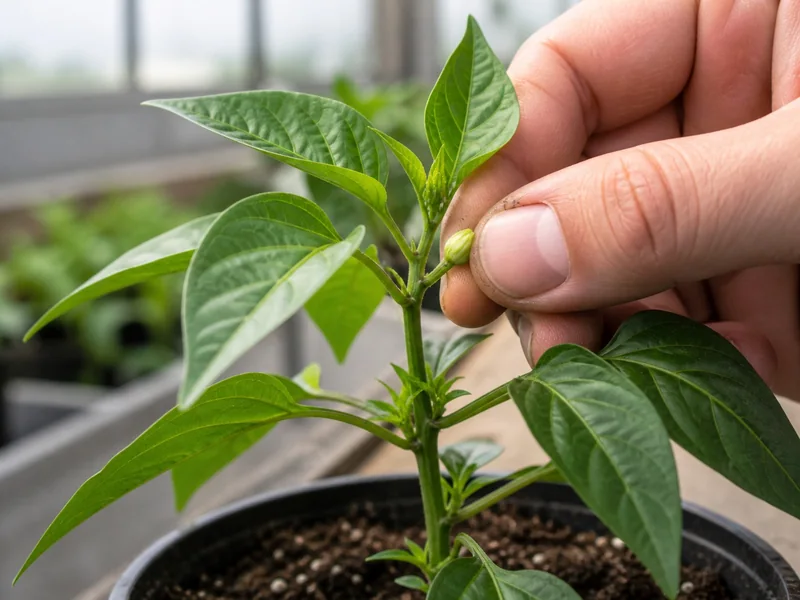
Pruning foliage is a different intervention.
Healthy leaves produce the energy for roots and fruit, so routine topping or leaf removal does not automatically shorten the season.
Every removed bud delays that potential fruit. Stop pinching once the plant is established and weather is suitable, or the attempt to build a larger plant will simply postpone harvest.
Flower loss on a large dark-green plant may point to temperature, shade, or excess nitrogen rather than insufficient size. Treat that pattern as a fruit-set question instead of pushing the canopy harder.
Photograph the same growing tip before the change and inspect it again after seven to fourteen days.
Height alone is weak evidence because a poorly lit plant can stretch without adding useful canopy.
A fresh leaf pair or side branch shows that the growing point has restarted.
New blades open broader and flatter instead of staying pale, twisted, or unusually small.
The container dries at a manageable pace without staying heavy or wilting by midday.
An established plant holds buds while continuing to extend healthy shoots.
Compare those changes with the cultivar and stage. A compact jalapeño may branch quickly, while a long-season Capsicum chinense plant can remain shorter even under equally good care.
If no new node, expanding leaf, or side shoot appears after the observation window, stop stacking acceleration tips. That plant has crossed into a genuine growth stall and needs a structured check of root temperature, transplant recovery, roots, water, light, and possible injury.
The best result is not the tallest plant by next week.
It is a pepper that keeps adding functional leaves, occupies its root space, and carries flowers without constant rescue.