How Do You Grow Banana Peppers for Crisp, Heavy Harvests?
Choose a sweet or hot banana pepper line before planting. Start seed about eight weeks before warm-soil transplanting, keep roots evenly moist, and clip firm pods at the color that matches their use.
Banana peppers grow best when the seed type, transplant temperature, and harvest stage are decided before the plant starts carrying fruit.
Choose a sweet or hot line deliberately, transplant into warm soil, keep moisture steady, and clip firm pods often if crisp yellow harvests are the goal.
The plant can produce repeated flushes because its fruit are narrower than bell peppers. That advantage disappears when cold roots, excess nitrogen, missed harvests, or dry-to-wet swings interrupt flower and pod development.
Which banana pepper variety should you plant?
The cultivar and heat description matter more than the words banana pepper alone. University of Minnesota Extension classifies banana peppers among sweet types and hot banana among hot types, while Hungarian wax peppers can look very similar at the yellow stage.
A pale yellow pod does not prove mild heat.
Seed packets should name the cultivar, expected pungency, days to maturity, and mature color so the crop matches a family pickle jar or a hotter cooking plan.
Sweet Banana is the familiar mild, tapered type. Hot Banana and Hungarian wax selections suit gardeners who want a sharper pod, but the seller's current description is more useful than a generic store label.
Choose one purpose for most of the bed. Mixing visually similar sweet and hot plants creates extra work at harvest because the pods cannot be sorted reliably by yellow color alone.
| Seed description | Likely harvest use | Detail to confirm |
|---|---|---|
| Sweet banana | Pickled rings, sandwiches, salads | Mature length and days to yellow harvest |
| Hot banana | Hot pickles, relishes, cooked dishes | Heat description and mature color |
| Hungarian wax | Hot pickling and frying | Cultivar identity rather than pod color |
When should you start banana pepper seeds?
Banana pepper seeds need about eight weeks indoors before outdoor planting. University of Minnesota recommends sowing one-quarter inch deep in sterile mix and using 80 to 90°F mat conditions until seedlings emerge, while noting that a soil temperature near 70°F is suitable.
Bright overhead light keeps the stems compact after emergence.
A warm tray beside a dim window can germinate well but still produce stretched seedlings that struggle under the first fruit load.
Move seedlings to larger cells when roots fill the original space.
If flower clusters appear long before transplanting, University of Minnesota advises pinching them until the outdoor move is close so the young plant can build roots first.
Harden plants over seven to fourteen days. Begin with a sheltered period outdoors, add light and wind gradually, and bring plants back inside when the night is too cold.
Use temperature as the transplant gate. University of Minnesota recommends waiting until nighttime lows are above 50°F, and University of Maryland warns that soil below 65°F can leave pepper transplants sitting without useful growth.
A tall seedling is not proof of readiness. Warm roots, a filled but unbound root ball, sturdy stems, and leaves adapted to outdoor light matter more than height.
How much sun and space do banana peppers need?
Full sun and well-drained soil are the basic site requirements for banana peppers. University of Maryland defines full sun as at least six direct hours and notes that eight to ten hours is preferable where extreme afternoon heat does not scorch exposed fruit.
University of Minnesota gives a soil pH range of 6.5 to 7. Use a soil test before adding lime, phosphorus, or another correction because compost cannot reveal the existing nutrient level.
Space garden plants about 18 inches apart, with enough room to reach the hanging fruit from both sides. University of Minnesota uses 18 inches in rows 30 to 36 inches apart, while Maryland's broader range is 12 to 24 inches within the row.
One plant needs a five-gallon container at minimum under Maryland guidance.
A larger pot earns its space in hot weather by holding more moisture between checks and giving roots a more stable temperature.
- Use potting mix in containers rather than dense garden soil.
- Keep every drainage hole open before setting the transplant.
- Plant at the same soil line used in the nursery pot.
- Water the root ball and surrounding soil together after planting.
- Add mulch after the soil has warmed, keeping it away from the stem.
Access affects production because pale pods hide under foliage. A plant placed against a wall may carry overlooked mature fruit that continues drawing energy after the intended pickling stage.
How should you water and feed banana peppers?
Consistent root-zone moisture produces the best pod quality. University of Minnesota links uneven moisture with weak flowers, small fruit, and blossom-end rot, and recommends a thorough soak when weekly rain does not supply about one inch.
Water from the condition below the surface rather than a fixed daily ritual.
Sandy beds and small containers dry sooner, while heavy soil may remain wet long after the top appears dry.
A surface sprinkle encourages shallow roots and leaves the plant vulnerable during a hot fruiting period. Drip irrigation or a soaker hose supplies the root zone without repeatedly wetting foliage.
Feed from a soil-test result when possible. University of Minnesota warns that too much nitrogen creates bushy plants that are slow to bear fruit, which explains a dark green canopy with few pods better than a shortage of fertilizer does.
University of Maryland describes peppers as medium feeders and recommends side-dressing after the first fruits set. Apply a measured vegetable fertilizer at that stage only when the soil or plant condition supports the need.
Container leaves can look tired after a heavy flush because water and nutrients leave the pot faster. Check moisture, drainage, recent feeding, and new growth together before adding a concentrated product.
Do banana pepper plants need support?
Support belongs in place while stems are upright and flexible. University of Maryland notes that mature pepper stems become brittle and recommends cages or short trellises.
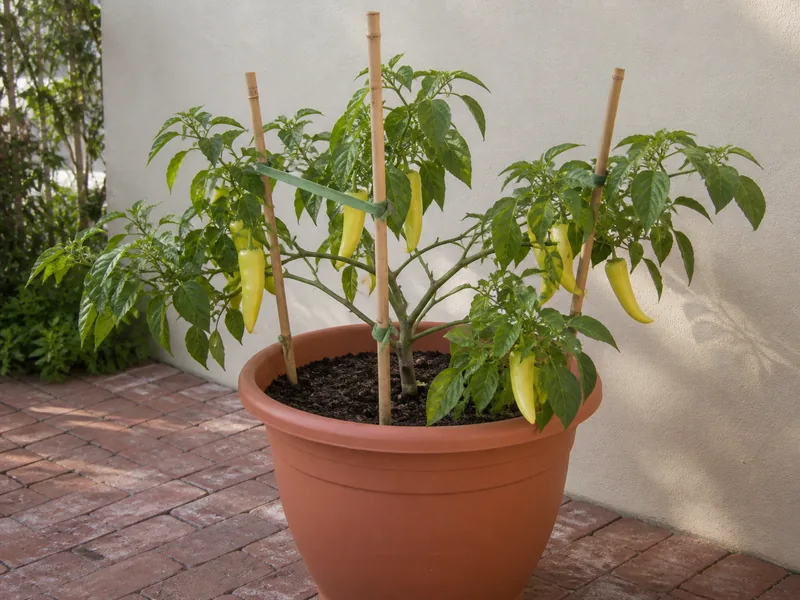
A single stake with loose soft ties suits an open garden row.
A low ring or three short stakes can catch several side branches in a container without hiding the fruit.
Support should keep pods off wet soil and preserve a clear picking path. It should not pull every branch into a narrow bundle that traps moisture and makes the inner flowers hard to inspect.
Install the support before rain loads the foliage and fruit with water. Lifting an already bent branch can split the joint where it meets the main stem.
Check ties as the stem thickens. A tie that begins loose can constrict the branch later in the season, so leave space for movement and growth.
When should you pick banana peppers?
Full-sized, firm fruit is ready to pick.
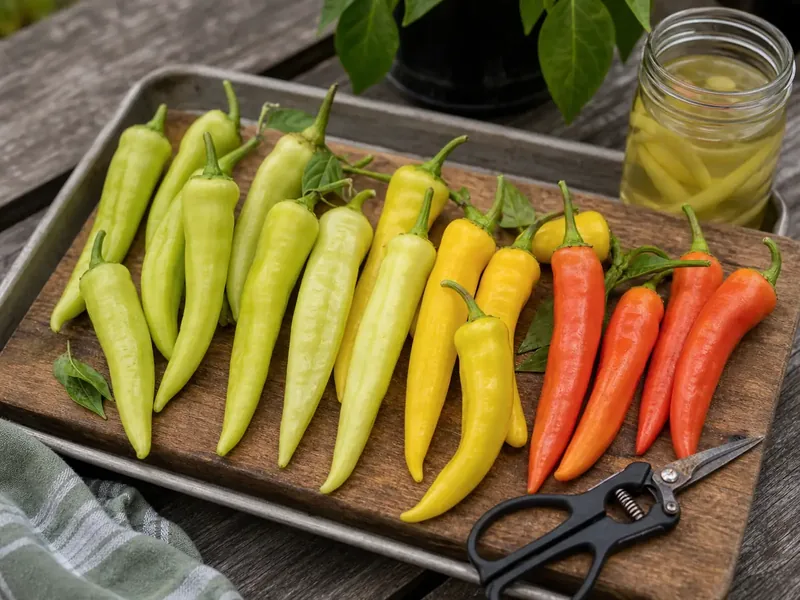
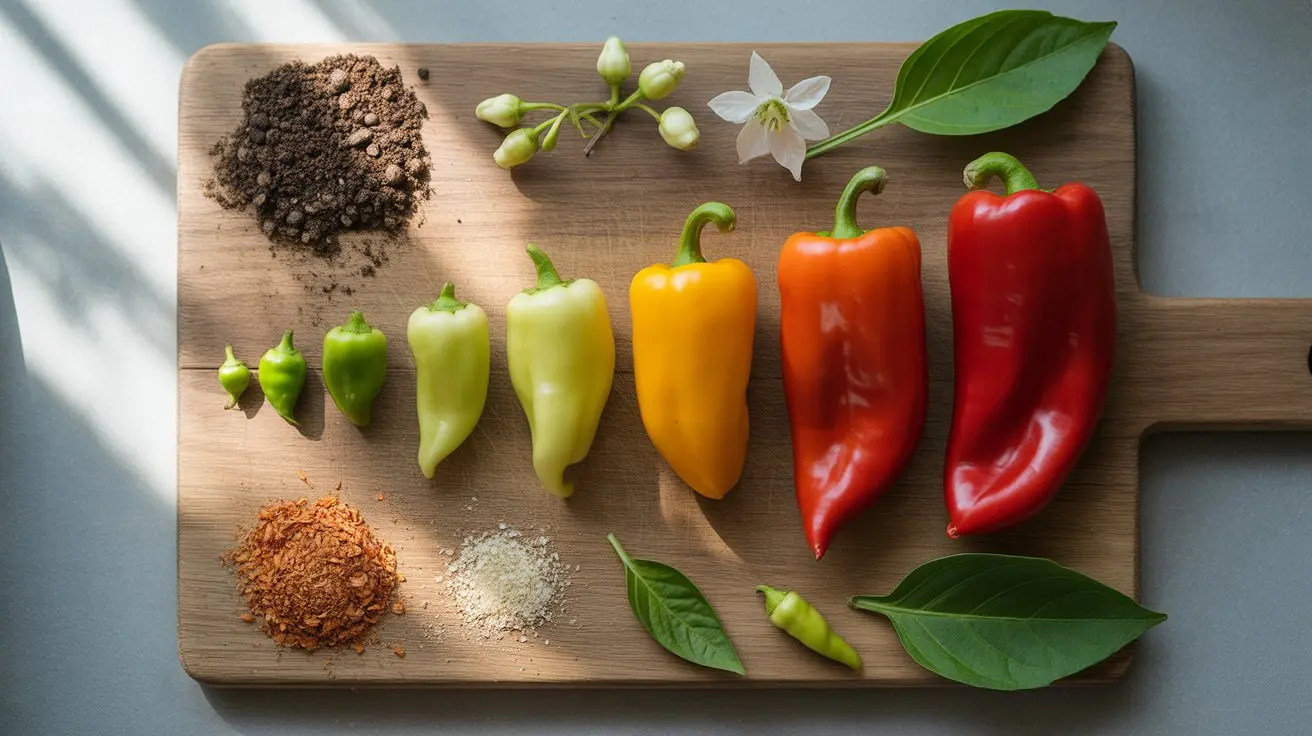
Pale yellow is the common stage for crisp pickling rings, while orange and red stages bring fuller sweetness and softer walls in a sweet cultivar.
| Intended use | Pick condition | Effect on the plant |
|---|---|---|
| Crisp pickles | Full-sized, firm, pale yellow | Early removal supports another flower flush |
| Fresh eating | Yellow to light orange with firm walls | More color develops without holding every pod |
| Ripe cooking | Orange or red | Longer hang time slows replacement fruit |
| Seed saving | Fully ripe, healthy pod | One marked fruit stays while the rest are harvested |
Clip the stem with clean shears instead of pulling the pod. Both Maryland and Minnesota Extension recommend cutting because brittle pepper branches can break during harvest.
Continued picking encourages more flowers and fruit, according to University of Minnesota. That makes harvest timing a crop-management tool rather than a kitchen decision alone.
Cool harvested pods promptly and sort by firmness. Firm yellow fruit goes to rings, while a sound but slightly softer ripe pod fits cooked use better than a jar meant to stay crisp.
Leave only selected pods to ripen when a steady pickling supply matters. Holding an entire flush for red color delays the next wave and creates more soft fruit than one recipe may need.
What causes common banana pepper problems?
The affected plant part and recent weather narrow the first correction.
Adding fertilizer to every weak flower or pale leaf can deepen the original problem.
| Symptom | First evidence to check | Useful first response |
|---|---|---|
| Flowers drop before fruit set | Hot days, warm nights, dry soil, or excess nitrogen | Stabilize moisture and pause unnecessary feeding |
| Black or sunken blossom end | Dry-to-wet swings and root condition | Restore even watering rather than applying foliar calcium blindly |
| Flat pale or tan fruit patch | Direct sun after leaf loss or hard pruning | Preserve healthy canopy and use temporary shade during extremes |
| Soft full-sized pods | Delayed picking, water swings, or warm storage | Harvest earlier and cool sound fruit promptly |
| Curled leaves | Moisture, wind, aphids, mites, or disease pattern | Identify the cause before spraying or feeding |
University of Minnesota notes that dry soil, temperatures above 90°F, and unsuitable night temperatures can weaken growth. Maryland adds that evening temperatures above 75°F may slow or stop pod production.
Sunscald appears where fruit loses leaf protection during hot, dry weather. Do not strip the canopy just to expose yellow pods for easier picking.
Blossom-end rot is connected to calcium movement through the plant, but irregular water can prevent that movement even when soil calcium is adequate. Stabilize the root zone before assuming the bed needs lime.
A correct diagnosis may require an extension office or plant clinic when spotting, distortion, or decline spreads. The useful first step is documenting which leaves and fruit changed, not choosing a product from one symptom.
Can you save seed from banana peppers?
Only a healthy pod at full mature color is ready for seed saving.
A pale yellow picking-stage fruit may be excellent for the kitchen but may not contain fully mature seed.
Mark one or two pods and keep harvesting the rest. This preserves the plant's repeat-flush advantage while the selected seed fruit remains on the branch.
Peppers are largely self-fertile, but insects can move pollen between nearby plants. University of Maryland recommends screening plants from insects or separating them by 500 feet when predictable saved seed matters.
That isolation rule matters most when sweet banana, hot banana, and Hungarian wax types share a garden. Cross-pollination does not change the pod being harvested this year, but it can change plants raised from its seed next season.
Dry cleaned seed thoroughly before storage and label it with cultivar, heat type, color at harvest, and year. A precise label prevents a yellow sweet line and a yellow hot line from becoming indistinguishable in winter envelopes.
Use purchased seed when reliable mild heat matters more than preserving a local line. Saved seed is valuable, but only isolation and accurate records support the expectation that the next crop will match its parent.
How Do You Grow Banana Peppers for Crisp, Heavy Harvests? FAQ
- University of Minnesota Extension - Growing Peppers
- University of Maryland Extension - Growing Peppers in a Home Garden
- Utah State University Extension - Peppers in the Garden
- Oregon State University Extension - Grow Your Own Peppers