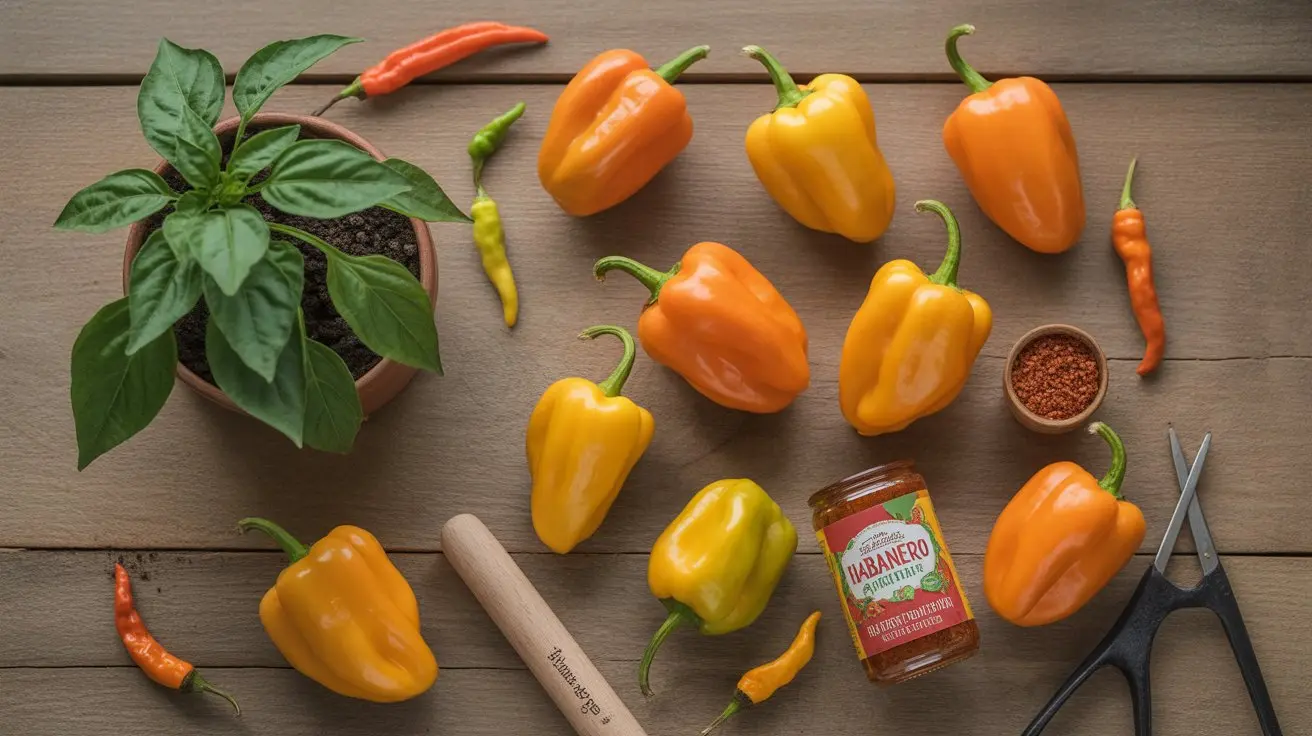
How to Grow Habaneros
Habaneros need a long growing season and warm temps. Seed starting, soil, fertilizing, staking, and maximizing heat.

Why Habaneros Demand Your Full Attention
Habaneros sit in the extra-hot SHU bracket, ranging from 100,000 to 350,000 Scoville units — that's roughly 10 to 50 times hotter than a serrano. Growing them successfully means respecting one non-negotiable fact: these are tropical peppers that evolved in warm, humid conditions and they will punish impatience.
Capsicum chinense varieties like the habanero belong to a species group that includes some of the hottest peppers on earth. They need more time, more warmth, and more consistent care than most backyard gardeners expect. Get those conditions right and you'll harvest dozens of pods per plant. Cut corners and you'll wait all summer for a handful.
Timing: The Single Biggest Variable
Habaneros need 90 to 120 days from transplant to first ripe fruit — longer than jalapeños, longer than serranos, longer than most peppers you'll grow. That clock doesn't start until the plant is in the ground, so seed-starting timing is critical.
Count backward from your last frost date. Start seeds 10 to 12 weeks before you plan to transplant. In most of the US, that means starting indoors in late January or early February. Southern growers with frost-free winters can push seeds even earlier.
Transplant outdoors only when nighttime temperatures stay consistently above 55°F. Habaneros stall in cold soil — a week of cool nights can set a plant back by three weeks of growth.
Germination: Heat Is Everything
Habanero seeds germinate slowly compared to Capsicum annuum varieties. Expect 14 to 21 days at optimal temperature. At suboptimal temperature, you might wait 30+ days or get nothing at all.
Soil temperature needs to stay between 80°F and 90°F consistently. A seedling heat mat is not optional — it's the difference between 80% germination and 20%. Set it and use a soil thermometer to verify; ambient air temperature in a room doesn't reflect what's happening at root level.
Plant seeds 1/4 inch deep in a quality seed-starting mix. Use individual cells or small 2-inch pots rather than open trays — habaneros dislike root disturbance and the less transplanting you do, the better.
Keep the medium moist but not saturated. A humidity dome helps maintain moisture during germination, but remove it once seedlings emerge to prevent damping-off fungus.
Soil Setup: What Habaneros Actually Need
These plants are heavy feeders that also demand excellent drainage. Rich, waterlogged soil will rot roots before you ever see a flower. The ideal mix is loamy, well-draining with a pH between 6.0 and 6.8.
If you're growing in-ground, amend clay soils heavily with compost and perlite. Raised beds give you direct control over drainage and warm up faster in spring — a genuine advantage for a heat-loving species. Container growing works well too; use at least a 5-gallon pot per plant, and fabric pots improve air pruning of roots.
Before transplanting, work in a balanced slow-release fertilizer. Something in the 5-10-10 range (lower nitrogen, higher phosphorus and potassium) supports root development and eventual fruiting without pushing excessive leafy growth early on.
Transplanting and Early Care
Harden off seedlings for 7 to 10 days before transplanting. Move them outside for a few hours daily, gradually increasing exposure to direct sun and wind. Skipping this step causes transplant shock that can delay fruiting by weeks.
Space plants 18 to 24 inches apart. Habanero plants get bushy — 2 to 3 feet wide at maturity — and crowding reduces airflow, which invites fungal disease.
Water deeply after transplanting, then back off. Habaneros prefer consistent moisture rather than frequent shallow watering. Let the top inch of soil dry between waterings. Inconsistent moisture is one of the top causes of blossom drop in habaneros.
Mulch around the base with 2 to 3 inches of straw or wood chips to retain soil moisture, moderate temperature, and suppress weeds. Keep mulch an inch away from the stem to prevent rot.
Fertilizing Through the Season
Habaneros have distinct nutritional phases. Early in the season, moderate nitrogen supports healthy leaf and stem development. Once flowering begins, switch to a low-nitrogen, high-potassium formula — too much nitrogen at this stage pushes foliage at the expense of fruit.
A common approach: feed with a balanced fertilizer every two weeks through early summer, then switch to a tomato-style fertilizer (like 5-10-10 or 8-32-16) once you see the first flower buds. Calcium is also important — habaneros are susceptible to blossom-end rot in calcium-deficient or inconsistently watered conditions.
Foliar feeding with diluted fish emulsion or kelp extract can give plants a mid-season boost, especially if you notice pale leaves or slow growth. Apply in the morning so leaves dry before evening.
Managing Heat, Stress, and Capsaicin Development
Here's something most guides skip: the heat level of your habaneros is not fixed. The capsaicin chemistry inside each pod responds to environmental stress. Plants that experience moderate water stress, high temperatures, and intense sun produce hotter fruit than pampered, heavily irrigated plants.
This doesn't mean you should neglect your plants — stressed plants also drop flowers and produce fewer pods. The goal is controlled stress: consistent but not excessive watering, full sun exposure (minimum 6 hours, ideally 8+), and temperatures between 70°F and 95°F during pod development.
For a deeper look at how capsaicin levels are measured and what drives the variation, the heat index measurement tool explains the Scoville methodology and why two habaneros from the same plant can test differently.
Night temperatures also matter. Habaneros set fruit best when nights stay above 60°F. Below that and flowers drop before they can be pollinated.
Pollination, Flowering, and Fruit Set
Habanero flowers are self-fertile, but they benefit from movement — wind or bee activity improves fruit set. In a greenhouse or indoor setup, shake plants gently every day or use a small fan to simulate airflow.
Flower drop is the most frustrating part of growing habaneros. Common causes: temperatures above 95°F during the day, below 55°F at night, inconsistent watering, or nitrogen excess. If you're losing flowers, run through that checklist before assuming something is wrong with the plant.
Once fruit sets, pods take 60 to 90 days to ripen from green to their final color — orange, red, or chocolate depending on the variety. Don't rush it. Ripe habaneros are sweeter and more complex than green ones, and maximum heat develops in fully ripe fruit.
Pest and Disease Management
Aphids are the most common habanero pest. They cluster on new growth and under leaves. A strong spray of water knocks most off; neem oil or insecticidal soap handles heavier infestations. Check plants weekly — small populations are easy to manage, established ones are not.
Spider mites thrive in hot, dry conditions. If you see fine webbing and stippled leaves, increase humidity and apply neem oil. Bacterial leaf spot shows up as dark, water-soaked lesions and spreads in wet conditions — avoid overhead watering and remove affected leaves promptly.
Phytophthora root rot kills habaneros in poorly drained soil. There's no cure once established, which is why drainage matters so much at setup. Prevention through soil prep is the only reliable strategy.
Harvesting for Maximum Yield
Pick habaneros at full color for peak flavor and heat. Orange habaneros should be uniformly deep orange with no green shoulders. The skin should be slightly waxy and firm, not soft.
Harvest regularly. Leaving ripe pods on the plant signals it to slow production — removing them keeps the plant in active fruiting mode. A productive habanero plant can yield 50 to 100+ pods over a season under good conditions.
Use gloves when harvesting and processing. Habanero capsaicin transfers easily to skin and eyes, and the burn is intense. If you're growing habaneros alongside milder varieties like fully ripe red jalapeños or the waxy-fruited cascabella, keep tools separate to avoid cross-contamination.
Cut pods with scissors or a knife rather than pulling — pulling can break branches, especially on heavily loaded plants.
Extending the Season and Overwintering
Habanero plants are perennials in frost-free climates. In zones 10 and above, a single plant can produce for years. In colder climates, you have two options: treat them as annuals or overwinter them indoors.
Overwintering works well. Before first frost, cut the plant back by about half its size, pot it up if it's in-ground, and bring it inside. Keep it in a sunny window or under grow lights, water sparingly, and let it go semi-dormant. Come spring, it'll push new growth weeks ahead of seedlings — meaning earlier and heavier harvests the second year.
If you're extending the outdoor season, row covers or a cold frame can protect plants from light frost and add 2 to 3 weeks of harvest time in fall.
Habaneros in Context: Related Varieties Worth Knowing
Habaneros occupy a specific heat tier that sits between the hot range and the super-hot extremes. If you want to understand where they land relative to other varieties, comparing them to peppers across the heat spectrum is useful.
On the milder end of the spectrum, the dried, crushed heat of red pepper flakes gives a sense of how habanero heat compares to everyday pantry staples. Moving up the scale, the fiery Brazilian malagueta offers a point of comparison from the South American pepper tradition, while the intensely hot Guntur Sannam from India's Indian pepper growing regions shows how habanero heat stacks up against dried chili varieties used in curry blends.
For growers interested in the broader Capsicum chinense family, the Caribbean pepper tradition produced the habanero's closest relatives — scotch bonnets and other fruity, floral chinense varieties that share similar growing requirements.
The aggressively hot lumbre pepper is another C. chinense type worth growing alongside habaneros for comparison, and the broader pepper cultivation guide covers seed-starting fundamentals that apply across all species.
Post-Harvest: Storage and Preservation
Fresh habaneros keep for 1 to 2 weeks in the refrigerator. For longer storage, freeze them whole — no blanching needed. Frozen habaneros lose their crisp texture but retain full heat and flavor, making them ideal for sauces and cooked applications.
Drying is another option. Habaneros can be dried in a dehydrator at 125°F to 135°F for 8 to 12 hours, or in an oven on the lowest setting with the door cracked. Dried habaneros can be ground into powder or stored whole for up to a year.
Hot sauce is the most common destination for a large habanero harvest. The fruity, floral character of ripe habaneros makes them one of the best sauce peppers available — far more complex than the one-dimensional heat you get from something like a generic dried chili blend.
Frequently Asked Questions
-
Plan on 120 to 150 days total from seed to ripe fruit. That includes 10 to 12 weeks of indoor seed-starting plus 90 to 120 days from transplant to harvest - one of the longer timelines among common pepper varieties.
-
Flower drop usually comes down to temperature extremes - daytime highs above 95F or nights below 55F are the most common culprits. Inconsistent watering and excess nitrogen fertilizer also cause drop; fix those three variables first.
-
Yes. Minimum 6 hours of direct sun is required, but 8 or more hours produces noticeably hotter pods. Capsaicin production increases with heat stress and UV exposure, so shaded plants consistently produce milder fruit than sun-grown ones.
-
Container growing works well for habaneros as long as you use at least a 5-gallon pot per plant. Fabric pots improve root health through air pruning. Container plants dry out faster, so expect to water more frequently than in-ground plants.
-
Cut the plant back by half before first frost, pot it up if it's in-ground, and bring it indoors to a sunny window or grow light setup. Water sparingly through winter and it will push vigorous new growth in spring, typically yielding earlier and heavier than first-year plants.