Disease-Resistant Pepper Varieties by the Problem You Have
Choose disease-resistant pepper varieties by the pathogen already confirmed in your garden, then verify the current seed label. Cornell lists different resistance packages for Aristotle, Archimedes, Hot Sunset, Cinder, Paladin, Legendario, and Tzotzil, while extension guidance still requires clean transplants, drainage, rotation, and vector control.
What does disease-resistant mean on a pepper variety?
Disease-resistant pepper varieties are bred or selected to handle specific pathogens better than susceptible varieties. They are not immune, and they are not protected from every problem that can hit a pepper plant.
The first decision is diagnosis because bacterial leaf spot, Phytophthora root rot, tobacco mosaic virus, tomato spotted wilt virus, and potato virus Y behave differently. A variety with resistance to one problem may do nothing for another.
This article covers the seed-selection step before planting. If you already have leaf spots, wilting, insects, or root rot symptoms, start with our pepper pests and diseases guide so you do not buy resistance for the wrong enemy.
What do pepper disease resistance codes mean?
Seed catalogs often compress disease claims into short codes. Common pepper codes include BLS for bacterial leaf spot, TSWV for tomato spotted wilt virus, TMV for tobacco mosaic virus, PVY for potato virus Y, and notes for Phytophthora resistance or tolerance.
The code matters more than the marketing line.
A seed packet that says disease-resistant without naming the disease is too vague to plan around. You need to know whether the claim points at a leaf disease, a soilborne disease, or a virus spread by insects or handling.
Also read whether the catalog says resistant, intermediate resistance, tolerant, or adapted.
Those words are not identical. Intermediate resistance usually means lower damage under pressure, not a plant that can ignore poor sanitation.
Here is what the common pepper codes mean and how each disease reaches the plant.
| Code | Disease | Type | Spreads by |
|---|---|---|---|
| BLS | Bacterial leaf spot | Bacterial, foliar | Splashing water and handling wet plants |
| TSWV | Tomato spotted wilt virus | Virus | Thrips |
| TMV | Tobacco mosaic virus | Virus | Contact, tools, and hands |
| PVY | Potato virus Y | Virus | Aphids |
| P | Phytophthora | Soilborne, root and crown | Wet, poorly drained soil |
Which pepper varieties carry disease resistance claims?
Cornell University compiles disease claims from seed catalogs and warns that its entries came from the 2018, 2020, and 2022 catalogs. Use the list to build a shortlist, then verify the current packet because a variety name without a current disease line is not enough evidence.
The resistance package also changes by cultivar and sometimes by race of the pathogen. Aristotle and Archimedes combine several claims, while Paladin is useful for a narrower Phytophthora problem and Cornell explicitly says it does not resist bacterial leaf spot.
| Variety | Pepper type | Published resistance or tolerance | Selection limit |
|---|---|---|---|
| Aristotle | Sweet bell | BLS races 1 to 3, Phytophthora root rot, PVY race 0, TEV, tobamovirus, TMV | Confirm the current seed listing and local races |
| Archimedes | Sweet bell | BLS races 0 to 3, 7, and 8, Phytophthora root rot, PVY, tobamovirus | Multiple codes still do not cover every disease |
| Hot Sunset | Hot wax type | BLS races 0 to 3, 7, and 8, plus TSWV | Useful only where those pressures are confirmed |
| Cinder | Hot pepper | BLS races 0 to 3, 7, and 8, plus PVY | BLS and PVY require different supporting controls |
| Paladin | Sweet bell | Good Phytophthora resistance | Cornell says it lacks BLS resistance and can show fruit silvering |
| Legendario or Tzotzil | Jalapeno | Phytophthora blight resistance | Choose for a diagnosed wet-soil disease problem |
Choose the row that matches the confirmed disease first, then compare fruit type, days to maturity, and regional adaptation. A long code list should not displace the pepper shape or season length that the garden can actually finish.
Cornell notes that Paladin was the first pepper with a good level of Phytophthora resistance, but its fruit can be prone to silvering. That tradeoff matters because resistance protects harvest potential only when the fruit still meets the grower's use.
Match resistance to your garden history
Choose resistance by the disease that has actually appeared in your beds, greenhouse, or local area.
If peppers collapsed in wet soil, Phytophthora tolerance matters more than a virus code. If leaves developed greasy spots after rain, bacterial spot resistance may be the better filter.
For growers who save beds year after year, history is useful evidence. A disease that appeared once after a rainy season may come back when conditions repeat, especially if infected plant debris stayed in the bed.
When you are not sure, ask a local extension office or compare symptoms carefully before buying. Disease-resistant seed is helpful only when the resistance matches the pressure.
Bacterial spot resistance is common, but still limited
Bacterial spot is one of the reasons pepper catalogs list BLS codes so often. It can mark leaves and fruit, spread during wet weather, and move through splashing water or infected transplants.
Bell peppers are common targets for bacterial spot resistance because large fruit shows blemishes clearly and commercial growers need marketable fruit. If you grow sweet bell peppers in a humid region, BLS codes are worth checking before color, size, or harvest claims.
Resistance does not replace spacing, drip irrigation, clean seedlings, and avoiding wet-leaf handling. If you are following a bell pepper spacing and watering practices, treat resistant seed as one layer in the system, not the whole system.
Virus resistance is a different decision
TSWV, TMV, and PVY are virus problems, so the source and spread pattern differ from bacterial spot. Tomato spotted wilt virus is associated with thrips, while tobacco mosaic virus can move through infected plant material and handling.
A resistant variety can reduce losses when the virus pressure is real, but it cannot fix uncontrolled insect pressure or contaminated handling. That is why variety choice and sanitation have to move together.
If you grow hot peppers near ornamentals, tomatoes, or volunteer nightshades, pay attention to virus history in the whole planting area. A jalapeno or cayenne seed listing with a virus code is useful only when that code matches the local issue.
Phytophthora tolerance matters in wet soil
Phytophthora root rot and crown rot are soil and water problems. They tend to punish heavy soil, standing water, poor drainage, and repeated pepper planting in the same bed.
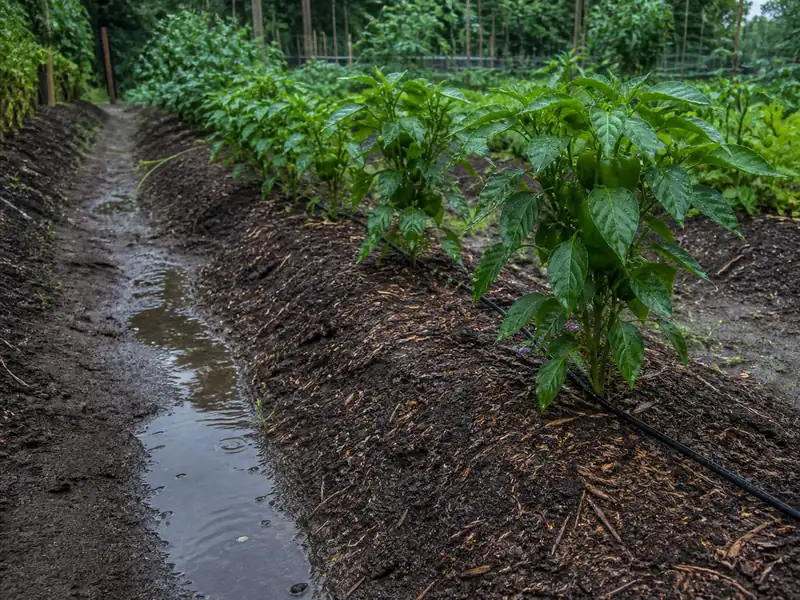
For this disease, a variety note is not enough if the site stays wet. Raised beds, drainage, rotation, and careful watering matter because roots sitting in saturated soil can still decline even on a more tolerant variety.
Container growers sometimes underestimate this risk.
A big pot with blocked holes can act like wet ground. If your disease pressure starts with soggy roots, pair variety choice with clean container drainage habits and a better watering rhythm.
Are hybrid peppers more disease resistant?
Many disease-resistant peppers are hybrids because breeders can stack useful traits more predictably. That does not mean every hybrid is resistant, and it does not mean every open-pollinated variety is weak.
Read the actual code line.
A hybrid bell may carry BLS and TSWV claims, while another hybrid may be sold mainly for color, yield, or fruit shape. An open-pollinated hot pepper may be perfectly fine if your garden has low disease pressure and clean airflow.
For superhots such as Carolina Reaper peppers, disease labels are often less central than long-season management, seed source, and avoiding root stress. Our long-season Reaper care focuses on that slower plant habit because the specific risk is different.
How do you spot a diseased pepper transplant?
Buying resistant seed helps only if the plant starts clean. A seedling tray with spotted leaves, sticky pest residue, or wet crowded foliage can bring disease pressure into a garden before the variety has a fair chance.
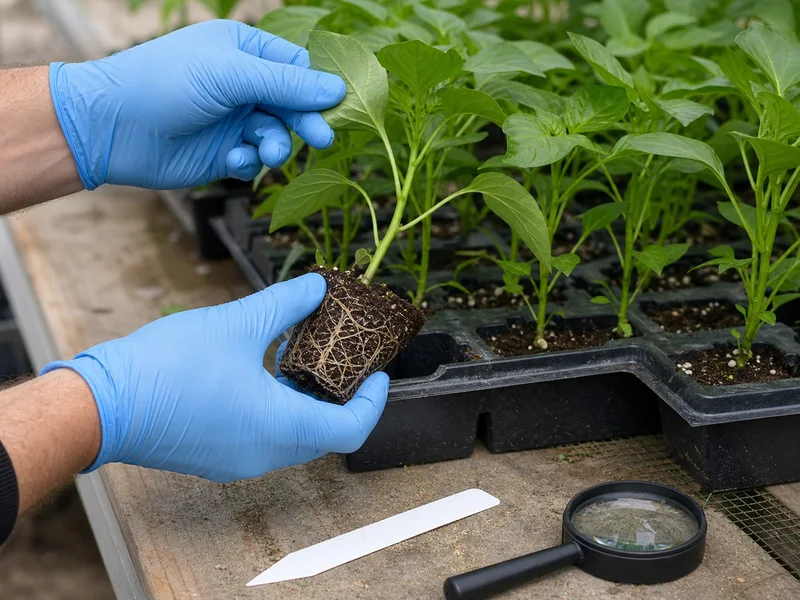
Inspect nursery plants under the leaves and near the growing tip.
Avoid seedlings with leaf spots, distorted new growth, soft stems, or roots sitting in sour wet mix. A disease-resistant label is not a reason to accept a weak transplant.
Some virus problems also move with insects.
Aphids and thrips do not care that the seed packet looked impressive, so scouting still matters once the plants are outside. If sticky leaves or curled new growth appear early, use our aphid scouting steps before the symptom spreads across the row.
Hardening off is another quiet disease-control step.
Seedlings moved outside too fast can stall, sunburn, and sit wet while they recover. A slower hardening-off schedule keeps the plant growing, which gives resistance traits and clean cultural controls a better start.
Regional pressure should narrow the seed list.
A dry inland garden may care less about bacterial leaf spot than a humid coastal garden, while a low wet bed may care more about Phytophthora than a raised container bench. The best resistant variety for one grower can be irrelevant for another.
Use local extension notes, nearby grower reports, and your own last-season records before chasing the longest code list. A packet with five codes is impressive, but a packet with the one code that matches your recurring disease is usually the better choice.
Use resistant varieties with clean cultural controls
The strongest plan combines seed choice with boring prevention:
- Set out clean, disease-free transplants.
- Rotate peppers away from last year's pepper and tomato beds.
- Space plants for airflow.
- Water at the base with drip, not overhead onto the leaves.
- Control weeds that host thrips and aphids.
- Remove and bin infected debris promptly.
Variety resistance lowers risk, but disease pressure still builds when the site invites it.
Do not save seed from diseased plants for next season.
Do not compost suspicious infected plant material unless your composting system reliably reaches pathogen-killing temperatures. Do not keep watering leaves late in the day because a packet had a resistance code.
Use resistance as a targeted tool. When the code, disease history, and site conditions all line up, a resistant pepper variety can be the difference between a normal harvest and a season spent chasing symptoms.
Disease-Resistant Pepper Varieties by the Problem You Have FAQ
- University of California IPM - Peppers
- Penn State Extension - Pepper Production
- Cornell Vegetables - Disease-resistant pepper varieties
- Cornell Vegetables - Pepper varieties resistant to Phytophthora and bacterial leaf spot
- University of Minnesota Extension - Bacterial spot of tomato and pepper