Habanero vs Thai Chili Showdown: Heat, Flavor & Uses
The habanero and Thai chili are both serious heat sources, but they sit in different leagues and bring entirely different flavor personalities to the table. Habaneros clock in at 100,000-350,000 SHU with a fruity, citrus-forward bite, while Thai chilies land at 50,000-100,000 SHU with a sharp, clean peppery burn. Choosing between them comes down to whether you want heat with tropical sweetness or heat with pure, unadorned fire.

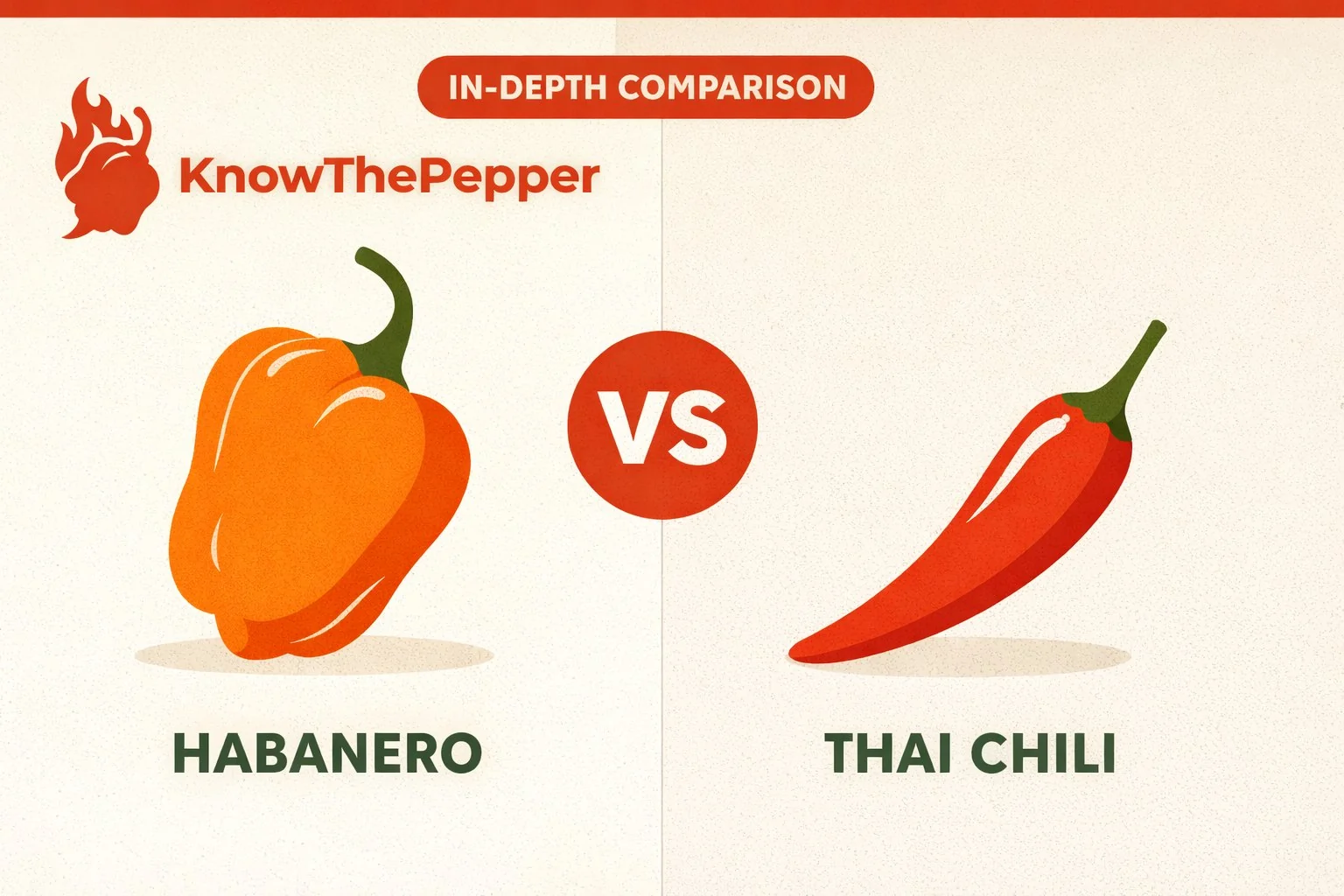
Habanero measures 100K–350K SHU while Thai Chili registers 50K–100K SHU — making Habanero 4× hotter. Habanero is known for its fruity and citrusy flavor (C. chinense), while Thai Chili offers bright and peppery notes (C. annuum).
- Heat difference: Habanero is 4× hotter
- Species: C. chinense vs C. annuum
- Best for: Habanero excels in hot sauces and extreme dishes, Thai Chili in hot sauces and spicy dishes
Habanero
Extra-HotThai Chili
Extra-HotHabanero vs Thai Chili Comparison
Habanero vs Thai Chili Heat Levels
Before getting into numbers, notice how differently these two peppers announce themselves. The habanero's heat arrives wrapped in fruit - there is a brief moment of sweetness before the capsaicin takes hold. Thai chili skips that preamble entirely; the burn is immediate, direct, and almost metallic in its sharpness.
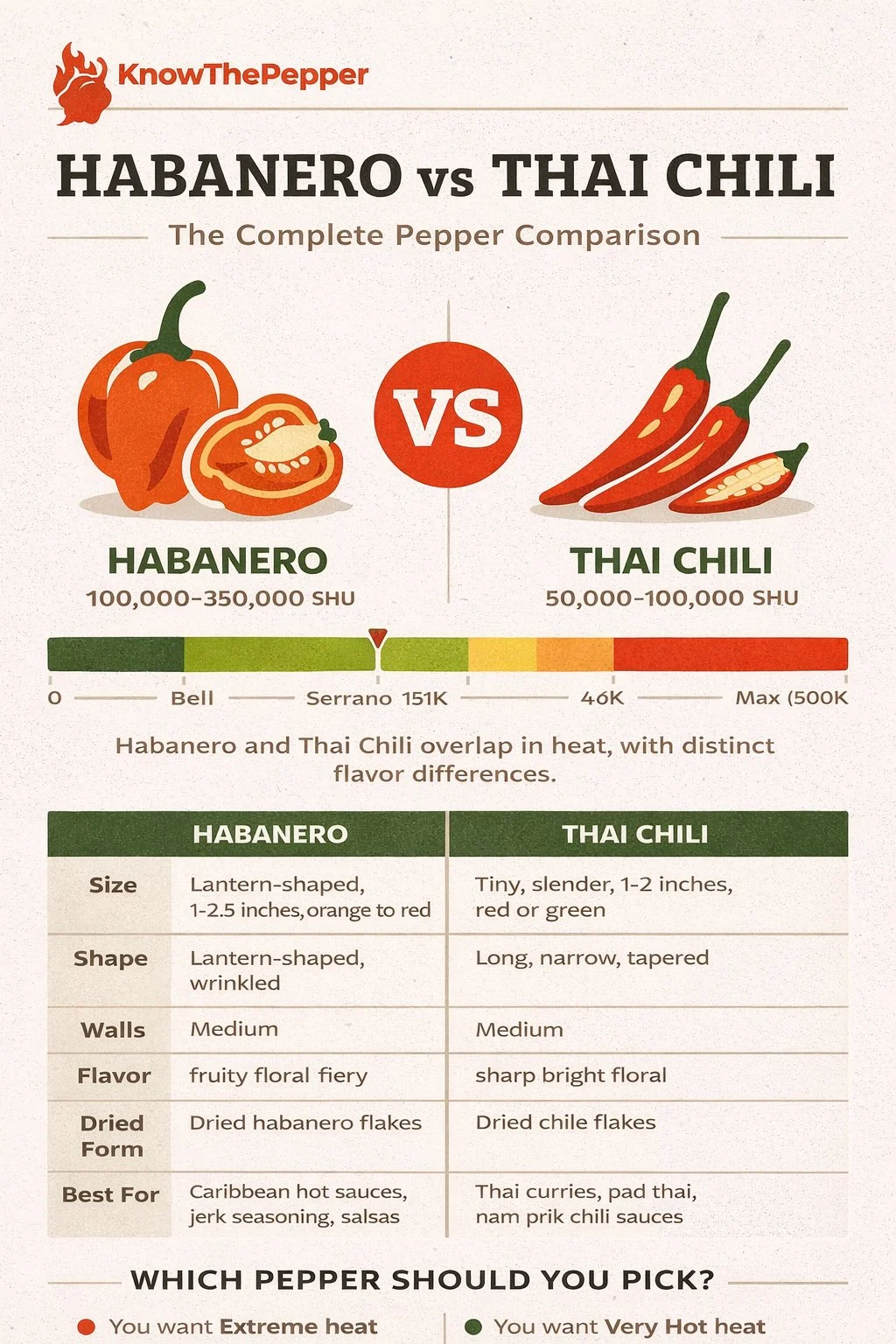
On the Scoville scale's measurement methodology, the gap is significant. Habaneros range from 100,000 to 350,000 SHU, placing them firmly in the extra-hot pepper tier. Thai chilies measure 50,000 to 100,000 SHU, which puts them in the hot pepper category - formidable, but a clear step down.
Compared to a jalapeño (roughly 5,000 SHU at its midpoint), a mid-range habanero at 175,000 SHU runs about 35 times hotter. A Thai chili at 75,000 SHU lands around 15 times hotter than that same jalapeño. That is not a small difference between the two peppers - habanero can be more than twice as intense.
The chemistry behind capsaicin's burn also helps explain why these peppers feel different despite both being hot. Habanero's C. chinense genetics tend to produce a slower-building, longer-lasting heat. Thai chili, as a C. annuum, delivers a faster spike that fades more quickly. For cooking purposes, that distinction matters as much as the raw SHU numbers.
Flavor Profile Comparison
Few peppers balance heat and flavor as well as the habanero.
Small enough to overlook, fierce enough to remember — the Thai chili punches well above its size.
Strip away the heat and these two peppers have almost nothing in common flavor-wise. Habanero carries genuine tropical fruit character - think mango, apricot, and a squeeze of citrus peel. That fruitiness is not subtle. It is why habanero works so well in fruit-based hot sauces and Caribbean dishes where the pepper is meant to contribute flavor alongside fire.
Thai chili's flavor profile is built differently. It is bright, grassy, and sharply peppery in the way that fresh black pepper is peppery - clean and direct. There is a slight vegetal quality when raw, but it cooks down to a concentrated, almost savory heat note. No fruit, no citrus, no sweetness.
Aroma reinforces the divide. Slice a habanero and the smell is unmistakably fruity, almost floral. Slice a Thai chili and you get something closer to a sharp, herbaceous sting - closer to a serrano than to anything tropical.
In finished dishes, habanero heat tends to linger in the back of the throat with that fruity undertone still present. Thai chili heat sits more on the tongue and lips, burning bright and then stepping back. This is part of why Southeast Asian dishes built around Thai chilies can feel intensely hot in the moment but do not leave you suffering for the next twenty minutes the way a habanero-heavy salsa might.
For cooks, the flavor difference is the deciding factor more often than the heat level. A habanero substitution in a Thai stir-fry changes the dish's character completely - that fruit note clashes with fish sauce and lemongrass in ways that a Thai chili simply would not.
Culinary Uses for Habanero and Thai Chili
Habanero belongs to Caribbean and Mexican cooking at its core. Jerk marinades, Yucatecan salsas, and dishes from Mexico's pepper traditions all lean on habanero's fruit-heat combination. It pairs naturally with mango, pineapple, citrus, and fatty proteins like pork and duck. The fruity backbone means it holds up well in hot sauces that spend time on the shelf - the flavor deepens rather than fading.
For heat-forward applications, habanero is excellent roasted or charred. The fruit character concentrates and the heat mellows slightly, making it more approachable in sauces without losing its identity. A rough ratio: one habanero replaces two to three Thai chilies when you want comparable heat, though you will always get the fruit note as part of the deal.
Thai chili is the backbone of Southeast Asian heat. Green Thai chilies go into fresh preparations - nam prik, som tum, green curry paste. Red Thai chilies, dried or fresh, drive the heat in dishes from Thailand's chili-forward cooking tradition. The clean burn integrates seamlessly with fish sauce, lime, galangal, and coconut milk in ways that a habanero would not.
Dried Thai chilies are particularly useful - they store well and grind into a powder that adds heat without bulk. Habanero can be dried too, but the fruity notes shift significantly in the process.
Substitution works in both directions with caveats. Replacing Thai chili with habanero in a Thai dish means cutting the quantity by half and accepting a flavor shift. Going the other way - Thai chili for habanero in a Caribbean recipe - requires doubling or tripling the count and acknowledging the dish will taste sharper and less fruity.
For a side-by-side look at another fruity-hot C. chinense pepper, the aji amarillo comparison shows how much the C. chinense botanical family tends toward fruit-forward heat profiles across the board.
Which Should You Choose?
If your cooking skews Caribbean, Mexican, or you want a pepper that brings fruity complexity alongside serious heat, habanero is the clear answer. The 100,000-350,000 SHU range gives you genuine firepower with a flavor profile that actively contributes to the dish rather than just delivering burn.
For Southeast Asian cooking, Thai chili is not a compromise - it is the correct choice. The clean, peppery 50,000-100,000 SHU heat integrates into those flavor profiles in a way habanero cannot replicate. The burn is fast and honest, without the fruit note that would muddy a curry paste or a papaya salad.
Heat-seekers who want maximum intensity should go habanero. Cooks who use heat as one tool among many in complex spice-forward dishes will often find Thai chili more versatile on a weeknight. Keeping both on hand is not overkill - they genuinely do not overlap much in practice. For a closer look at how Thai chili stacks up against its nearest relative, the bird's eye chili heat and flavor comparison is worth reading before deciding which one to grow or stock.
Can You Substitute One for the Other?
Proceed with caution. Habanero is 4× hotter than Thai Chili.
Need a different option altogether? Search for peppers that match your target heat and flavor with precise swap ratios.
Growing Habanero vs Thai Chili
If you’re deciding which pepper to grow at home, consider your climate and patience level. Habanero and Thai Chili have different maturation times and temperature preferences. Hotter varieties generally need a longer, warmer growing season to develop their full capsaicin content. Our zone-based planting date tool can pinpoint the best sowing window for your area.
Starting habaneros from seed requires patience. Germination takes 10–21 days at soil temperatures of 80–85°F — a heat mat is not optional, it's essential.
Transplant seedlings outdoors only after nighttime temperatures stay consistently above 55°F. Habaneros are frost-intolerant and will stall in cold soil.
Full sun — at least 6–8 hours daily — is non-negotiable. In containers, use a 5-gallon minimum; habaneros develop substantial root systems.
The hardest part of growing Thai chilies is not germination — it is managing heat stress during fruiting. These plants originate from a tropical climate and expect warmth, but sustained temperatures above 95°F (35°C) cause flower drop before pods can set.
Germination itself is straightforward at 80–85°F soil temperature, typically within 10–14 days. Start seeds indoors 8–10 weeks before last frost.
They prefer well-draining soil with consistent moisture but will tolerate brief dry spells better than waterlogging. Feed with a low-nitrogen fertilizer once flowering begins; too much nitrogen pushes leaf growth at the expense of pods.
History & Origin of Habanero and Thai Chili
Both peppers carry centuries of culinary heritage. Habanero traces its roots to Mexico, while Thai Chili originates from Thailand. Understanding their backstory helps explain why each pepper developed its distinctive traits.
Buying & Storage
Whether you’re shopping for Habanero or Thai Chili, the same quality indicators apply. Fresh peppers should feel firm and heavy for their size, with taut, glossy skin and no soft or wet spots. Minor stem cracks known as “corking” are perfectly normal and often indicate a mature, flavorful pod.
- Firm pods with taut skin and consistent color
- Should feel heavy relative to size
- Minor stem cracks (“corking”) are normal
- Avoid anything soft, shriveled, or with dark wet spots
- Fresh: Paper bag, crisper drawer — 1–2 weeks
- Frozen: Wash, dry, freeze on sheet pan — 6+ months
- Dried: Airtight, away from light — up to 1 year
The Verdict: Habanero vs Thai Chili
Habanero and Thai Chili sit in the same heat tier but serve different roles. Habanero delivers 4× more heat with its distinctive fruity and citrusy character. Thai Chili, with its bright and peppery profile, excels in everyday cooking.
Frequently Asked Questions
Related Comparisons
Sources pending verification.