Habanada vs Habanero: Taste, Heat & When to Use Each
The habanada and the habanero share nearly identical genetics and flavor DNA — but one registers 0 SHU and the other tops out at 350,000 SHU. If you want that distinctive tropical, floral character without any burn, the habanada delivers it cleanly. If heat is the point, the habanero remains one of the most flavorful peppers in the extra-hot pepper bracket.

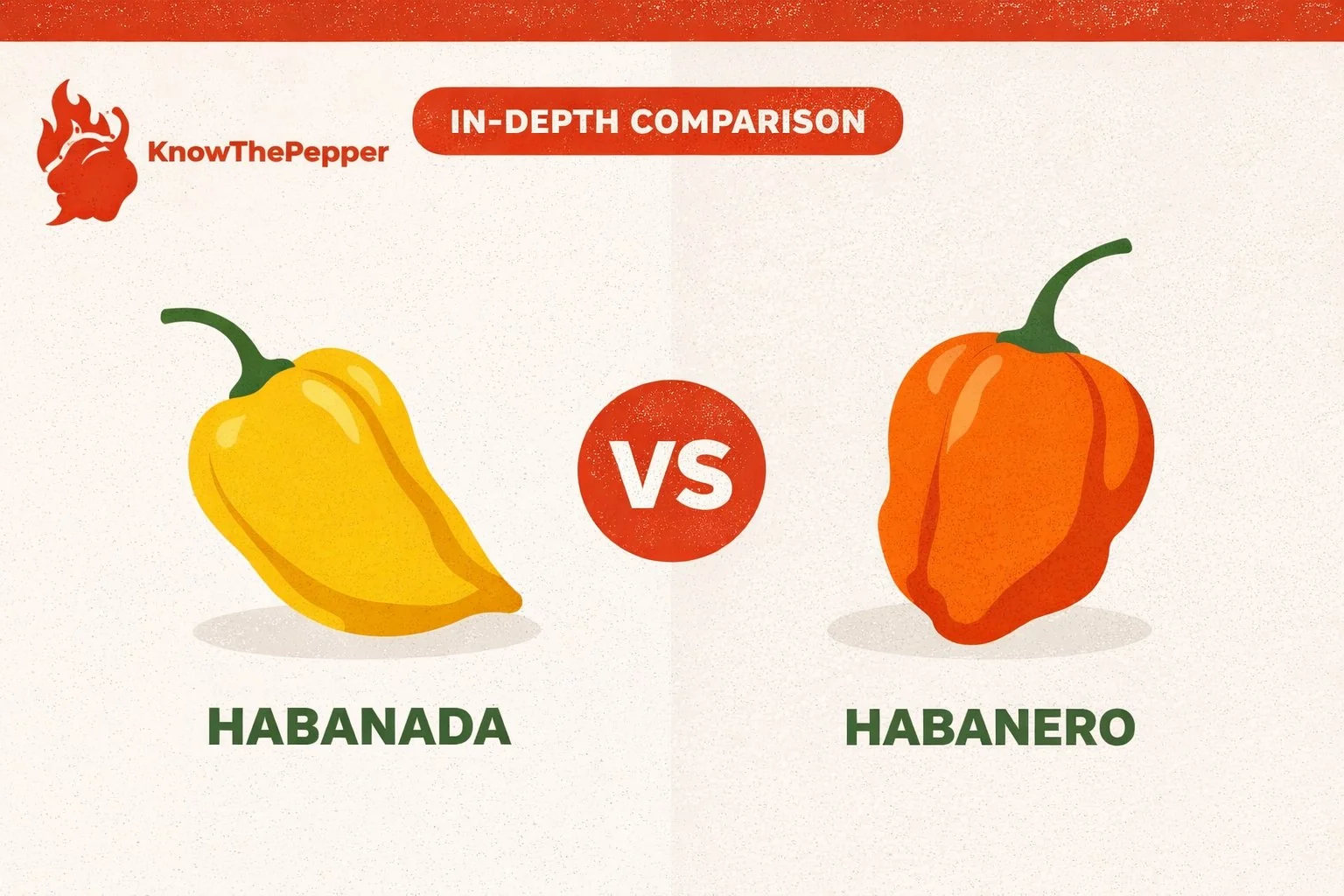
Habanada measures 0–0 SHU while Habanero registers 100K–350K SHU — roughly equal in heat. Habanada is known for its fruity and sweet flavor (C. chinense), while Habanero offers fruity and citrusy notes (C. chinense).
- Species: Both are C. chinense
- Best for: Habanada excels in everyday cooking and salsas, Habanero in hot sauces and spicy dishes
Habanada vs Habanero Comparison
Habanada vs Habanero Heat Levels
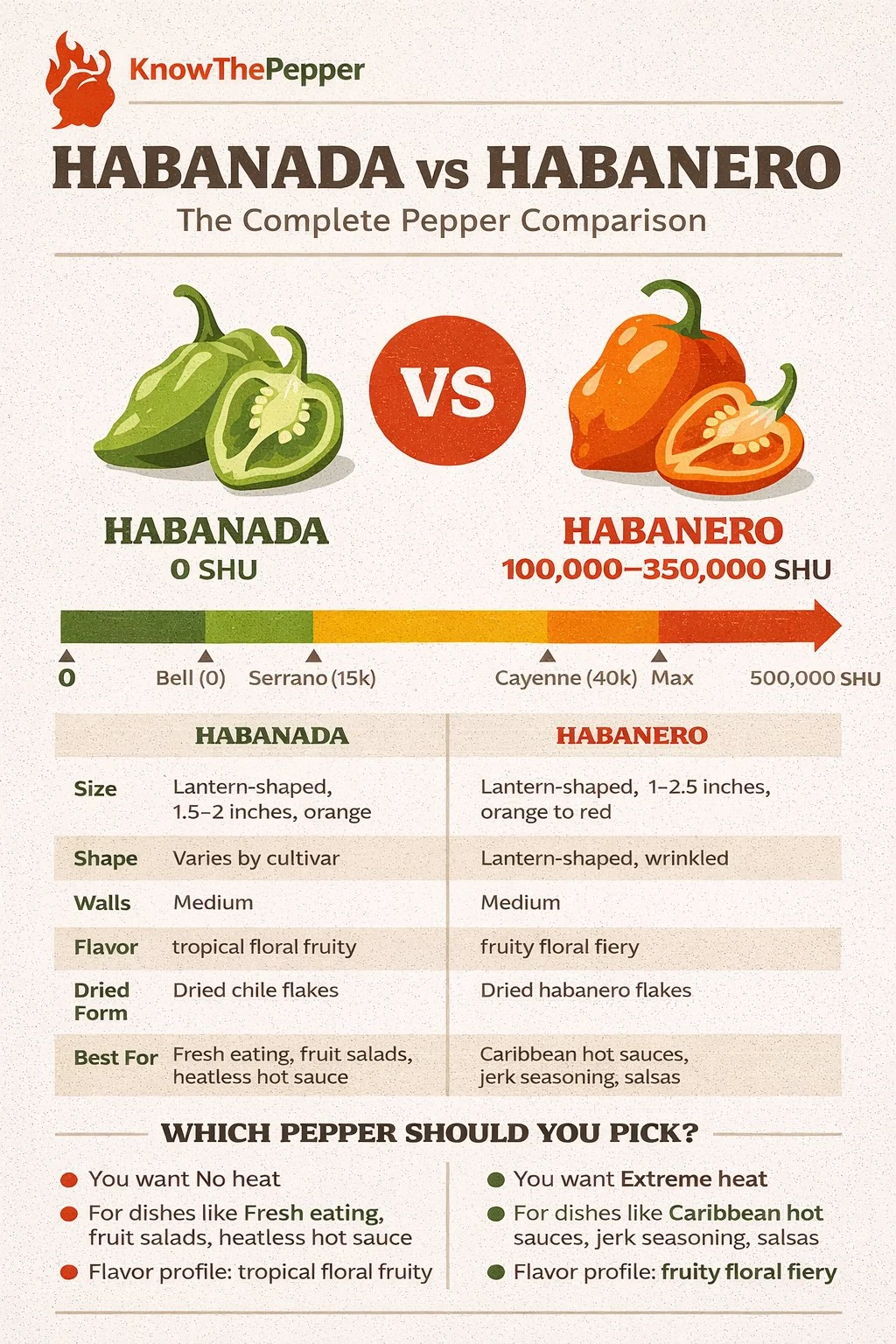
The heat gap here is about as absolute as it gets. The habanada measures 0 SHU — it contains no measurable capsaicin, making it genuinely heat-free, not just mild. The habanero sits at 100,000-350,000 SHU, placing it firmly in territory that demands respect from most cooks.
To put that habanero range in perspective: a dried guajillo typically measures around 2,500-5,000 SHU. That means a habanero can run 20 to 140 times hotter than a guajillo depending on the specific specimen. Habaneros vary considerably within that range — growing conditions, stress, and ripeness all affect final capsaicin content.
The habanada's zero rating isn't a marketing claim; it's the result of careful breeding that eliminated capsaicin production without touching the aromatic compounds. The burn mechanism that makes habaneros so intense — capsaicin binding to TRPV1 receptors — simply doesn't activate with habanada. For a deeper look at why that receptor response feels so different from pepper to pepper, the chemistry is genuinely fascinating.
Practically speaking, this means habanada is accessible to anyone regardless of heat tolerance. Habanero, on the other hand, sits in a tier that stops many home cooks from using it at full concentration. Most recipes call for half a habanero where they'd use a whole of something milder. The habanada removes that calculation entirely.
Flavor Profile Comparison
The first time I bit into a habanada raw, expecting at least a tingle, the absence of heat felt almost disorienting — just a wave of mango, citrus blossom, and stone fruit.
Few peppers balance heat and flavor as well as the habanero.
Start with the nose: both peppers carry a distinctive floral, tropical aroma that separates C. chinense species peppers from virtually everything else in the kitchen. That scent — somewhere between ripe mango, apricot, and a faint floral note — is present in both varieties before you even take a bite.
On the palate, the habanada tastes like a habanero with the volume knob turned all the way down on heat but kept at full on fruit. You get bright citrus, stone fruit sweetness, and that characteristic chinense depth without any of the capsaicin interference. Many tasters actually perceive the habanada's flavor as more complex than habanero because the burn isn't competing with the fruit notes.
The habanero's flavor is genuinely fruity and citrusy — that's not marketing language, it's the pepper's actual profile. But for anyone sensitive to heat, those flavors arrive wrapped in significant fire, which can make it hard to appreciate them fully.
Cooking affects them differently too. Habanada holds its fresh, bright character well through light heat — sauteing or quick roasting amplifies the sweetness. Habanero develops a slightly deeper, more complex flavor when cooked, with the heat mellowing somewhat but never disappearing. Raw habanero in a salsa or mango salad hits differently than the same pepper in a slow-cooked sauce. The habanada performs consistently across applications, which makes it easier to predict in a recipe.
Culinary Uses for Habanada and Habanero
The habanada opened up a category of cooking that was previously off-limits for heat-sensitive cooks or dishes where capsaicin would overwhelm other flavors. Think habanada-infused cream sauces, habanada sliced raw into fruit salads, habanada blended into cocktails. The fruity Caribbean heat profile of the habanero inspired all of these applications — the habanada just removes the barrier to entry.
For habanada, the best applications lean into its sweetness: - Slice raw into ceviche or aguachile for tropical aroma without heat - Blend into vinaigrettes — the fruity notes work beautifully with citrus dressings - Roast and puree into compound butter for seafood - Pickle whole for a sweet-tangy condiment - Use in salsas where guests have varying heat tolerance
For habanero, the heat is part of the point: - Classic Caribbean jerk seasoning relies on habanero's specific fruity-hot combination - Mango habanero hot sauce — the fruit pairing is almost mandatory - Habanero salsa for those who want serious heat with complexity - Dried and ground into powder for spice rubs - Fermented hot sauces where the heat mellows over time
Substitution ratios: If a recipe calls for habanero and you want to use habanada to reduce heat, use a 1:1 ratio by volume — the flavor profile is close enough that the dish won't taste different, just cooler. Going the other direction (habanada recipe, want heat), start with half a habanero and taste.
The habanada also works as a direct substitute in recipes from the Mexican pepper tradition that call for habanero in non-heat contexts — fruit salsas, ceviches, marinades where the aroma matters more than the burn.
For a look at how habanero stacks up against other high-heat options, the habanero vs. manzano matchup shows how much flavor varies even within the hot pepper world.
Which Should You Choose?
Choose habanada when the flavor is the goal and heat is an obstacle — cooking for mixed groups, building sauces where capsaicin would dominate, or simply wanting that tropical chinense aroma in dishes that can't handle fire. It's also the better choice for raw applications where habanero's heat would be punishing.
Choose habanero when the heat-fruit combination is specifically what you're after. Jerk chicken, mango hot sauce, fermented pepper mash — these dishes are built around habanero's dual identity. The difference between habanero and red savina habanero shows just how much variation exists even within the habanero family if you want to push heat further.
For gardeners, both are worth growing — the habanada's germination and growing requirements mirror the habanero closely, so if you can grow one, you can grow the other. Plant both and you cover every occasion.
Can You Substitute One for the Other?
Proceed with caution. Habanero is 0× hotter than Habanada.
Need a different option altogether? Search for peppers that match your target heat and flavor with precise swap ratios.
Growing Habanada vs Habanero
If you’re deciding which pepper to grow at home, consider your climate and patience level. Habanada and Habanero have different maturation times and temperature preferences. Hotter varieties generally need a longer, warmer growing season to develop their full capsaicin content. Our zone-based planting date tool can pinpoint the best sowing window for your area.
Growing habanada follows the same general path as any C. chinense variety — which means it wants warmth, patience, and consistent moisture.
Transplant outdoors only after nighttime temps stay reliably above 55°F. C.
The habanada is a compact grower compared to some chinense varieties, which makes it manageable in containers. A 5-gallon pot with well-draining potting mix works fine.
Starting habaneros from seed requires patience. Germination takes 10–21 days at soil temperatures of 80–85°F — a heat mat is not optional, it's essential.
Transplant seedlings outdoors only after nighttime temperatures stay consistently above 55°F. Habaneros are frost-intolerant and will stall in cold soil.
Full sun — at least 6–8 hours daily — is non-negotiable. In containers, use a 5-gallon minimum; habaneros develop substantial root systems.
History & Origin of Habanada and Habanero
Both peppers carry centuries of culinary heritage. Habanada traces its roots to USA, while Habanero originates from Mexico. Understanding their backstory helps explain why each pepper developed its distinctive traits.
Buying & Storage
Whether you’re shopping for Habanada or Habanero, the same quality indicators apply. Fresh peppers should feel firm and heavy for their size, with taut, glossy skin and no soft or wet spots. Minor stem cracks known as “corking” are perfectly normal and often indicate a mature, flavorful pod.
- Firm pods with taut skin and consistent color
- Should feel heavy relative to size
- Minor stem cracks (“corking”) are normal
- Avoid anything soft, shriveled, or with dark wet spots
- Fresh: Paper bag, crisper drawer — 1–2 weeks
- Frozen: Wash, dry, freeze on sheet pan — 6+ months
- Dried: Airtight, away from light — up to 1 year
The Verdict: Habanada vs Habanero
Habanada and Habanero occupy very different positions on the heat spectrum. Habanero delivers its distinctive fruity and citrusy character. Habanada, with its fruity and sweet profile, excels in everyday cooking.
Frequently Asked Questions
Related Comparisons
Sources pending verification.