Fresno Pepper vs Serrano Pepper: Key Differences Explained
Fresno and serrano peppers occupy overlapping territory in the kitchen — both red, both moderately hot, both common in Mexican-inspired cooking. But they diverge meaningfully in heat ceiling, texture, and where they shine. Knowing the difference helps you pick the right one instead of just grabbing whichever bag is closest.

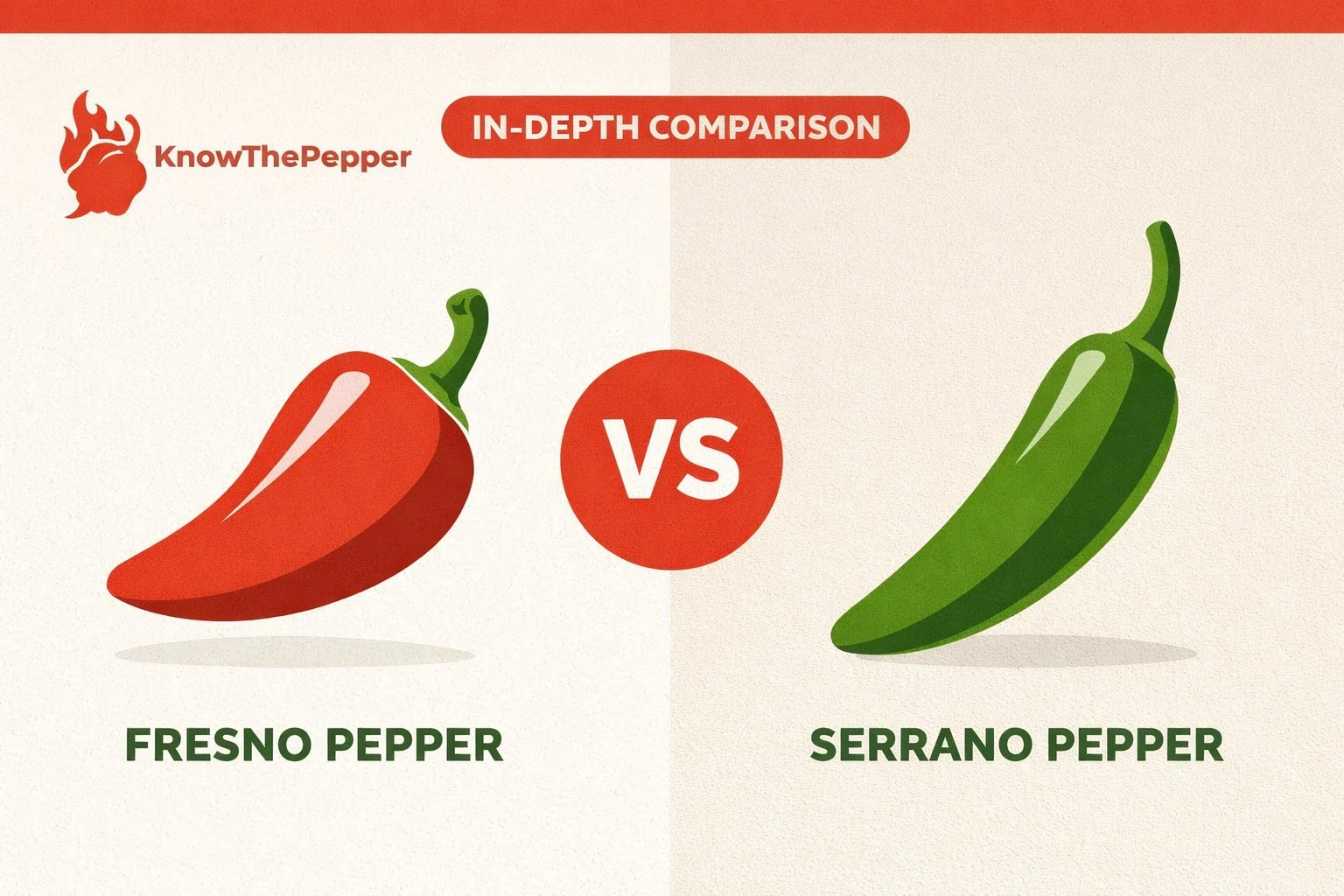
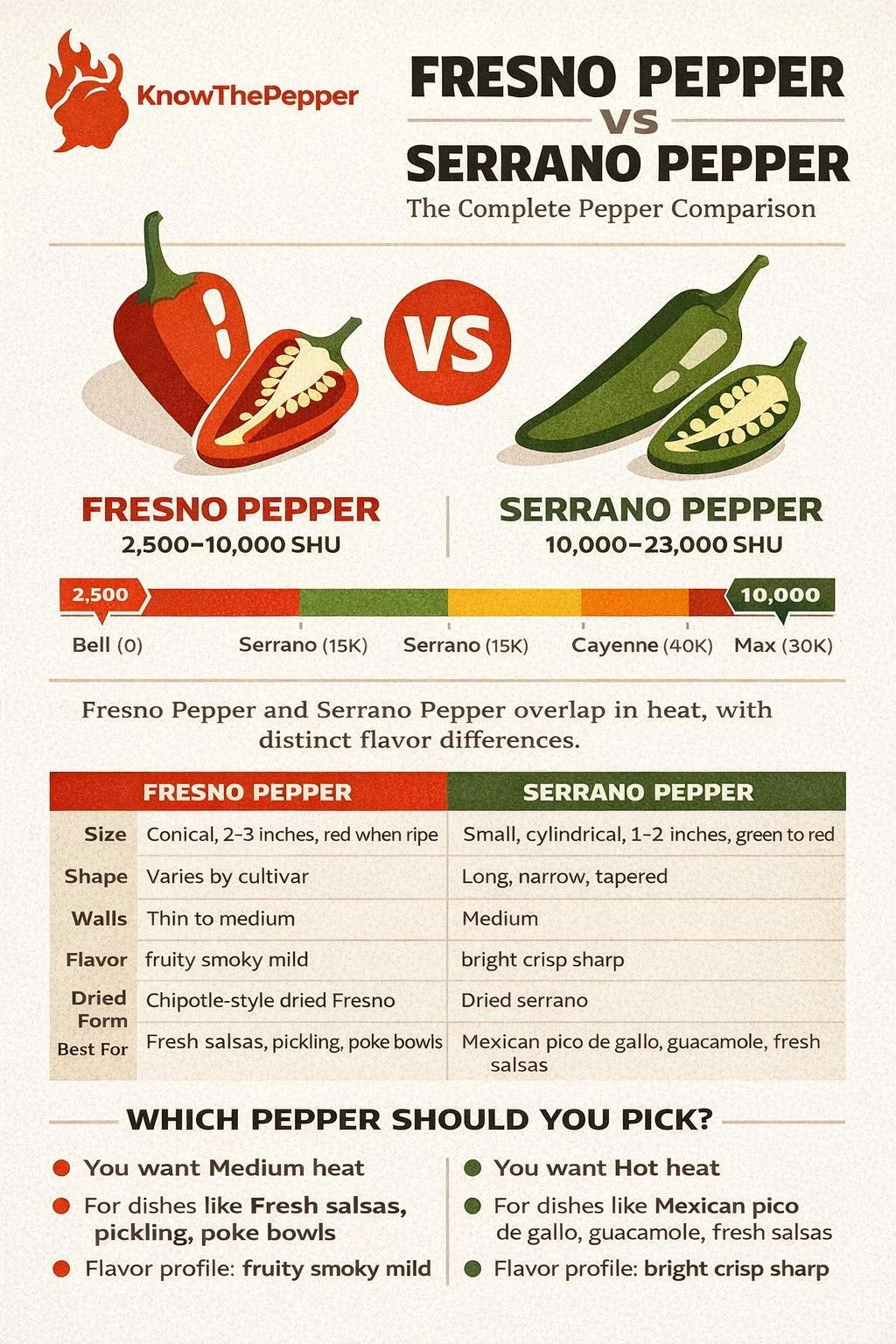
Fresno Pepper measures 3K–10K SHU while Serrano Pepper registers 10K–23K SHU — making Serrano Pepper 2× hotter. Fresno Pepper is known for its fruity and smoky flavor (C. annuum), while Serrano Pepper offers bright and crisp notes (C. annuum).
- Heat difference: Serrano Pepper is 2× hotter
- Species: Both are C. annuum
- Best for: Fresno Pepper excels in everyday cooking and salsas, Serrano Pepper in fresh salsas and mild recipes
Fresno Pepper
HotSerrano Pepper
HotFresno Pepper vs Serrano Pepper Comparison
Fresno Pepper vs Serrano Pepper Heat Levels
Before getting into numbers, the flavor tells you something is different. Bite a fresh serrano and the heat arrives fast — sharp, clean, almost grassy in its intensity. A Fresno delivers its burn more slowly, with a fruitier, slightly smoky warmth that lingers rather than spikes.
Serrano peppers typically register between 10,000 and 23,000 SHU on the Scoville scale's standardized testing methodology. Fresno peppers run cooler, generally landing in the 2,500 to 10,000 SHU range — putting them closer to jalapeño territory than serrano territory.
To frame that with a reference point: a typical jalapeño sits around 5,000 SHU. Serranos can run roughly 2 to 4 times hotter than that baseline. Fresnos, at their hottest, match a jalapeño's upper range and rarely exceed it by much.
Both peppers belong to the Capsicum annuum species bracket, which tends to produce clean, direct heat rather than the slow-building burn you get from habaneros or other C. chinense varieties. The chemistry behind capsaicin's receptor binding explains why annuum-family peppers feel sharp up front — they activate TRPV1 receptors quickly but don't linger the way resinous superhots do.
Practically speaking: if you want heat with some forgiveness, reach for the Fresno. If you want a genuine kick that commands attention, the serrano is the better call.
Flavor Profile Comparison
The Fresno pepper gets mistaken for a red jalapeño constantly — same conical shape, similar color, sold side by side at the grocery store.
Bite into a raw serrano and the first thing you notice is the aroma — green, grassy, almost herbal, like a jalapeño that decided to be serious.
Fresnos are often described as a jalapeño's more interesting cousin — similar structure, but with a noticeably fruitier, slightly smoky character that becomes more pronounced as the pepper reddens. Green Fresnos taste closer to a jalapeño, but the red-ripe version develops a depth that makes it worth seeking out specifically.
Serrano peppers have a brighter, more herbaceous flavor — crisp and grassy when fresh, with a clean heat that doesn't muddy the other flavors in a dish. They're less fruity than Fresnos and more assertive. That clarity is exactly why serranos are the go-to for fresh pico de gallo and raw salsas where you want the pepper to register without dominating.
Texture matters here too. Serranos have thicker flesh relative to their small size, which means they hold up well when chopped fine and mixed into uncooked preparations. Fresnos have thinner walls and a slightly softer bite — better suited to roasting, pickling, or situations where you want the pepper to meld into the dish rather than stay distinct.
Aroma is another point of difference. Slice open a serrano and you get that sharp, vegetal smell that signals fresh heat. Fresnos smell sweeter, almost like a cross between a bell pepper and something mildly smoky. That aromatic difference carries through to the finished dish, which is why the two peppers aren't always interchangeable even when the heat level is similar.
For raw applications, serrano wins on brightness. For cooked dishes, sauces, or anything pickled, the Fresno's softer flavor profile integrates more smoothly.
Culinary Uses for Fresno Pepper and Serrano Pepper
Serranos belong in fresh preparations. Pico de gallo, ceviche, guacamole, and raw salsas are where this pepper has been used for generations in central Mexican cooking — the de árbol vs. serrano heat gap side-by-side shows just how much fiercer dried alternatives can run compared to the serrano's fresh brightness. Use serranos whole or sliced thin; their firm flesh won't turn mushy in acidic preparations.
Frsnos are more versatile in the heat. Roast them directly over a flame until the skin blisters, then peel and blend into sauces — the process softens their heat and amplifies that fruity-smoky quality. They also pickle exceptionally well. A jar of pickled red Fresnos with garlic and rice vinegar is a condiment worth keeping in the fridge year-round.
For substitution, the math is straightforward but context-dependent. Swapping serrano for Fresno in a raw salsa will reduce heat noticeably — use about 1.5 Fresnos per serrano to compensate. Going the other direction (replacing Fresno with serrano), cut the quantity by roughly a third and taste as you go. The flavor shift is as significant as the heat shift, so adjust seasoning accordingly.
Frsnos work well in dishes where you'd use a cayenne vs. serrano heat contrast side-by-side as a reference — they sit below both in heat but bring more fresh fruit character than cayenne. In stir-fries, egg dishes, or anywhere you want color and mild heat without overwhelming spice, Fresnos earn their place.
Serranos shine in salsa verde alongside tomatillos, in marinades for grilled meats, and sliced raw over tacos. They're also excellent fermented — the firm walls hold structure through lacto-fermentation better than softer peppers.
Both peppers respond well to charring. A few minutes under a broiler transforms either one, adding smokiness that neither possesses raw.
Which Should You Choose?
Pick serranos when the pepper needs to be the heat source — raw preparations, fresh salsas, anything where brightness and a clean kick matter most. They're sharper, hotter, and more assertive, which is exactly what you want when the pepper is doing structural work in a dish.
Reach for Fresnos when you want heat that plays well with others. Their fruitier character, thinner walls, and lower ceiling make them better suited to cooked sauces, pickling, and situations where you want warmth without dominance. They're also the smarter call for anyone cooking for mixed-heat-tolerance crowds.
The Fresno vs. habanero heat jump side-by-side puts Fresnos in useful perspective — they're genuinely mild compared to the upper ranges of the pepper world. Serranos are no superhots either, but they carry enough heat to matter. Neither pepper is a bad choice; the better question is what role you need the pepper to play.
Can You Substitute One for the Other?
Yes — direct substitution works. Fresno Pepper and Serrano Pepper are close enough in heat to swap at roughly 1:1. The main difference will be flavor. For more swap options, explore ranked alternatives with conversion ratios.
Growing Fresno Pepper vs Serrano Pepper
If you’re deciding which pepper to grow at home, consider your climate and patience level. Fresno Pepper and Serrano Pepper have different maturation times and temperature preferences. Hotter varieties generally need a longer, warmer growing season to develop their full capsaicin content. Our zone-based planting date tool can pinpoint the best sowing window for your area.
Fresnos are straightforward to grow but reward growers who manage water stress deliberately. Start seeds indoors 8–10 weeks before last frost — they germinate well at 80–85°F soil temperature and typically sprout within 10–14 days.
Transplant after all frost risk has passed, spacing plants 18 inches apart in full sun. They need at least 6–8 hours of direct light daily.
For more heat in your harvest, reduce watering by about 30% during the final 2–3 weeks of ripening. This mild drought stress increases capsaicin concentration noticeably — the same technique used commercially to push Fresnos toward the upper end of their 10,000 SHU ceiling.
Serranos are reliable producers that reward patient gardeners. Start seeds indoors 8–10 weeks before last frost — germination takes 10–21 days at soil temperatures around 80–85°F.
Transplant outdoors once nighttime temps stay above 55°F. Space plants 18–24 inches apart in full sun with well-draining soil amended with compost.
Days to maturity runs 70–80 days from transplant to green-ripe. Letting pods fully ripen to red adds another 2–3 weeks but intensifies both flavor and heat.
History & Origin of Fresno Pepper and Serrano Pepper
Both peppers carry centuries of culinary heritage. Fresno Pepper traces its roots to USA, while Serrano Pepper originates from Mexico. Understanding their backstory helps explain why each pepper developed its distinctive traits.
Buying & Storage
Whether you’re shopping for Fresno Pepper or Serrano Pepper, the same quality indicators apply. Fresh peppers should feel firm and heavy for their size, with taut, glossy skin and no soft or wet spots. Minor stem cracks known as “corking” are perfectly normal and often indicate a mature, flavorful pod.
- Firm pods with taut skin and consistent color
- Should feel heavy relative to size
- Minor stem cracks (“corking”) are normal
- Avoid anything soft, shriveled, or with dark wet spots
- Fresh: Paper bag, crisper drawer — 1–2 weeks
- Frozen: Wash, dry, freeze on sheet pan — 6+ months
- Dried: Airtight, away from light — up to 1 year
The Verdict: Fresno Pepper vs Serrano Pepper
Fresno Pepper and Serrano Pepper sit in the same heat tier but serve different roles. Serrano Pepper delivers 2× more heat with its distinctive bright and crisp character. Fresno Pepper, with its fruity and smoky profile, excels in everyday cooking.
Frequently Asked Questions
Related Comparisons
Sources pending verification.