Fatalii vs Scotch Bonnet Showdown: Heat, Flavor & Uses
Both the Fatalii and Scotch Bonnet belong to C. chinense and hit genuinely serious heat, but they come from opposite ends of the world and taste nothing alike. The Fatalii brings a sharp citrus punch from Central Africa, while the Scotch Bonnet delivers the sweet tropical warmth that defines Caribbean cooking. Choosing between them usually comes down to flavor direction, not fire tolerance.

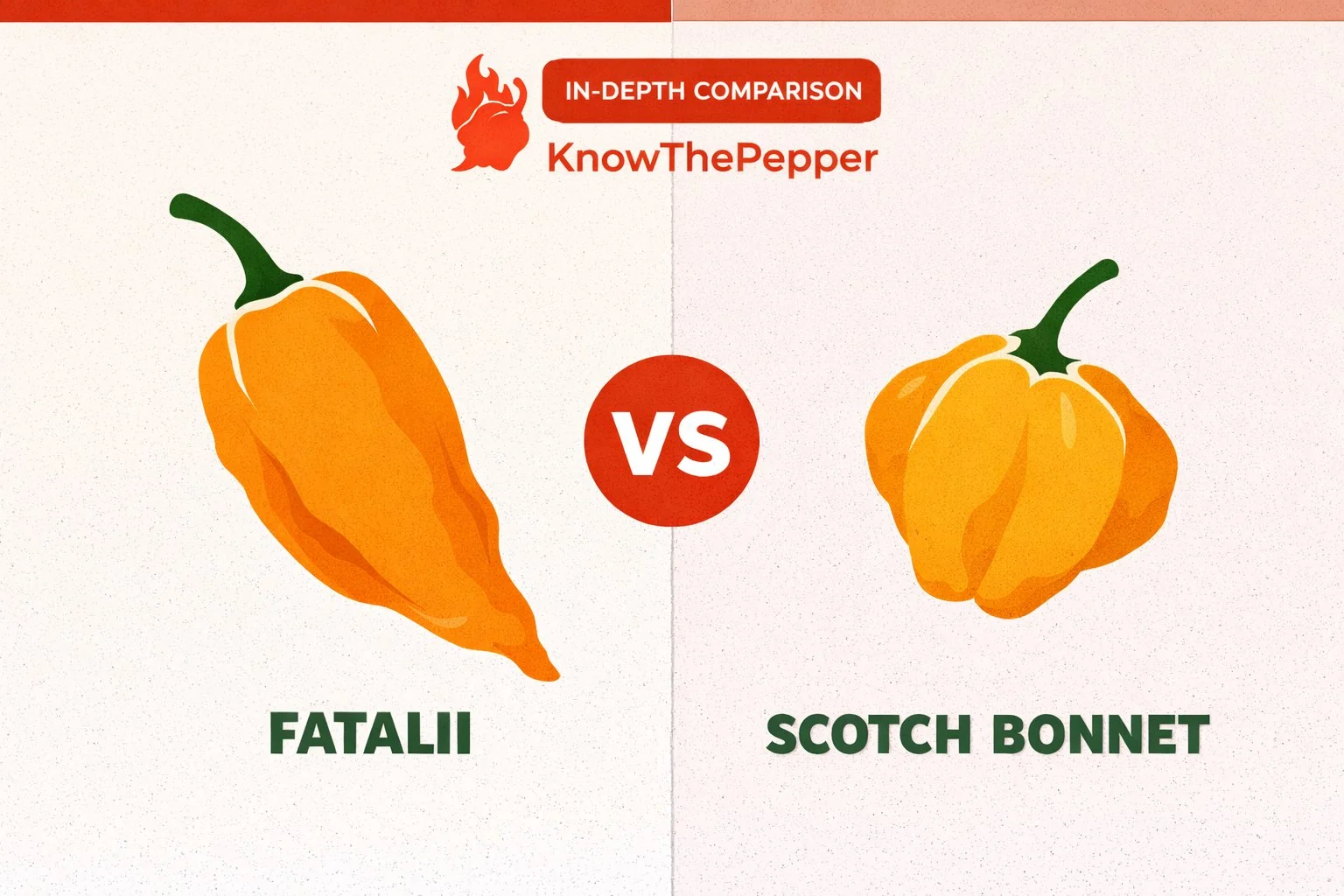
Fatalii measures 125K–400K SHU while Scotch Bonnet registers 100K–350K SHU — roughly equal in heat. Fatalii is known for its citrusy and fruity flavor (C. chinense), while Scotch Bonnet offers fruity and tropical notes (C. chinense).
- Species: Both are C. chinense
- Best for: Fatalii excels in hot sauces and extreme dishes, Scotch Bonnet in hot sauces and spicy dishes
Fatalii
Extra-HotScotch Bonnet
Extra-HotFatalii vs Scotch Bonnet Comparison
Fatalii vs Scotch Bonnet Heat Levels
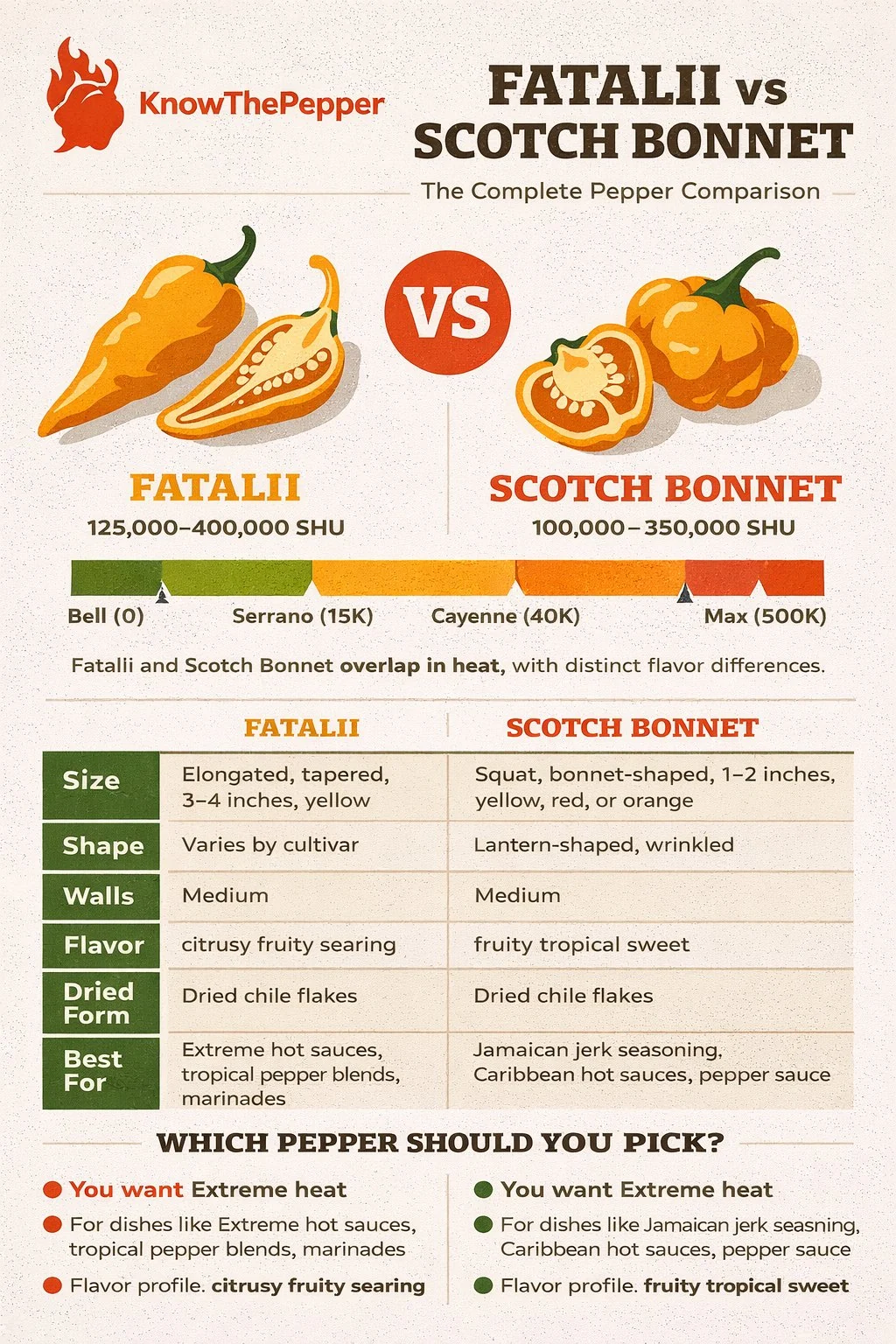
The Fatalii measures 125,000-400,000 SHU, and the Scotch Bonnet runs 100,000-350,000 SHU — close enough on paper that the overlap is real, but the Fatalii's ceiling is meaningfully higher. At peak, a hot Fatalii is roughly 50,000 SHU hotter than a hot Scotch Bonnet.
Put both in context: a serrano sits around 10,000-23,000 SHU, which means the Fatalii can be anywhere from 5 to 40 times hotter depending on the individual fruit. The Scotch Bonnet lands roughly 4 to 35 times hotter than that same serrano. Both belong firmly in the extra-hot SHU bracket — this is not a category for the timid.
The character of the heat differs as much as the numbers. Fatalii heat arrives fast, with a sharp frontal burn that spreads across the palate and lingers with a dry, almost acidic finish. Scotch Bonnet heat builds more gradually, sitting deeper in the throat and releasing in waves. The capsaicin receptor science behind this difference — specifically how quickly alkaloids bind to TRPV1 receptors — is covered in depth in the capsaicin chemistry and receptor biology guide.
For practical cooking, treat both as high-risk ingredients requiring restraint. A single Fatalii can overwhelm a pot of soup meant for six. The Scotch Bonnet is marginally more forgiving at the lower end of its range, which partly explains its broader use in everyday Caribbean kitchens.
Flavor Profile Comparison
Bite into a Fatalii and the first thing you notice is the aroma — a sharp, citrusy burst that smells more like a zest grater than a pepper.
The first time I tasted a Scotch Bonnet raw — sliced thin, no gloves, rookie mistake — the sweetness hit before anything else.
Strip away the heat and these two peppers taste genuinely different — which matters more than most people expect when choosing between them.
The Fatalii leads with citrus. Think lemon zest, grapefruit pith, and a bright acidity that cuts through fat. There is fruit underneath, but it reads more like passion fruit or mango than anything sweet. The aroma when you slice a fresh Fatalii is almost perfume-like — intensely floral and acidic at the same time. It is a pepper that announces itself before it even touches your tongue.
The Scotch Bonnet goes in a sweeter direction. Its tropical profile — stone fruit, mild sweetness, hints of cherry — is what makes it irreplaceable in the Caribbean-rooted cooking traditions behind jerk and pepper sauces. The aroma is warmer and less sharp, more like ripe fruit than citrus. This is why Scotch Bonnet-based hot sauces often taste almost jammy before the heat arrives.
Both peppers share the characteristic C. chinense fruitiness that separates this species from the grassier C. chinense botanical lineage relatives like jalapeños. But within that shared DNA, they read as distinct flavor categories. Fatalii works where you want brightness and acid alongside heat. Scotch Bonnet works where you want sweetness and depth.
Aroma also plays differently in cooked applications. Fatalii's citrus notes partially volatilize under heat, leaving the burn but softening the brightness. Scotch Bonnet holds its tropical character longer through cooking, which is one reason it defines slow-cooked dishes like Jamaican goat curry.
Culinary Uses for Fatalii and Scotch Bonnet
These two peppers overlap in some applications but genuinely excel in different directions — knowing which to reach for saves a dish.
Scotch Bonnet is the foundational heat source for jerk seasoning, Trinidadian pepper sauce, and Jamaican curry. Its sweet-fruity profile integrates into marinades without fighting other ingredients. It is also the traditional choice for Ghanaian stews and West African soups — a reminder that its influence stretches beyond the Caribbean. For a side-by-side look at how Scotch Bonnet performs against similarly fruity peppers, the flavor overlap with the datil is worth understanding before you substitute.
Fatalii shines in applications where citrus would normally come from an added ingredient. Hot sauces built around Fatalii often need less vinegar because the pepper itself provides acidity. It pairs exceptionally well with fish, shellfish, and chicken — proteins that benefit from brightness. African-inspired salsas and fermented hot sauces are natural homes for it.
For substitution ratios: if a recipe calls for one Scotch Bonnet and you only have Fatalii, start with two-thirds of the amount given the Fatalii's higher ceiling heat. Going the other direction — replacing Fatalii with Scotch Bonnet — use a 1:1.2 ratio and accept a sweeter, less acidic result.
Both peppers work in: - Fresh salsas and relishes (use gloves, always) - Fermented hot sauces - Oil infusions - Dry rubs when dehydrated and ground
The Fatalii's citrus oil content makes it particularly good dehydrated — the flavor concentrates rather than flattening. Scotch Bonnet dries well too, but loses more of its tropical sweetness in the process, making fresh or frozen the preferred storage for flavor-critical applications.
For anyone growing either pepper at home, the full germination and care guide for hot peppers covers soil temperature requirements that apply to both varieties.
Which Should You Choose?
If your cooking leans toward Caribbean cuisine — jerk, curries, pepper sauces — the Scotch Bonnet is the correct choice. Its sweet tropical flavor is not easily replicated, and its fruity Caribbean heat profile is baked into the identity of those dishes. Replacing it with something else always costs you something.
If you want a citrus-forward heat that functions almost like a seasoning ingredient — adding brightness and acid alongside fire — the Fatalii is harder to beat. It is especially useful in African pepper-rooted recipes and in any application where you would otherwise squeeze lemon over the finished dish.
For raw heat ceiling, the Fatalii wins. For culinary versatility across the widest range of established recipes, the Scotch Bonnet has more existing tradition behind it. The Fatalii versus habanero comparison is worth reading if you want to understand where the Fatalii fits in the broader C. chinense heat spectrum — the habanero is its closest common relative and a useful calibration point.
Both peppers reward careful use. Neither forgives carelessness.
Can You Substitute One for the Other?
Proceed with caution. Fatalii is 1× hotter than Scotch Bonnet.
Need a different option altogether? Search for peppers that match your target heat and flavor with precise swap ratios.
Growing Fatalii vs Scotch Bonnet
If you’re deciding which pepper to grow at home, consider your climate and patience level. Fatalii and Scotch Bonnet have different maturation times and temperature preferences. Hotter varieties generally need a longer, warmer growing season to develop their full capsaicin content. Our zone-based planting date tool can pinpoint the best sowing window for your area.
Fatalii seeds need warmth to germinate reliably — 80–85°F soil temperature is the target. Start them 10–12 weeks before last frost; this is a pepper that rewards patience during the seedling phase.
Once established, the plants grow to 2–3 feet tall with a somewhat open, branching structure. They prefer full sun and consistent moisture without waterlogging.
In containers, a 5-gallon pot works but a 7-gallon gives the root system more room and tends to produce heavier yields. The plants are somewhat sensitive to temperature swings, especially cool nights below 55°F, which can stall fruit development.
Scotch Bonnets need warmth from the start. Germination requires 80–85°F soil temperature; anything cooler and seeds stall for weeks.
These plants run long — expect 90–120 days from transplant to ripe fruit. They're not beginner peppers in terms of patience, but they're forgiving once established.
Soil should drain well. *C.
History & Origin of Fatalii and Scotch Bonnet
Both peppers carry centuries of culinary heritage. Fatalii traces its roots to Central Africa, while Scotch Bonnet originates from Caribbean. Understanding their backstory helps explain why each pepper developed its distinctive traits.
Buying & Storage
Whether you’re shopping for Fatalii or Scotch Bonnet, the same quality indicators apply. Fresh peppers should feel firm and heavy for their size, with taut, glossy skin and no soft or wet spots. Minor stem cracks known as “corking” are perfectly normal and often indicate a mature, flavorful pod.
- Firm pods with taut skin and consistent color
- Should feel heavy relative to size
- Minor stem cracks (“corking”) are normal
- Avoid anything soft, shriveled, or with dark wet spots
- Fresh: Paper bag, crisper drawer — 1–2 weeks
- Frozen: Wash, dry, freeze on sheet pan — 6+ months
- Dried: Airtight, away from light — up to 1 year
The Verdict: Fatalii vs Scotch Bonnet
Fatalii and Scotch Bonnet sit in the same heat tier but serve different roles. Fatalii delivers its distinctive citrusy and fruity character. Scotch Bonnet, with its fruity and tropical profile, excels in everyday cooking.
Frequently Asked Questions
Related Comparisons
Sources pending verification.