Cherry Pepper vs Pimento Pepper: Key Differences Explained
Cherry peppers and pimento peppers are so visually similar that grocery stores routinely mislabel them — both are small, round to heart-shaped, and deep red at maturity. Both register at 0-0 SHU on the Scoville scale, placing them firmly in the no-heat category. The differences that actually matter are in texture, sweetness depth, and how each performs in the kitchen.

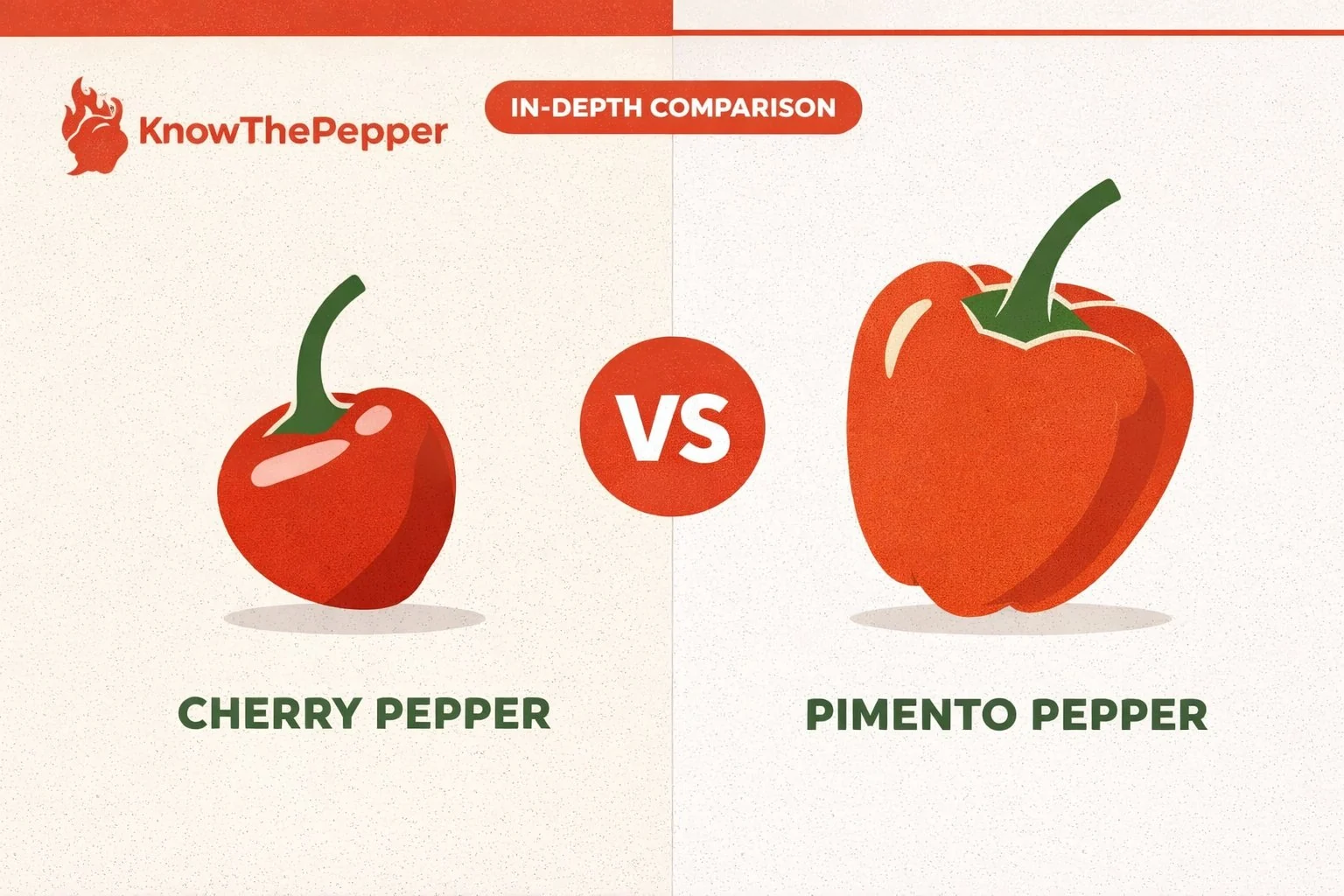
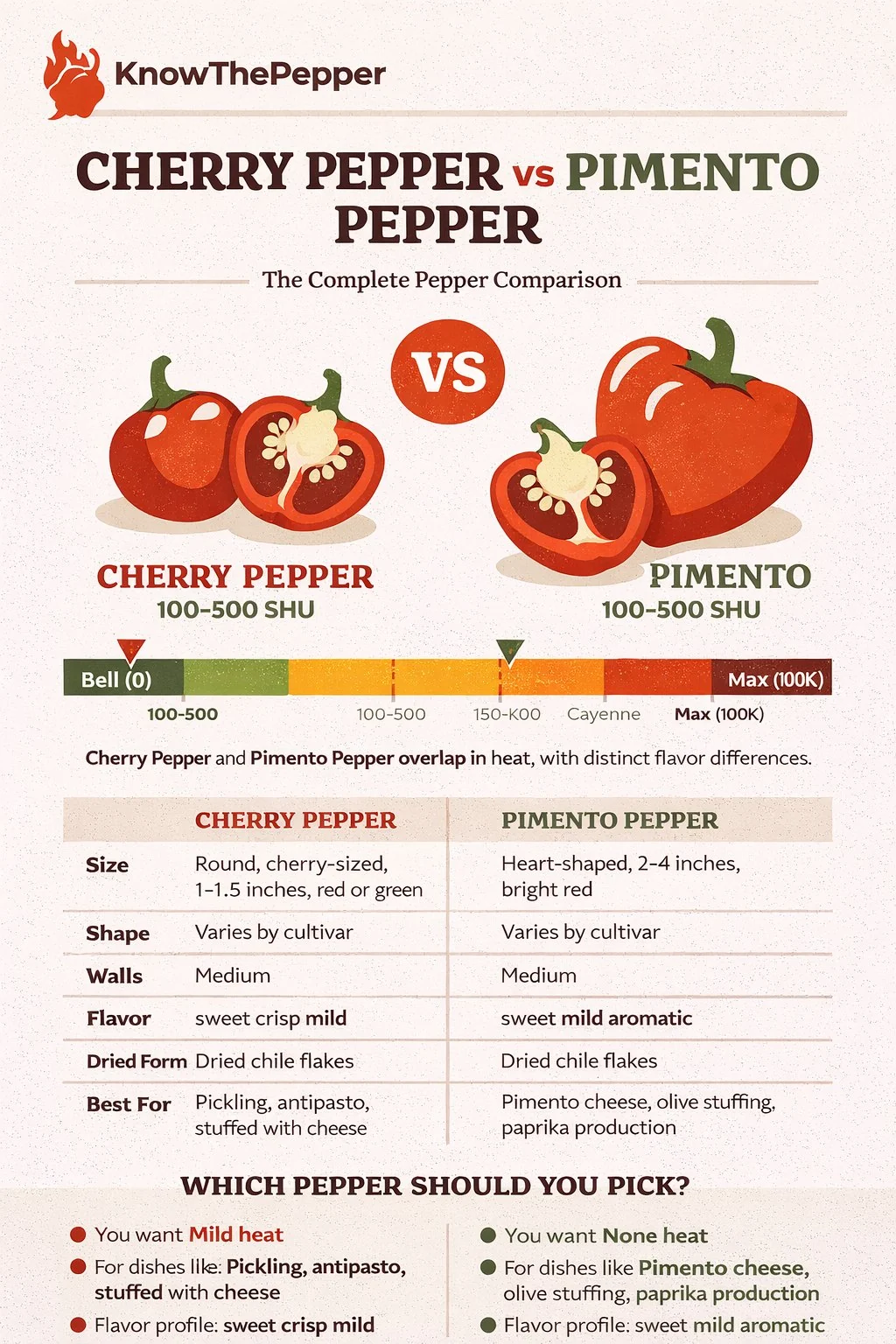
Cherry Pepper measures 100–500 SHU while Pimento Pepper registers 100–500 SHU — roughly equal in heat. Cherry Pepper is known for its sweet and mild flavor (C. annuum), while Pimento Pepper offers sweet and mild notes (C. annuum).
- Species: Both are C. annuum
- Best for: Cherry Pepper excels in everyday cooking and salsas, Pimento Pepper in fresh salsas and mild recipes
Cherry Pepper vs Pimento Pepper Comparison
Cherry Pepper vs Pimento Pepper Heat Levels
Both cherry peppers and pimento peppers clock in at 0 SHU — no measurable capsaicin, no burn, none of the why-peppers-produce-heat receptor science that makes spicy food lovers sweat. To put that in perspective against a Fresno pepper (averaging around 6,000 SHU), these two are essentially in a different universe — Fresno runs thousands of times hotter by any Scoville scale position you care to check.
The practical implication is that neither pepper will challenge heat-sensitive eaters. Children, people avoiding spice for medical reasons, and anyone building a dish where pepper flavor needs to shine without interference — all of them can use cherry or pimento without any concern.
Where they sit on the broader spectrum matters for context. The no-heat to barely-warm intensity range they occupy is shared by bells and banana peppers. This is the sweet end of the Capsicum world, where sugar and fruit notes dominate because there is no capsaicin competing for your attention.
The only meaningful heat distinction between the two is that some cherry pepper varieties — particularly those labeled 'cherry bomb' — can carry trace heat up to a few hundred SHU. True pimento stays at absolute zero consistently. If you are buying jarred or fresh and heat is a genuine concern, pimento is the safer pick by a small margin.
Flavor Profile Comparison
Cherry peppers look exactly like their name suggests: round, about 1–2 inches in diameter, and bright red at full maturity, though they also appear in green and yellow stages.
Few peppers carry as much cultural weight as the pimento.
Pimento is often described as the sweeter of the two, and that reputation is earned. The flesh is thick, almost waxy, with a concentrated sweetness that intensifies dramatically when roasted. There is a subtle earthiness underneath — not grassy like a bell pepper, but grounded and rich. That flavor profile is exactly why pimento cheese became a Southern staple: the pepper holds its character even when blended into fat and acid.
Cherry peppers have brightness that pimento lacks. The flavor is fruitier, slightly more acidic, and the skin has a faint tartness that comes through especially when the pepper is pickled. Pickled cherry peppers are sharper on the palate — vinegar amplifies that natural acidity rather than fighting it.
Aroma-wise, pimento smells almost floral when freshly cut. Cherry peppers smell more like a concentrated sweet bell — familiar, approachable, but less complex. Neither has the grassy or vegetal notes you get from green peppers; both are fully ripe red at their best.
For stuffing applications, pimento's thick walls hold shape better under heat. Cherry pepper walls are thinner and softer, which means they collapse faster in the oven but absorb marinades more readily. For raw applications — charcuterie boards, salads — cherry peppers hold up better texturally because the skin stays firm longer after slicing. The piquillo pepper's smoky roasted contrast with pimento's clean sweetness is a useful reference point for understanding where pimento sits on the flavor spectrum.
Culinary Uses for Cherry Pepper and Pimento Pepper
Stuffed cherry peppers with prosciutto and provolone is the dish that shows off what cherry peppers do best. The thin walls soften just enough in the oven to let the filling meld, while the slight acidity of the pepper cuts through the richness of cured meat and cheese. Antipasto platters across Italian-American delis have relied on this combination for decades.
Pimento's highest-profile role is as the red strip inside a green olive — that is pimento paste, pressed into the cavity to balance the olive's brine. Beyond that, pimento cheese (cream cheese or sharp cheddar blended with diced pimento) is the canonical Southern application. The pepper's sweetness and soft texture make it ideal for spreads where you want pepper presence without chunks that fight the base.
For roasting, pimento wins on yield. The thick flesh produces more roasted pepper per pound than cherry, and the resulting strips are meaty enough to use on sandwiches or pizza without disappearing under other ingredients.
Pickled cherry peppers are the better jarred product for slicing onto hoagies or layering into grain bowls — their firmer texture survives the brine without turning mushy. Pickled pimento tends to go soft faster.
Substitution-wise, these two swap reasonably well in cooked applications at a 1:1 ratio. In raw or pickled contexts, expect a flavor shift — pimento will be sweeter and softer, cherry will be slightly tangier and firmer. The heat and texture matchup between cherry bomb and cherry pepper varieties is worth understanding if you are sourcing from a farmers market where labeling is inconsistent.
For anyone exploring the homemade pickled cherry pepper route, the brine ratio matters more than which variety you use — both take on vinegar well. The peppadew versus cherry pepper sweetness and size matchup is also relevant if you are trying to replicate that sweet-pickled profile with what is available locally.
Which Should You Choose?
Choose pimento when sweetness and soft texture are the priority — roasting, spreads, cheese blends, and any application where the pepper needs to melt into the dish rather than hold its shape. It is the more reliable pick for stuffed applications that need thick walls and for raw preparations where concentrated sweetness is the goal.
Choose cherry pepper when you want that slight fruity brightness, when pickling is involved, or when texture needs to survive longer in an acidic environment. The thinner walls absorb marinades faster, making them better for quick-pickled preparations and antipasto.
For most cooked dishes, the swap is seamless. The flavor difference is real but subtle enough that guests will not notice unless they know both peppers well. The bigger practical difference is sourcing: pimento is more reliably available jarred year-round, while fresh cherry peppers show up more consistently at farmers markets and specialty grocers in late summer. Neither will add heat to your dish — that is a guarantee both peppers make without exception.
Can You Substitute One for the Other?
Yes — direct substitution works. Cherry Pepper and Pimento Pepper are close enough in heat to swap at roughly 1:1. The main difference will be flavor. For more swap options, explore ranked alternatives with conversion ratios.
Growing Cherry Pepper vs Pimento Pepper
If you’re deciding which pepper to grow at home, consider your climate and patience level. Cherry Pepper and Pimento Pepper have different maturation times and temperature preferences. Hotter varieties generally need a longer, warmer growing season to develop their full capsaicin content. Our zone-based planting date tool can pinpoint the best sowing window for your area.
Cherry peppers are reliable producers that suit both container growing and in-ground beds. Plants typically reach 18–24 inches tall and produce heavily once established.
Start seeds indoors 8–10 weeks before last frost — the timing guidance for pepper planting applies directly here. Germination happens fastest at soil temperatures around 80–85°F.
Full sun is non-negotiable — at least 6–8 hours daily. They're less fussy about soil than some varieties, though consistent moisture prevents the blossom-end rot that affects thick-walled types.
Pimento plants are compact and productive, typically reaching 18–24 inches tall — manageable in containers or tight garden rows. Start seeds indoors 8–10 weeks before your last frost date.
For practical guidance on transplant pepper seedlings outdoors, wait until nighttime temps stay consistently above 55°F. Pimentos are sensitive to cold snaps even after establishment.
Full sun is non-negotiable — at least 6–8 hours daily. Well-drained soil with a pH around **6.
History & Origin of Cherry Pepper and Pimento Pepper
Both peppers carry centuries of culinary heritage. Cherry Pepper traces its roots to USA, while Pimento Pepper originates from Spain. Understanding their backstory helps explain why each pepper developed its distinctive traits.
Buying & Storage
Whether you’re shopping for Cherry Pepper or Pimento Pepper, the same quality indicators apply. Fresh peppers should feel firm and heavy for their size, with taut, glossy skin and no soft or wet spots. Minor stem cracks known as “corking” are perfectly normal and often indicate a mature, flavorful pod.
- Firm pods with taut skin and consistent color
- Should feel heavy relative to size
- Minor stem cracks (“corking”) are normal
- Avoid anything soft, shriveled, or with dark wet spots
- Fresh: Paper bag, crisper drawer — 1–2 weeks
- Frozen: Wash, dry, freeze on sheet pan — 6+ months
- Dried: Airtight, away from light — up to 1 year
The Verdict: Cherry Pepper vs Pimento Pepper
Cherry Pepper and Pimento Pepper sit in the same heat tier but serve different roles. Cherry Pepper delivers its distinctive sweet and mild character. Pimento Pepper, with its sweet and mild profile, excels in everyday cooking.
Frequently Asked Questions
Related Comparisons
Sources pending verification.