Cayenne Pepper vs Tabasco Pepper: Key Differences Explained
Cayenne and tabasco are both hot-sauce staples with serious heat, but they sit in different SHU brackets, bring different flavor characters, and behave differently in the kitchen. Cayenne is the workhorse — dry, sharp, and found in everything from spice rubs to medicinal supplements. Tabasco is juicier, more acidic, and almost exclusively associated with fermented hot sauce culture.

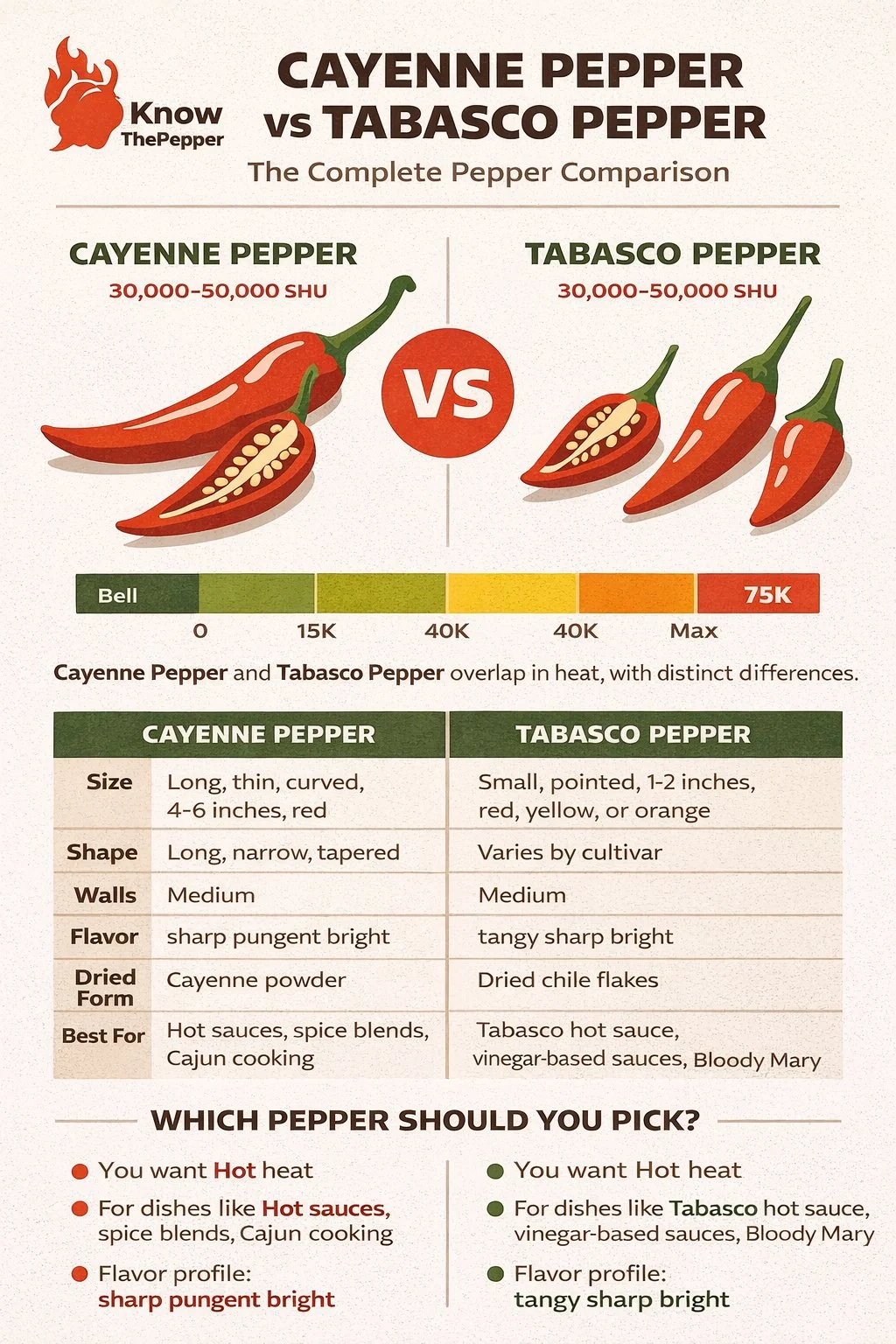
Cayenne Pepper measures 30K–50K SHU while Tabasco Pepper registers 30K–50K SHU — roughly equal in heat. Cayenne Pepper is known for its neutral and peppery flavor (C. annuum), while Tabasco Pepper offers sharp and vinegary notes (C. frutescens).
- Species: C. annuum vs C. frutescens
- Best for: Cayenne Pepper excels in everyday cooking and salsas, Tabasco Pepper in fresh salsas and mild recipes
Cayenne Pepper
HotTabasco Pepper
HotCayenne Pepper vs Tabasco Pepper Comparison
Cayenne Pepper vs Tabasco Pepper Heat Levels
Both peppers land in the 30,000–50,000 SHU range, which puts them comfortably in the high-heat tier — well above a serrano (10,000–23,000 SHU) and several times hotter than a standard jalapeño. Cayenne typically clocks in between 30,000 and 50,000 SHU, while tabasco peppers hit a nearly identical 30,000–50,000 SHU window. On paper, they're near twins. In practice, the heat character feels different.
Cayenne's burn is immediate and linear — it hits the front of the mouth and spreads fast. There's not much build; what you feel in the first second is roughly what you get. Tabasco's heat, by contrast, tends to creep. The vinegar-forward fermentation process in most tabasco preparations may slow initial capsaicin delivery, but the finish lingers longer on the back palate.
For context on the Scoville rating methodology and how labs test pepper heat, both peppers are measured using High-Performance Liquid Chromatography (HPLC), which replaced the older taste-panel method. At roughly 3–5 times hotter than a serrano, these are peppers that demand respect in the kitchen but won't approach the scorching upper intensity of habanero-level heat compared to cayenne.
The capsaicin in both peppers binds to TRPV1 receptors — the same pathway responsible for the burning sensation. If you want to go deeper into how capsaicin interacts with pain receptors at a chemical level, that receptor science explains why dairy fat (not water) is your best relief option.
Flavor Profile Comparison
Few peppers have traveled as far or worked as hard as cayenne.
Most peppers get famous for their heat.
Strip away the heat and these two peppers taste noticeably different. Cayenne is dry and one-dimensional in the best possible way — sharp, slightly grassy, with a clean spice note and almost no sweetness. Dried cayenne powder has a faint earthiness but no real fruitiness. It's a background player that amplifies other flavors without competing with them.
Tabasco peppers are a different story. Fresh, they carry a bright, tangy quality — almost citrus-adjacent — with a thin flesh that's unusually high in moisture compared to most hot peppers. That juiciness is exactly why McIlhenny Co. built an entire fermentation process around them. The acidity develops during barrel aging, turning the pepper's natural tartness into something complex and layered.
Aroma-wise, cayenne powder smells like dry heat — pungent, slightly smoky depending on processing. Fresh or fermented tabasco has a sharper, almost vinegary nose even before any acid is added.
In terms of culinary positioning, cayenne is the pepper you reach for when you want heat without flavor interference. Tabasco brings its own personality to whatever it touches. That's not a criticism — it's a feature. A dish built around tabasco's acidity will taste different from one seasoned with cayenne, even at the same heat level.
For a deeper look at how cayenne's sharp heat compares to the milder, earthier de Arbol, the flavor difference there is as instructive as the SHU gap.
Culinary Uses for Cayenne Pepper and Tabasco Pepper
Cayenne's primary format is powder, and that shapes nearly everything about how it gets used. Dry rubs for grilled meats, spice blends, soups, stews, and chili — cayenne shows up anywhere you need consistent, measurable heat. A teaspoon of cayenne powder in a pot of chili feeds 6–8 people without overwhelming them. It also dissolves cleanly into sauces and marinades without adding bulk or liquid.
Tabasco peppers are almost entirely consumed in fermented hot sauce form. The Tabasco brand sauce uses a three-year barrel-aging process, but home fermenters can produce a similar style in 4–6 weeks. The resulting sauce is thinner than most commercial hot sauces, highly acidic, and built for drizzling rather than cooking. Eggs, oysters, bloody marys, and pizza are the classic applications — situations where you want a bright, sharp spike rather than deep background heat.
Substitution gets tricky because the formats rarely match. If a recipe calls for cayenne powder and you only have tabasco sauce, use 1 teaspoon of sauce per 1/4 teaspoon of cayenne powder and reduce any other liquid in the recipe slightly. Going the other direction — swapping cayenne for tabasco sauce — adds acidity you may not want, so cut the amount by half and taste as you go.
For fresh pepper applications, tabasco's thin walls and high moisture content make it better suited to quick pickles and ferments than to roasting or stuffing. Cayenne fresh peppers roast and dry well, and are worth growing if you want to make your own powder. A full germination-to-harvest guide for growing hot peppers covers both varieties.
For heat-level comparisons in everyday cooking, how cayenne stacks up against jalapeño in familiar recipes is a useful reference point when scaling heat for different audiences.
Which Should You Choose?
If your kitchen only has room for one, cayenne powder is the more versatile pick. It integrates into almost any cuisine, stores for years, and delivers predictable heat without altering flavor balance. It sits in a high-heat SHU bracket that covers most cooking needs without crossing into specialty territory.
Tabasco peppers — or tabasco-style hot sauce — are the better choice when you specifically want acid alongside heat. The fermented, vinegary profile is irreplaceable in certain applications; no amount of cayenne powder replicates what a dash of tabasco sauce does to a bowl of gumbo or a raw oyster.
For heat tolerance newcomers, cayenne is easier to calibrate — you can measure it precisely. Tabasco sauce is more forgiving to drizzle but harder to dial in when cooking from scratch.
Serious hot-sauce makers should grow tabasco peppers. Everyone else should keep cayenne powder in the spice rack and a bottle of tabasco-style sauce in the door of the fridge. They solve different problems.
Can You Substitute One for the Other?
Yes — direct substitution works. Cayenne Pepper and Tabasco Pepper are close enough in heat to swap at roughly 1:1. The main difference will be flavor. For more swap options, explore ranked alternatives with conversion ratios.
Growing Cayenne Pepper vs Tabasco Pepper
If you’re deciding which pepper to grow at home, consider your climate and patience level. Cayenne Pepper and Tabasco Pepper have different maturation times and temperature preferences. Hotter varieties generally need a longer, warmer growing season to develop their full capsaicin content. Our zone-based planting date tool can pinpoint the best sowing window for your area.
Cayenne is one of the more forgiving hot peppers to grow, which explains its global reach. Start seeds indoors 8-10 weeks before last frost.
For practical guidance on growing cayenne from transplant to harvest, the key variables are consistent heat and full sun. Cayenne wants at least 6-8 hours of direct light daily and struggles in cool, wet summers.
Transplant outdoors once nighttime temps stay above 55°F. Space plants 18-24 inches apart.
Tabasco peppers are more demanding than most backyard gardeners expect. As a *C.
Start seeds 10-12 weeks before your last frost date. Germination is slower than annuum varieties, often taking 14-21 days at 80-85°F.
Spacing matters more with tabasco than with compact annuum types - these plants can reach 3-4 feet tall and spread nearly as wide in warm climates. Give them 18-24 inches between plants.
History & Origin of Cayenne Pepper and Tabasco Pepper
Both peppers carry centuries of culinary heritage. Cayenne Pepper traces its roots to French Guiana, while Tabasco Pepper originates from Mexico. Understanding their backstory helps explain why each pepper developed its distinctive traits.
Buying & Storage
Whether you’re shopping for Cayenne Pepper or Tabasco Pepper, the same quality indicators apply. Fresh peppers should feel firm and heavy for their size, with taut, glossy skin and no soft or wet spots. Minor stem cracks known as “corking” are perfectly normal and often indicate a mature, flavorful pod.
- Firm pods with taut skin and consistent color
- Should feel heavy relative to size
- Minor stem cracks (“corking”) are normal
- Avoid anything soft, shriveled, or with dark wet spots
- Fresh: Paper bag, crisper drawer — 1–2 weeks
- Frozen: Wash, dry, freeze on sheet pan — 6+ months
- Dried: Airtight, away from light — up to 1 year
The Verdict: Cayenne Pepper vs Tabasco Pepper
Cayenne Pepper and Tabasco Pepper sit in the same heat tier but serve different roles. Cayenne Pepper delivers its distinctive neutral and peppery character. Tabasco Pepper, with its sharp and vinegary profile, excels in everyday cooking.
Frequently Asked Questions
Related Comparisons
Sources pending verification.