Cayenne Pepper vs De Arbol – Heat & Flavor Compared
Cayenne and de arbol are two of the most beloved dried chiles in the world, both sitting in a similar heat bracket but delivering distinctly different flavor experiences. Cayenne brings a clean, sharp heat that works across cuisines, while de arbol carries a nuttier, more complex profile rooted in Mexican cooking. Understanding the differences helps you pick the right one - or know when they can swap places.

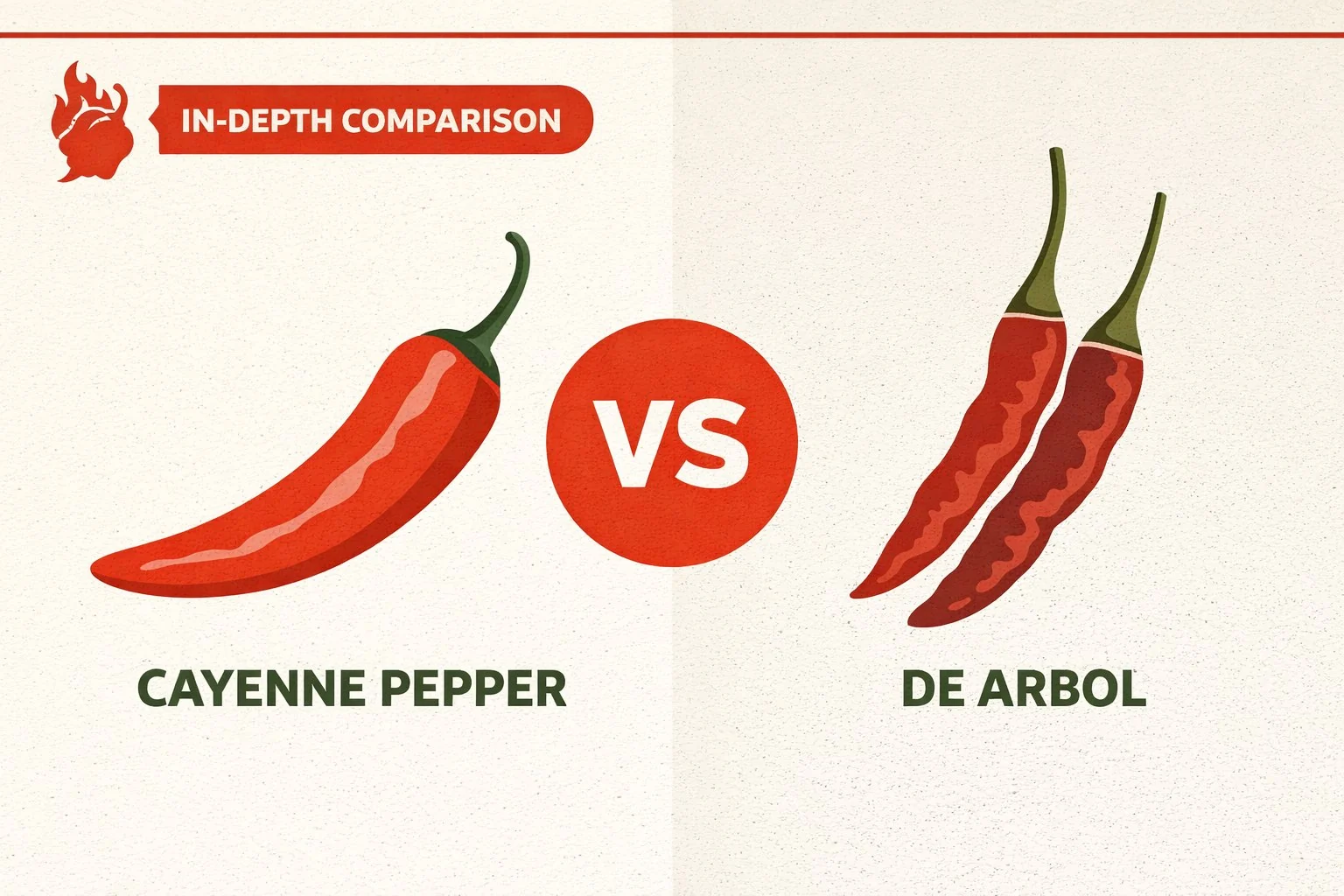
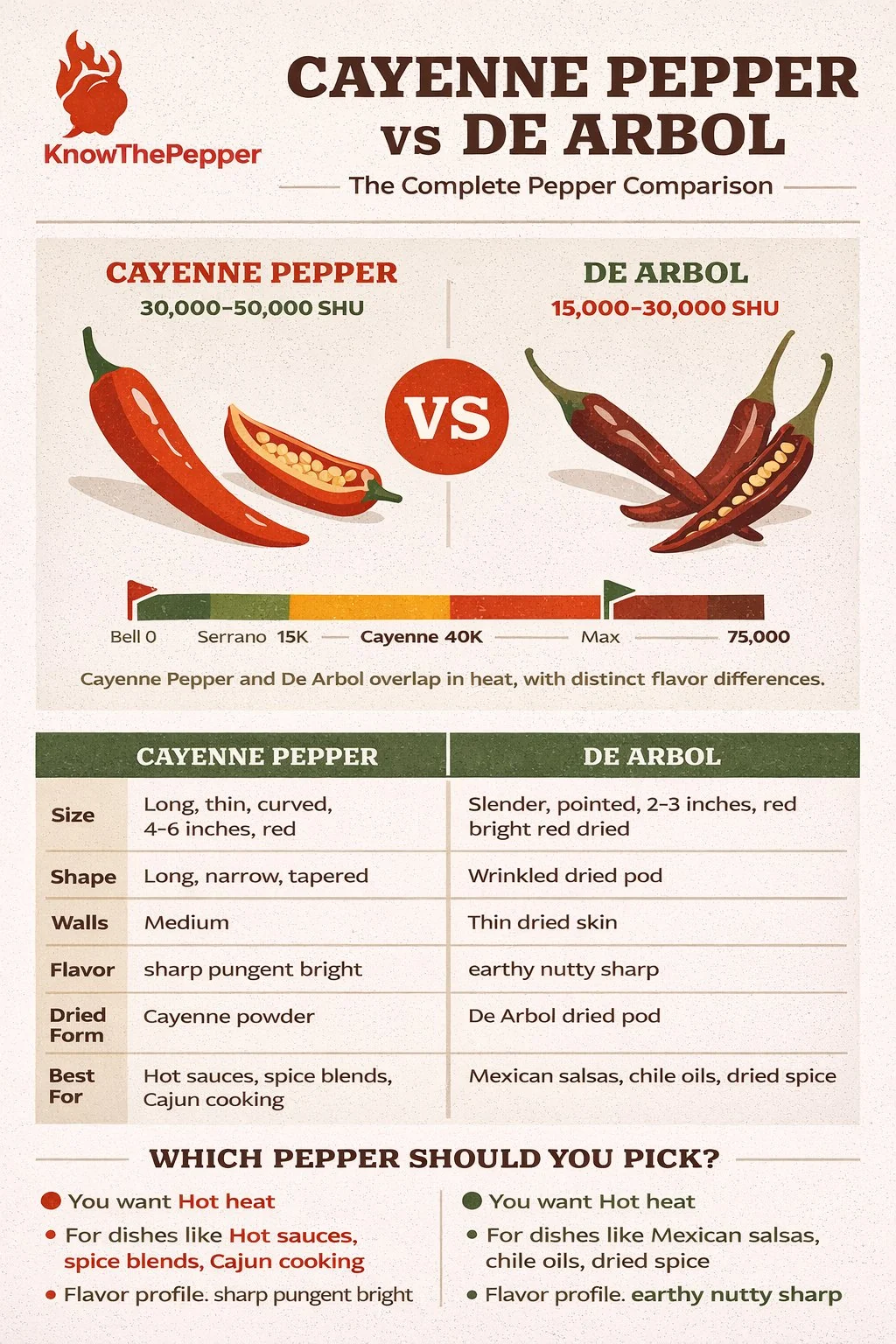
Cayenne Pepper measures 30K–50K SHU while De Arbol registers 15K–30K SHU — making Cayenne Pepper 2× hotter. Cayenne Pepper is known for its neutral and peppery flavor (C. annuum), while De Arbol offers smoky and nutty notes (C. annuum).
- Heat difference: Cayenne Pepper is 2× hotter
- Species: Both are C. annuum
- Best for: Cayenne Pepper excels in everyday cooking and salsas, De Arbol in fresh salsas and mild recipes
Cayenne Pepper
HotDe Arbol
HotCayenne Pepper vs De Arbol Comparison
Cayenne Pepper vs De Arbol Heat Levels
Before getting into numbers, the flavor shapes how you perceive the heat - and that matters more than most people expect.
Cayenne hits fast and clean. The burn arrives almost immediately on the tongue and fades at a moderate pace, without much lingering complexity behind it. That directness is part of its appeal - you get heat without a lot of distraction.
De arbol burns differently. The heat builds slightly slower but carries more aromatic weight with it - a toasty, almost smoky edge that makes the burn feel more layered. Some describe it as hotter-tasting than the raw numbers suggest, likely because the flavor compounds amplify the heat perception.
On the Scoville testing and measurement scale, both peppers land in a comparable zone - typically cited between 30,000 and 50,000 SHU for cayenne, with de arbol ranging from 15,000 to 30,000 SHU depending on growing conditions and drying method. That puts cayenne roughly 6 to 10 times hotter than a jalapeño (which averages around 5,000 SHU), while de arbol comes in at 3 to 6 times jalapeño heat.
So cayenne does run hotter on average - but the margin is narrower than most assume. If you're reaching for de arbol expecting a milder experience, you might still get a solid kick depending on the batch. Both peppers fall comfortably within the medium-high heat bracket of the Scoville scale, well below superhots but meaningfully above the mild end.
Flavor Profile Comparison
Few peppers have traveled as far or worked as hard as cayenne.
The first time a de arbol found its way into my kitchen, I mistook it for a decorative dried chili.
Cayenne's flavor profile is often described as neutral heat - not in a bad way, but in the sense that it doesn't assert much beyond the burn itself. There's a faint earthiness, a touch of brightness, and a clean finish that makes it easy to layer into spice blends without competing with other ingredients. That's exactly why it shows up in everything from cayenne-forward hot sauce recipes to curry powders to dry rubs.
De arbol has a more assertive personality. Dried de arbol chiles develop a distinctly nutty, slightly grassy quality - some describe it as having a faint tea-like aroma when toasted. That toasting step, common in Mexican cooking, pulls out a roasted complexity that cayenne simply doesn't offer. The flavor is sharper and more herbal in its fresh or lightly dried form, becoming richer and more dimensional when dry-roasted before use.
Aromatically, de arbol is the more interesting pepper of the two. It's the kind of chile that changes character depending on how you treat it - raw versus toasted, whole versus ground. Cayenne is more consistent and predictable, which is a feature in professional kitchens where reliability matters.
For culinary applications, cayenne skews toward blending and background heat. De arbol skews toward starring roles - salsas, moles, and chile oils where the pepper's own flavor is part of the point. If you're building a spice blend and need heat without flavor interference, cayenne wins. If you want the chile itself to contribute character, de arbol is the better call.
Culinary Uses for Cayenne Pepper and De Arbol
Both peppers are workhorses, but they shine in different contexts.
Cayenne is the universal heat additive. Ground cayenne appears in Cajun seasoning, Indian spice blends, Ethiopian berbere, and American hot sauces. It dissolves into dishes without announcing itself, making it ideal when you want heat as a background element. Add it to marinades, compound butters, dry rubs, or any dish where you need a reliable, clean kick. The heat gap between cayenne and habanero is significant - cayenne is the safer choice when cooking for mixed heat tolerances.
De arbol is more at home in Mexican and Tex-Mex cooking. It's a key player in chile de arbol salsa, a simple but intensely flavored table sauce made by toasting the dried chiles, blending with garlic and tomato, and finishing with a splash of vinegar. De arbol also works well in chile oils - the Chinese tradition of chili crisp often uses it or closely related varieties. Whole dried de arbol pods can steep in soups, stews, and braising liquids, then be removed before serving.
Substitution: In most recipes, cayenne and de arbol can swap at roughly a 1:1.5 ratio - use 1.5 parts cayenne to replace de arbol (since cayenne typically runs hotter), or 1.5 parts de arbol to replace cayenne. Keep in mind that the flavor shift will be noticeable. De arbol brings nuttiness that cayenne lacks; cayenne brings clean heat that de arbol doesn't quite match.
For fresh applications, neither pepper is commonly used raw - both are most often encountered dried or ground. If you do find fresh de arbol, treat it similarly to a thin-walled cayenne: slice thin for garnish, or char whole for a smoky salsa base. Check cayenne substitution options if you need a closer heat-and-flavor match for a specific dish.
Toasting de arbol before grinding is non-negotiable for the best flavor - 30 seconds in a dry skillet over medium heat transforms the pepper entirely. Cayenne doesn't benefit from the same treatment as much, since its flavor is subtler to begin with.
Which Should You Choose?
For pure, reliable heat that disappears into a dish, cayenne is the better tool. It's consistent, widely available in ground form, and plays well with virtually every cuisine. If you're building spice blends, seasoning proteins, or adding background warmth to soups and sauces, cayenne is the practical choice.
De arbol earns its place when flavor matters as much as heat. It's the better pepper for salsas, chile oils, and Mexican-inspired dishes where the chile's own character is supposed to come through. The toasted nuttiness adds a dimension that cayenne simply can't replicate.
For the bird's eye vs cayenne heat comparison, cayenne typically runs milder - worth knowing if you're calibrating heat across multiple peppers in a recipe.
Bottom line: keep both in the pantry if you cook across cuisines. Use cayenne when you want invisible heat, and reach for de arbol when you want the chile to have a voice.
Can You Substitute One for the Other?
Yes — direct substitution works. Cayenne Pepper and De Arbol are close enough in heat to swap at roughly 1:1. The main difference will be flavor. For more swap options, explore ranked alternatives with conversion ratios.
Growing Cayenne Pepper vs De Arbol
If you’re deciding which pepper to grow at home, consider your climate and patience level. Cayenne Pepper and De Arbol have different maturation times and temperature preferences. Hotter varieties generally need a longer, warmer growing season to develop their full capsaicin content. Our zone-based planting date tool can pinpoint the best sowing window for your area.
Cayenne is one of the more forgiving hot peppers to grow, which explains its global reach. Start seeds indoors 8-10 weeks before last frost.
For practical guidance on growing cayenne from transplant to harvest, the key variables are consistent heat and full sun. Cayenne wants at least 6-8 hours of direct light daily and struggles in cool, wet summers.
Transplant outdoors once nighttime temps stay above 55°F. Space plants 18-24 inches apart.
De arbol is a reliable producer once established, though it demands heat to perform. Start seeds indoors 8-10 weeks before last frost — germination runs 10-14 days at soil temperatures around 80-85°F.
Transplant outdoors only after nighttime temps stay consistently above 55°F. De arbol needs full sun and well-drained soil; waterlogged roots stall growth quickly.
Pods mature from green to bright red in 80-90 days from transplant. The plants set fruit prolifically — a single established plant can carry dozens of pods simultaneously.
History & Origin of Cayenne Pepper and De Arbol
Both peppers carry centuries of culinary heritage. Cayenne Pepper traces its roots to French Guiana, while De Arbol originates from Mexico. Understanding their backstory helps explain why each pepper developed its distinctive traits.
Buying & Storage
Whether you’re shopping for Cayenne Pepper or De Arbol, the same quality indicators apply. Fresh peppers should feel firm and heavy for their size, with taut, glossy skin and no soft or wet spots. Minor stem cracks known as “corking” are perfectly normal and often indicate a mature, flavorful pod.
- Firm pods with taut skin and consistent color
- Should feel heavy relative to size
- Minor stem cracks (“corking”) are normal
- Avoid anything soft, shriveled, or with dark wet spots
- Fresh: Paper bag, crisper drawer — 1–2 weeks
- Frozen: Wash, dry, freeze on sheet pan — 6+ months
- Dried: Airtight, away from light — up to 1 year
The Verdict: Cayenne Pepper vs De Arbol
Cayenne Pepper and De Arbol sit in the same heat tier but serve different roles. Cayenne Pepper delivers 2× more heat with its distinctive neutral and peppery character. De Arbol, with its smoky and nutty profile, excels in everyday cooking.
Frequently Asked Questions
Related Comparisons
Sources pending verification.