Carolina Reaper vs Trinidad Moruga Scorpion: Compared
The Carolina Reaper and Trinidad Moruga Scorpion sit at the absolute ceiling of measurable heat - two C. chinense monsters separated by surprisingly thin margins. Both deliver fruity flavor before obliterating you, but their differences in heat ceiling, flavor character, and culinary behavior are worth understanding before you reach for either.

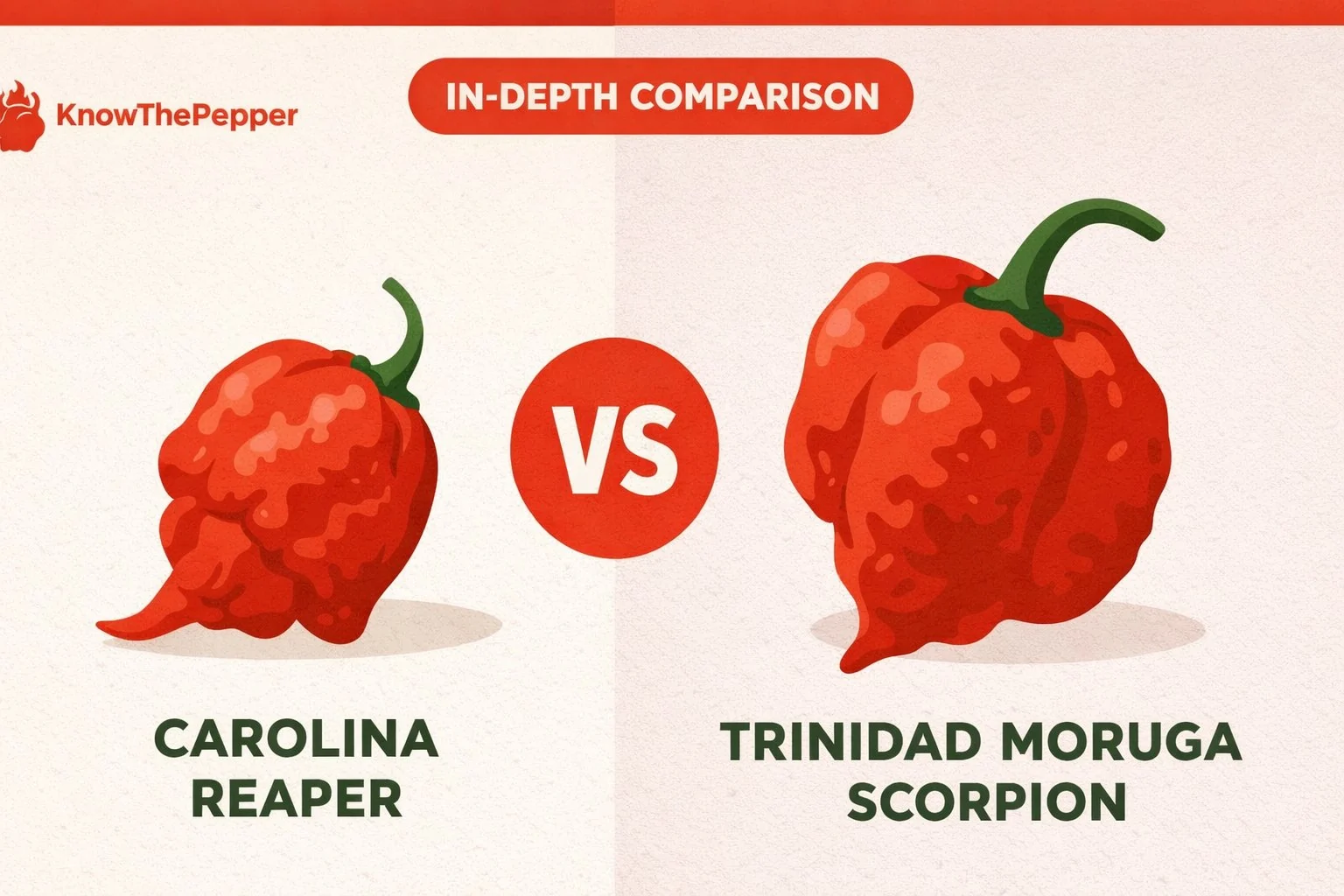
Carolina Reaper measures 1.4M–2.2M SHU while Trinidad Moruga Scorpion registers 1.2M–2M SHU — roughly equal in heat. Carolina Reaper is known for its fruity and sweet flavor (C. chinense), while Trinidad Moruga Scorpion offers fruity and floral notes (C. chinense).
- Species: Both are C. chinense
- Best for: Carolina Reaper excels in hot sauces and extreme dishes, Trinidad Moruga Scorpion in hot sauces and spicy dishes
Carolina Reaper
Super-HotTrinidad Moruga Scorpion
Super-HotCarolina Reaper vs Trinidad Moruga Scorpion Comparison
Carolina Reaper vs Trinidad Moruga Scorpion Heat Levels
The first time I sliced a Trinidad Moruga Scorpion without gloves, thinking I'd built up enough tolerance from habaneros, I was humbled within minutes. That experience reframed how I think about peppers in the super-hot category that defines both of these varieties.
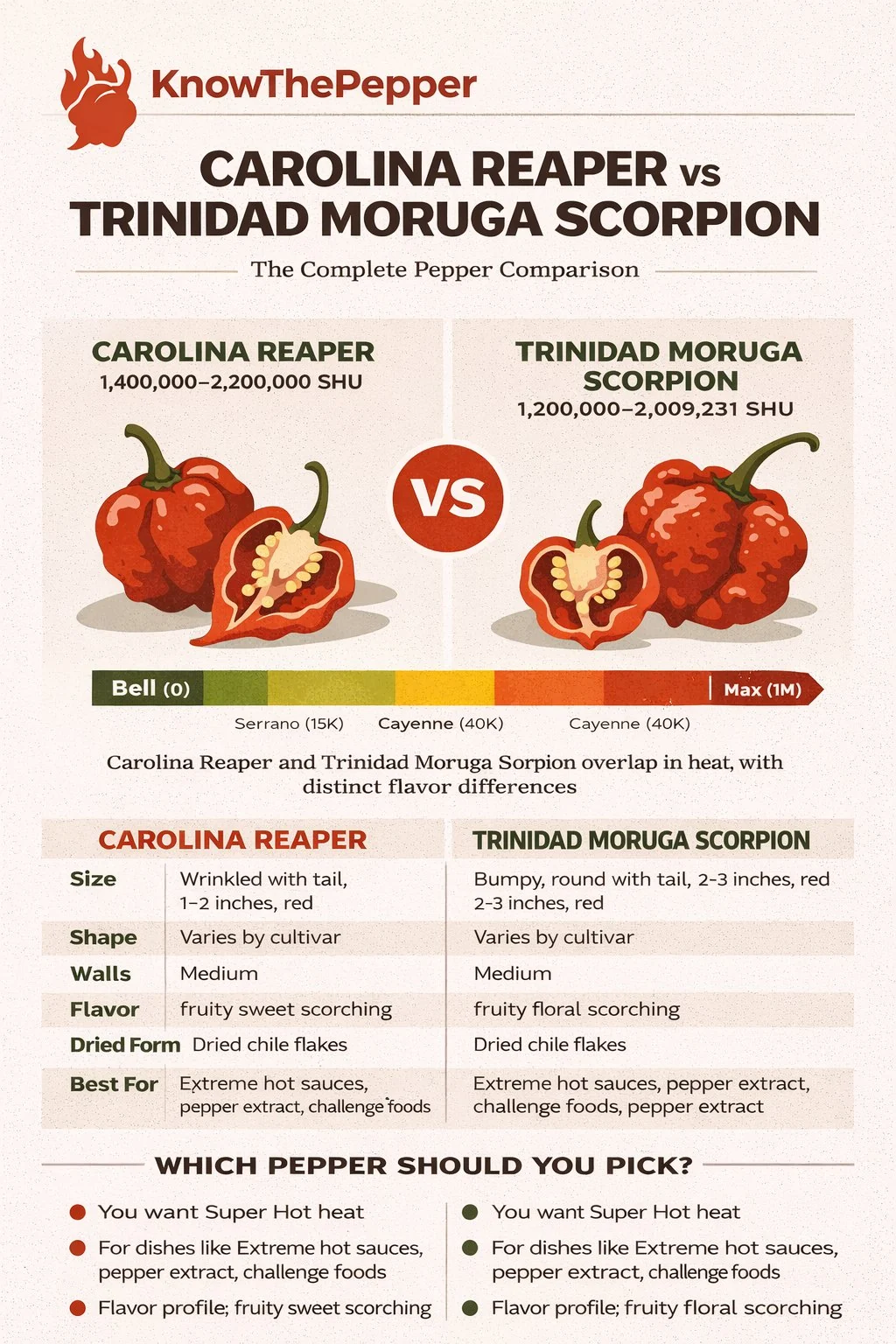
The Carolina Reaper ranges from 1,400,000 to 2,200,000 SHU, with its record-setting peak measured by Winthrop University in 2013. The Trinidad Moruga Scorpion clocks in at 1,200,000 to 2,009,231 SHU, with New Mexico State University's Chile Pepper Institute confirming those upper figures in 2012. On paper, the Reaper edges higher - but the overlap between these two is substantial enough that individual pods from a Moruga Scorpion plant can easily outpace a given Reaper.
To put this in perspective using a more meaningful benchmark: a dried guajillo pepper sits around 2,500 to 5,000 SHU. That means both the Reaper and the Moruga Scorpion can be anywhere from 240 to 880 times hotter than a guajillo. That's not a typo.
The burn character differs meaningfully despite the similar numbers. The Reaper hits fast and builds to a sustained, suffocating wave - capsaicin binding that keeps intensifying for 20-30 minutes. The Moruga Scorpion delivers a slightly slower initial onset but produces what many describe as a more penetrating, full-mouth heat. Both trigger the same biological heat mechanism that makes capsaicin so effective at overwhelming pain receptors. Neither is survivable without consequence.
Flavor Profile Comparison
Behind the Carolina Reaper's scorpion-tailed, wrinkled exterior is a flavor profile that catches first-timers completely off guard.
Few peppers command the same respect as the Trinidad Moruga Scorpion.
Strip away the heat for a moment - which requires significant imagination with either of these - and you'll find genuinely interesting flavor underneath.
The Carolina Reaper leads with a pronounced fruity sweetness. Think tropical fruit candy: mango, peach, a hint of chocolate depending on the grow conditions. Bred by Ed Curlin of PuckerButt Pepper Company, it was developed specifically to maximize both heat and flavor, crossing a Pakistani Naga with a Red Habanero. That breeding goal shows - there's real sweetness before the fire lands.
The Trinidad Moruga Scorpion takes a different direction. Its flavor is fruity but laced with floral notes - something almost rose-adjacent that you notice in the first second before heat erases everything. Its Caribbean origin gives it a flavor DNA closer to the Scotch Bonnet family, with that distinctive tropical-floral brightness that C. chinense peppers from the region tend to carry.
Both peppers share the thick, wrinkled flesh typical of the chinense botanical lineage, which concentrates flavor compounds alongside capsaicinoids. Neither is thin-walled or watery - you get actual substance when cooking with them.
For culinary purposes, the Reaper's sweeter profile makes it slightly more versatile in fruit-forward hot sauces. The Moruga's floral note adds complexity to Caribbean-style preparations. The difference is subtle but real to anyone who can get past the initial heat assault long enough to notice.
Culinary Uses for Carolina Reaper and Trinidad Moruga Scorpion
Working with either of these peppers demands respect and latex gloves - non-negotiable. Beyond safety, the practical question is what you actually do with them.
Hot sauce is the most logical application for both. A single Reaper or Moruga Scorpion, deseeded and blended into a mango-habanero base, adds extreme heat without overwhelming the fruit notes. Start with a 1:10 ratio - one super-hot pepper to ten milder peppers - and adjust from there. The Reaper's sweetness integrates particularly well with pineapple and papaya bases. The Moruga's floral quality pairs interestingly with coconut and tamarind.
Chili powders and rubs work well with dried versions of both. A small pinch - and small means small, roughly 1/8 teaspoon per pot serving 6-8 people - adds background heat to competition chili or smoked brisket rubs without making the dish inedible. The Moruga Scorpion's floral note comes through even in dried form, which is unusual.
For fermented hot sauces, both perform well. Their thick flesh ferments cleanly over 5-7 days at room temperature with 2-3% salt brine. The fermentation softens the heat slightly while amplifying the fruity complexity.
If you want a step-by-step approach to growing either variety at home before committing to purchased pods, both are demanding but rewarding plants - long season, high heat requirements, and sensitive to overwatering.
Substitution between the two is essentially 1:1 given their overlapping heat ranges. If a recipe calls for one and you only have the other, swap directly. For those stepping down in heat, the Carolina Reaper versus habanero breakdown shows how dramatic the gap is to the next tier down - you'd need roughly 1/15th the volume of either super-hot to match habanero heat.
Which Should You Choose?
Choosing between these two comes down to flavor preference and availability, not heat tolerance - both will exceed the limits of most people regardless.
The Carolina Reaper is the better pick if you want maximum heat ceiling, sweeter fruit notes, and slightly more predictable availability through US-based seed companies and specialty retailers. Its record-setting status also means more documented growing data and more hot sauce producers working with it. The Reaper versus Pepper X matchup is the more relevant frontier for anyone chasing the absolute top.
The Trinidad Moruga Scorpion wins on flavor complexity. That floral note is genuinely distinctive and makes it more interesting in Caribbean-style preparations. It also has a longer documented history as a traditional pepper from the island's pepper-growing culture, which matters if provenance is important to you.
For heat-curious cooks: neither. For hot sauce makers targeting the extreme end of the market: Reaper for sweetness, Moruga for floral depth. For competitive chili heads: personal preference, since the heat difference is within measurement variance.
Both belong to the American super-hot breeding tradition that pushed the Scoville ceiling in the 2010s - and both remain benchmarks for what C. chinense can produce.
Can You Substitute One for the Other?
Proceed with caution. Carolina Reaper is 1× hotter than Trinidad Moruga Scorpion.
Need a different option altogether? Search for peppers that match your target heat and flavor with precise swap ratios.
Growing Carolina Reaper vs Trinidad Moruga Scorpion
If you’re deciding which pepper to grow at home, consider your climate and patience level. Carolina Reaper and Trinidad Moruga Scorpion have different maturation times and temperature preferences. Hotter varieties generally need a longer, warmer growing season to develop their full capsaicin content. Our zone-based planting date tool can pinpoint the best sowing window for your area.
Starting Carolina Reapers from seed requires patience - germination takes 14 to 21 days at soil temperatures between 80-85°F. Bottom heat from a seedling mat is essentially non-negotiable for reliable germination rates.
Transplant outdoors only after nighttime temperatures stay consistently above 60°F. The plants need a long season - 150 to 180 days from transplant to mature red pods - so starting seeds indoors 10 to 12 weeks before last frost is standard.
Full sun and well-draining soil with a pH around **6.0 to 6.
The Moruga Scorpion is a long-season grower. From seed to first ripe pod typically runs 150 to 180 days, which means starting indoors 10 to 12 weeks before your last frost date is non-negotiable in most climates.
Germination requires consistent soil temps of 80-85°F. A heat mat under the seed tray isn't optional — it's the difference between 70% germination and 20%.
Once seedlings reach 4-6 inches, pot up gradually rather than jumping straight to a large container. The Moruga Scorpion responds well to slightly root-bound conditions early on — it triggers more aggressive flowering.
History & Origin of Carolina Reaper and Trinidad Moruga Scorpion
Both peppers carry centuries of culinary heritage. Carolina Reaper traces its roots to USA, while Trinidad Moruga Scorpion originates from Trinidad. Understanding their backstory helps explain why each pepper developed its distinctive traits.
Buying & Storage
Whether you’re shopping for Carolina Reaper or Trinidad Moruga Scorpion, the same quality indicators apply. Fresh peppers should feel firm and heavy for their size, with taut, glossy skin and no soft or wet spots. Minor stem cracks known as “corking” are perfectly normal and often indicate a mature, flavorful pod.
- Firm pods with taut skin and consistent color
- Should feel heavy relative to size
- Minor stem cracks (“corking”) are normal
- Avoid anything soft, shriveled, or with dark wet spots
- Fresh: Paper bag, crisper drawer — 1–2 weeks
- Frozen: Wash, dry, freeze on sheet pan — 6+ months
- Dried: Airtight, away from light — up to 1 year
The Verdict: Carolina Reaper vs Trinidad Moruga Scorpion
Carolina Reaper and Trinidad Moruga Scorpion sit in the same heat tier but serve different roles. Carolina Reaper delivers its distinctive fruity and sweet character. Trinidad Moruga Scorpion, with its fruity and floral profile, excels in everyday cooking.
Frequently Asked Questions
Related Comparisons
Sources pending verification.