Banana Pepper vs Jalapeño Showdown: Heat, Flavor & Uses
Banana peppers and jalapeños share shelf space at every grocery store, but they occupy completely different territory in the kitchen. One brings mild tang with zero heat, the other delivers a sharp, grassy bite that ranges from a gentle tingle to a genuine burn. Understanding the gap between them changes how you cook.

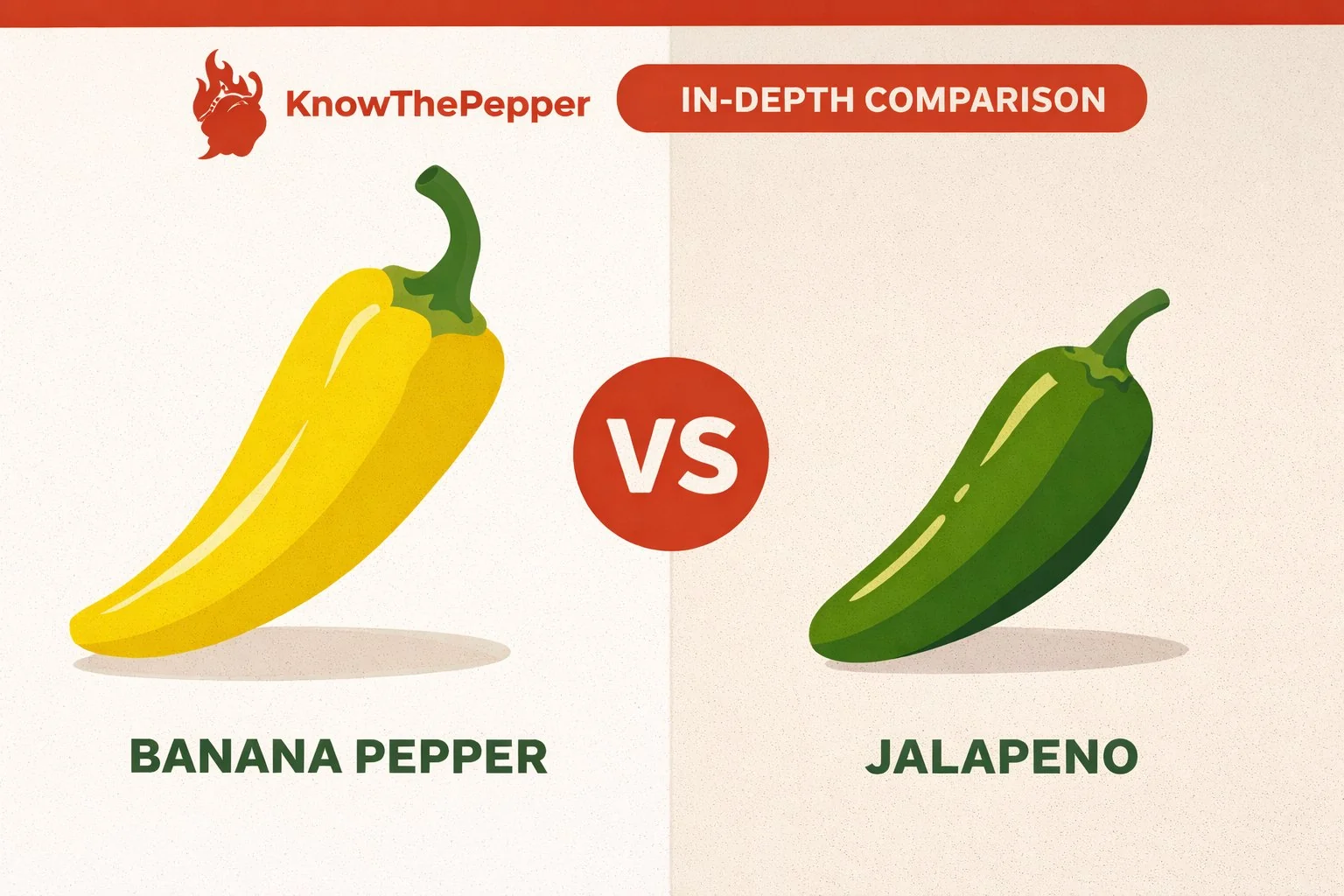
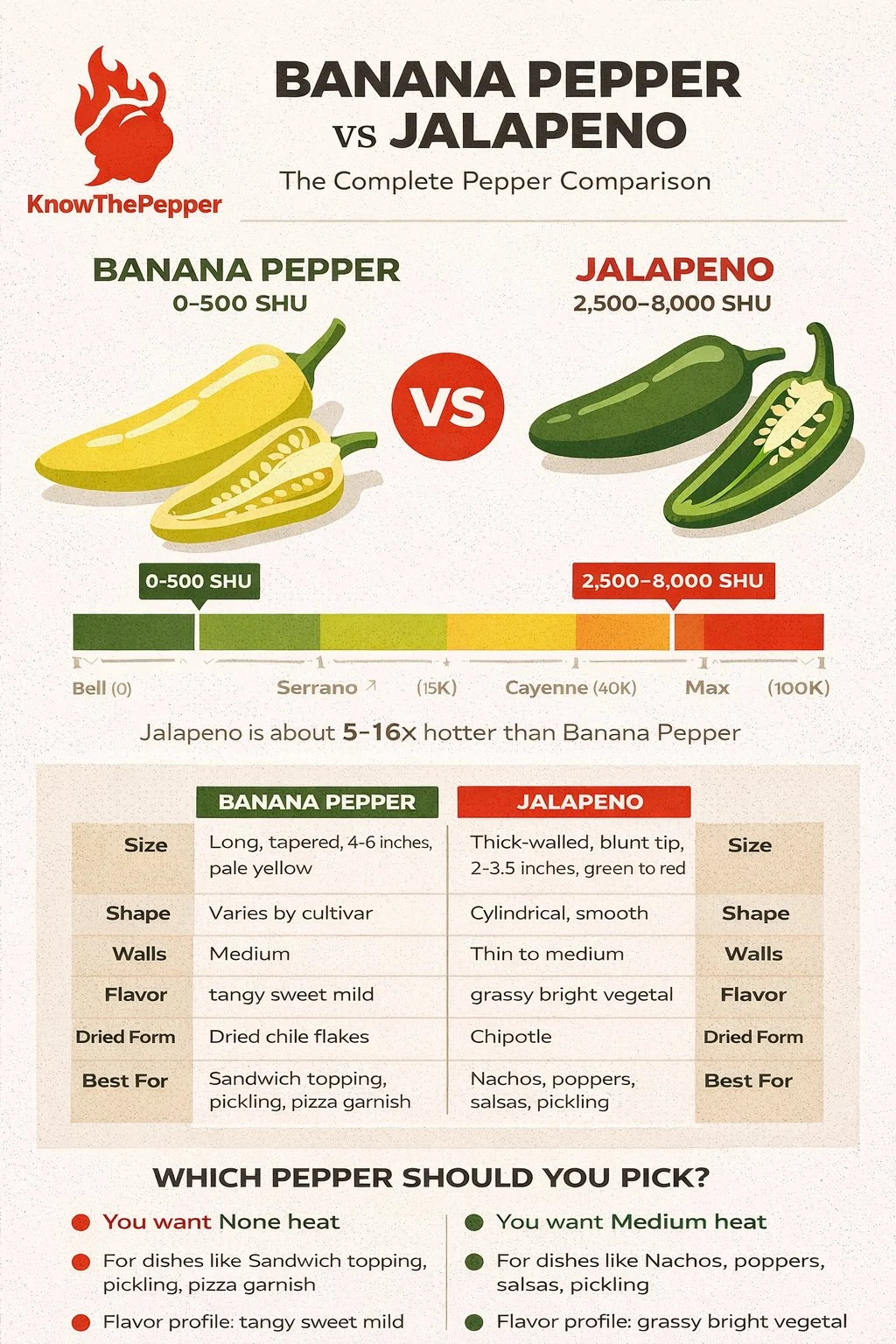
Banana Pepper measures 0–500 SHU while Jalapeño registers 3K–8K SHU — making Jalapeño 16× hotter. Banana Pepper is known for its mild and tangy flavor (C. annuum), while Jalapeño offers bright and grassy notes (C. annuum).
- Heat difference: Jalapeño is 16× hotter
- Species: Both are C. annuum
- Best for: Banana Pepper excels in everyday cooking and salsas, Jalapeño in fresh salsas and mild recipes
Banana Pepper vs Jalapeño Comparison
Banana Pepper vs Jalapeño Heat Levels
Bite into a banana pepper and you get nothing but flavor — no warmth, no slow build, nothing that activates the pain receptors in your mouth. That's because banana peppers register at 0 SHU, sitting firmly outside any heat classification entirely.
Jalapeños are a different story. At 2,500-8,000 SHU, they span a surprisingly wide range depending on growing conditions, stress, and ripeness. A grocery store jalapeño picked young might barely register, while a garden-grown specimen left to stress in dry soil can push toward that upper ceiling.
To put the gap in perspective: even the mildest jalapeño is infinitely hotter than a banana pepper, since any number multiplied from zero stays zero. A mid-range jalapeño at 5,000 SHU sits roughly 1.5 times hotter than a Fresno at the low end — and the Fresno-to-jalapeño side-by-side contrast illustrates how much growing conditions shift perceived intensity.
The jalapeño belongs to C. annuum, the botanical family that also includes bells, poblanos, and Fresnos. Capsaicin binds to TRPV1 receptors — the receptor science behind that heat response explains why the burn feels so different from simple bitterness or acidity.
Banana peppers are genuinely heat-free, making them one of the few peppers you can eat by the handful without any physiological consequence. Jalapeños demand at least some respect.
Flavor Profile Comparison
The first time I bit into a raw banana pepper straight from the garden, the tanginess caught me off guard — more like a mild vinegar note than anything I expected from a fresh pepper.
Few peppers have earned their reputation as thoroughly as the jalapeño.
Banana peppers have a tangy, slightly sweet flavor with a waxy texture and mild acidity. Fresh ones taste almost like a cross between a bell pepper and a mild vinegar-pickled vegetable — clean, crisp, with a faint sweetness that intensifies when roasted. Pickled banana peppers, which are far more common in American kitchens, lean heavily into that acidic tang and become almost briny.
Jalapeños bring something sharper. The bright, grassy character of a fresh jalapeño is distinctive — green and vegetal with a slight bitterness that plays well against fat and acid. When red and fully ripe, they sweeten considerably and lose some of that raw edge, which is why chipotle's smoky depth vs. fresh jalapeño heat feels like a completely different pepper despite being the same fruit at different stages.
Aroma is another point of separation. Slice open a jalapeño and you get that immediate grassy, almost herbal smell. Banana peppers smell mild and slightly sweet — nothing that announces itself.
For cooking, these differences matter. Banana pepper flavor is passive; it adds color, mild tang, and texture without competing with other ingredients. Jalapeño flavor is active — it pushes into the dish, adds brightness, and changes the overall profile. Dishes built around jalapeño taste different from those that simply include it as garnish.
Both peppers hold up well raw, but jalapeños also char and blister beautifully. Banana peppers tend to go soft and lose structure under high heat, which is why they're more often pickled or stuffed than grilled.
Culinary Uses for Banana Pepper and Jalapeño
Banana peppers shine in low-heat applications where their tang and color do the work. They're the default topping on Italian subs and hoagies for a reason — that mild acidity cuts through cured meats and cheese without adding heat that might overwhelm the sandwich. Pickled banana pepper rings are also a standard pizza topping, Greek salad addition, and antipasto component.
Stuffed banana peppers are a natural fit. Their shape and mild flavor make them ideal vessels for cream cheese, sausage, or grain-based fillings. Roasting softens them considerably, so stuffed preparations usually get baked rather than grilled.
For anyone looking at alternatives to banana pepper's mild tang, pepperoncini are the closest match — similar acidity, similar heat (near zero), similar texture when pickled.
Jalapeños cover far more culinary ground. Fresh, they go into salsas, guacamole, tacos, and grain bowls. Pickled jalapeños (en escabeche) are a staple across Mexican pepper traditions and appear everywhere from nachos to banh mi. Roasted jalapeños add depth to sauces. Smoked and dried, they become chipotles.
The cherry bomb's stuffability vs. jalapeño's versatility is a useful frame — jalapeños can do almost anything, while cherry bombs excel specifically at being stuffed.
Substitution math: if a recipe calls for jalapeños and you want zero heat, banana peppers can replace them 1:1 by volume, but expect to lose all the heat and some of the grassy character. Add a splash of white wine vinegar to compensate for the flavor difference. Going the other direction — adding jalapeño heat to a banana pepper dish — use one jalapeño for every three banana peppers and taste as you go.
For heat-sensitive guests, banana peppers let you build the same visual and textural experience as a jalapeño dish without any capsaicin risk.
Which Should You Choose?
Banana peppers and jalapeños solve different problems. If you need color, mild tang, and zero heat — for sandwiches, salads, or anyone who can't handle spice — banana peppers are the right call. They're reliable, approachable, and pair with almost anything.
Jalapeños belong in dishes where heat is part of the point. Even at the mild end of their 2,500-8,000 SHU range, they contribute a grassy sharpness that banana peppers simply cannot replicate. They're also more versatile across cooking methods — raw, roasted, pickled, or smoked, they adapt.
For heat-seekers, jalapeños sit in the medium-heat SHU bracket alongside Fresnos and poblanos — approachable enough for most palates but with enough kick to matter. You can verify exactly where any individual pepper falls using a Scoville testing and measurement reference.
Bottom line: keep both on hand. Use banana peppers when heat would be unwelcome. Use jalapeños when the dish needs that bright, spicy edge.
Can You Substitute One for the Other?
Yes — direct substitution works. Banana Pepper and Jalapeño are close enough in heat to swap at roughly 1:1. The main difference will be flavor. For more swap options, explore ranked alternatives with conversion ratios.
Growing Banana Pepper vs Jalapeño
If you’re deciding which pepper to grow at home, consider your climate and patience level. Banana Pepper and Jalapeño have different maturation times and temperature preferences. Hotter varieties generally need a longer, warmer growing season to develop their full capsaicin content. Our zone-based planting date tool can pinpoint the best sowing window for your area.
Banana peppers are forgiving plants — a good starting point if you want a step-by-step growing guide to work from. They thrive in full sun with consistent moisture and warm soil, performing best where daytime temperatures stay between 70°F and 85°F.
Start seeds indoors 8 to 10 weeks before the last frost date. Transplant once nighttime temperatures stay reliably above 55°F — cold soil stunts early growth noticeably.
Fertilize at transplant with a balanced formula, then switch to a lower-nitrogen feed once flowering begins. Too much nitrogen pushes leafy growth at the expense of fruit set.
Jalapeños are among the most forgiving hot peppers to grow, but they do have preferences worth knowing.
Start seeds indoors 8–10 weeks before your last frost date. Soil temperature for germination should stay between 75–85°F — a heat mat under the seed tray makes a real difference in germination speed and uniformity.
Transplant outdoors once nighttime temps stay consistently above 55°F. Jalapeños want full sun — at least 6 hours daily — and well-drained soil with a pH around **6.
History & Origin of Banana Pepper and Jalapeño
Both peppers carry centuries of culinary heritage. Banana Pepper traces its roots to USA, while Jalapeño originates from Mexico. Understanding their backstory helps explain why each pepper developed its distinctive traits.
Buying & Storage
Whether you’re shopping for Banana Pepper or Jalapeño, the same quality indicators apply. Fresh peppers should feel firm and heavy for their size, with taut, glossy skin and no soft or wet spots. Minor stem cracks known as “corking” are perfectly normal and often indicate a mature, flavorful pod.
- Firm pods with taut skin and consistent color
- Should feel heavy relative to size
- Minor stem cracks (“corking”) are normal
- Avoid anything soft, shriveled, or with dark wet spots
- Fresh: Paper bag, crisper drawer — 1–2 weeks
- Frozen: Wash, dry, freeze on sheet pan — 6+ months
- Dried: Airtight, away from light — up to 1 year
The Verdict: Banana Pepper vs Jalapeño
Banana Pepper and Jalapeño occupy very different positions on the heat spectrum. Jalapeño delivers 16× more heat with its distinctive bright and grassy character. Banana Pepper, with its mild and tangy profile, excels in everyday cooking.
Frequently Asked Questions
Related Comparisons
Sources pending verification.