Aleppo Pepper vs Maras Pepper: Which Pepper Should You Use?
Aleppo pepper and Maras pepper are two Syrian and Turkish dried chili flakes so closely related that many cooks use them interchangeably — but they are not identical. Both land in the mild-to-medium heat range with rich, oily, fruity depth, yet each carries a distinct regional character shaped by terroir, processing, and tradition. Understanding the differences helps you choose the right one for your kitchen.

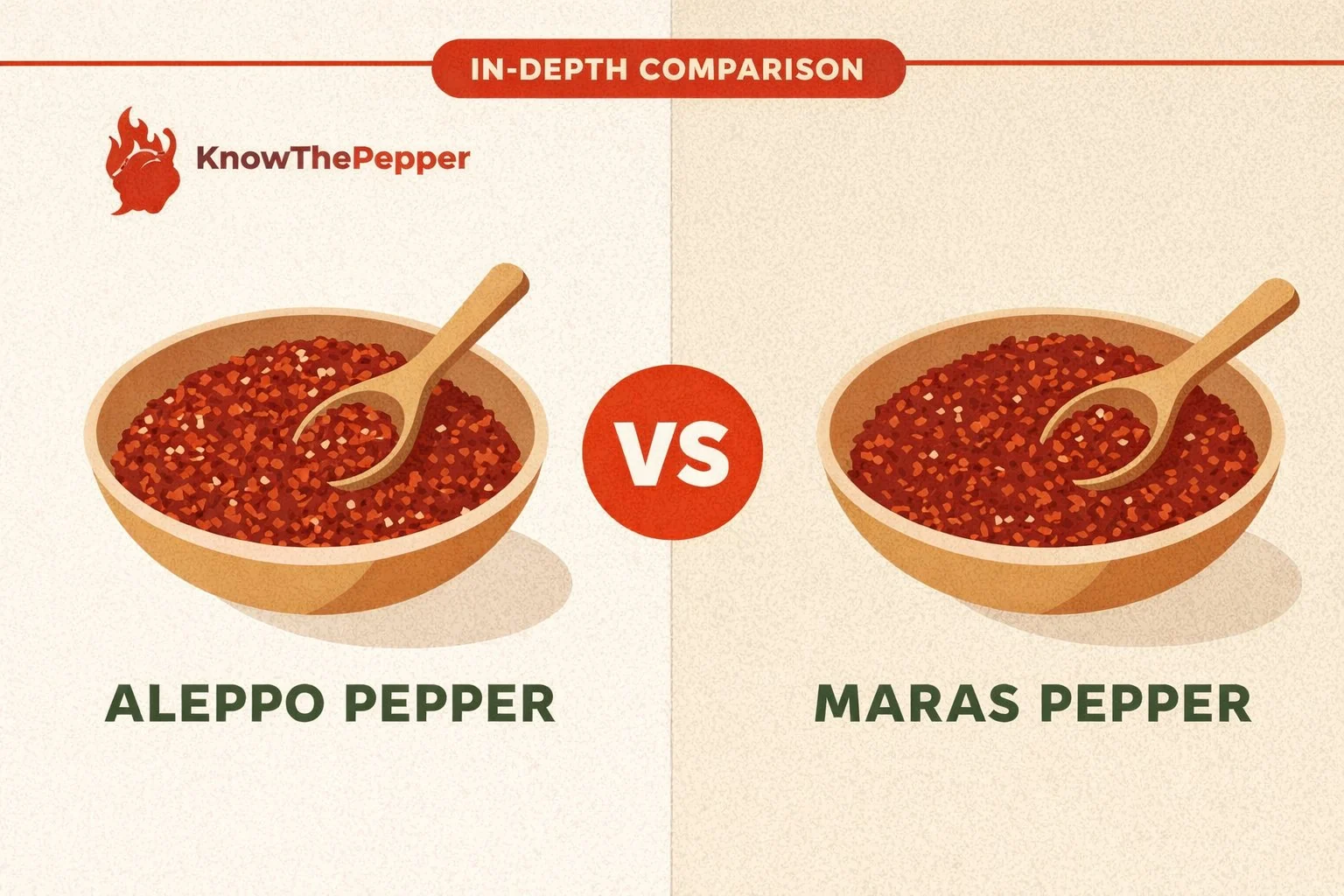
Aleppo Pepper measures 10K–30K SHU while Maras Pepper registers 30K–50K SHU — making Maras Pepper 2× hotter. Aleppo Pepper is known for its fruity and earthy flavor (C. annuum), while Maras Pepper offers fruity and earthy notes (C. annuum).
- Heat difference: Maras Pepper is 2× hotter
- Species: Both are C. annuum
- Best for: Aleppo Pepper excels in everyday cooking and salsas, Maras Pepper in fresh salsas and mild recipes
Aleppo Pepper
HotMaras Pepper
HotAleppo Pepper vs Maras Pepper Comparison
Aleppo Pepper vs Maras Pepper Heat Levels
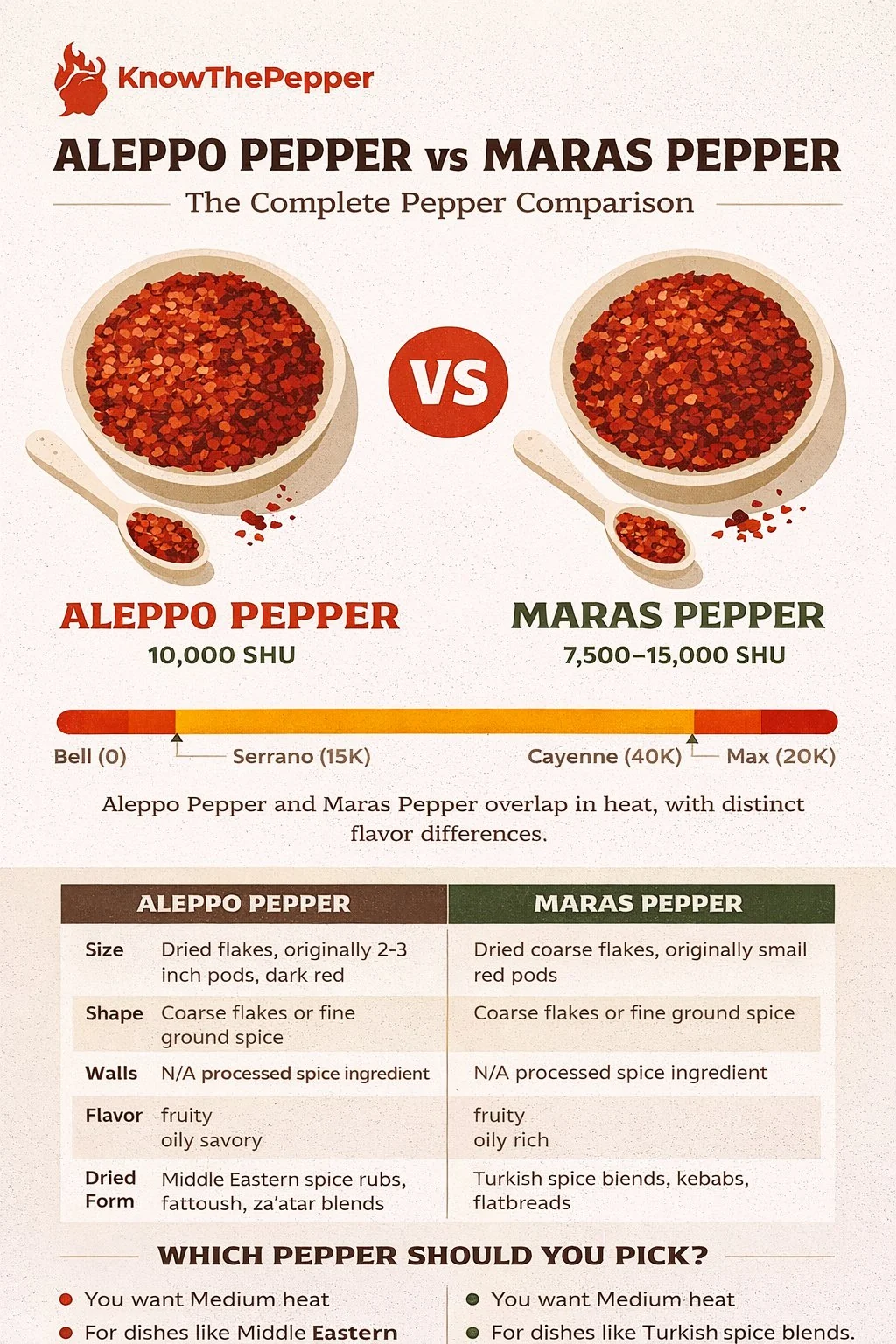
Both peppers sit at the mild end of the mild heat bracket, registering well below the heat of a serrano, which typically runs 10,000-23,000 SHU. Aleppo and Maras flakes are generally estimated in the 10,000 SHU neighborhood — making them roughly one-quarter to one-fifth the intensity of a serrano. That puts them firmly in the territory of dried paprika-style warmth rather than anything that challenges your tolerance.
The heat character matters as much as the number. Aleppo pepper delivers a slow-building, gentle burn that blooms after a few seconds on the palate, then fades cleanly. There is no sharp front-end bite. Maras pepper behaves similarly but many cooks describe its heat as slightly more immediate — a touch warmer on first contact before it settles into the same lingering, oily finish.
Both peppers contain moderate capsaicin levels, and the chemistry behind why that warmth spreads so evenly relates to how the oils in these partially dried, semi-moist flakes carry heat across the tongue differently than a bone-dry powder would. Neither pepper will overwhelm a dish — they function more as background warmth than a heat source, which is precisely why both are used so generously in Middle Eastern and Turkish cooking.
Flavor Profile Comparison
Most peppers ask you to choose between heat and flavor.
Turkey's most celebrated chili comes from the city of Kahramanmaras in southeastern Anatolia, where the climate and volcanic soil produce a pepper unlike anything else in the region.
Flavor is where these two peppers diverge most meaningfully. Aleppo pepper — named for the Syrian city of Aleppo — carries a complex profile: dried fruit, mild earthiness, a faint cumin-like quality, and a subtle brininess from the salt added during processing. The flakes retain some moisture and oil, which gives them a jammy, almost raisin-like intensity. There is also a gentle sourness that makes Aleppo more versatile than its heat level alone would suggest.
Maras pepper, sourced from the Kahramanmaras region of southeastern Turkey, shares the oily, semi-moist texture but leans warmer and more straightforwardly fruity. The flavor is less complex than Aleppo — brighter, with more pronounced red pepper sweetness and a slightly smokier finish depending on the batch. Where Aleppo has layers, Maras has directness.
Aroma matters here too. Aleppo flakes smell almost like a spiced sun-dried tomato — rich, slightly fermented, and deeply savory. Maras has a cleaner, more pepper-forward scent with occasional hints of dried cherry or mild paprika.
For those who enjoy the side-by-side heat and flavor gap between Aleppo and Urfa Biber, Maras sits somewhere between the two — warmer than Urfa, less complex than Aleppo at its best. The distinction is real, but in many dishes, both will produce nearly identical results.
Culinary Uses for Aleppo Pepper and Maras Pepper
In practical kitchen terms, Aleppo pepper and Maras pepper are nearly one-to-one substitutes. Use them at equal ratios in any recipe that calls for either — 1 teaspoon Aleppo = 1 teaspoon Maras, no adjustment needed. The flavor shift will be subtle enough that most diners would not identify the difference.
Both shine in applications where the spice is added to fat — blooming in olive oil or butter before other ingredients go in. Eggs, roasted vegetables, grilled lamb, and flatbreads all benefit from this technique. The oils in the flakes release into the cooking fat and coat the dish with a rich, fruity warmth that dry-roasted spices simply cannot replicate.
Aleppo is the stronger choice when a recipe depends on layered, complex spice notes — muhammara, spiced yogurt dips, or dishes where the pepper is a primary flavor rather than a background note. The comparison between Aleppo and Calabrian chili's heat and fruitiness illustrates how Aleppo holds its own against bolder European dried chilies in these roles.
Maras is the better pick when you want the red pepper character to read more cleanly — Turkish pide, kebab marinades, or simple compound butters where too much complexity might muddy the result.
Both work well as finishing spices. Scatter either over hummus, labneh, or roasted cauliflower just before serving and the color alone — a deep burgundy-red — adds visual appeal alongside the flavor. Neither should be used as a 1:1 swap for standard crushed red pepper flakes without reducing the quantity by about half, since those flakes are significantly hotter. If you need swap options for Aleppo pepper when neither is available, a blend of sweet paprika and a small amount of cayenne comes closest to the oily, fruity warmth both provide.
Which Should You Choose?
Choose Aleppo pepper when complexity is the goal — when the spice needs to carry a dish rather than simply support it. Its layered fruit-and-brine profile rewards recipes that give it room to express itself.
Choose Maras pepper when you want that same mild warmth with a cleaner, more direct red pepper flavor. It is slightly more forgiving in dishes with many competing spices, and its flavor integrates without demanding attention.
For anyone building a pantry, Aleppo is the more versatile and widely available of the two — though both are worth keeping on hand. The flavor contrast between Aleppo and Espelette pepper shows how Aleppo holds up against other regional dried chilies with comparable heat, reinforcing that it earns its place as a foundational spice. Maras is the pepper for cooks who have discovered it specifically through Turkish cuisine and want to stay true to those recipes.
Can You Substitute One for the Other?
Yes — direct substitution works. Aleppo Pepper and Maras Pepper are close enough in heat to swap at roughly 1:1. The main difference will be flavor. For more swap options, explore ranked alternatives with conversion ratios.
Growing Aleppo Pepper vs Maras Pepper
If you’re deciding which pepper to grow at home, consider your climate and patience level. Aleppo Pepper and Maras Pepper have different maturation times and temperature preferences. Hotter varieties generally need a longer, warmer growing season to develop their full capsaicin content. Our zone-based planting date tool can pinpoint the best sowing window for your area.
Growing Aleppo pepper in North America is straightforward for anyone familiar with C. annuum cultivation basics — the plant doesn't demand special treatment, just warmth and patience.
Start seeds indoors 8–10 weeks before last frost. Germination is reliable at 75–85°F soil temperature, typically within 10–14 days.
The plants reach 24–36 inches tall and prefer full sun with well-draining soil. Once established, they're relatively drought-tolerant — overwatering is a more common mistake than underwatering.
Maras peppers grow best in climates that mirror southeastern Turkey: hot days, moderate nights, and well-drained soil. In North America, USDA zones 7-10 suit them well outdoors; zone 6 growers can succeed with a long head start indoors.
Start seeds 8-10 weeks before last frost indoors. Germination is reliable at soil temperatures between 75-85°F - a heat mat under the tray makes a real difference.
Transplant after nighttime temperatures stay above 55°F. Maras plants grow to about 24-30 inches and benefit from staking once fruit load develops.
History & Origin of Aleppo Pepper and Maras Pepper
Both peppers carry centuries of culinary heritage. Aleppo Pepper traces its roots to Syria, while Maras Pepper originates from Turkey. Understanding their backstory helps explain why each pepper developed its distinctive traits.
Buying & Storage
Whether you’re shopping for Aleppo Pepper or Maras Pepper, the same quality indicators apply. Fresh peppers should feel firm and heavy for their size, with taut, glossy skin and no soft or wet spots. Minor stem cracks known as “corking” are perfectly normal and often indicate a mature, flavorful pod.
- Firm pods with taut skin and consistent color
- Should feel heavy relative to size
- Minor stem cracks (“corking”) are normal
- Avoid anything soft, shriveled, or with dark wet spots
- Fresh: Paper bag, crisper drawer — 1–2 weeks
- Frozen: Wash, dry, freeze on sheet pan — 6+ months
- Dried: Airtight, away from light — up to 1 year
The Verdict: Aleppo Pepper vs Maras Pepper
Aleppo Pepper and Maras Pepper sit in the same heat tier but serve different roles. Maras Pepper delivers 2× more heat with its distinctive fruity and earthy character. Aleppo Pepper, with its fruity and earthy profile, excels in everyday cooking.
Frequently Asked Questions
Related Comparisons
Sources pending verification.