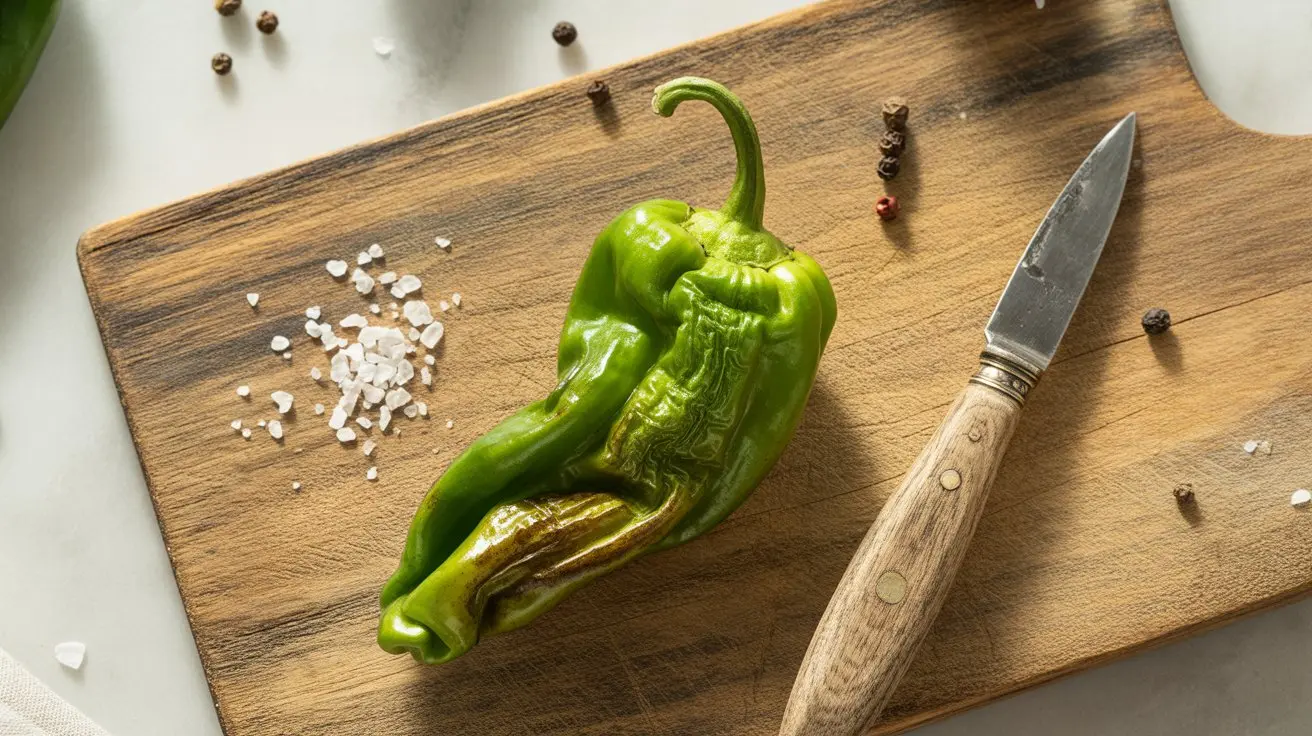
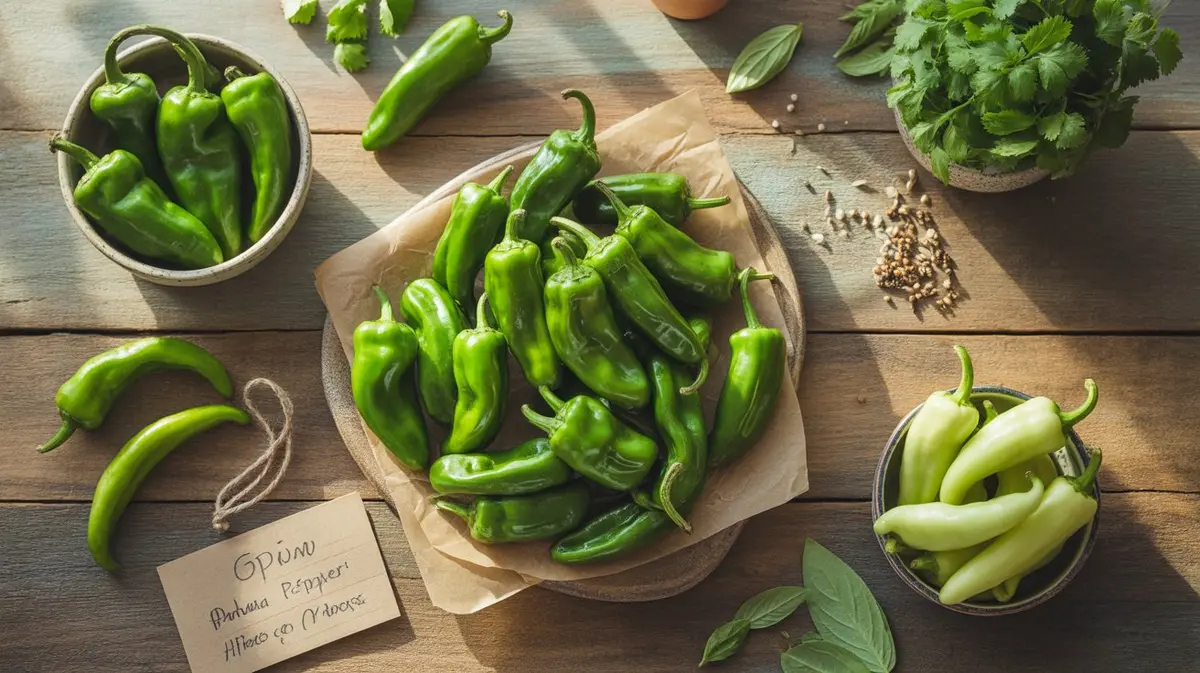
Shishito peppers bring something specific to the table: thin walls, a grassy sweetness, and that famous roulette factor where roughly one in ten turns out noticeably hotter than the rest. When you can't find them, you need a substitute that handles high-heat cooking (blistering, charring, roasting) without turning mushy, while staying mild enough that nobody at the table flinches. The ten options below cover everything from near-identical blister candidates to solid flavor stand-ins for raw preparations.
These alternatives are ranked by how closely they match Shishito Pepper’s heat level and flavor profile. Use the conversion ratios to adjust quantities in your recipe.
#1
Padron Pepper Closest Match
Padron peppers are the closest cultural and culinary cousin to shishitos — both are thin-skinned, blister beautifully in a screaming-hot pan, and carry that same mild-with-occasional-surprises character. SHU sits between 50-2,500, so the heat ceiling is higher, but most Padrons you'll cook are as gentle as shishitos. Use a 1:1 ratio by count or weight. The flavor is slightly more vegetal and less sweet than shishito, but once charred with flaky salt and olive oil, most people can't tell the difference.
#2
Sweet Italian Pepper Runner-Up
The sweet, approachable flavor of Sweet Italian peppers makes them a dependable shishito stand-in for cooked applications. At 0-100 SHU, they register no real heat — milder even than the typical shishito. Because they're larger and meatier, slice them into shishito-sized pieces or use smaller specimens whole. Ratio: use about 60% by weight compared to shishitos to account for the extra flesh. They won't blister quite as dramatically, but they caramelize well in a cast iron pan.
#3
Gypsy Pepper Also Great
Gypsy peppers ripen through yellow to orange-red and have thin enough walls to handle dry-heat cooking well. At 0-100 SHU, they're squarely in shishito territory for heat. The flavor is sweeter and fruitier than shishito's grassy note, which actually works well in preparations where you want a little more depth. Use 1:1 by count for whole roasted dishes, or match by weight for chopped applications. Check the full Gypsy pepper profile for more on how it performs across cooking methods.
#4
Jimmy Nardello Pepper
Jimmy Nardellos are a heritage frying pepper with intensely sweet, almost fruity flesh that becomes silky and almost jammy when cooked in fat. At 0-500 SHU (almost always at the low end), they're mild and sweet rather than grassy. The thinner skin blisters acceptably, though not as crisply as shishito. Use 1:1 by count for sauteed or pan-fried preparations. These shine specifically in olive oil with garlic — a preparation shishito fans will recognize immediately.
#5
Banana Pepper
Banana peppers bring a mild tang that sets them apart from shishito's clean sweetness. At 0-500 SHU, heat is minimal, but that slight acidity changes the dish's character. They work better as a shishito substitute in cooked applications than raw ones — heat mellows the tang considerably. Slice lengthwise and cook in sections rather than whole. Use 1:1 by weight, but expect a flavor shift. Worth knowing: for a side-by-side look at how banana peppers differ from similarly mild peppers, the texture contrast is often the deciding factor.
#6
Pepperoncini
Pepperoncini land at 100-500 SHU — noticeably tangier and slightly more assertive than a typical shishito. The tangy, mildly pickled character of pepperoncini means they're best used as a shishito substitute in cooked dishes where that acidity can soften. Fresh pepperoncini (not jarred) blister reasonably well and have thin walls similar to shishito. Use 1:1 by count for whole preparations, but taste as you go — the flavor profile diverges more than the other options on this list. Good in a pinch, not a perfect match.
#7
Corno di Toro
Corno di Toro ("bull's horn") peppers are large, curved Italian frying peppers with sweet, rich flesh that holds up beautifully to high heat. At 0-500 SHU, they're gentle, and the flavor is genuinely sweet without the grassy note shishito fans expect. Because they're significantly larger, cut them into shishito-sized strips or rings. Use about 50% by weight compared to shishitos. They don't blister the same way — expect more of a roasted softness than a charred pop — but the flavor payoff in a composed dish is excellent.
Cubanelle peppers look like a reasonable swap at a glance — thin walls, mild heat, Italian frying pepper category. But Cubanelles have a distinctive bitter undertone that survives high heat and clashes with the simple, grassy sweetness that makes shishito dishes work. The texture also stays firmer than ideal for blistering preparations.
Bell peppers are the most common impulse substitute, and they consistently disappoint. The walls are too thick to blister properly, the flavor is too dominant and vegetal in a different way, and the sheer size makes portioning awkward. Even mini sweet peppers — a closer relative — lack the thin skin that gives shishitos their characteristic char.
Fresno chiles might seem plausible given their size, but at 2,500-10,000 SHU, they run significantly hotter than even the spiciest shishito. That heat difference fundamentally changes the dish — what should be a casual snack becomes something that requires heat tolerance.
Substitution Tip
When substituting Shishito Pepper (50–200 SHU), always start with less of a hotter substitute and add more to taste. For milder substitutes, you can increase the quantity. Our swap ratio calculator gives precise conversion amounts, and the heat unit converter translates between Scoville and other scales.
Fact-Checked & Expert Reviewed
Editorial Standards: All facts verified against authoritative sources. Content reviewed by subject matter experts before publication.
Review Process:
Written by
Sofia Torres
(Lead Culinary Reviewer)
, reviewed by
Karen Liu
(Lead Fact-Checker & Science Editor)
. Last updated February 19, 2026.
Padrons are the single best shishito substitute for blistered or pan-fried preparations — the cooking method, texture, and eating experience are nearly identical. The key difference is that Padrons have a slightly higher heat ceiling (up to 2,500 SHU), so the occasional spicy one hits harder than a hot shishito would.
Thin-walled options like Padrons, Gypsy peppers, and fresh pepperoncini blister well in a dry cast iron or carbon steel pan. Thicker-walled peppers like Sweet Italian or Corno di Toro will soften and caramelize rather than char, which changes the texture but still produces a good dish.
Sweet Italian peppers and Gypsy peppers both cap out at 100 SHU, putting them right in shishito's typical heat range. If you want zero chance of any heat at all, Sweet Italian peppers are the safest call — they're reliably mild across every specimen.
They're closely related but distinct cultivars — both are C. annuum, both originated in East Asia and traveled to Europe via trade routes, and both share the thin-walled, mild-with-occasional-heat character. Padrons developed their distinct identity in the Galicia region of Spain, where they've been cultivated for centuries.
Pickled pepperoncini can work in cold applications like grain bowls or antipasto plates where shishito would be used raw or lightly dressed. For any cooked preparation, dried peppers change the texture and moisture content too dramatically — stick to fresh substitutes whenever the recipe involves heat.