
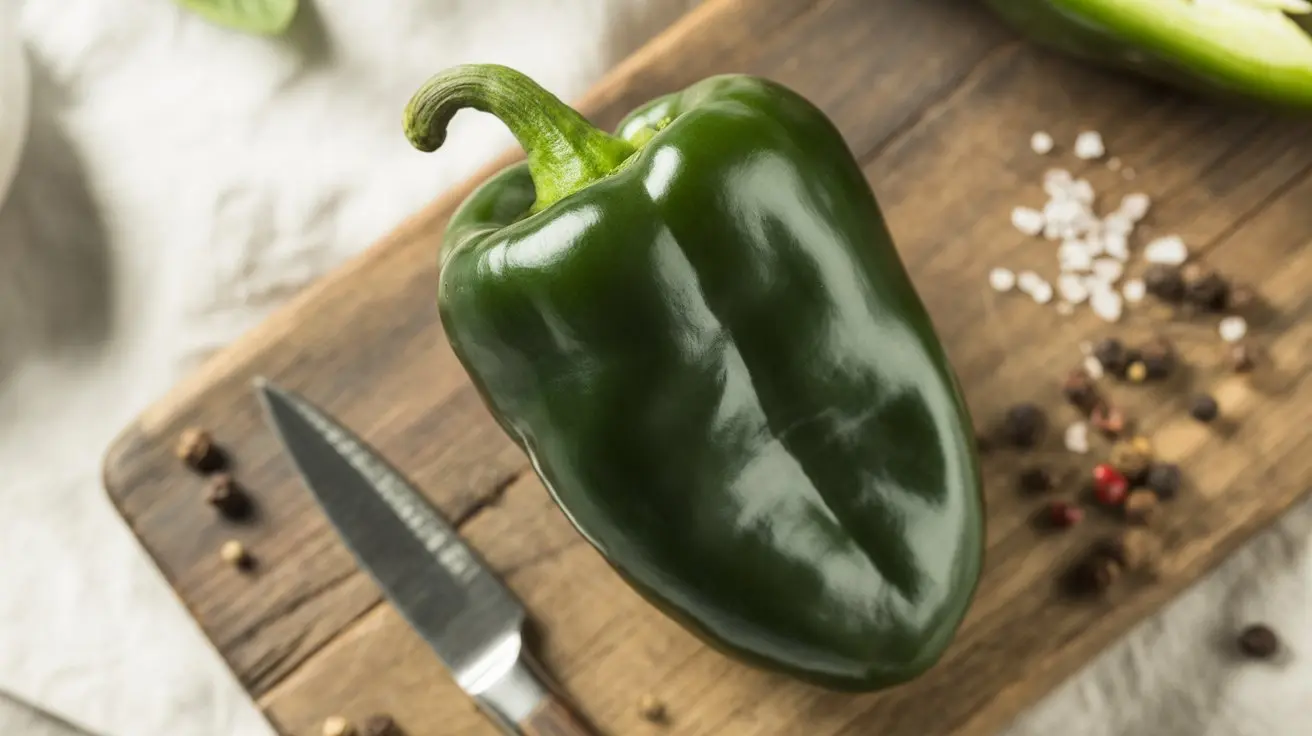
Best Poblano Pepper substitutes and alternatives for cooking
Substitute Guide

Out of Poblano Pepper? 7 Great Swaps Ranked

Quick Summary

Poblano peppers bring a mild, earthy depth to chiles rellenos, mole, and roasted salsas that is hard to replicate exactly. Their thick walls, low heat, and slightly smoky flavor are what make them so versatile — but when the produce section comes up short, several peppers can step in without ruining the dish. The right swap depends on whether you need that charrable skin, the bulk for stuffing, or just the flavor base.

Advertisement

Best Poblano Pepper Substitutes

These alternatives are ranked by how closely they match Poblano Pepper’s heat level and flavor profile. Use the conversion ratios to adjust quantities in your recipe.
#1
Anaheim Pepper Closest Match

The closest side-by-side comparison worth reading puts these two peppers nearly neck-and-neck for most applications. Anaheims sit at 500-2,500 SHU — a whisper of heat compared to the poblano's near-zero range — but their long, thick-walled flesh chars beautifully and holds up to stuffing almost as well.

Use a 1:1 ratio. The flavor is a touch grassier and less earthy, but roasted Anaheims develop a sweetness that works well in enchilada sauce and rajas. If the recipe calls for dried poblanos (ancho chiles), Anaheim falls short — dried Anaheims are a different beast entirely.

#2
Bell Pepper Runner-Up

The sweet, crisp flesh of a bell pepper makes it the most accessible swap on this list. Zero heat, 0 SHU, and available in every grocery store year-round. Red and green bells both work, though red brings more sweetness and green edges closer to the grassy note in fresh poblanos.

For stuffed pepper recipes, bells are actually superior — their cavity is larger and more uniform. Use a 1:1 ratio and expect a milder, sweeter result. The thin skin doesn't char the same way, so skip the broiling step if you need clean, peeled flesh.

#3
NuMex Heritage Big Jim Also Great

This New Mexico heirloom is a serious stuffing pepper. Its walls are thick, the flesh is meaty, and it can reach 12 inches long — making it one of the best large-format poblano swaps available. Heat runs 500-1,000 SHU, so it stays firmly in mild SHU territory without surprising anyone at the table.

The NuMex Heritage Big Jim's roasting character is excellent — skin blisters cleanly and the flesh softens without going mushy. Use 1:1. Flavor is slightly earthier than Anaheim with a hint of nuttiness that complements cheese-stuffed preparations well.

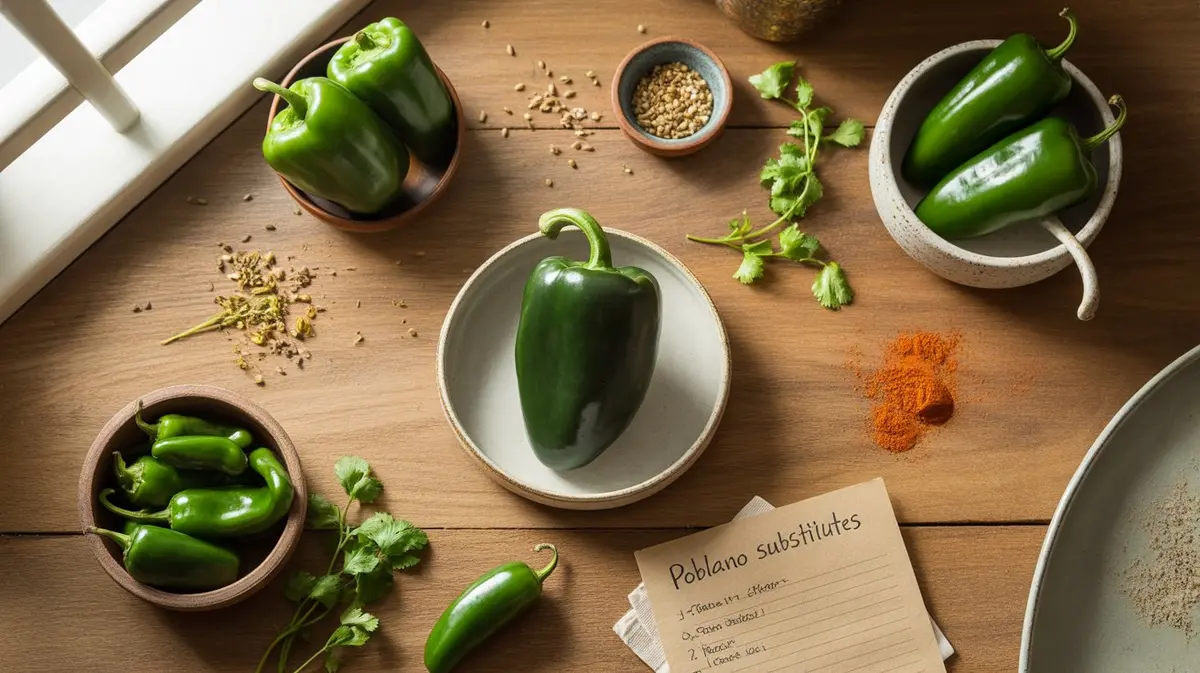
Comparison of Poblano Pepper with similar peppers for substitution
#4
NuMex Joe E. Parker

Another New Mexico cultivar bred specifically for the chile verde and roasting market. The mild, thick-walled profile of Joe E. Parker sits at roughly 1,000-1,500 SHU — enough warmth to notice but nowhere near disruptive. Walls are slightly thinner than Big Jim but the flavor is clean and slightly sweet when roasted.

Use 1:1. This works particularly well in sauces and soups where the pepper breaks down. Less ideal for whole stuffed preparations where structural integrity matters.

#5
Rocotillo

An underrated option. The rocotillo's mild, fruity flavor hovers around 1,500-2,500 SHU and brings a hint of the tropical sweetness you sometimes detect in roasted poblanos. Walls are moderately thick, though the shape (squat and round) makes it awkward for whole stuffed dishes.

Use 1:1 by weight rather than by count. Best deployed in sauces, stews, and rajas where shape doesn't matter. The flavor depth is genuinely good — it won't feel like a compromise in a mole verde or chile-based braise.

#6
Habanada

The habanada's intensely fruity, tropical sweetness is a different flavor profile entirely — this is a heatless habanero, bred to remove the capsaicin while keeping the aromatic complexity. At 0 SHU, it won't alarm anyone, but the flavor is distinctly floral rather than earthy.

Use 1:1, but consider this a flavor-forward substitute rather than a neutral one. It shines in fresh preparations — salads, salsas, garnishes — where the poblano's role was mostly textural. For roasted or cooked applications, the floral notes can read as out-of-place unless you're leaning into them intentionally.

#7
Lumbre

The lumbre pepper's New Mexico heritage brings moderate heat — roughly 5,000-15,000 SHU — which puts it meaningfully hotter than a poblano. This is the swap to reach for when you want to add some punch to a dish that was originally designed to be mild.

Use a 1:2 ratio (one lumbre for every two poblanos called for) and taste as you go. The flavor is earthy and slightly smoky when roasted, which aligns well with poblano-forward recipes. Not suitable for dishes where guests expect zero heat, but excellent when you want the same roasted character with more bite.

Related Chocolate Habanero: 300K–425K SHU, Taste & Recipes
Peppers to Avoid as Poblano Pepper Substitutes

Jalapeño seems like an obvious swap — it is Mexican, widely available, and has a similar grassy flavor when raw. But the jalapeño vs poblano comparison reveals the problem quickly: jalapeños top out around 8,000 SHU, walls are thin, and the size difference makes stuffed preparations impossible. You would need four or five jalapeños to approximate one poblano by volume, and the heat would dominate the dish.

Serrano is even further off. At 10,000-23,000 SHU, serranos are roughly ten times hotter than most jalapeños and bring a sharp, bright heat that cuts through rather than blends into sauces. Their small size and thin skin make them purely a heat source, not a structural or flavor substitute.

Prik kee noo (Thai bird's eye chili) should not appear anywhere near a poblano substitution. These tiny chilies run 50,000-100,000 SHU and are used by the pinch, not the pepper. Their purpose in cooking is entirely different — heat delivery, not body or flavor base.

Fact-Checked & Expert Reviewed
Editorial Standards: All facts verified against authoritative sources. Content reviewed by subject matter experts before publication.
Review Process: Written by Sofia Torres (Lead Culinary Reviewer) , reviewed by Karen Liu (Lead Fact-Checker & Science Editor) . Last updated February 19, 2026.
Related Pepper Comparisons: Side-by-Side Heat & Flavor

Poblano Pepper Substitute FAQ

Bell peppers work structurally — they hold stuffing well and their walls soften during baking — but the earthy, slightly smoky flavor of a roasted poblano won't be there. The dish will taste milder and sweeter, which is fine if heat-sensitive guests are at the table.

Anaheim peppers are the most practical swap for mole applications, bringing a similar roasted depth at a 1:1 ratio. Rocotillo is worth considering if you want a fruitier undertone that complements chocolate-based moles particularly well.

Yes — dried poblanos are called ancho chiles and have a richer, fruitier, almost raisin-like flavor that fresh pepper substitutes cannot replicate. For recipes calling for ancho, look for dried mulato or pasilla negro chiles rather than reaching for a fresh pepper.

Technically yes, but the math gets imprecise quickly. A lumbre or Anaheim at half quantity will reduce heat but also reduce the body and flavor contribution the recipe depends on — you may need to compensate with a neutral bell pepper to make up the volume.

Anaheim and NuMex Heritage Big Jim are the top choices for rajas — both char cleanly, peel without tearing, and slice into strips that hold their shape in cream or cheese sauces. The poblano pepper's full flavor profile is still the gold standard, but these two come closest when fresh poblanos are unavailable.

Sources & References
Karen Liu
Fact-checked by Karen Liu
Contributing Editor & Food Scientist
All Substitutes Browse Peppers Substitute Finder Tool
