
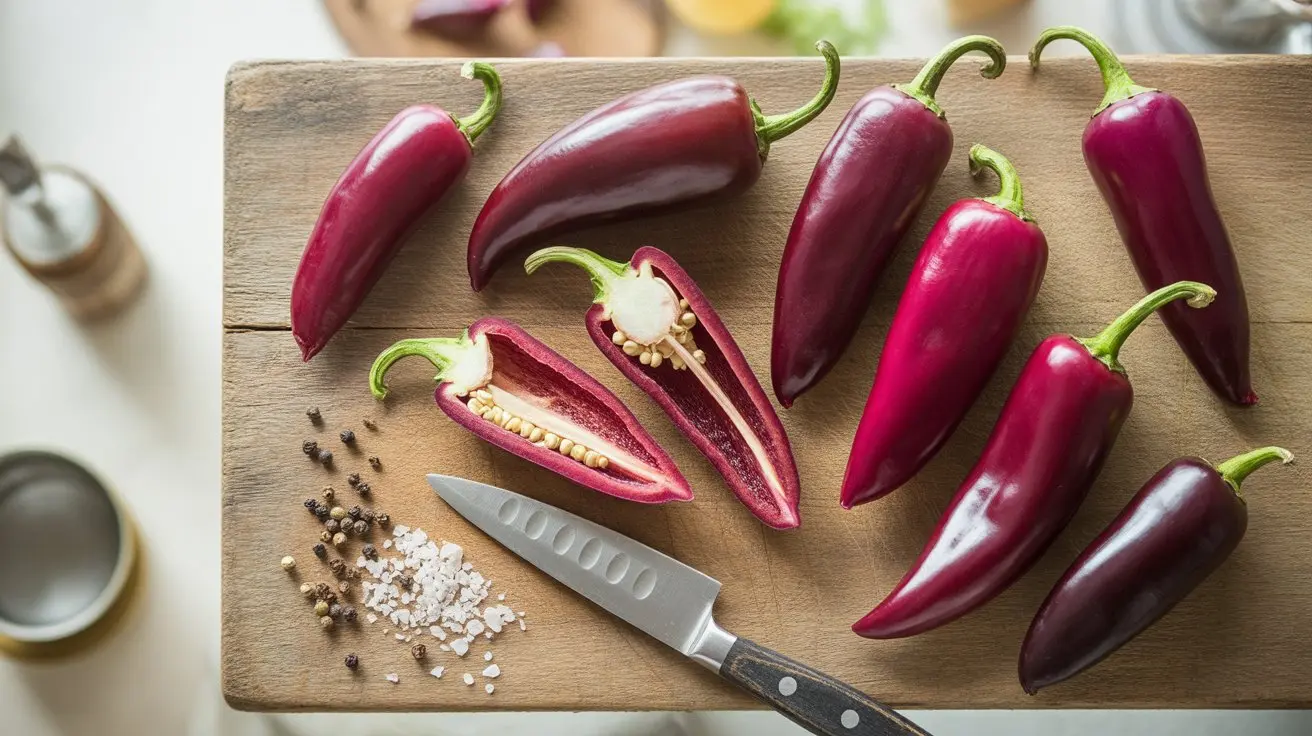
Purple Jalapeño

The purple jalapeño is a color variant of the classic Capsicum annuum jalapeño, registering 2,500–8,000 SHU on the medium heat spectrum. Its deep violet pods carry the same fresh, grassy bite as the green standard, with striking ornamental appeal. Grown across Mexico and increasingly popular in home gardens, it ripens from purple through green to red at full maturity.
- Species: Capsicum annuum
- Heat tier: Medium (1K–10K SHU)
- Comparison: 2x hotter than a jalapeño
What is Purple Jalapeño?
Long before seed catalogs started marketing it as a novelty, the purple jalapeño was simply what happened when jalapeño genetics expressed anthocyanin pigmentation under certain growing conditions. The violet color isn't a separate species — it's Capsicum annuum, same as the classic fresh-to-smoky jalapeño heat most people know, just expressing a different color gene.
At 2,500–8,000 SHU, the heat range mirrors the standard green variety exactly. What changes is the visual drama. Pods emerge deep purple-black, sometimes with green streaking, then transition through a mottled phase before settling into red at full maturity. That color window is brief — maybe a week or two — which makes purple jalapeños a fleeting pleasure in the garden.
Flavor-wise, expect the same fresh, grassy profile with a clean capsaicin sting. There's no sweetness added by the anthocyanins, no fruity undertone. What you get is a pepper that tastes like a jalapeño and burns like one too — just one that looks dramatically different sitting on a cutting board.
Compared to a serrano's sharper, hotter bite, the purple jalapeño sits comfortably in familiar territory. It's approachable heat — enough to register clearly, not enough to clear a room. That balance, combined with the ornamental appeal, makes it genuinely useful both in the garden and the kitchen.
History & Origin of Purple Jalapeño
Jalapeños trace back thousands of years to the Mexican state of Veracruz, where indigenous cultures cultivated Capsicum annuum long before Spanish contact. The town of Jalapa (now Xalapa) gave the pepper its name, and trade routes spread it across Mesoamerica.
The purple color variant emerged from natural genetic expression — anthocyanin production triggered by specific growing conditions and selective cultivation. It wasn't engineered; growers simply noticed and preserved plants that held the purple stage longer.
Modern seed stabilization brought consistent purple-fruiting lines to market in the late 20th century. Today it appears in both ornamental and culinary contexts, though it remains far less common commercially than its green counterpart. Its roots in Mexican agricultural tradition run just as deep as the standard variety — the color is new, the pepper is ancient.
How Hot is Purple Jalapeño? Heat Level & Flavor
The Purple Jalapeño delivers 3K–8K Scoville Heat Units, placing it in the Medium tier (1K–10K SHU). That makes it roughly 2x hotter than a jalapeño.
Flavor notes: fresh and grassy.
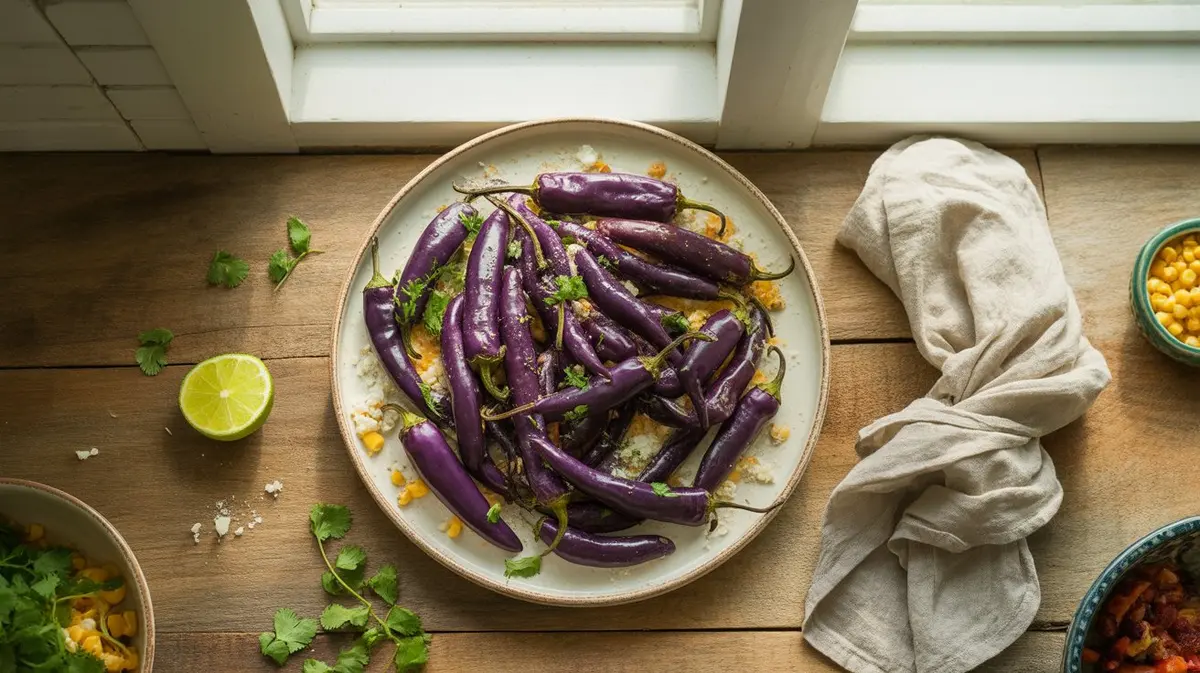
Purple Jalapeño Nutrition Facts & Health Benefits
A 100g serving of raw purple jalapeño delivers roughly 27–30 calories, with minimal fat and about 5–6g of carbohydrates. Protein sits around 1g.
The anthocyanin pigment adds antioxidant value beyond what green jalapeños provide — the same compounds responsible for the color also function as free-radical scavengers. Vitamin C content is substantial, typically 100–120mg per 100g, which exceeds many common vegetables.
Capsaicin concentration aligns with the 2,500–8,000 SHU range — moderate enough to trigger metabolic responses associated with thermogenesis without the intensity of hotter varieties. Vitamin A and potassium round out the micronutrient profile.
Best Ways to Cook with Purple Jalapeño Peppers
The purple jalapeño works anywhere a standard green jalapeño does, with one important caveat: cooking destroys the anthocyanin pigment almost immediately. Purple pods turn olive-green or gray in heat, so use them raw if the color matters to you.
Sliced thin into salsas, scattered over tacos, or pickled in a quick brine — these are the applications where the violet hue actually survives long enough to impress. Pickling in a light vinegar brine preserves some color and highlights the grassy, fresh flavor beautifully.
For cooked applications, the visual distinction disappears but the flavor holds. They work well in jalapeño popper preparations where the filling and breading take center stage anyway. The heat level — topping out around 8,000 SHU — means they stuff and cook predictably without surprising anyone.
For candied jalapeño recipes, the sugar syrup will shift the color to a murky purple-brown, but the texture and heat transfer beautifully. Consider mixing purple and the deeply earthy mulato flavor profile in a compound salsa for both visual and flavor contrast.
The smoky dried jalapeño character of chipotle shares the same base pepper — a useful reminder that these purple pods, if smoked and dried, would produce an essentially identical result.
Where to Buy Purple Jalapeño & How to Store
Purple jalapeños appear most reliably at farmers markets from mid-summer through early fall, typically July through September in most North American growing regions. Specialty grocery stores occasionally stock them, but availability is inconsistent — growers' markets are the better bet.
Look for pods with deep, uniform violet coloring and firm flesh. Avoid any showing soft spots or wrinkling, which signals the pepper has already begun its color transition.
Refrigerate unwashed in a paper bag or loosely wrapped; they hold well for 1–2 weeks. For longer storage, pickle or freeze them — freezing softens texture but preserves heat and flavor. The fresh grassy intensity of the red-ripe jalapeño stage gives you a sense of what these taste like once fully matured past purple.
Best Purple Jalapeño Substitutes & Alternatives
Whether you ran out of purple jalapeño or just want to try something different, these peppers make solid stand-ins. We picked them based on heat range, flavor overlap, and how well they actually work in the same dishes.
Our top pick: Puya Pepper (5K–8K SHU). The heat level is close enough for a direct swap in salsas, sauces, and stir-fries. Flavor leans fruity and smoky, so the taste will shift a bit — but the overall heat stays in the same range.
How to Grow Purple Jalapeño Peppers
Purple jalapeños follow the same cultivation calendar as standard jalapeños, which makes them straightforward for anyone with jalapeño experience. Start seeds indoors 8–10 weeks before last frost. Germination is reliable at 75–85°F soil temperature — a heat mat speeds things up considerably.
Transplant after all frost risk passes, spacing plants 18 inches apart in full sun. They want at least 6–8 hours of direct light daily; less than that and you'll see reduced pod set and washed-out color.
The purple coloration intensifies with cooler overnight temperatures — somewhere in the 60–65°F range. Hot nights tend to push pods toward green faster. This is the opposite of what most gardeners expect, but it's consistent with how anthocyanins behave across many plant species.
Soil should drain well. These plants tolerate moderate drought once established but produce better with consistent moisture. Compare the cultivation characteristics of New Mexico varieties if you're in an arid climate — similar water management principles apply.
Harvest purple pods before they transition to red if color is the goal. The mild-to-medium growing profile of NuMex Big Jim offers a useful comparison for container growers — both handle pot culture reasonably well with adequate root space.
Frequently Asked Questions
-
The purple color comes from anthocyanins, which are heat-sensitive pigments that break down rapidly above about 140°F. This is the same reason red cabbage turns blue-gray when cooked without an acid — the pigment chemistry is unstable under heat.
-
No — the SHU range is identical at 2,500–8,000, and heat level is determined by genetics and growing conditions, not pod color. A purple pod from the same plant as a green pod will register essentially the same capsaicin concentration.
-
Yes, but results depend on whether your plant was grown from an open-pollinated or hybrid variety. Open-pollinated lines will reproduce true to the parent; F1 hybrids may revert to standard green or produce inconsistent coloring in the next generation.
-
Green streaking occurs when chlorophyll production outpaces anthocyanin expression in portions of the pod — a normal part of the ripening transition. Cooler overnight temperatures slow the transition and tend to produce more uniformly purple pods.
-
Both sit in the 5,000–8,000 SHU overlap zone at their upper range, but Puya carries a distinctly fruity, slightly smoky character compared to the fresh grassiness of purple jalapeño. Puya is also a Mexican variety but used almost exclusively dried, while purple jalapeños shine fresh.
- Chile Pepper Institute — Capsicum annuum Varieties
- USDA FoodData Central — Peppers, jalapeño, raw
- University of California Cooperative Extension — Pepper Production
- Anthocyanin Expression in Capsicum — Journal of Agricultural and Food Chemistry
Species classification: Capsicum annuum — based on published botanical taxonomy.