What Are the Jalapeno Plant Stages from Seed to Red Fruit?
Jalapeno stages run from germination and true leaves through transplant recovery, flowering, fruit set, mature green pods, and red ripening. Identify the stage from the newest persistent structure, then use timing ranges to diagnose a delayed transition.
Jalapeno plant stages progress from germination and true leaves through outdoor acclimation, flowering, fruit set, mature green pods, and red ripening. Use the newest persistent structure as the stage marker, then use elapsed time to decide whether the transition is moving normally.
A warm, well-lit plant can move faster than the same cultivar in cool soil or weak light. Seed packets also usually count maturity from transplanting, so their number does not include the indoor seedling period.
The useful sequence has two clocks. The calendar helps you plan, while the plant itself tells you what care it needs today.
How long do jalapeno plant stages take?
A transplanted jalapeno commonly needs about 75 to 85 days to reach a green harvest under favorable field conditions. Texas A&M AgriLife lists roughly 110 to 120 days for a direct-seeded crop, which shows how much the starting point changes the answer.
Add about 8 to 10 weeks when you start seedlings indoors before transplanting. Treat all of these figures as planning ranges because cultivar, light, root temperature, container volume, and weather change the pace.
| Stage marker | Useful timing context | What changes now |
|---|---|---|
| A shoot lifts above the mix | Germination varies most with seed warmth and moisture | Remove the dome after emergence spreads through the tray |
| Pointed true leaves follow the cotyledons | Transplants commonly need 8 to 10 weeks indoors | Strengthen light and make room for roots |
| Fresh leaves expand after transplanting | Recovery depends on soil warmth and root disturbance | Resume normal care instead of forcing growth |
| White flowers remain open | Temperature determines whether pollen and ovaries remain viable | Keep moisture steady and check heat or cold stress |
| The ovary swells behind the fallen petals | Fruit can become visible within several days | Protect leaves, roots, and loaded branches |
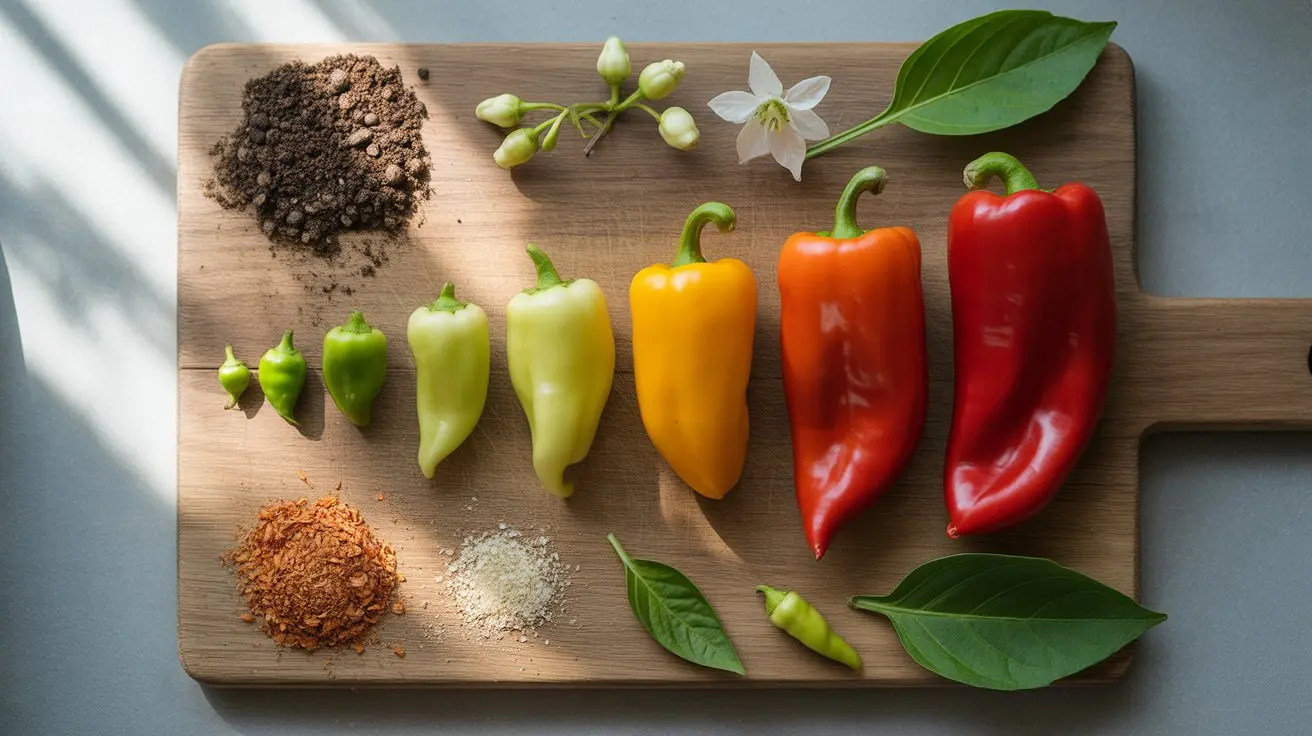
| A firm pod reaches cultivar size | NMSU gives 35 to 50 days from flowering to mature green fruit | Pick green or reserve selected pods for ripening |
| A full-size pod turns completely red | Color develops after the pod has already reached size | Harvest for ripe flavor or mature seed |
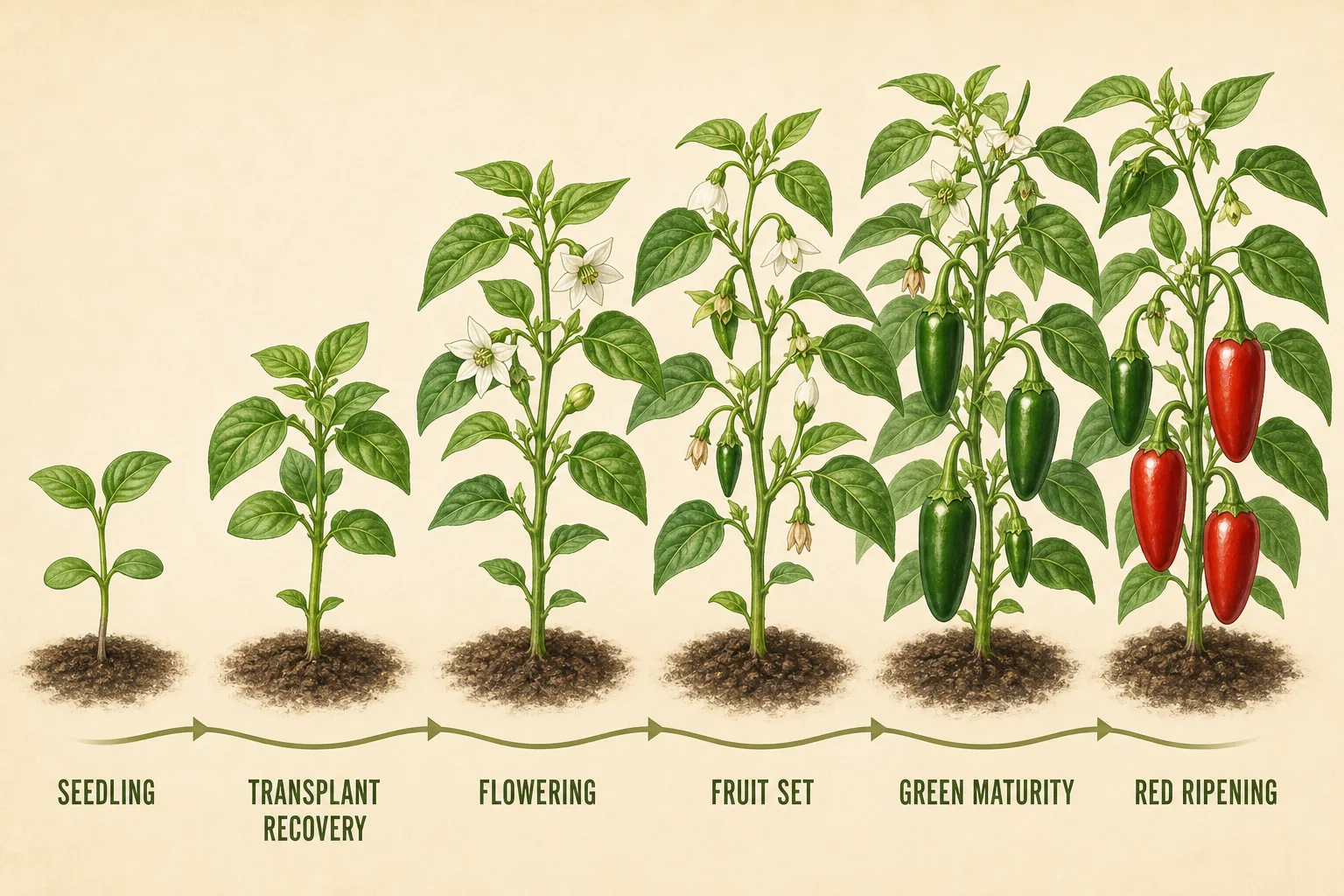
Do not wait for one stage to disappear before naming the next. A plant with new flowers, pea-size pods, and mature green fruit is flowering and fruiting at the same time.
Use the pepper growing calendar to place these transitions in your local season. Use the complete jalapeno growing guide when you need the full planting, feeding, pest, and harvest program rather than stage identification alone.
What does a healthy jalapeno seedling look like?
Cotyledons are the first two smooth seed leaves. The first true leaves emerge above them with the pointed shape and branching veins that continue on an adult jalapeno.
Utah State University Extension describes a strong transplant as stocky, dark green, about 5 to 8 inches tall, and carrying 6 to 9 mature leaves with a developed root system. Height alone is weak evidence because a light-starved plant can become tall before its roots and canopy are ready.
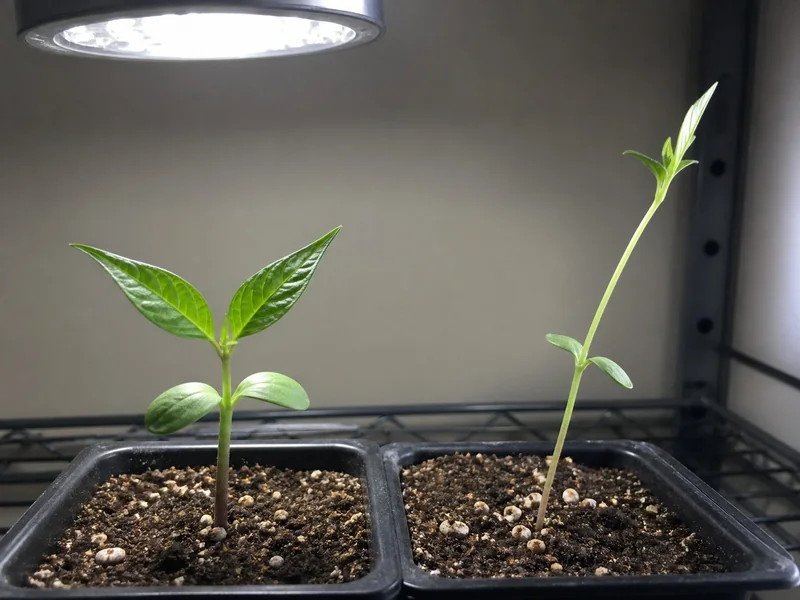
Short gaps between leaves, a firm stem, and even green color point to adequate overhead light.
Long pale internodes and a leaning stem point first to light distance, duration, or direction.
Overlapping leaves or a dense root mat means the next useful move is more space, not stronger fertilizer.
Move the light or increase useful light before trying to feed leggy pepper seedlings out of the problem. Fertilizer cannot shorten an internode that has already stretched.
Pot up when roots occupy the cell and neighboring leaves overlap. A larger container helps only when the mix still drains and the new volume is not kept continuously wet.
When is a jalapeno ready to harden off and transplant?
Begin hardening when the seedling is compact, rooted through its container, and close to the safe outdoor planting window. The plant should already tolerate normal indoor watering intervals without collapsing between checks.
Hardening off pepper plants is a gradual exposure test, not a seven-day countdown. Start with a sheltered period in bright shade, then add direct sun and wind only after the leaves stay upright and unbleached.
- Start with a short sheltered outdoor session and bring the plant back inside before it chills.
- Lengthen the next session only when leaves remain green, firm, and upright.
- Pause during strong wind, unusually hot sun, or nights near 55°F.
- Transplant after frost danger has passed and the soil has reached at least about 60°F.
- Look for a small expanding leaf to confirm that root recovery has begun.
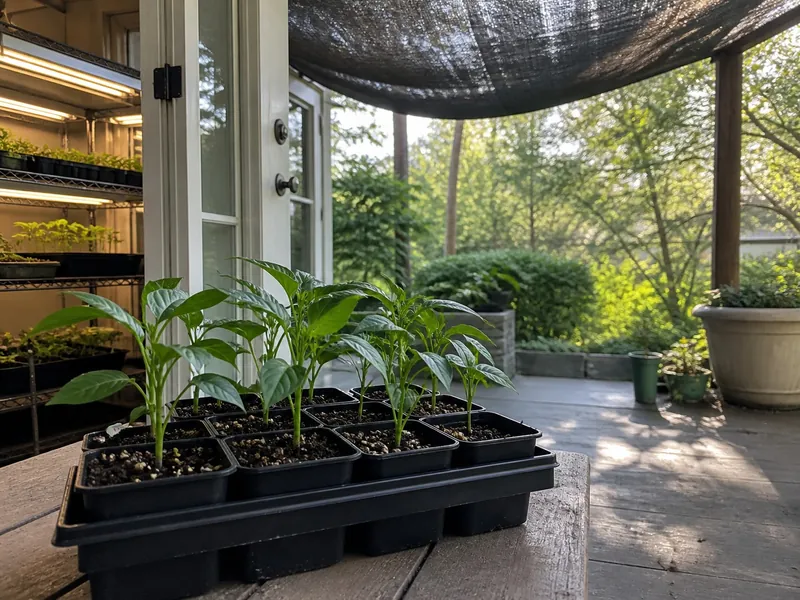
Leaves that bleach after the first sunny session show that exposure increased too quickly. Temporary mild wilt can reflect water loss, but a seedling that stays limp after returning to shade needs its root moisture checked.
Set the plant at the same soil line it held in the pot and water the root ball into the surrounding soil. The transplant pepper seedlings guide covers planting depth and root handling in more detail.
Old leaves may hold still while roots reconnect with the soil. Recovery is complete when fresh leaves expand at the growing tip, not when a fixed number of days has passed.
Why do jalapeno flowers fall before fruit sets?
A white flower marks an attempt to reproduce, not a guaranteed pod. A few flowers can fall normally, especially while a young plant is still building leaf area.
Repeated loss across several nodes is different. NMSU reports poor fruit set when mean temperatures fall below about 55°F or rise above 95°F, and Utah State notes abortion during nights below 55°F or days above 90°F.
Inspect moisture below the surface instead of reacting to a dry crust. A drought-to-soaking cycle can drop flowers, while continuously wet soil limits root oxygen and produces a different kind of stress.
Dark, lush foliage with long soft growth can follow too much nitrogen. Pause before trying to fertilize pepper plants again, because more nitrogen can extend leaf growth while delaying fruit set.
Outdoor jalapenos are self-fertile and usually receive enough vibration from wind and insects. A gentle shake can help in a still protected space, but it will not repair heat-damaged pollen, cold roots, or saturated soil.
How soon does a flower become a jalapeno?
Successful fruit set becomes visible when the petals fade and the green ovary behind them begins to swell. The star-shaped calyx remains at the stem end, while a failed flower often yellows and drops with its small base.
North Carolina Extension says pepper fruit can appear about 2 to 6 days after the flower drops. NMSU then gives roughly 4 to 5 weeks for a chile pod to reach full length.
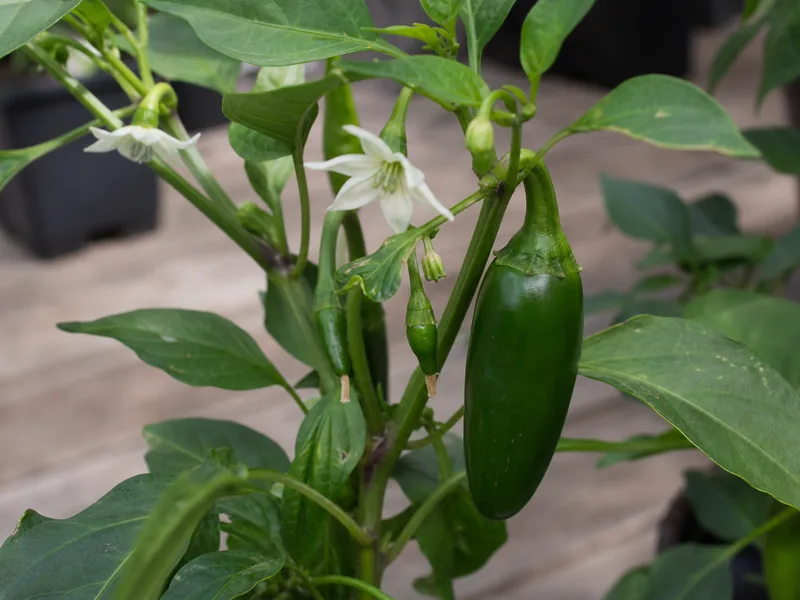
- Petal drop exposes the ovary and retained calyx.
- Visible fruit set begins when that ovary keeps enlarging instead of yellowing.
- Pod filling continues after full length as the wall gains thickness and weight.
A full-length pod is therefore not automatically ready to harvest. It can still feel thin, bend easily, and have an undeveloped shoulder near the stem.
Stable watering matters more once several pods are enlarging at once. A severe dry-to-wet swing can disrupt calcium movement and contribute to pepper blossom end rot even when the soil contains enough calcium.
Keep sound leaves because they produce sugars and shade exposed pods. Add support when fruit clusters pull a branch downward, and stake pepper plants before a loaded branch develops a sharp bend.
When is a green jalapeno fully mature?
A mature green jalapeno has reached the expected size for its cultivar, feels firm and solid, and has a filled shoulder below the calyx. NMSU places mature green chile about 35 to 50 days after flowering, but the pod's physical condition makes the harvest decision.
Do not demand one supermarket length from every cultivar. Early Jalapeno, Mucho Nacho, and compact container selections can finish with different lengths and wall thicknesses.
A narrow flexible pod with a tapering shoulder is still lengthening or filling.
A firm full-size pod with a filled shoulder is ready for crisp green use.
A sound mature pod can remain attached when red flavor or mature seed is the goal.
Gloss can help you compare pods on the same plant, but it is not a universal maturity test. Firmness, size, wall development, and the cultivar description carry more weight together.
Pale corking lines do not make a separate stage. University of Maryland Extension notes that superficial jalapeno cracks often become visible as pods move from green and dark coloration toward red, without reducing eating quality.
Harvesting jalapenos regularly can free the plant to continue flowering. Cut the stem with clean snips instead of pulling a pod from a brittle branch.
Should you wait for jalapenos to turn red?
Pick green when you want firm texture, a fresh grassy flavor, or more room for younger fruit to develop. Wait for red when you want a riper flavor, mature seed, or fruit intended for smoking and drying.
Utah State gives about 35 to 45 days from flowering to full color for peppers, depending on temperature and variety. That range overlaps NMSU's mature-green window because size, wall filling, and final pigment are connected but separate milestones.
| Decision | Green harvest | Red harvest |
|---|---|---|
| Texture | Firm and crisp | Softer as ripening advances |
| Flavor direction | Fresh and grassy | Riper and generally sweeter |
| Plant cost | Fruit leaves the plant sooner | The pod continues using water and sugars |
| Seed evidence | Seed may not be fully mature | Fully colored sound fruit gives stronger maturity evidence |
| Best choice | Pick for immediate green use | Reserve selected pods for a planned ripe use |
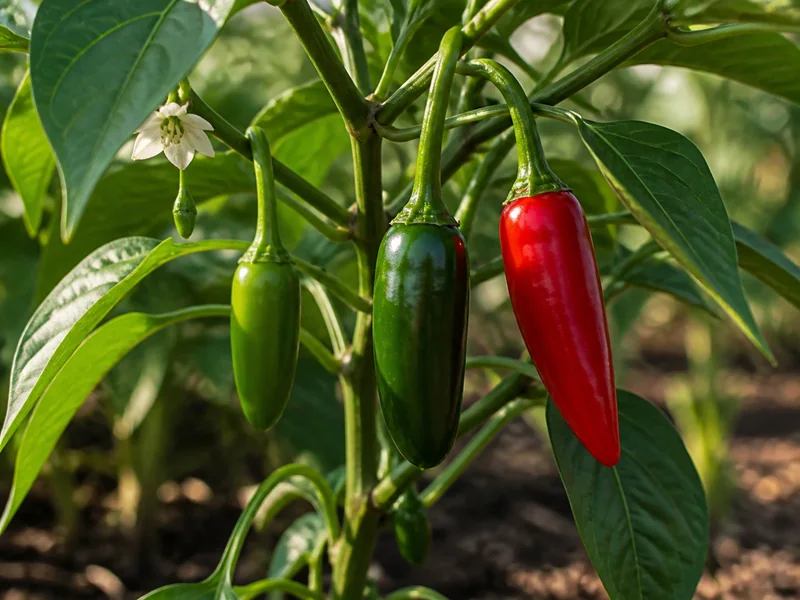
A dark green or nearly black blush can appear before red on a typical red jalapeno. University of Maryland Extension identifies these color changes as normal in many peppers when the fruit remains firm and sound.
Reserve only a few pods for full color when the plant is small or heavily loaded. You can save pepper seeds from fully mature fruit, but ripe color does not guarantee true-to-type offspring when nearby varieties have crossed.
Can one jalapeno plant be in several stages at once?
Yes. Once branching and flowering begin, one jalapeno can carry open flowers, swelling ovaries, small pods, mature green fruit, and red fruit at the same time.
The plant does not return to an earlier stage when another flush of flowers opens. It has entered a continuing reproductive phase in which individual flowers and pods occupy different points in the fruit sequence.
Let the most demanding active structures guide care. Enlarging fruit needs consistent root moisture, loaded branches may need support, and the canopy still needs enough healthy leaf area to feed and shade the crop.
Corking is a surface response to expansion, and purple pigment can be a normal cultivar trait or an anthocyanin response to temperature. Neither mark changes a green pod into a new lifecycle category.
Damage behaves differently. A soft sunken lesion, spreading discoloration, mold, or tissue that collapses should be diagnosed as injury or disease rather than ripening.
This overlap is why a photograph of the whole plant often answers more than a date. Record the newest persistent structure and the oldest sound fruit, then describe both when asking for help.
Why has a jalapeno stopped moving to the next stage?
A stage is stalled when the expected next structure does not appear or stops enlarging. Start with the variable that controls that specific transition instead of applying the same remedy to every delay.
| Missing next step | Check first | Useful response |
|---|---|---|
| No emergence | Temperature and moisture inside the mix | Correct cold, dry, or saturated media before reseeding |
| No compact true-leaf growth | Light distance, duration, and direction | Improve overhead light and inspect root space |
| No new leaf after transplanting | Soil warmth, root moisture, and wind stress | Protect the root zone and wait for visible expansion |
| Flowers repeatedly drop | Night cold, daytime heat, and moisture swings | Stabilize the environment before attempting hand pollination |
| Set fruit stays small | Root volume, plant load, light, and leaf health | Correct the limiting condition before adding fertilizer |
| Full-size fruit stays green | Cultivar, late-season temperature, and remaining daylight | Harvest green or protect selected pods while they color |
| Leaves wilt while soil is wet | Drainage and root-zone oxygen | Pause watering pepper plants and inspect the root zone |
Write down the dates of emergence, first true leaves, first outdoor exposure, first new leaf after transplanting, first persistent flower, first visible pod, mature green harvest, and first red fruit. The gaps reveal which transition your light, soil, containers, or weather slowed.
Use that record to adjust the next season, not to pressure the current plant into a rigid timeline. A jalapeno is progressing when it keeps producing the next healthy structure, even if its calendar differs from a packet average.
What Are the Jalapeno Plant Stages from Seed to Red Fruit? FAQ
- Texas A&M AgriLife Extension, Jalapeno Pepper Commercial Production
- New Mexico State University Extension, Growing Chiles in New Mexico
- Utah State University Extension, How to Grow Peppers in Your Garden
- University of Minnesota Extension, Growing Peppers
- North Carolina Extension, Growing Peppers in the Home Garden
- University of Maryland Extension, Growing Peppers in a Home Garden
- University of Maryland Extension, Normal Plant Characteristics of Vegetables
- University of Maryland Extension, Cracking of Vegetables
- University of Georgia Extension, Common Pepper Fruit Defects