When Should You Harvest Jalapeños for Green or Red Use?
Harvest jalapeños when the pods have reached their cultivar's mature size and the walls feel firm. Pick green for crisp texture and continued production, or leave selected healthy pods to ripen red for sweeter flavor, smoking, drying, or seed saving.
When Are Jalapeños Ready to Pick?
A jalapeño is ready for a useful green harvest when it has reached the mature size expected for its cultivar and feels firm. The University of Minnesota Extension recommends harvesting peppers at mature size and notes that jalapeños do not need to turn red before they have good eating quality.
Use the seed packet or cultivar description as the size reference because jalapeños do not all finish at one standard length. A compact-fruited cultivar can be mature while a larger-fruited cultivar on the next plant still needs time.
Judge several cues together. A full-bodied pod with firm walls and an even green color is a stronger signal than color alone, while a narrow pod that has not filled out near the shoulders usually benefits from more time.
| Cue | What it tells you | Harvest decision |
|---|---|---|
| Expected cultivar size | The fruit has completed most of its expansion | Pick if the walls are also firm |
| Firm, filled walls | The pod can handle slicing, stuffing, or pickling | Use for a green harvest |
| Small, narrow pod | Expansion may still be underway | Leave it unless damage or frost makes an early pick necessary |
| Soft spot or wet lesion | The issue is damage, not desirable ripeness | Remove and keep it out of the sound harvest |
Should You Pick Jalapeños Green, Corked, or Red?
Green and red jalapeños are both harvestable, but they serve different kitchen plans. University of Maryland Extension states that peppers can be harvested green or allowed to change color on the plant, so the best stage depends on the texture and flavor you need.
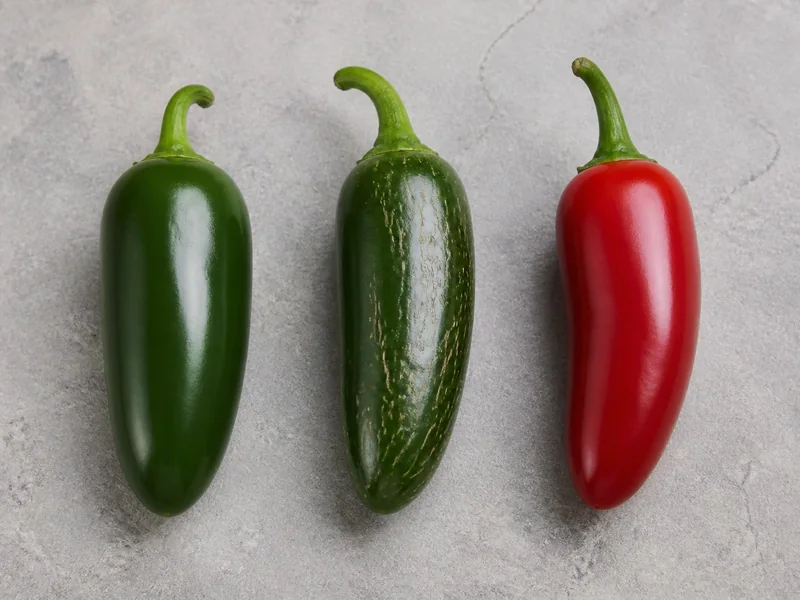
Pick firm green pods for crisp slices, fresh salsa, poppers, and pickles. Leave selected pods to color fully when sweeter ripe flavor matters more than the snap of a green pod.
Corking appears as tan, shallow stretch marks in the skin as the fruit expands. Treat it as a maturity clue rather than a promise about heat, then check firmness and intended use before deciding to pick.
- Firm green: crisp applications and a faster return to flowering.
- Corked green: a mature pod that still suits roasting, stuffing, or salsa when the walls remain sound.
- Fully red: smoking for chipotle, cooked red sauce, drying, or seed saving.
Do not leave every pod for red color simply because red looks more complete. A plant can carry green harvests and a smaller set of intentionally ripening pods at the same time.
Are Red Jalapeños Hotter Than Green Ones?
Red color confirms ripening, but it does not tell you exactly how hot one jalapeño will taste. Colorado State University Extension explains that chile pungency also changes with cultivar, air temperature, irrigation, and fertilization.
That variation means a red pod can taste fuller and sweeter without providing a dependable heat multiple over a green pod. Pods on the same plant can also differ, so harvest color should guide flavor and texture plans rather than promise a Scoville result.
Choose green or red for the kitchen outcome, then dose the pepper according to the heat you observe after cutting it. When consistent heat matters across a large batch, mix pieces from several sound pods instead of assuming the reddest fruit controls the result.
How Do You Pick Jalapeños Without Damaging the Plant?
Clip most jalapeños with clean, sharp shears and leave a short stem on the fruit. The University of Minnesota Extension advises clipping pepper stems because only some varieties separate easily from the plant.
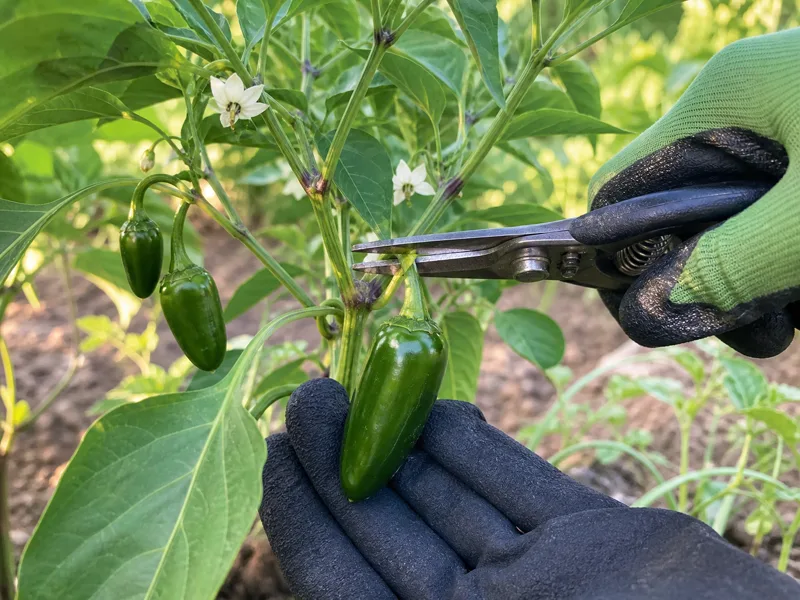
Support the fruiting branch with the free hand and cut the small fruit stem rather than the main branch. This matters most where several pods and flowers share a flexible fork, since pulling one pod can bend or split the tissue supporting the others.
Wear gloves while harvesting hot peppers and wash your hands before touching your eyes or face. That handling advice also comes from the University of Minnesota Extension because capsaicin residue can irritate skin and sensitive tissue even when the fruit looks intact.
- Choose the pod and trace its stem back to the nearest branch.
- Hold the branch steady without squeezing nearby flowers or small fruit.
- Make one clean cut through the fruit stem.
- Place damaged pods in a separate container from sound fruit.
Does Picking Jalapeños Make the Plant Produce More?
Remove usable fruit regularly when total production is the goal. University of Minnesota Extension states that continued harvest encourages pepper plants to keep producing flowers and setting more fruit.
That guidance does not require stripping every green pod on a schedule. Walk the plant, remove fruit that has reached its intended stage, and leave only the pods that still need size or that you have deliberately reserved for red ripening.
One or two checks each week during active production is a practical observation rhythm, not a biological deadline. Hot weather, cultivar, container size, and the number of developing pods can all change how quickly the next harvest becomes ready.
A mixed-stage plant benefits from selective passes. First cut mature green pods, then take corked pods assigned to roasting, and finally collect any fully red fruit that has reached its planned use.
- For maximum green yield: remove mature green fruit instead of holding the whole crop for color.
- For mixed kitchen uses: harvest most fruit green and mark a few healthy pods to finish red.
- For a red harvest: accept that those pods occupy the plant longer while they finish ripening.
Sort the Harvest Before It Reaches the Kitchen
Sort by condition and intended use as the pods enter the basket. This prevents a damaged fruit from disappearing under sound peppers and makes the next preservation step clear before the harvest warms on a counter.
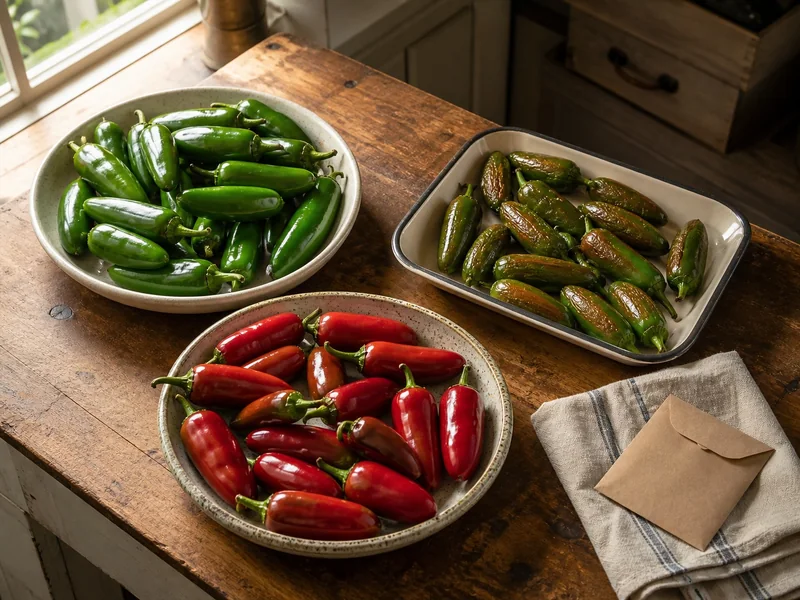
Oregon State University Extension recommends selecting crisp, firm green or red peppers for preservation. Pods with wet decay, mold, insect entry, or spreading soft areas do not meet that quality standard and should stay out of a pickling, freezing, or drying batch.
Keep sound green, sound red, and damaged pods in separate groups. The first two groups can move directly to their planned recipe, while the damaged group needs individual inspection and prompt use or disposal.
| Basket group | Next action | Why it is separate |
|---|---|---|
| Firm green pods | Refrigerate, slice, stuff, or pickle | Texture is the main value |
| Firm red pods | Smoke, dry, freeze, or cook into sauce | Ripe flavor is the main value |
| Corked but sound pods | Roast or use fresh | Surface marks alone do not define spoilage |
| Split, moldy, or soft pods | Inspect away from the sound crop | Damage changes food quality and storage choices |
Will Green Jalapeños Turn Red After You Pick Them?
A harvested green jalapeño may continue changing surface color, but that does not equal full on-plant ripening. Oregon State University Extension classifies peppers as non-climacteric fruit, which means they do not improve their sweetness and aroma after harvest the way a tomato or pear can.
Leave sound fruit on the plant when fully developed red flavor is the goal and warm weather remains. Pick at mature green or at the first color break when frost, branch damage, sunscald, or immediate kitchen use makes waiting the worse choice.
A windowsill can make the skin look redder while the pod loses water and softens. Judge that pepper by firmness and condition rather than assuming the new color created the same flavor it would have developed while attached.
| Condition at picking | What can happen afterward | Best decision |
|---|---|---|
| Full-size green and firm | May change some color but will not improve like a climacteric fruit | Use for green applications |
| Color break and firm | Can continue coloring during short holding | Use promptly and expect an in-between flavor |
| Fully red and firm | Already reached the ripe stage needed for red use or seed | Move to the planned use without warm counter storage |
| Soft, split, or wet | Quality declines rather than ripens | Inspect separately and discard decay |
Do not seal green peppers with an apple or banana to force ripening. Ethylene exposure cannot replace the plant's remaining contribution, and a closed humid bag can create condensation around damaged fruit.
When Are Jalapeño Seeds Mature Enough to Save?
Reserve fully mature peppers that are turning red or have reached their final ripe color when seed saving is the goal. Utah State University Extension gives that maturity standard and recommends drying removed pepper seeds thoroughly on a towel or screen.
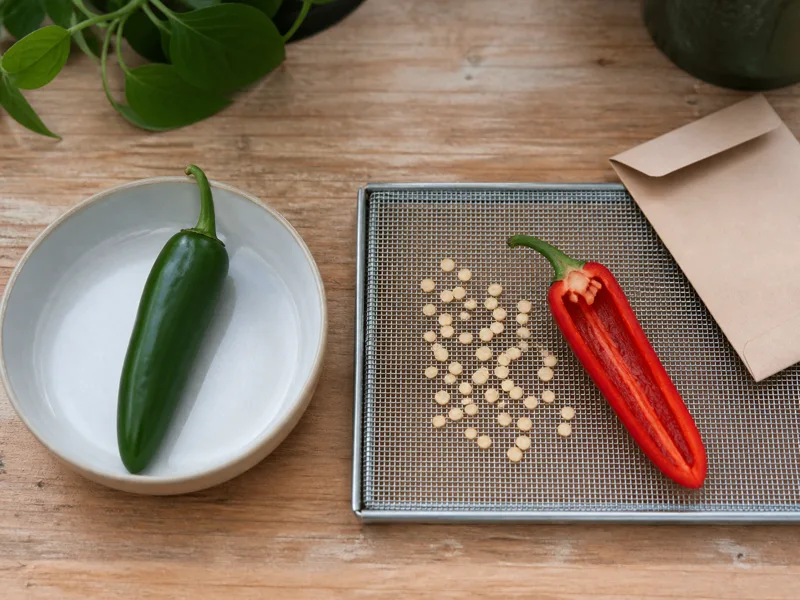
Choose fruit from a healthy plant that produced the pod shape, vigor, and timing you want to preserve. Utah State also warns that peppers can cross-pollinate, so seed collected where different varieties flowered nearby may not reproduce the parent exactly.
Seed from a hybrid cultivar can also produce variable offspring because the saved generation may separate into traits from its parents. Keep the cultivar name, harvest year, and plant source with each dry seed lot so later germination results remain interpretable.
Green eating-stage pods belong in the kitchen rather than the seed envelope. Their fruit can be mature enough to eat while the seed has not completed the ripening process needed for reliable saving.
Troubleshoot Conflicting Harvest Signals
A jalapeño can show one mature feature without being the right pick for every use. Resolve the conflict by returning to three questions: has it reached expected size, are the walls sound, and what will happen to it after harvest?
Corking without softness usually supports a harvest decision rather than blocking it. Red color with a soft or wet lesion is a damage problem, while a smooth green pod at full size can be ready even without corking.
- Full size but pale green: compare it with other pods on the same cultivar and check wall firmness.
- Corked but firm: harvest for roasting, salsa, stuffing, or fresh use.
- Partly red: pick now for mixed flavor or leave it only when sound fruit and ripe use justify more time.
- Red but soft: inspect for decay before assigning it to sauce, smoke, or seed.
- Firm but undersized: leave it to expand unless weather or damage creates a reason to harvest early.
Days to maturity are a planning estimate rather than a harvest command because weather and transplant stress can shift the calendar. The pod itself supplies the final evidence through cultivar size, wall condition, color, and the use you have chosen.
Make the Pick Match the Next Step
The clearest harvest decision is the one that already includes a destination. Pick green pods when crisp texture matters, reserve sound fruit for red ripening when smoke or ripe flavor matters, and take only fully mature healthy pods for seed.
Move harvested peppers out of direct sun and into their next use promptly. The University of Maryland Extension advises keeping harvested peppers away from direct sunlight to reduce water loss, sunscald, and heat damage.
For short holding, University of Minnesota Extension identifies about 55°F in moist conditions as suitable for peppers and suggests perforated bags when refrigeration is the practical home option. An open basket in a hot kitchen and a sealed wet bag create different problems, so cool the crop without trapping visible condensation.
Wash peppers when you are ready to use or preserve them, then follow the food-safety method for that recipe. Harvest maturity cannot make an unsafe canning process safe, and a sound pod still needs the tested acid, salt, and processing steps required by the chosen preservation method.
Harvesting jalapeños is a maturity and use decision, not a color test alone. Mature size and firm walls establish readiness, while green, corked, or red condition tells you which kitchen or seed-saving job the pod can perform best.
When Should You Harvest Jalapeños for Green or Red Use? FAQ
- University of Minnesota Extension, Growing peppers
- University of Maryland Extension, Growing Peppers in a Home Garden
- Utah State University Extension, Collecting and Storing Seeds from Your Garden
- Oregon State University Extension, Preserving Peppers
- Colorado State University Extension, Chile Peppers
- University of Minnesota Extension, Harvesting and storing home garden vegetables
- Oregon State University Extension, Which Fruits Don't Get Sweeter After Picking?