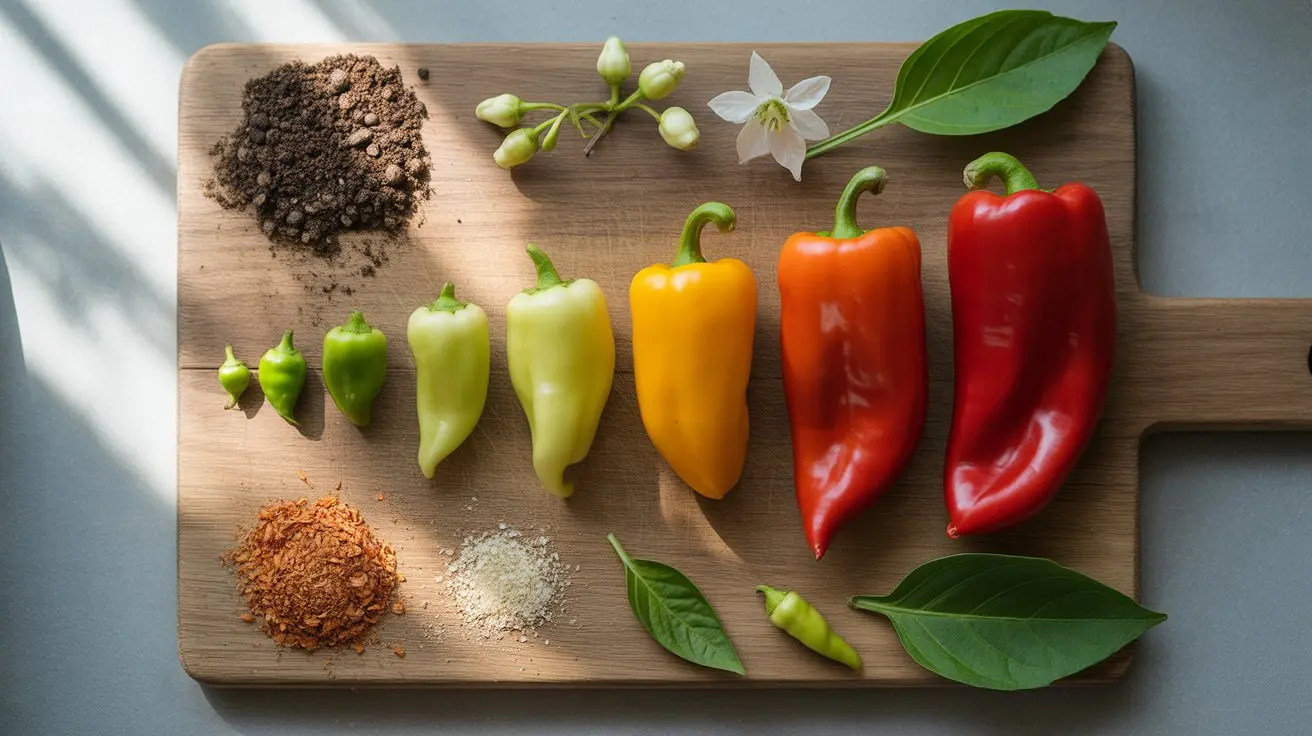
How Long for Peppers to Grow (Seed to Harvest)
Pepper growth timeline from seed to harvest. We cover germination (7-21 days), seedling stage, flowering, and days to maturity for 20+ varieties.

Why Pepper Timing Tripped Me Up the First Time
The first season I grew peppers seriously, I started seeds in late March and wondered why my plants were still flowerless in July. Turns out I had no real grasp of the full seed-to-harvest arc — and I was not alone. Pepper timing is one of the most misunderstood parts of the whole process.
The short answer: expect 60 to 150 days from transplant to harvest, depending on variety. But that number only makes sense once you understand every stage that feeds into it.
The Germination Window: Days 1 Through 21
Before a pepper plant exists, a seed has to wake up. Germination in peppers is heavily temperature-dependent — soil temps below 65°F produce sluggish, uneven sprouting, while the sweet spot sits between 80°F and 90°F.
Most varieties sprout within 7 to 21 days under warm conditions. Thin-walled annuums like bell peppers and banana peppers tend toward the faster end. Thick-fleshed Capsicum chinense varieties — habaneros, superhots — often need the full three weeks or longer.
A heat mat under your seed tray is not optional if you want consistent results. Without one, you are gambling on ambient room temperature, which rarely stays warm enough overnight.
The Apollo pepper, a superhot bred for extreme capsaicin production, is a good example of a slow germinator — plan for 14 to 21 days even with a heat mat. Patience here pays off later.
Seedling Stage: Weeks 3 Through 8
Once cotyledons appear, the clock shifts. The seedling stage covers roughly four to six weeks, during which your plants develop their first true leaves and begin building the root infrastructure they will rely on all season.
Light is the limiting factor at this stage. Seedlings need 14 to 16 hours of direct or artificial light daily. Leggy, pale seedlings are almost always a light problem, not a watering problem.
Soil temperature still matters post-germination. Keep root-zone temps above 70°F during the seedling phase. Peppers are tropical plants — cold soil stunts root development in ways that can cost you weeks at harvest time.
Fertilization should begin lightly once true leaves appear. A balanced 10-10-10 formula at quarter strength every two weeks is enough. Overfeeding seedlings produces lush foliage but delays the transition to reproductive growth.
Transplanting: Timing and Spacing That Actually Matter
Transplant timing is where most growers lose weeks they cannot get back. Peppers go into the ground after last frost, when soil temps have reached a consistent 60°F or above — not just when the air feels warm.
Hardening off takes 7 to 10 days. Start with an hour of outdoor exposure in filtered shade, increasing gradually. Skipping this step causes transplant shock that can set plants back two to three weeks.
Spacing depends heavily on variety. Compact plants like mild-fleshed Korean green peppers, popular in banchan and stir-fries, can sit 12 to 15 inches apart. Larger varieties — especially those with sprawling growth habits — want 18 to 24 inches between plants and 24 to 36 inches between rows.
Tight spacing cuts airflow and invites fungal disease. Give plants room to breathe, and yields will reflect it.
Vegetative Growth: Building the Frame
After transplant, peppers spend two to four weeks in a purely vegetative phase. The plant is building stem thickness, leaf canopy, and root depth — none of which is visible as progress, but all of which determines how many fruits it can carry.
Soil quality during this phase matters more than at any other point. Peppers prefer a slightly acidic pH of 6.0 to 6.8, well-draining loam with good organic matter. Heavy clay soils hold water around the crown and cause root rot; sandy soils drain too fast and starve roots of consistent moisture.
The smoky, earthy Pasilla de Oaxaca, a pepper tied deeply to Mexican pepper traditions, grows vigorously in warm, well-amended soil — it is a good benchmark for how a healthy vegetative phase should look. Strong stem structure by week six post-transplant is a sign you are on track.
Consistent watering through this phase is critical. Peppers want 1 to 2 inches of water per week. Inconsistent moisture during vegetative growth leads to blossom drop later — a problem that is hard to recover from mid-season.
Flowering and Pollination: The Pivot Point
Flowering typically begins 60 to 90 days after transplant, though early-maturing varieties can push flowers at 45 days. The first flower cluster usually appears at the main fork of the plant — a spot called the crown — and spreads outward from there.
Peppers are self-fertile, meaning each flower carries both male and female parts. Wind or gentle shaking is usually enough to trigger pollination. In still greenhouse conditions, a soft brush or electric toothbrush applied to open flowers helps set fruit.
Temperature extremes kill pollination. Daytime highs above 90°F or nighttime lows below 55°F cause flowers to drop without setting. This is the most common cause of mid-summer fruit loss in hot climates.
The intensely hot, thin-skinned Piri Piri, originating from African growing traditions, flowers prolifically once conditions warm — but it is particularly sensitive to cold nights. Keep nighttime temps above 60°F for consistent fruit set on heat-loving varieties.
Fruit Development: Green to Ripe
From successful pollination to a fully ripe pepper takes anywhere from 25 to 85 days, depending on variety. This is the widest variable in the entire timeline — and the one most growers underestimate.
Thin-walled varieties like cayenne and serrano mature quickly, often within 25 to 40 days of fruit set. Thick-walled peppers — especially large bells and Capsicum chinense superhots — can take 70 to 90 days after fruit set to reach full color and flavor development.
The Sugar Rush Peach, a sweet-heat Capsicum baccatum from South American growing regions, sits in the middle of this range at roughly 50 to 65 days from fruit set to its characteristic peach color. It is one of the better varieties for understanding how color change signals ripeness — the shift from green to cream to peach is gradual and readable.
Color change is the most reliable ripeness indicator across all varieties. Green peppers are physiologically mature but lack the sugars, capsaicinoids, and flavor compounds that develop during color change. Harvesting at full color always produces better flavor.
Days to Maturity by Variety Category
Seed packets list days to maturity from transplant, not from seed — an important distinction. The number on the packet assumes you are starting with an established seedling, not a seed in the ground.
Here is a working breakdown by variety category:
- Bell peppers — 70 to 90 days to green stage, add 2 to 3 weeks for full color
- Jalapeños and serranos — 65 to 80 days to mature green, 90 to 100 days for full red
- Cayenne types — 70 to 80 days to red ripe
- Habaneros and Scotch bonnets — 90 to 110 days to full color
- Superhot varieties (Carolina Reapers, 7-Pots, Scorpions) — 100 to 150 days from transplant
- Thin-skinned ornamentals — 55 to 75 days, often earlier
The Hatch Chile, celebrated for its roasted New Mexico flavor, matures in 75 to 85 days from transplant — one reason it is tied so specifically to the late-summer harvest window in New Mexico. Timing the harvest to local conditions is part of what makes it distinctive.
For a full step-by-step breakdown of the growing process from start to finish, the complete pepper growing walkthrough covers soil prep, container options, and troubleshooting in detail.
Watering Through the Full Season
Watering needs shift across the growth stages. Seedlings want consistently moist but never soggy soil. Transplants need deep watering every two to three days during establishment — shallow watering trains roots to stay near the surface, which makes plants vulnerable during dry spells.
Once plants are established and actively growing, 1 to 2 inches per week is the target. Drip irrigation outperforms overhead watering for peppers — wet foliage invites disease, and consistent root-zone moisture reduces blossom drop during fruit set.
During fruit development, do not let plants dry out completely between waterings. Calcium deficiency-related problems like blossom end rot are triggered by inconsistent moisture, not calcium-poor soil. The plant cannot uptake calcium when moisture is erratic.
Cut back watering slightly as fruits approach full ripeness. Mild water stress at this stage concentrates sugars and capsaicinoids — it is a technique used deliberately by growers aiming for maximum heat in superhot varieties.
Soil and Nutrition Across Growth Stages
Pepper nutrition needs change as the plant matures. During vegetative growth, nitrogen drives leaf and stem development. Once flowering begins, excess nitrogen becomes a liability — it pushes vegetative growth at the expense of fruit set.
Shift to a lower-nitrogen, higher-phosphorus and potassium fertilizer when flower buds appear. A 5-10-10 or tomato-specific formula works well at this stage. Potassium supports fruit cell development and contributes to flavor compound production.
Calcium and magnesium are secondary nutrients that matter more than most growers realize. A foliar spray of calcium-magnesium solution every two weeks during fruiting prevents deficiency symptoms and supports cell wall integrity in developing fruits.
Soil pH should be tested before planting. Values outside the 6.0 to 6.8 range lock up nutrients regardless of what you apply. A simple soil test from your county extension office costs a few dollars and prevents a season of mystery deficiencies.
Harvest Timing and What to Look For
Knowing when to pick is the final skill in the timeline. The rule is simple: harvest when the pepper reaches its target color, has firm flesh, and separates from the plant with light pressure. Peppers that require yanking are not ready.
Picking regularly — every few days once plants are in production — signals the plant to keep producing. Leaving ripe fruits on the plant too long slows new fruit development and can cause secondary fermentation inside the pepper in hot weather.
For varieties you want at the green stage (poblanos, serranos, green bells), harvest when the pepper has reached full size and feels firm. For maximum flavor and heat, wait for full color change. The difference in taste between a green and fully red cayenne is significant enough to be worth the extra two to three weeks.
Understanding why heat levels change during ripening connects directly to how capsaicin acts as a heat trigger in the first place — capsaicinoid concentration peaks during color change, then stabilizes or slightly decreases in fully ripe fruit.
If frost is approaching before fruits have colored, pull the whole plant and hang it roots-up in a warm garage. Fruits will continue to ripen off the plant for one to two weeks. This technique saves a significant portion of a late-season crop.
Full Seed-to-Harvest Timeline Summary
Putting all stages together, here is a realistic total timeline from seed to first harvest:
- Germination: 7 to 21 days (soil temp 80-90°F)
- Seedling development: 4 to 6 weeks (true leaves, root establishment)
- Hardening off: 7 to 10 days before transplant
- Transplant to first flower: 45 to 90 days
- Pollination to ripe fruit: 25 to 85 days depending on variety
Total range: 90 to 200 days from seed to first ripe pepper. Fast-maturing annuums at the low end, superhot chinense varieties at the high end.
This is why pepper growers in northern climates start seeds indoors in January or February. You need that head start to get superhots through their full development cycle before fall frosts arrive.
Varieties positioned at the mild end of the heat spectrum often mature faster than their hotter counterparts — bell peppers and banana peppers are ready well before a habanero or a superhot finishes its cycle. Growers focused on extra-hot varieties should plan for the longest possible season.
Frequently Asked Questions
-
Total time runs 90 to 200 days depending on variety. Fast-maturing annuums like cayenne can finish in 90 to 110 days from seed, while superhot Capsicum chinense varieties often need 150 to 200 days from seed to first ripe fruit.
-
Low soil temperature is almost always the cause. Pepper seeds need 80 to 90 degrees Fahrenheit at the root zone to germinate reliably within 7 to 14 days. A heat mat under the seed tray solves this problem immediately.
-
Count backward from your last frost date. Most varieties need 8 to 10 weeks of indoor growth before transplanting, and superhots benefit from 12 to 14 weeks. Northern growers often start seeds in January or February.
-
Yes. Regular harvesting signals the plant to redirect energy into new fruit development. Leaving r