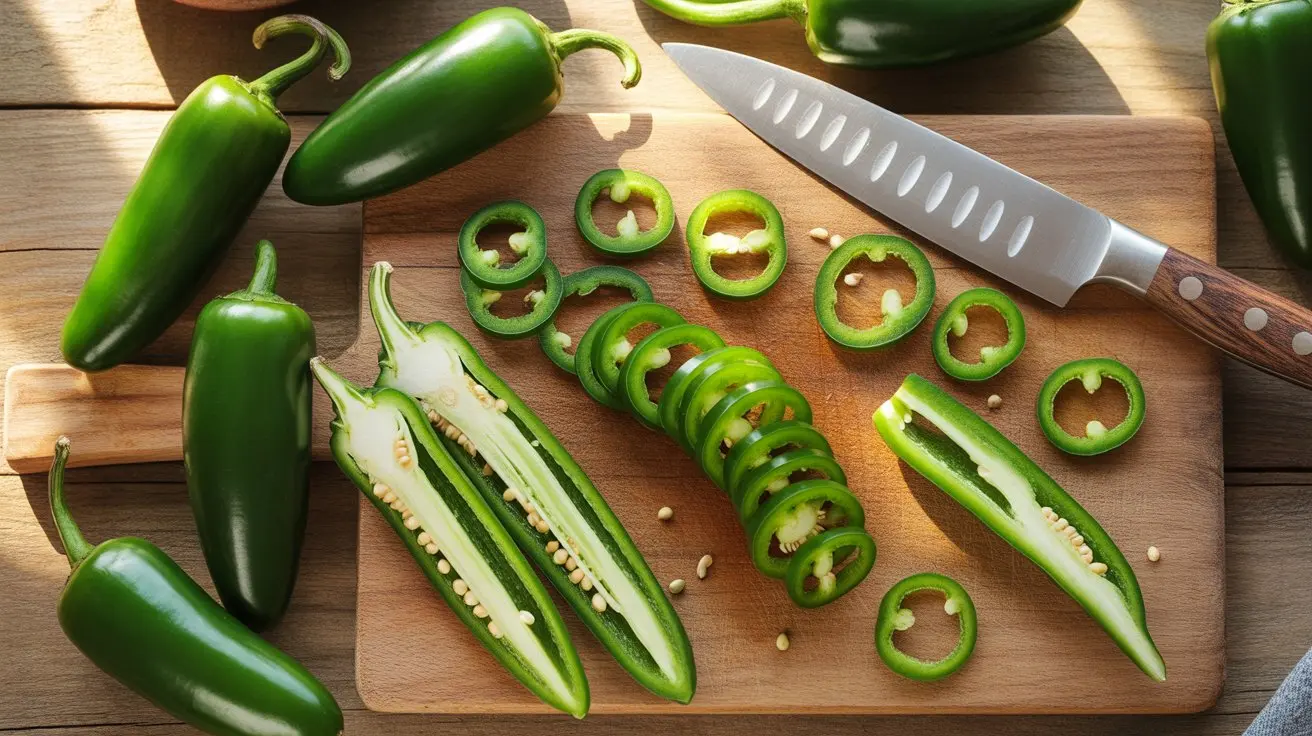
How to Grow Jalapenos
Complete guide to growing jalapeños at home. Seed starting, transplanting, container growing, harvest timing, and troubleshooting.
Why Jalapeños Are the Right Starting Point
If you grow only one pepper, make it a jalapeño. The plant is forgiving, productive, and the fruit is genuinely useful — that slow-building tingle that hits the back of your tongue and lingers without overwhelming. It belongs to the Capsicum annuum species, which covers most of the peppers you already know and grow.
Jalapeños sit squarely in the 2,500–8,000 SHU intensity range, mild enough for everyday cooking but with enough presence to matter. Varieties like Early Jalapeño, TAM Mild, and Mucho Nacho give you options depending on what you want from the plant.
Starting Seeds: Timing Is Everything
Jalapeños need a long season — start seeds 8–10 weeks before your last expected frost date. In most of North America, that means February or early March for indoor starts.
Soil temperature matters more than air temperature at this stage. Seeds germinate best between 80–85°F (27–29°C). A seedling heat mat under your trays is not optional if your home runs cool — germination drops sharply below 70°F.
Sow seeds ¼ inch deep in a sterile seed-starting mix. Don't use garden soil; it compacts in small cells and can harbor fungal issues. Cover trays with a humidity dome until sprouts appear, which typically takes 7–14 days at optimal temperature.
Once cotyledons emerge, remove the dome and move seedlings under grow lights — 14–16 hours of light daily. A cheap T5 fluorescent or LED shop light works fine. Keep lights 2–3 inches above the canopy to prevent leggy stretching.
Hardening Off Before Transplant
Skipping hardening off is the most common mistake with jalapeños. Plants raised indoors under artificial light are not ready for direct sun, wind, or temperature swings.
Start the process 10–14 days before transplant. On day one, set plants outside in a shaded, sheltered spot for 1–2 hours. Add an hour each day, gradually introducing more direct sun. By the end of week two, they should handle a full day outdoors without wilting.
Watch for leaf curl or bleaching — those are signs of sun stress. If either appears, pull the plants back into shade and slow the process down.
Transplanting and Soil Setup
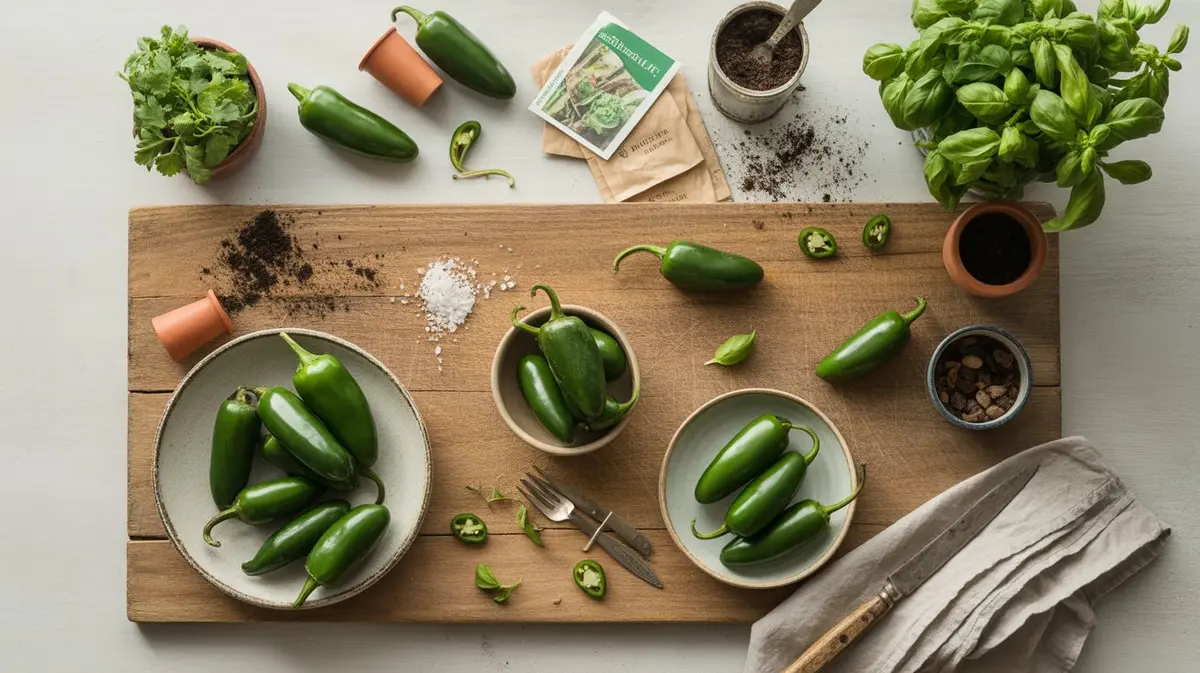
Transplant jalapeños after your last frost date when nighttime temperatures stay above 55°F consistently. Cold nights below that threshold stall root development and can cause blossom drop even on established plants.
Jalapeños prefer well-draining, loamy soil with a pH between 6.0 and 6.8. Amend heavy clay with compost and perlite before planting. Space plants 18–24 inches apart in rows 24–36 inches wide — they need airflow to prevent fungal issues later in the season.
Plant slightly deeper than the nursery pot level, burying the stem an inch or two. Unlike tomatoes, jalapeños won't root heavily from buried stem tissue, but deeper planting improves stability and moisture access.
Water in with a diluted liquid fertilizer at transplant — something with higher phosphorus to encourage root establishment. Hold off on heavy nitrogen until the plant is visibly growing again, usually 1–2 weeks after transplant.
Container Growing for Jalapeños
Jalapeños are genuinely well-suited to containers. A 3–5 gallon pot per plant is the minimum; 7–10 gallons gives you better yield and stability, especially in hot climates where smaller containers dry out fast.
Use a quality potting mix, not garden soil. Add perlite at 20–25% of total volume to improve drainage. Containers in full sun can dry out daily in summer — plan on watering once or twice a day during peak heat.
The upside to container growing is mobility. If a late frost threatens, bring the plants inside. If your patio gets afternoon shade in July, rotate them. Container jalapeños often produce well into fall because you can extend the season more easily than in-ground plants.
For apartment growers or anyone with limited space, check out the broader seed-starting and container setup guide for detailed potting strategies that apply across pepper types.
Fertilizing Through the Season
Jalapeños are moderate feeders. Too much nitrogen early on pushes lush leaf growth at the expense of fruit — a common trap when growers use the same fertilizer schedule from transplant to harvest.
During the vegetative stage (first 4–6 weeks after transplant), a balanced fertilizer like 10-10-10 works well. Once flowers appear, shift to a lower-nitrogen formula — something like 5-10-10 or a tomato fertilizer. This encourages fruit set rather than continued leaf production.
Calcium and magnesium deficiencies show up frequently in jalapeños, especially in containers. Blossom end rot is the most visible calcium deficiency symptom. A side-dressing of lime or a foliar spray of calcium-magnesium solution addresses it before it spreads.
Fertilize every 2–3 weeks during the growing season. If leaves are dark green and the plant looks healthy, back off — over-fertilizing is as damaging as neglect.
Watering, Mulching, and Common Problems
Consistent moisture is more important than total water volume. Jalapeños stressed by drought followed by heavy watering are prone to blossom drop and fruit cracking. Aim to keep soil evenly moist — not waterlogged, not bone dry.
Drip irrigation or soaker hoses are ideal. Overhead watering in the evening leaves foliage wet overnight, which invites fungal disease. If you hand-water, do it in the morning.
A 2–3 inch layer of straw or wood chip mulch around the base of each plant reduces water loss, moderates soil temperature, and suppresses weeds. It's one of the highest-return tasks in the garden.
Common pest problems include aphids, pepper weevils, and spider mites. Aphids cluster on new growth and can be knocked off with a strong water spray. Mites appear in hot, dry conditions — increasing humidity and introducing predatory mites helps. Pepper weevils are harder to manage; row covers early in the season prevent adult beetles from reaching flowers.
Harvest Timing: Green vs. Red
Jalapeños are typically ready to pick 70–85 days after transplant, though this varies by variety. Green jalapeños are harvested before full maturity — they have a crisp, grassy bite with the characteristic slow heat. Left on the plant, they turn red and develop a slightly sweeter, more complex flavor with modestly higher heat.
Look for corking — those white stretch marks on the skin — as a sign of maturity. Corked jalapeños are not damaged; the marks indicate the pepper grew faster than the skin could keep up. Many growers prize corked fruit for its flavor depth.
Harvest by cutting with scissors or snips rather than pulling. Pulling can snap branches or uproot plants in containers. Leaving a short stem attached extends shelf life.
Regular harvesting signals the plant to keep producing. A jalapeño plant left to ripen all its fruit at once will slow down significantly. Pick every 3–5 days once production starts.
How Jalapeño Heat Compares to Other Varieties
Jalapeños sit at a comfortable middle ground. Compared to a small dried-and-smoky Pakistani chili used in meat dishes, jalapeños are noticeably milder. Against something like the thin-walled Chinese chili prized in stir-fry cooking, jalapeños are roughly comparable in intensity but with a completely different flavor profile.
At the far end of the scale, the chocolate ghost pepper variant and its yellow counterpart are in a different category entirely — both exceed 1,000,000 SHU, which puts them at roughly 125 times hotter than a standard jalapeño. The Red Savina's intense fruity heat held the world record before superhots arrived and still sits around 350,000–577,000 SHU.
For a full breakdown of how jalapeños compare to other varieties, the Scoville measurement reference tool gives you side-by-side numbers across hundreds of peppers. And if you want to understand why some people feel heat more intensely than others, the receptor science behind capsaicin's burn explains the actual biology.
The small round Wiri Wiri from Guyana is a useful comparison point — it lands in the 100,000–350,000 SHU hot bracket, making it dramatically hotter than jalapeños despite its unassuming size.
Saving Seeds and Overwintering
Jalapeño seeds are easy to save. Allow a few fruits to ripen fully red, then cut them open and scrape seeds onto a paper towel. Let them air dry for 1–2 weeks away from direct sunlight. Store in a cool, dry location in paper envelopes — not plastic bags, which trap moisture and cause mold.
Saved seeds from open-pollinated varieties will produce true to type. If you're growing multiple pepper varieties close together, there's a chance of cross-pollination, so isolation or hand-pollination is worth the effort if seed purity matters to you.
In frost-free climates, jalapeño plants are perennials and can produce for 3–5 years. In colder zones, you can overwinter plants indoors. Cut the plant back to a manageable size, pot it up, and keep it in a cool but frost-free location with minimal watering. Plants re-emerge in spring faster than starting from seed and often produce earlier in the following season.
Varieties Worth Growing
Early Jalapeño matures in about 65 days — useful for short-season growers in northern climates. Mucho Nacho produces larger fruit, which makes it easier to stuff. TAM Mild Jalapeño, developed by Texas A&M, has almost no heat — useful if you want the flavor without the burn for cooking with kids or heat-sensitive guests.
For growers interested in the Mexican pepper tradition that jalapeños come from, the broader Mexican chili heritage context is worth understanding — jalapeños are just one branch of a much deeper agricultural history.
Purple jalapeño varieties are also worth trying. The immature fruit is deep purple, ripening through green to red — mostly ornamental, but fully edible with standard jalapeño flavor. They tend to produce slightly less prolifically than standard green types.
Troubleshooting Yield Problems
If your plant flowers but drops blossoms without setting fruit, temperature is usually the cause. Jalapeños drop flowers when daytime temperatures exceed 95°F or nighttime temperatures fall below 55°F. Shade cloth during heat waves and row covers on cool nights address both ends of the problem.
Poor pollination is another common culprit. Jalapeños are self-fertile but benefit from insect activity or manual pollination. In low-pollinator environments — rooftop gardens, enclosed patios — gently shaking flowering branches daily or using a small brush to transfer pollen between flowers improves fruit set significantly.
Yellowing lower leaves often signal a nitrogen deficiency, especially in containers where nutrients leach out with frequent watering. A diluted liquid fertilizer application usually resolves it within two weeks. If the yellowing is between leaf veins rather than overall, suspect iron or magnesium deficiency instead — both respond to foliar micronutrient sprays.
Frequently Asked Questions
-
Expect 100-120 days total from seed to first harvest — about 8-10 weeks of indoor seed starting, plus 70-85 days after transplanting. Variety selection matters: Early Jalapeño cuts that post-transplant window down to around 65 days.
-
Yes, and they're one of the better peppers for container culture. Use a minimum 3-gallon pot, though 7-10 gallons produces noticeably better yields. Containers dry out fast in summer heat, so daily watering is often necessary during peak season.
-
Temperature extremes are the most common cause — blossoms drop when daytime heat exceeds 95°F or nights dip below 55°F. In low-pollinator environments like enclosed patios, manually shaking flowering branches daily improves fruit set significantly.
-
Corking refers to the white stretch marks that appear on jalapeño skin as the pepper matures rapidly. It is not damage — it indicates the flesh expanded faster than the skin could accommodate. Many growers consider corked jalapeños more flavorful.
-
Both are correct depending on what you want. Green jalapeños have a crisper texture and grassier flavor. Red jalapeños are sweeter, slightly hotter, and have more complex flavor. Leaving fruit on the plant to redden does slow overall production.